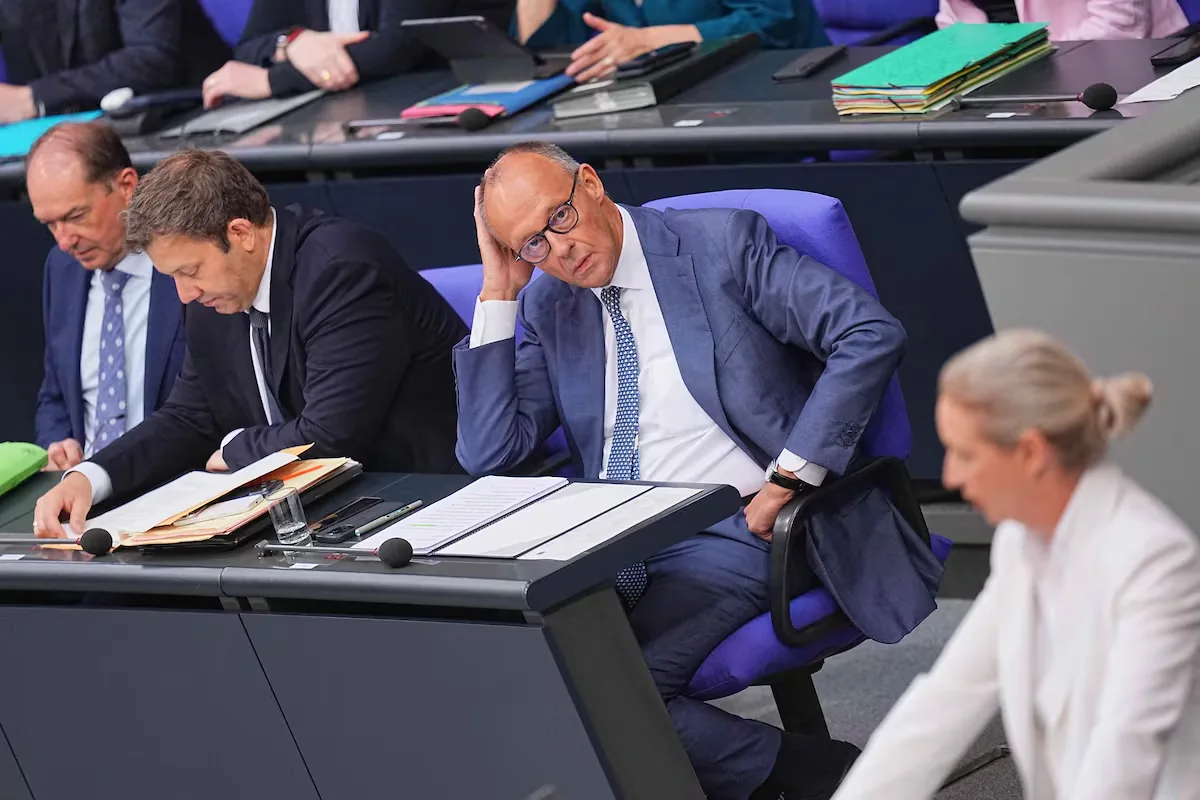








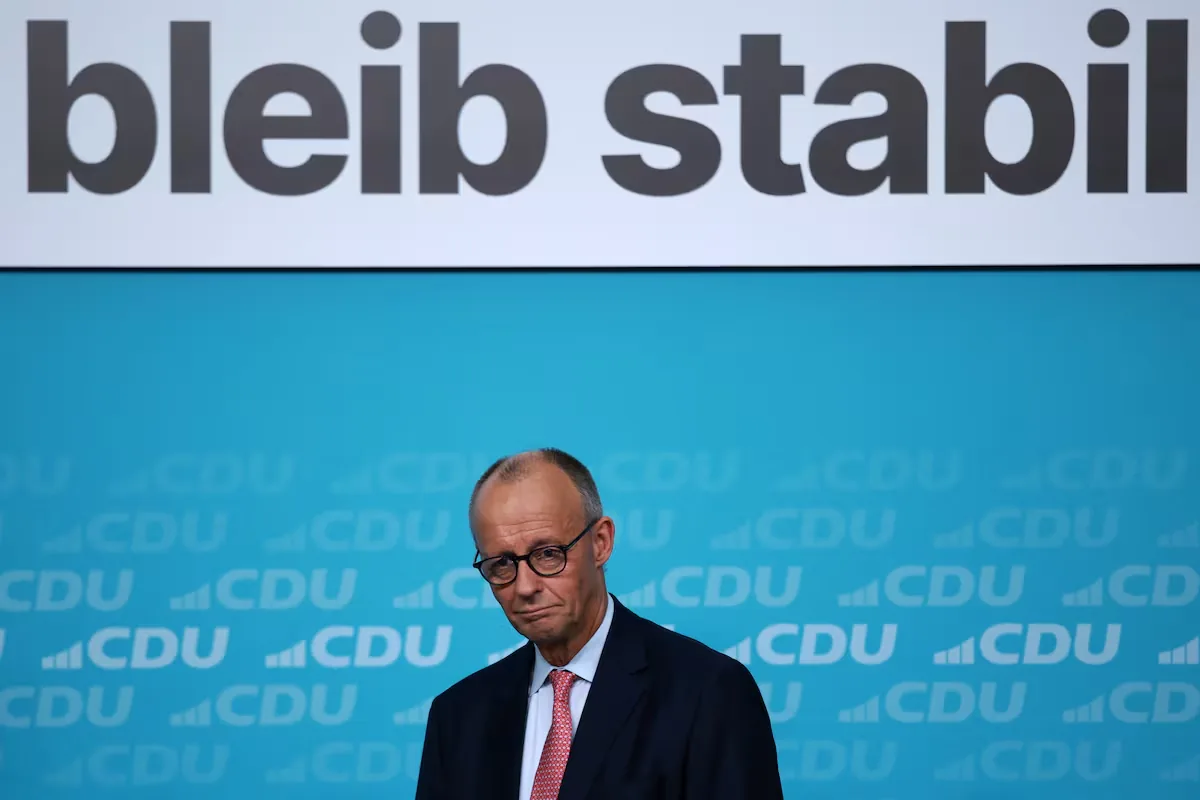
Friedrich Merz is an absent leader, at least in this electoral September in Germany. The chancellor did not participate in his party’s campaign, the CDU, in the September 6 elections in the state of Saxony-Anhalt. Nor has he been seen this month at political events for the elections next Sunday in the land of Mecklenburg-Western Pomerania. In the campaign to elect the new Berlin Senate, in which the Christian Democrats could lose power, Merz did intervene this Thursday: a conference at the party headquarters for about a hundred CDU representatives in the German capital. His unpopularity in the polls, the worst for a chancellor in five years, discourages him from having more prominence.
Read more Arrested ‘El Trompas’, alleged killer of Spanish student Claudia Tacoronte in Mexico
The CDU collapsed in the elections in Saxony-Anhalt, from 37% of the votes obtained in 2021 to 17%. Alternative for Germany (AfD) soared from 20% to 43.7%. The CDU will lose that regional government and the far right has for the first time the possibility of coming to power in Germany since the fall of Nazism. In other elections in an eastern state, in Mecklenburg-Western Pomerania, the Christian Democrats would barely surpass the 5% threshold to have representatives in Parliament, according to polls.
Polls also agree that the Christian Democrats will lose power in Berlin in favor of a left-wing alliance. “We are going through turbulent weeks, it is true, but I believe we will win to have a great government for Berlin with Stefan Evers,” Merz said referring to his candidate to be mayor-president of the German capital.
The chancellor, who on September 7 acknowledged that he has “problems connecting emotionally with the citizens,” wanted to share some anecdotes that sought to make him more approachable. He revealed that on some holidays, early in the morning, he takes the subway to visit historical places in the capital. “Come on, man, I don’t believe it, it’s impossible for security reasons,” said a CDU representative sitting next to the EL PAÍS journalist.
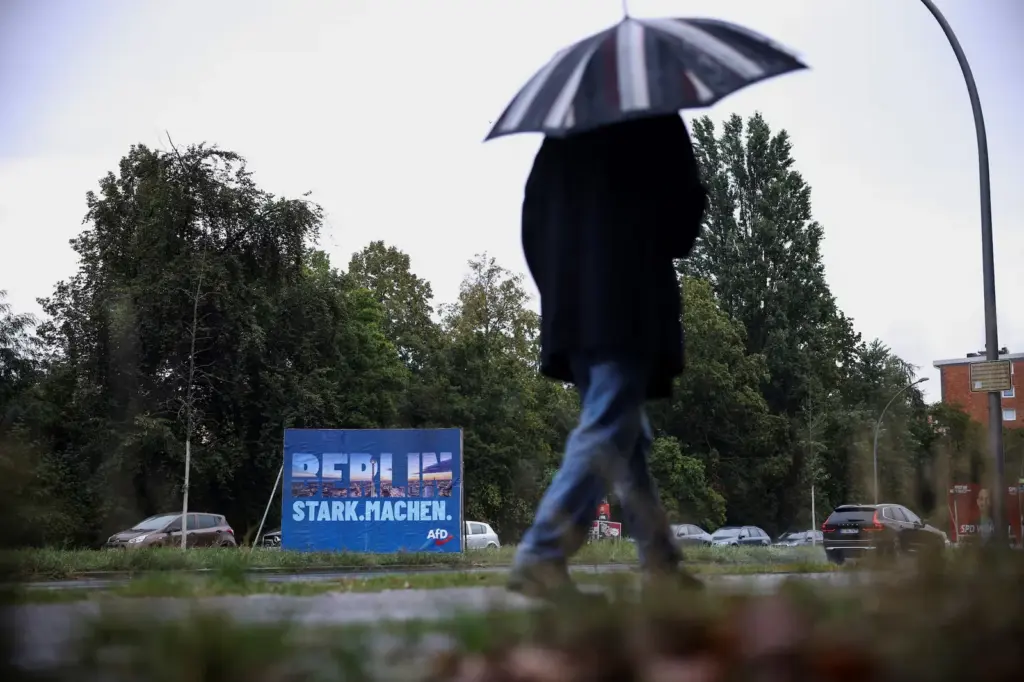
For weeks, the main subject of speculation in Berlin has been how these turbulences might affect Merz’s future. The guesses began even before the CDU’s collapse in the Saxony-Anhalt elections. Polls have been pointing all summer to an unprecedented drop in voting intention for the Christian Democrats. The latest poll, conducted on September 15 by the YouGov polling center, gives them 18.5% support if federal elections were held now; AfD rises as the leading force to 29%. The SPD remains at a low, with 13%, surpassed by the Greens, who would be the third list with 16%.
The alarm signal was given this August by Manfred Güllner, director of Forsa, one of Germany’s most important polling companies. Güllner compared the data on the decline in popularity of Merz and his party with the rise of AfD and concluded that the longer the chancellor remains in office, the further the far right will go. Güllner recommended that the Christian Democrats “seriously consider” seeking a replacement for Merz.
Possible successors to the chancellor
The names mentioned as potential successors are Marcus Söder, leader of the CSU (the CDU’s sister party in Bavaria), Hendrik Wüst, the president of North Rhine-Westphalia, Boris Rhein, president of Hesse, and Alexander Dobrindt, Minister of the Interior. Söder has stated that Merz should continue and Dobrindt’s loyalty to the chancellor is beyond doubt. But Wüst has distanced himself from Merz on several issues, the most recent being the consideration of possible legal measures against AfD.
The chancellor, and most of the CDU, oppose initiating a legal process to outlaw AfD because they doubt that a Constitutional Court ruling would be in favor and because it would come after years of waiting in which the far right would reinforce its role as an anti-system victim. Wüst, on the other hand, proposed this September that a new commission formed by the federal government, regional governments, and intelligence services decide to take the illegality case to the Constitutional Court.
Merz has assured that he does not intend to throw in the towel even though more and more voices in the CDU express their doubts publicly. Tino Schomann, vice president of the party in Mecklenburg-Western Pomerania, was the first to fire in an interview with public television NDR on September 8: “We need a leader who conveys empathy, credibility, and solidity. Merz has shown he is not capable of that. I think he is not fit for the position, neither to unite the country nor to solve its problems.”
“The citizens know that we have a credibility problem in Berlin [in the federal government], without a doubt it is something we will have to discuss calmly in the coming weeks,” warned Sebastian Lechner, president of the CDU in Lower Saxony, on September 14. Similar assessments were made on September 15 on Deutschlandfunk radio by the party president in Bremen, Heiko Strohman, who accused the chancellor of incapacity “to motivate people.”
Two of the media that set the German political agenda, Table and Die Bild, reported on September 15 that Merz plans to convene an emergency meeting of the Christian Democratic leadership on the night of September 20. According to these two media outlets, citing anonymous sources, the chancellor wants to propose a kind of “indirect vote of confidence” to the CDU leaders. According to Bild, the majority of the Christian Democratic parliamentary group in the Bundestag and their regional barons will demand that Merz implement immediate measures to ease the economic pressure on citizens.
The main demand is to subsidize fuel prices. The end of Russian gas and crude oil following sanctions against the invasion of Ukraine has driven up costs in all economic sectors. But the German government, unlike other major economies, does not allocate budget to reduce the price for consumers. This means the country has the third highest price for 95-octane gasoline, 2.33 euros on average, according to data from September 7 from the German Federal Statistical Office (Destatis). This is, compared to Spain, where the government does subsidize fuels, 28% higher. Regarding diesel, the difference is 36%, according to data from the automobile association ADAC provided on September 16.
Internal opposition to Merz also demands that he reduce tax pressure and halt agreements with the SPD, his coalition partner alongside the CDU, to impose a tax on sugary drinks, more tax pressure on products made with plastic, and an increase in income tax for high incomes.
Merz would not be the only German head of government to resign early, although he would be the earliest (he has been head of government for 16 months). Three chancellors have resigned in the past before finishing their terms: Konrad Adenauer resigned, under party pressure, at 87 years old and after 14 years as chancellor; his successor, Ludwig Erhard, also left office due to disagreements in the coalition with the liberal FDP, with one year left in the legislature; finally, the Social Democrat Willy Brandt resigned after four years as chancellor after it was discovered that his right-hand man was a spy for communist Germany.
Merz compared himself in his conference this Thursday to Adenauer, the first chancellor of democratic Germany. “Why do we have to carry out these reforms that are so unpopular?” the Christian Democratic leader rhetorically asked. “Because we face great challenges, as when Adenauer was appointed in 1949. He had clear coordinates and followed them despite so many obstacles, and he was right,” he concluded.
Read more ‘La mesa de Hora 25’, live on EL PAÍS