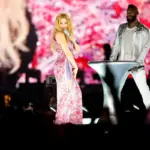







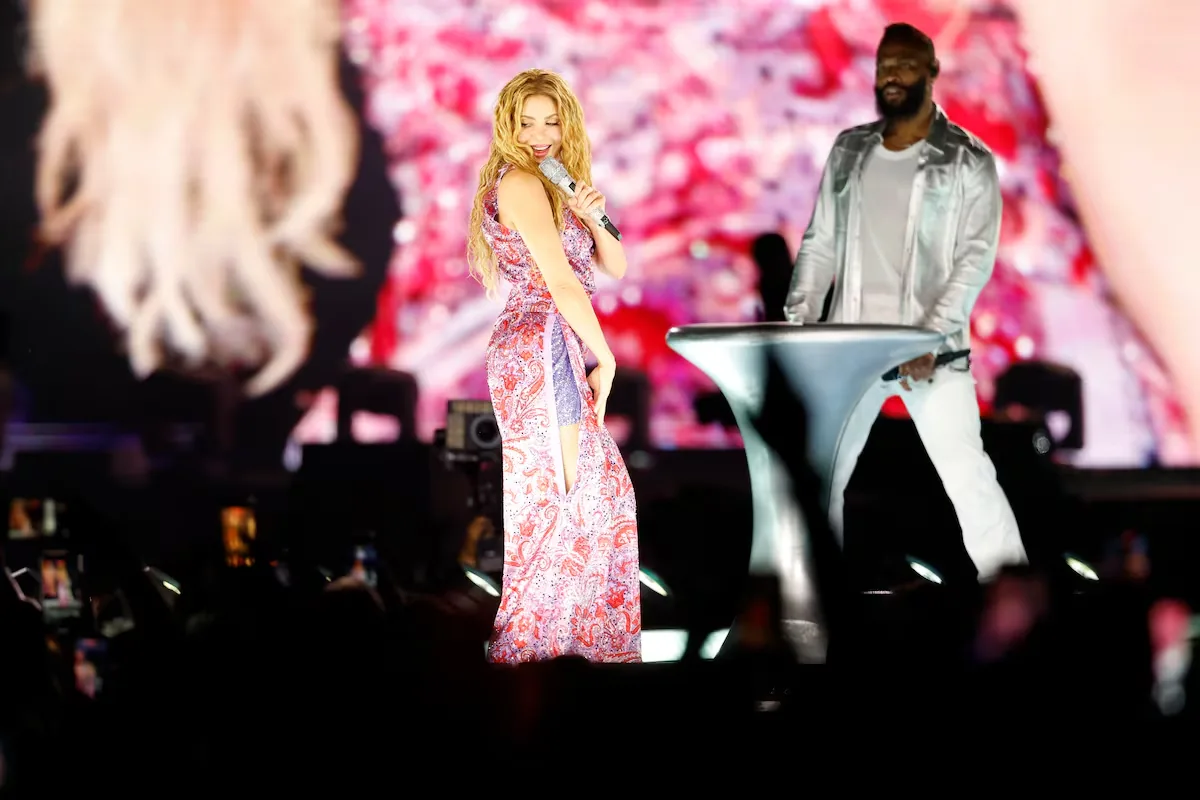
Are those bills flying over the stage? Shakira just sang, or rather shouted, the tour’s motto: “Women no longer cry, women cash in!”. She and 55,000 voices drive the last song of the night, that track the Colombian signed with Argentine producer Bizarrap and that everyone knows as Pa’ tipos como tú. Cannons placed on the sides spit out money, which rains over the stage and the front rows. The Colombian grabs a bill and shows it to the camera. She smiles. The concert rushes its final moments with this image. The money, obviously, is fake. The Macondo of the Colombian artist also breathes some magical realism.
Shakira fulfilled the first of the 12 nights scheduled for her Madrid residency at the Iberdrola Music Space, in Villaverde (south of the capital), in a complex built for the occasion that the star calls Macondo Park, a bold reference to the name of the place where the immortal One Hundred Years of Solitude by her fellow countryman Gabriel García Márquez takes place.
Two hours of visual sparks, a colossal physical outburst by the protagonist, about thirty songs to review her three and a half decades in music, and an audience dominated by women who gave themselves fully to enjoyment. It was a show to really enjoy, fun, colorful, and exciting for those who spent part of their adolescence singing Feet Bare, White Dreams and have reconnected with the outspoken and combative feminist discourse of the star’s latest compositions. In that sense, people left feeling they got their money’s worth for the 120 euros (average price) of the ticket.
But the Colombian could have offered something more. Such a display lacked a second layer. Beyond the machinery, the screens, the hits, and the colorful commotion, the concert barely ventured outside the predictable codes of the big stadium spectacle. It would have benefited from some risk, transgression, an idea capable of breaking the mold and turning the colossal production into more than just a flawless succession of songs. The protagonist faced the most significant event of her career, a moment that might not be repeated. That step—the one that transforms a massive concert into a lasting artistic event in memory—was taken by Bad Bunny at the Metropolitano or Karol G at the Bernabéu, to name Latin artists who also faced similar challenges in the capital and left an indelible memory.
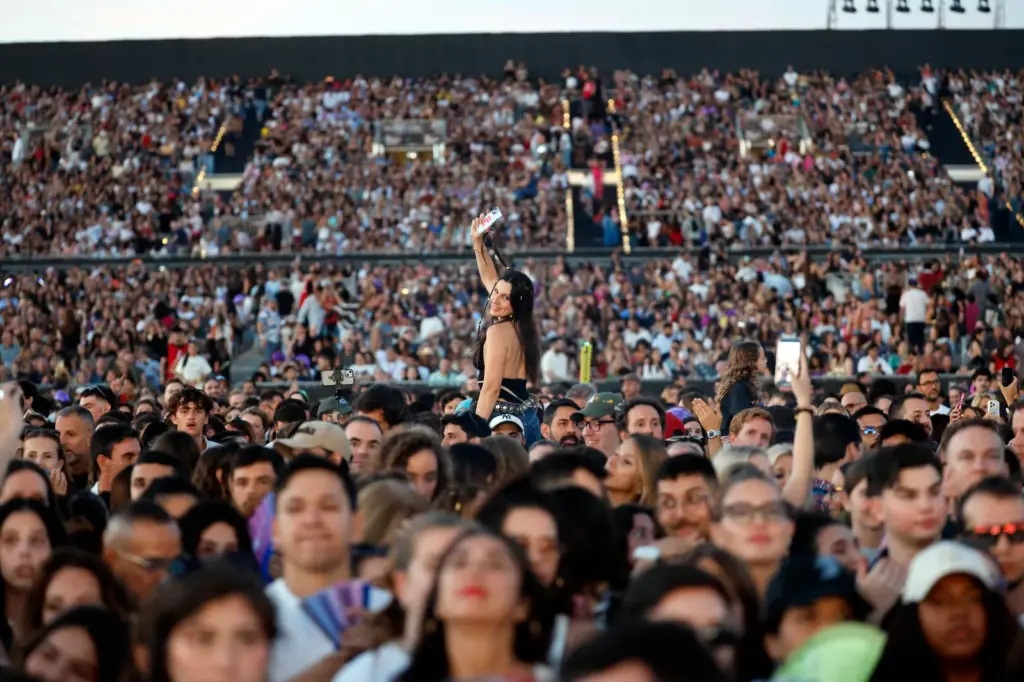
The atmosphere couldn’t have been better at the Shakira Stadium, an amphitheater erected on the grounds where the Mad Cool festival is held. The stands do not rise vertically, as in football fields, so some sections of the audience saw it quite far. But it didn’t matter, because people came with the party spirit in their bodies. There were girls (and some boys) wearing purple wigs like those in the video Las de la intuición, some friends had put on furry wolf ear headbands in honor of Loba, many Colombian flags…
A T-shaped stage, with a huge screen and a catwalk that the star used almost constantly, welcomed the 55,000 spectators, half of them seated (a figure of speech, since they were almost always standing) in the stands.
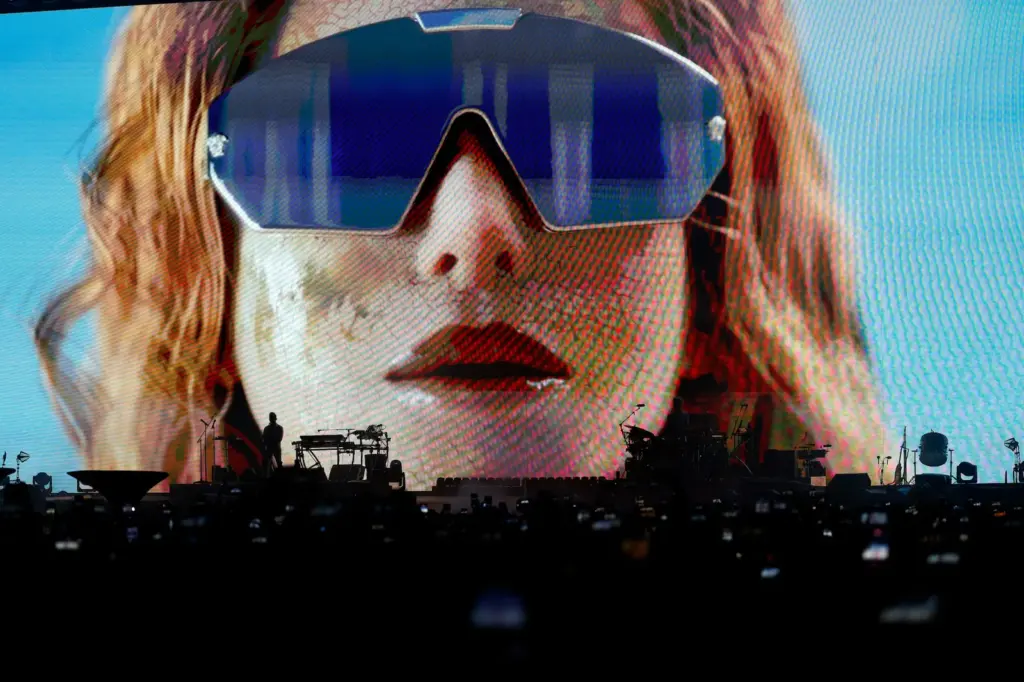
At 8:45 p.m., Shakira, accompanied by dancers and children, advanced through an aisle opened among the audience while a percussive instrumentation played. She was dressed in a shiny pink outfit, jacket and pants, and glasses of the same tone. When she climbed the stage by some stairs, the music stopped. The singer remained still for a few seconds in a staging that recalled the start of Bad Bunny’s tour concerts. She took off her glasses and threw them to the spectators. Then her song La fuerte began to play, with robotic movements by the protagonist.
She was witty with her first comment: “People tell me: ‘Shakira, with the face you left with and the face you came back with’.” She was referring, of course, to her painful breakup with Gerard Piqué and her problems with the Spanish tax authorities. Time heals almost everything and she was euphoric.
From here, she composed a recital for the delight of all audiences, from children to some sixty-year-olds who also wanted to live the experience. At 49, the Barranquilla native is at a moment of popularity that few might have bet she would achieve after seven years without releasing a new album. But Women No Longer Cry arrived and the world remembered her again, that artist who had sold 95 million records, who achieved the record for the most Latin Grammy Awards won by a female artist, and who co-starred in the most impactful halftime show (until this year’s Bad Bunny) of the Super Bowl alongside Jennifer Lopez.
Read more Trump announces an agreement with Denmark to assume “permanent control of the security” of Greenland
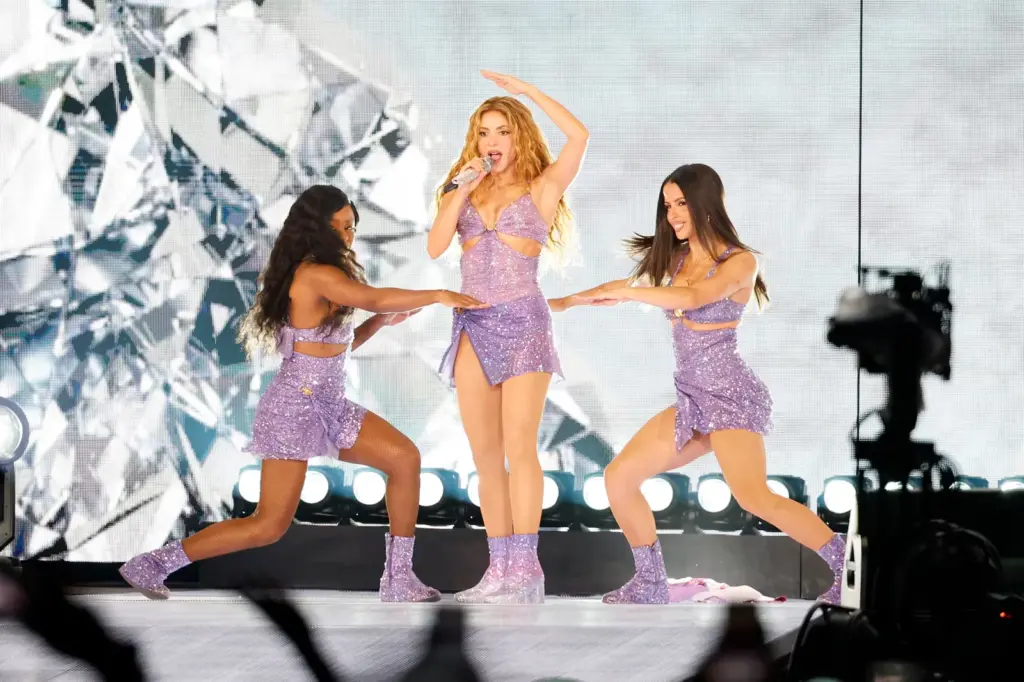
She arrived in Madrid with those mammoth setups where you have to overcome your reservations and perform an act of faith to trust that the instruments are really played by the guys on stage, as well as that the pre-recorded vocal supports are not too many. In the second song, Girl Like Me, the star had already changed her outfit (this time a fuchsia/intense pink, short and very shiny dress), a constant throughout the night. These forced interludes to renew the wardrobe, although spiced with videos, interrupted the rhythm of the show more than once.
There is a certain comedy in Shakira’s style that is accentuated in these massive convocations, already caricatured: her nasal tone that breaks abruptly on some syllables, the expressive quirks (that “auuuuu” in Loba, which the venue howled wildly) or some verses like: “I’m addictive like sugar,” which don’t seem likely to go down in the history of pop poetry, something, by the way, neither she nor her followers aspire to.
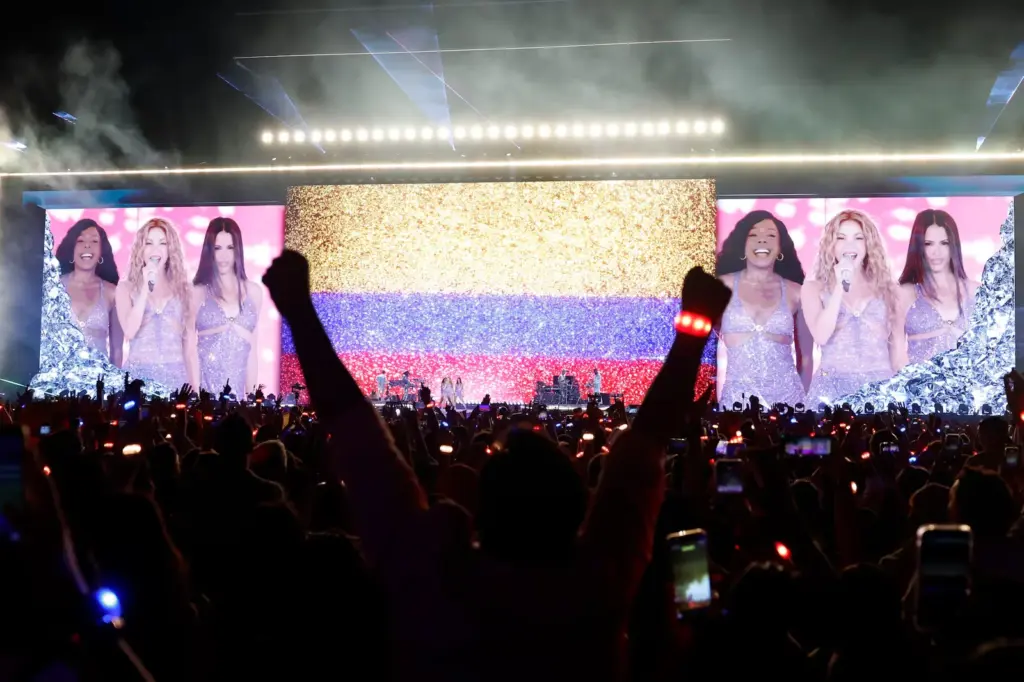
That Shakira who sang in the nineties for young people with mixed feelings now warns mature women that infidelities are not forgiven. In the stands and on the floor of the venue, an atmosphere of unity was breathed, the one the Colombian demands for women: “Alone, maybe we can be hurt, but together we are invincible.” The scene in the audience was beautiful: mothers hugging their daughters, friends singing to each other, girls with blonde wigs…
With contagious enthusiasm, Shakira changed character during the night with astonishing naturalness: the rocker from Can’t Remember to Forget You (where she played the drums), the reggaeton artist from Te felicito; the pop singer from Don’t Bother (where she dared to perform a guitar solo, albeit a simple one); the Caribbean from La tortura, the balladeer from Acróstico… In this last song, her children Milan and Sasha appeared on the screens to sing, as in the studio version. Well, a mother’s love can overcome everything, even this somewhat embarrassing musical moment.
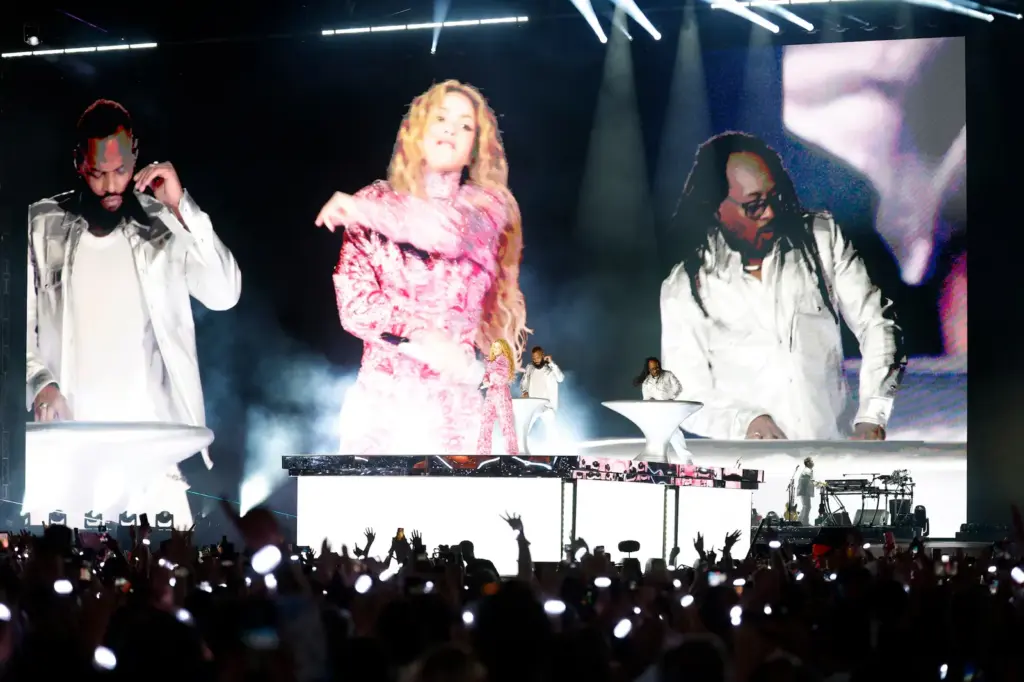
With quite good sound, the star’s dance exhibition overwhelms. Shakira showed a pre-Olympic fitness level: she perreó, danced salsa, performed dozens of choreographies with her dance troupe, executed African dances, and sprinted demandingly along the catwalk. She danced so much that sometimes her voice didn’t find the microphone and didn’t come through fresh. That, or her voice was not having its best night.
In Chantaje she went backstage and it was seen on the video screens how they smoothed her untamed curly hair and dressed her while she sang, a moment that intended naturalness but achieved the opposite. “Love for another is very beautiful, but love for oneself is more beautiful,” she said before performing Soltera.
The last stretch was focused on saying goodbye on a high note: Te dejo Madrid, which she added to the repertoire as a nod to the capital; Suerte (Whenever Wherever); her two World Cup songs (Dai Dai, where she said: “Spain world champion,” and Waka Waka) and the final revelry with Loba (you know: auuuuu) and BZRP Music Sessions #53 (Pa’ tipos como tú), which she sang with four muscular dancers, perhaps wanting to send a message to her ex-partner. People left happy; some, the privileged who manage to sway their hips with art, stayed for the carnival show of the Barranquilla Dance School. Only 11 concerts remain.
Read more The migrants who were left without a place in the Port of Ceuta: «The law of the strongest has won»