







“I have to travel light, this stays here,” said Ali, from Iraq, as he left a supermarket bag with the belongings he had accumulated in these almost 50 days on the beach of El Trampolín this Friday. It was not yet six in the morning and he, like several hundred other migrants, was waiting to be transferred to the reception center at the Port of Ceuta. No sign of sleep, only hope. “I know they delayed it for something political, but I have been ready all these nights; it has to be today,” he said. No one had informed them officially, but the incessant rumor made a crowd of men wait impatiently before the operation was deployed, when no officer appeared in the dead of night.
Read more Delcy Rodríguez will meet with Trump in New York in an unprecedented gesture of rapprochement
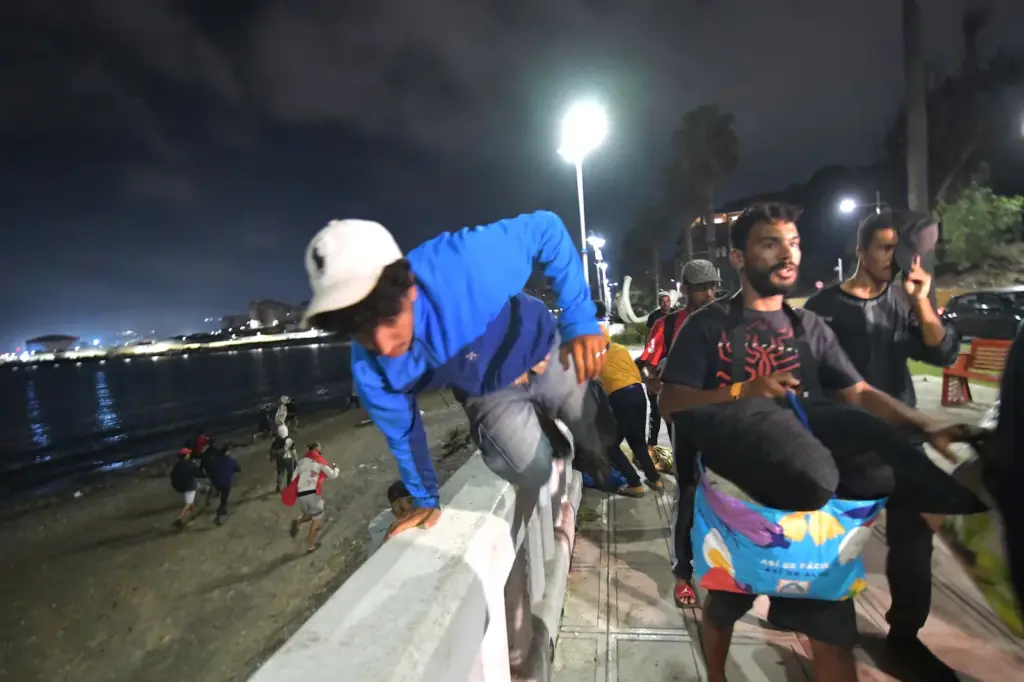
They knew little, but the essential: not everyone would fit. So around six-thirty, the migrants sleeping on the beaches of Benítez and El Trampolín gathered on the promenade, forming an increasingly compact mass of people struggling not to be left behind. For an hour more and more joined, moving by pure inertia and something else: the new facility was a kilometer in that direction. A few Civil Guard patrols tried to contain them, without success. “I have to get in, please,” shouted Ayman, leaning on two uneven crutches. And before seven o’clock or any police unit appeared, a stampede broke out on the promenade, with migrants trying to make their way, running in panic. Traffic had not yet been cut off, and several vehicles were trapped in the stampede.
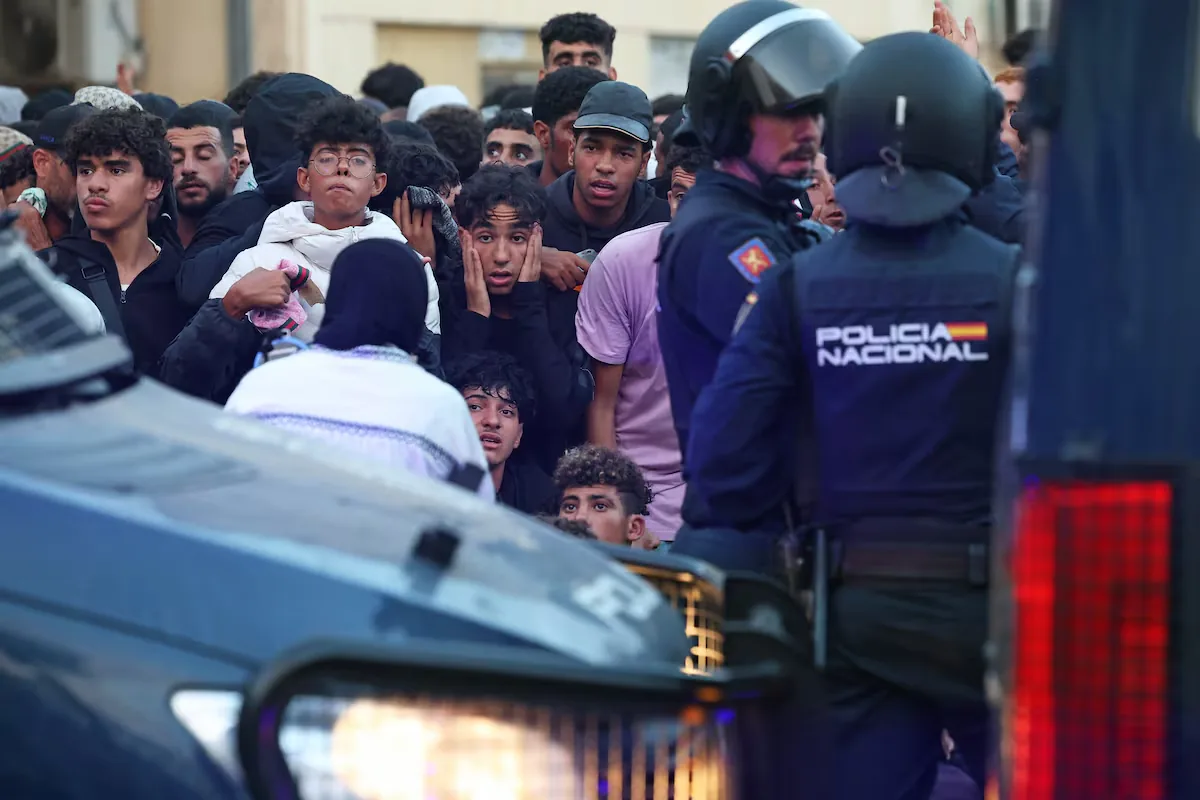
The Police Intervention Units arrived in the area amid the wave and tense scenes were experienced trying to control them. After extending the cordon, they chose not to start the operation at the initial point and organized the migrants from there. Behind them, a trail of shoes and sandals already carpeted the road, remnants of the stampede.
“Calm down, we are going to organize you into groups from here,” shouted one of the transfer officials through the megaphone, in Dariya. The migrants crowded around the police vehicles, close to being crushed, until shots fired into the air broke what was left of the night. Several were injured, although none seriously. After that, a slow pace was imposed, and the officers separated them two hundred at a time and sat them on the ground, divided by about fifty meters. Oussama, Ayoub, and Mohamed hugged in the third group, surrounded by blankets. “We are going in!” they celebrated, counting how many people were ahead. “I am very happy, I have big dreams,” said Oussama. In the group behind, the head of one of the entities coordinating the new camp located two twins, minors. “You cannot go, this is for adults,” she said. And she removed them from the line. In the group behind, someone raised a huge pole with a tiny Spanish flag.
The return to the beach
As soon as they spotted the huge white tents, the migrants burst into applause. After several hours of a sometimes chaotic transfer, the first entered the temporary reception center facilities, still surrounded by cranes and excavators. In the coming days, another additional tent is expected to be completed, but for now, the annexes were occupied. In total, just over 1,700 places. Many asked if there were blankets inside or if they had to keep the ones they brought, and a mountain of warm clothing was growing outside while the bunks filled up. Proverbially, a sign thrown on the ground said in Spanish, French, and Arabic: “Full.” It was placed on the doors around 11 in the morning.
At that time, the Benítez and El Trampolín beaches showed the same image as the past 49 days, but soaked in despair. Under a relentless sun, thousands of migrants sensed that their chance had passed, and they would not sleep in the center that night. No one told them, but when the rows of people returning along the promenade appeared, they knew.
“I fell asleep; when I woke up, they were already far ahead, I didn’t know it would start so soon,” lamented Brahim. Next to him, Zakaria tried to understand what had happened: “So, those of us who didn’t get in, are they sending us back to Morocco?” he asked. Abderrahman rested on the beach steps, rubbing his leg. “I couldn’t run fast enough, I was among the first, but I don’t run that much. I stayed behind and the law of the strongest won,” he said.
Next to him, leaning on the railing facing the sea, about ten minors watched the return to the shacks: “They caught us, we were going to sneak in, but they saw we weren’t old enough,” said a boy about 14 years old. “And how long do we have to wait now? Because when we go to the police station they keep telling us there’s no room in the minors’ places; I’m tired of sleeping on the street,” he asked whoever had answers.
And, at the far end of the beach, in Trampolín, Jalid brooded over his regret. He had decided to enter the Port camp and stayed awake all night to prepare. He took down his tent, threw away the cardboard, and gave away a metal chair where he spent the hours. He knew he was not eligible for asylum and that the move to the reception center would likely mean probable expulsion to Morocco once everyone was identified. “But I needed a shower, a bed, after so long. So I decided to enter and think about what to do once there. Maybe it would take time to kick us out, and I could find another way, get on a boat to the peninsula,” he says. But everything changed at 6:57, the time he received a voice message from another migrant who had advanced in the stampede. He plays it aloud: “Don’t come, they are going to expel us all to Morocco as soon as we enter,” he said, agitated. Jalid heard it and left the line. Now he welcomes those left outside and shares their discouragement. “It’s hard to know what is true and what isn’t. I will keep waiting,” he anticipates.
Read more Jan Martínez Ahrens: “Journalism can only thrive in democratic conditions”