





Literary careers experience figures that rise and fall, shooting stars that shine momentarily in an evanescent sky, and stars that can accumulate enormous quality over time, but few readers. The rare thing is to find a writer like Rosa Montero, who has combined enormous and sustained success with a growing, versatile, changing path, capable of trying multiple registers and always capturing the biorhythms of her time, with even more merit when that time already spans many decades of life. Her literature has accompanied several generations from many countries since she published her first novel 47 years ago.
Listing all the awards she has received worldwide throughout her life would overflow this space and we will not bore you. The sample from the last year suffices, a good thermometer of all facets of this writer and journalist: Francisco Cerecedo Journalism Award; Celsius Award for the best science fiction novel; Liber Award for the most outstanding Hispanic American author; 2026 Medal from Universitat Jaume I; or Giovanni Boccaccio Award in Italy, which add to previous prestigious recognitions such as the National Literature Award in Spain in 2017 or the Officer of Arts and Letters 2024 in France.
As said: we would fill several pages. Therefore, we will focus on her, an intelligent and electric woman, a book devourer endowed with scientific, historical, social, and psychological curiosity that she has reflected in almost 40 titles of fiction narrative, non-fiction, science fiction, noir genre, journalism, children’s and youth literature, short stories, in her articles, and even in opera librettos such as The Day Before, inspired by the Iliad, which premiered in May in Vienna on the 75th anniversary of the city’s festival. Book by book, intervention by intervention, the writer born in Madrid in 1951, translated into nearly 30 languages, has become a phenomenon also in Latin America, where queues stretch to get her signature at any festival where she is, and a sought-after presence in numerous forums worldwide. She has just published A Day in the Life of Clarita (Alfaguara), a rarity in her career, as she herself defines it, and an excuse as good as any to stop and analyze her figure.
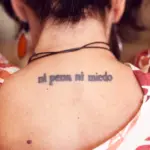
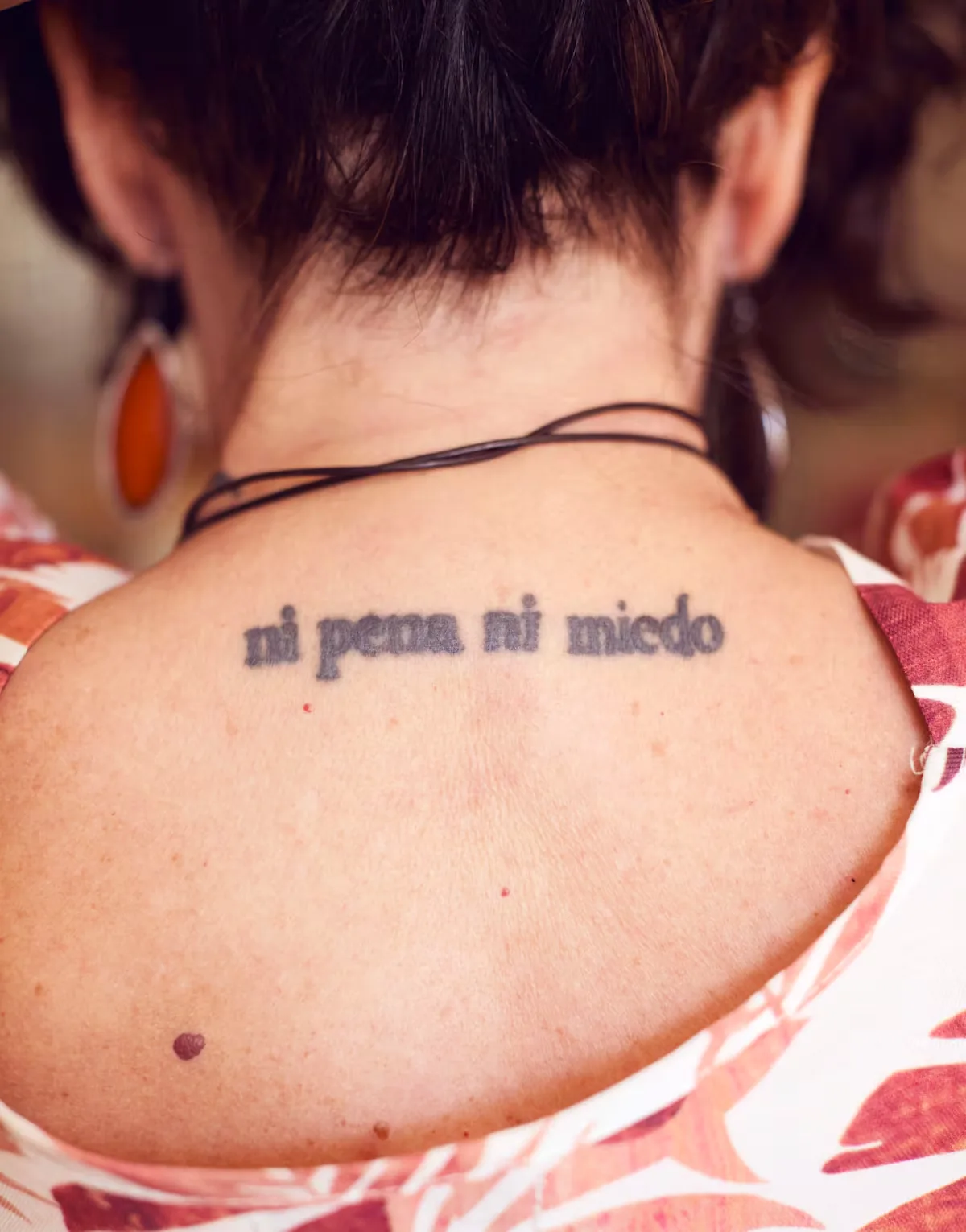
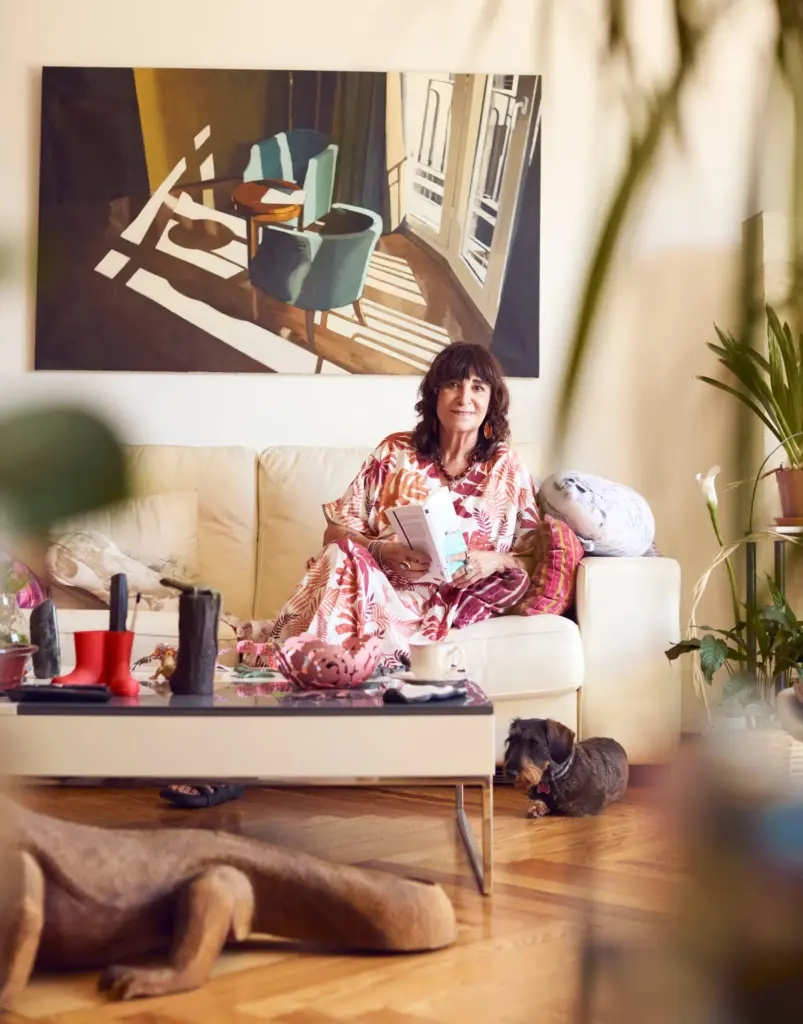
“For me, writing is something organic, natural, it is my way of giving content to my life. I have always remembered myself writing because, paraphrasing Monterroso, when I woke up literature was there,” she says at her home near Retiro, a temple where her world, obsessions, memories, books, and a string of carefully chosen notebooks among the most beautiful to take notes, with a pen, of all her projects are condensed. Here is Petra, her beloved dog, who often accompanies her, like the endless salamanders that decorate her space. She also shows us the motto tattooed on her nape: neither sorrow nor fear, a phrase that Chilean poet Raúl Zurita inscribed in the Atacama Desert in a land artwork over three kilometers long and that she immediately identified as her most intimate ambition as she grows older. “It is a wonderful motto for aging.”

Montero, trained as a journalist and psychologist, with a successful career at EL PAÍS and previously at Fotogramas and Pueblo, signed her first novel in 1979, Chronicle of Lovelessness, a title she disavowed for a long time. Her ambition has been evolution, experimentation, and the discovery of new registers. “Isaiah Berlin said there are two types of writers, somewhat independent of their quality: hedgehog writers who curl up on themselves and always write the same novel, like Marcel Proust or Javier Marías; and fox writers who walk the steppe looking for new horizons. I am a total fox, I always try to find a new way to tell my obsessions,” she assures. “We all write about the same themes, but I try in each book to shed some light on my anxieties, to see how I can approach those dark, unsettling, and exciting themes in a new way, more beautiful, more original, more accurate, and deeper. Always trying.”
This is how she has traveled paths of contemporaneity for decades, but also of historical complexity (History of the Transparent King), science fiction (the Bruna Husky collection), or what she calls her three “literary artifacts,” which have undoubtedly provided her a more intimate connection with her readers. We talk about The Madwoman in the House, her first foray into autobiography to address truth and fantasy, The Ridiculous Idea of Not Seeing You Again (Seix Barral), in which she explores her own mourning for the death of her husband, Pablo Lizcano, based on diaries and Madame Curie’s pain over the death of hers, and The Danger of Being Sane, whose English translation The New York Times has just highlighted as “brilliant and moving.”
“The three are a very rare mix, with some autofiction, very unconventional biographies of other people, very unreliable autobiography, very unconventional essay, and fiction,” she says to define her “artifacts.” With a warning for the most devoted: among her beautiful notebooks where she records her projects, there is another one in progress.
There are several definitions of the Montero formula and she herself will give us hers shortly. Let’s see some. Her distinctive feature is “her ability to always go further, her audacity,” says Marta Pérez-Carbonell, a great connoisseur of her work and coordinator of a monograph recently dedicated to her by the cultural magazine Turia. “She reminds us why fictions are part of life and her immense capacity to expand it. Only when finishing her books do we realize she was whispering great truths about what it means to be human.” Carme Riera, academic, writer, and also a reader of Montero, defines her as “a prodigious woman, a kind of fairy who writes wonderfully.” “She has the ability to observe the world with intelligent and amazed sharpness and translate it into writings full of life that manage to move us,” assures Ana Santos, former director of the National Library.
Miguel Santamarina, editor and cultural journalist at Zenda and a connoisseur of her work, believes her literature “is born from the observation of a life that, like Pessoa’s, is not enough, it slips through her hands and transforms into a fiction where the real blurs into the imaginary in a trembling way.” Always marked by “her obsession with the passage of time and the need to make the most of it.” In that sense, Miguel Munárriz precisely titled the chapter he dedicates to her in Determined to Be Happy (Aguilar), a sentimental chronicle of literature in recent decades: ‘Rosa Montero or the Full Life.’ And that is perhaps the best definition. Munárriz describes that vital and enthusiastic character that marks her life, her literature, her causes, and her dealings with friends. “She is a fundamental figure in Spanish literature and culture, as a writer, feminist, activist. The cultural world today would be much less without her, much worse,” he assures. And he highlights a great piece of advice the author recorded in Write with Rosa Montero: “The novel is a long-distance race and tenacity is more important than talent.” Amen.
Because that long distance is what drives an evolution that, as Montero explains, involves a double path apparently contradictory, but true: on the one hand, you have to die as an author, erase the conscious self and become a kind of medium so that the story passes through you. “Losing control is extremely difficult and you resist, but I have advanced a lot in that, in erasing myself and letting those intimate monsters flow. The lower you go from yourself, the more you are in the universal, the more you are a spokesperson for your time,” she assures. But, on the other hand, there is craftsmanship, the physical, the formal. “And while you lose control of the imaginary, the creative, the substantial, you must have more and more conscious control of the material, refining it more.” Therefore, she assures while pointing to her head, “here the novels are wonderful, a cosmic thing with lights, colors, and music of the planets, but then you have to make it real. When I did it 47 years ago, what came out was very different from what was up here, and now what comes out is very similar.”
That is where that little fox that searches the steppe sniffs from the unconscious, advances, and decides by instinct. “Picasso said that if before painting a picture you already know what you are going to do, why paint it. I have the same feeling.” It happened to her with that first novel, Chronicle of Lovelessness, which she confesses she never liked. “The second disappointed my editor because the market appreciates repetition, but I get extremely bored doing what you know.” She has gone through blocks, creative slumps, and has thrown more than one project in the trash after years of work.

And the turning point in her career that opened the most markets is another one she does not particularly like because it was more conventional, The Cannibal’s Daughter, which sold a million copies. “Each one adds registers and readers, some for some things and others for others.” Long-distance career. “Sometimes you go up, sometimes you go down. What seems amazing to me is that so many years have passed, that I keep writing, that I keep getting so excited about writing, and that they keep reading me. All three things.”
And what is the Montero formula according to Montero? She assures she realized it a few years ago: “There is always a protagonist in a calamitous situation, a misanthrope who hates himself, who drags guilt and begins a kind of ordeal that he manages to pass to end up in a better situation. There is redemption, he learns to love himself a little, and there is a para-family of monsters that the novel shows to be better than the power characters.” That is Clarita. The protagonist of her new novel is a woman who has not broken a plate, who wants to be invisible and who, on her retirement day, faces a challenge and decides to react. A Day in the Life of Clarita, which she describes as a rarity that came her way, is fundamentally a novel about the meanest of power. “It talks about power exercised through humiliation and how one can respond without becoming a monster.”
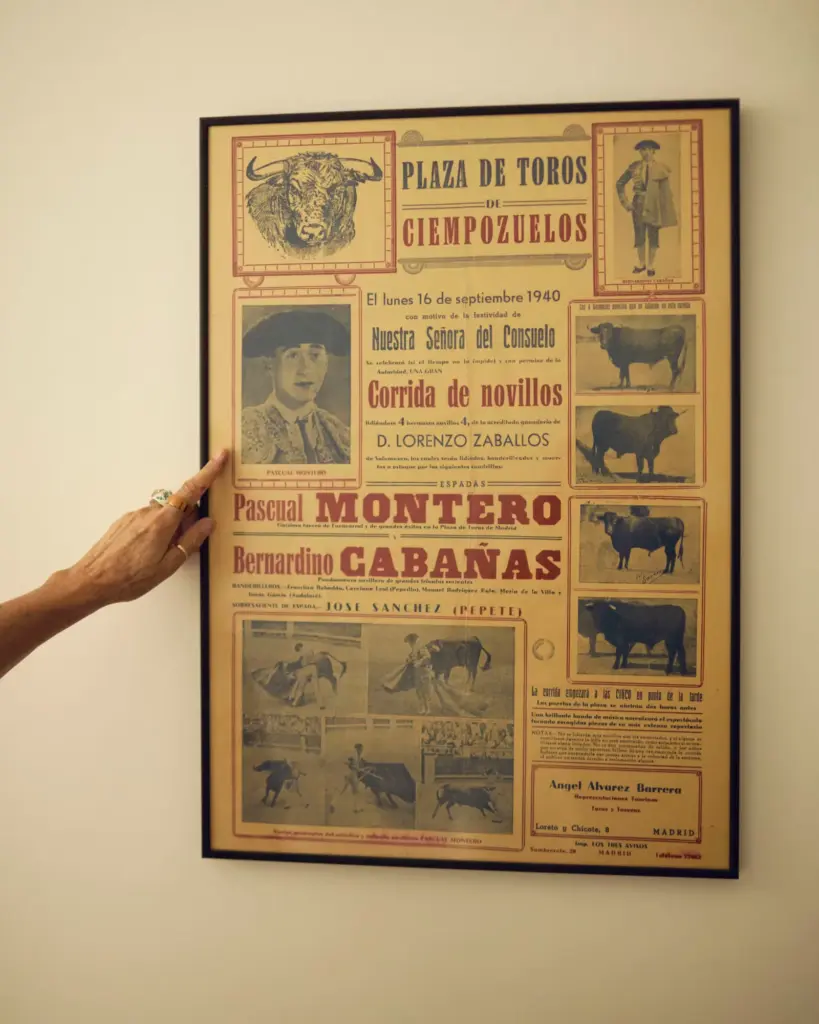
We pause the conversation. Montero makes us coffee, serves us water, turns on the air conditioning on this hot morning just back from her vacation in Portugal, where she has not stopped reading and where she sketches the projects that cross her mind. Here, in this bright space full of books, salamanders, and memories, including a poster of a bullfight of her father, who was a bullfighter, she does her daily exercise, a routine that keeps her, above all, mentally fit. She is obsessed with death, the passage of time, loss, but also the causes that have found in her a constant defender, from animal rights to feminism, the human perspective on problems, scientific advances, and lately, the danger of AI, which she has been warning about long before the tech oligarchs in the US.
—Will artificial intelligence kill the novel?
—It’s going to kill us, which is much worse! I don’t give a damn about the novel. There are many risks of a brutal change for the worse, who knows to what extent. It’s a complicated moment.
But while that apocalypse arrives, she keeps working. Han Kang told me in Barcelona that she always has clear her next three novels. And that when she is finishing one, she has already thought of another, so there are always three. And Rosa? “The last six months of writing are usually very creative and that’s when the next one comes to me, I fall in love with it and I want to finish quickly to go to the other, like a love relationship,” she recounts. “With age everything gets complicated, you have little time left and you have to choose. Now I had a novel project that has been dying, I don’t think it will come out. I have the idea of a fantasy genre trilogy. And a literary artifact that will be the last and warms my heart, but I’m not going to tell you the theme (laughs).”
Does she count her awards? Montero downplays them and recalls something Cela said: if you resist, they end up rewarding you. “He was right about that. It’s a matter of age.” And that age leads her to remember Socrates, who spent the last night of his life learning to play a very complicated melody on a flute. “His followers urged him: Why are you wasting time when you are going to die at dawn? And he said: ‘To die knowing it.’” Word of Rosa Montero.
Read more Shakira spreads joy in Madrid in a fun concert that lacked depth
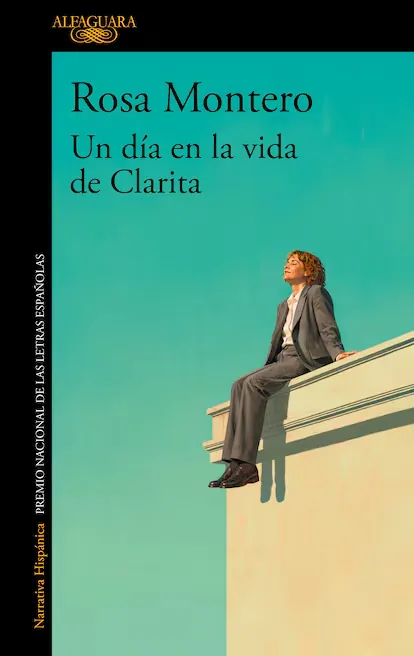
A Day in the Life of Clarita
Alfaguara, 2026
144 pages. 19.90 euros