

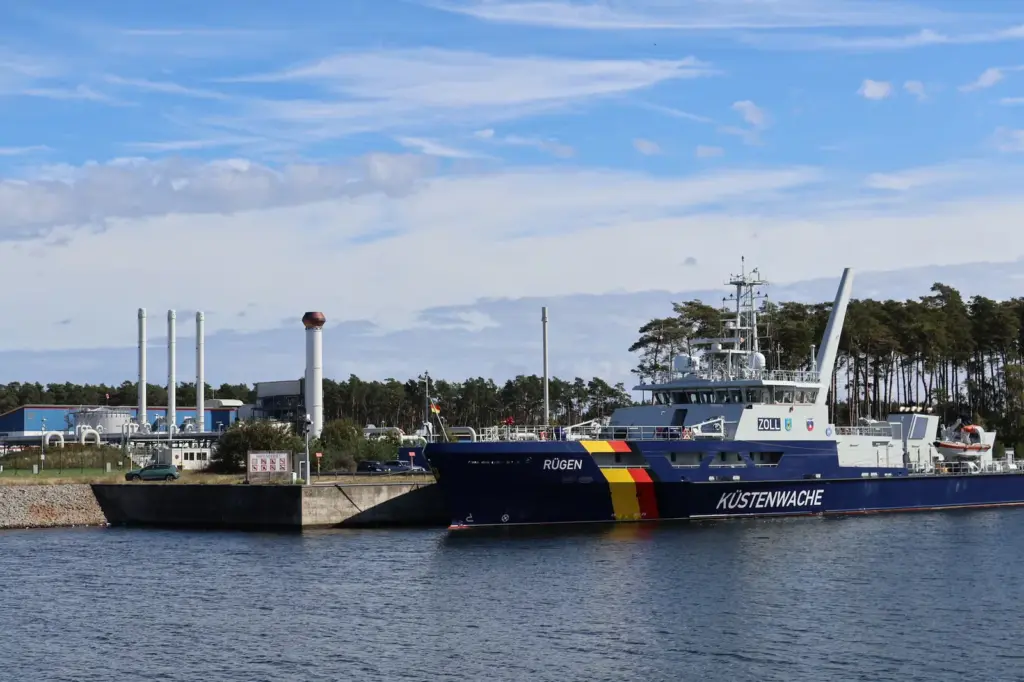
There are moments in contemporary German history when its government has made particularly unpopular decisions in favor of a higher cause. At the Lubmin yacht club, it is clear that the war in Ukraine is one of those moments. On one side, recreational boats are moored, and on the other, the reception and processing facilities of the Nord Stream I gas pipeline rise. Nord Stream I and II cross the Baltic Sea from Russia to this small German coastal town in the state of Mecklenburg-Western Pomerania. The gas that supplied German industry and homes stopped flowing in 2022, when Western sanctions against the Kremlin began to be applied. On September 16, the sun was shining and locals and tourists were strolling around. All those interviewed, about ten, spoke in favor of restoring Russian hydrocarbons.
Read more The great fortunes save 3 billion in wealth tax thanks to the IRPF shield
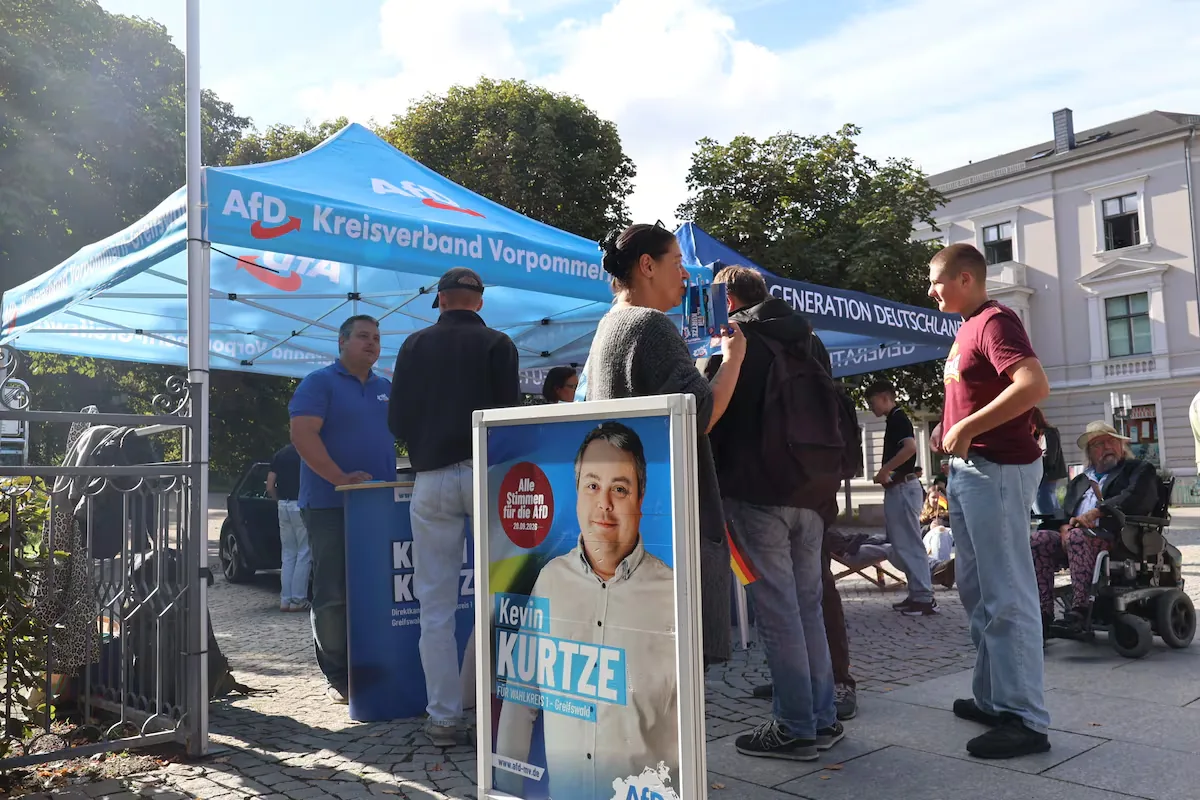
Dieter Emmelman was enjoying a midday aperitif on his 10-meter yacht. His wife and a friend were with him. “Here we support Russia!” his wife shouted from the cabin so the journalist could hear her. “Everyone would want to restore Russian gas in East Germany, and that is decisive for deciding your vote,” says Emmelman, a retired railway driver. His residence is located between Lubmin and his hometown in Saxony-Anhalt. In this land, the far-right AfD swept the regional elections on September 6 with almost 44% of the vote in favor. This Sunday there are elections in Mecklenburg-Western Pomerania, and polls indicate that AfD could win with nearly 40% of the votes.
In Lubmin, 44% of its 2,300 citizens voted for AfD in the 2025 federal elections. “Life has become more expensive throughout Germany due to losing access to affordable energy, but in this region, many jobs linked to Nord Stream have also been lost; it is normal for AfD to sweep,” says Andreas Blumenthal, a bricklayer in Lubmin. The far-right party, along with the nationalist left BSW, is the only one proposing to lift sanctions against Russia. AfD and BSW are negotiating to form a government in Saxony-Anhalt, the first in which the far right would come to power in Germany since Nazism.
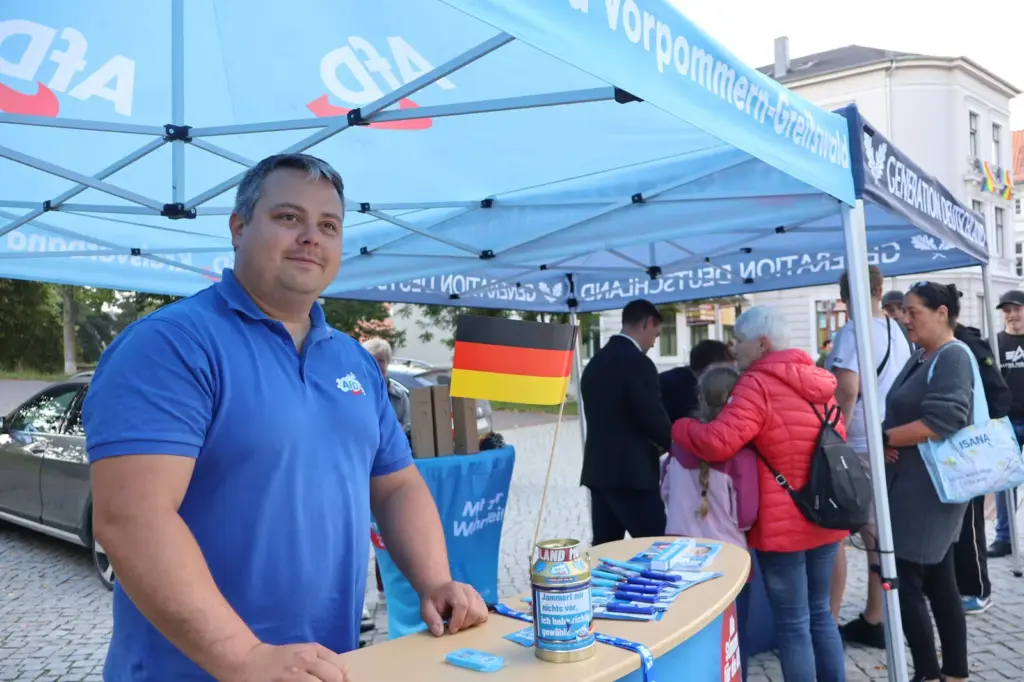
Axel Vogt, mayor of Lubmin, has preferred not to speak to EL PAÍS, according to a local official. Vogt is from the CDU, and in Mecklenburg-Western Pomerania, the Christian Democrats could suffer an unprecedented collapse: polls give them between 5% and 7% of the votes. “For CDU politicians in this land, a difficult situation arises because they are also against stopping the purchase of Russian gas, but Berlin is in charge.” These are the words to this newspaper from Hannes Gnauck, AfD deputy in the Bundestag, during an electoral event in Greifswald, the capital of the district where Lubmin is located. Gnauck was a soldier between 2014 and 2021 until he was disciplined by the German Army as an “extremist” with positions “contrary to the constitutional order.”
“It is a central issue in these elections: energy security, job losses due to sanctions, and the historical issue; in the East, we have a strong bond with Russia,” summarizes Gnauck, adding: “The sanctions are doing more harm to Germans than to Russians.”
“In the West, they have always been anti-Russian, but Russia is not an aggressor, it is not our enemy,” continues Emmelman from the side of his boat. “I was an engineer in the GDR (the former German Democratic Republic) and after reunification, and I have done well. But if in the GDR there was price and life stability, since reunification prices have skyrocketed at least tenfold. It is normal for people to vote for AfD.”
Mecklenburg-Western Pomerania is an exception because the SPD has high chances of renewing the government. Polls show a possible tie between AfD and the Social Democrats. The key to their success is the president of the land, Manuela Schwesig. “She is popular because she conveys that she is from here and different from her party’s leadership, although she is not the one making decisions,” says Gnauck.
One of the reasons Schwesig has this appeal is because she is not belligerent toward Russia. She was one of the main promoters of Nord Stream II despite the Kremlin having already invaded the Ukrainian Crimean peninsula in 2014 and supported the armed uprising in Donbas. Schwesig has criticized the Kremlin for the war, but her strategy is to avoid the Russian issue, and this is well regarded even throughout the country.
Read more Now, everyone wants to regulate (AI)
Ralf and Vivian are father and daughter. They are from Hamburg, in West Germany, a city of the former Hanseatic League, like Greifswald and Lubmin. He is an engineer, 63 years old, and votes for the SPD: “Russia is part of Europe and at some point our relationship must return, not while the war in Ukraine lasts, but it is a mistake to do without their energy.
Ralf, like Emmelman, believes that the invasion of Ukraine is a reaction by Russia to a threat from the United States. “Russia has a different mentality, we cannot change that, so at some point we will have to understand each other again, but without depending on them,” says Vivian, 21 years old.
Green-CDU Understanding
The Greens and the Christian Democrats of the CDU have the most forceful position against Russia in Mecklenburg-Western Pomerania. They also have the worst voting estimates in the polls: 5% for the Greens and 6% for the CDU, according to the latest available survey, from Thursday, published by the public television ZDF.
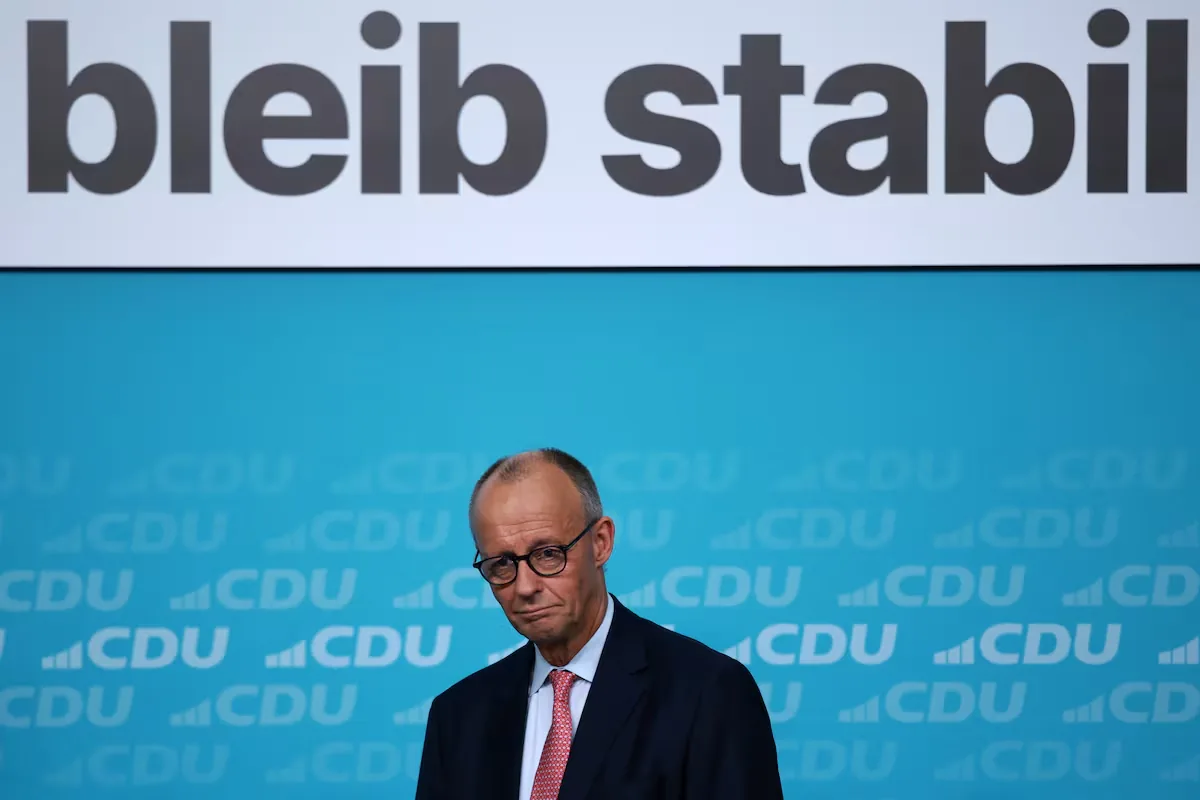
Chancellor Friedrich Merz said on Thursday that it was a mistake to depend on Russian gas because it is a source of instability. Rebecca Kreidemeier is 21 years old, a Green activist in Greifswald, and repeats the same idea as the Christian Democrat Merz: “Gas pollutes, renewable energies are cheaper than gas, and Russian gas makes us dependent on others; the rest are fake news.” “Buying Russian gas means financing their war machine and financing a dictatorship; I don’t understand why so many people accept it,” adds this medical student.
The cost of natural gas in Germany quadrupled in the first year of the invasion after the closure of Russian supply, but prices stabilized with the incorporation of new sources, especially imported liquefied gas. According to data published this September by the newspaper Handelsblatt, gas today has the highest cost in decades, three times above the previous record, the Iraq war in 2003. This is partly due to the consequences of the invasion of Ukraine but mainly due to the impact of the Middle East conflict between the United States and Iran.
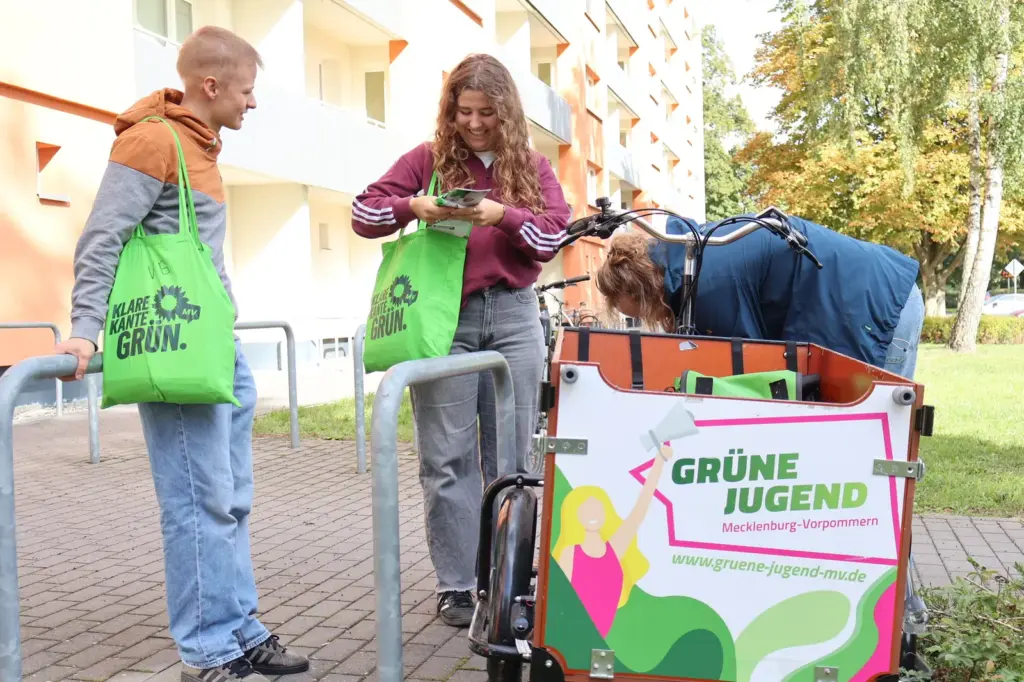
Kreidemeier went out on Thursday by bike with her companions Marga and Benni Moeck to distribute electoral propaganda. All three study at the University of Greifswald; none of them are from East Germany: Kreidemeier is from the Freiburg region in the south, a Green stronghold; Marga is from Düsseldorf, and Moeck from Berlin.
At one point on their route, they cross paths with members of Generation Germany, the youth wing of AfD. “Shit, the Nazis,” exclaims Moeck when he sees them. On Kreidemeier’s bike is a sticker with the slogan “Antifascist cyclist.” Their far-right rivals respond with timid boos, but both groups smile and continue on their way. The members of Generation Germany were the same age as their rivals, just over 18 years old; the difference, as this newspaper later confirmed, is that none of the AfD youth group came from the West, all were natives of the area, from Pomerania.
Read more El Roto: where two fit