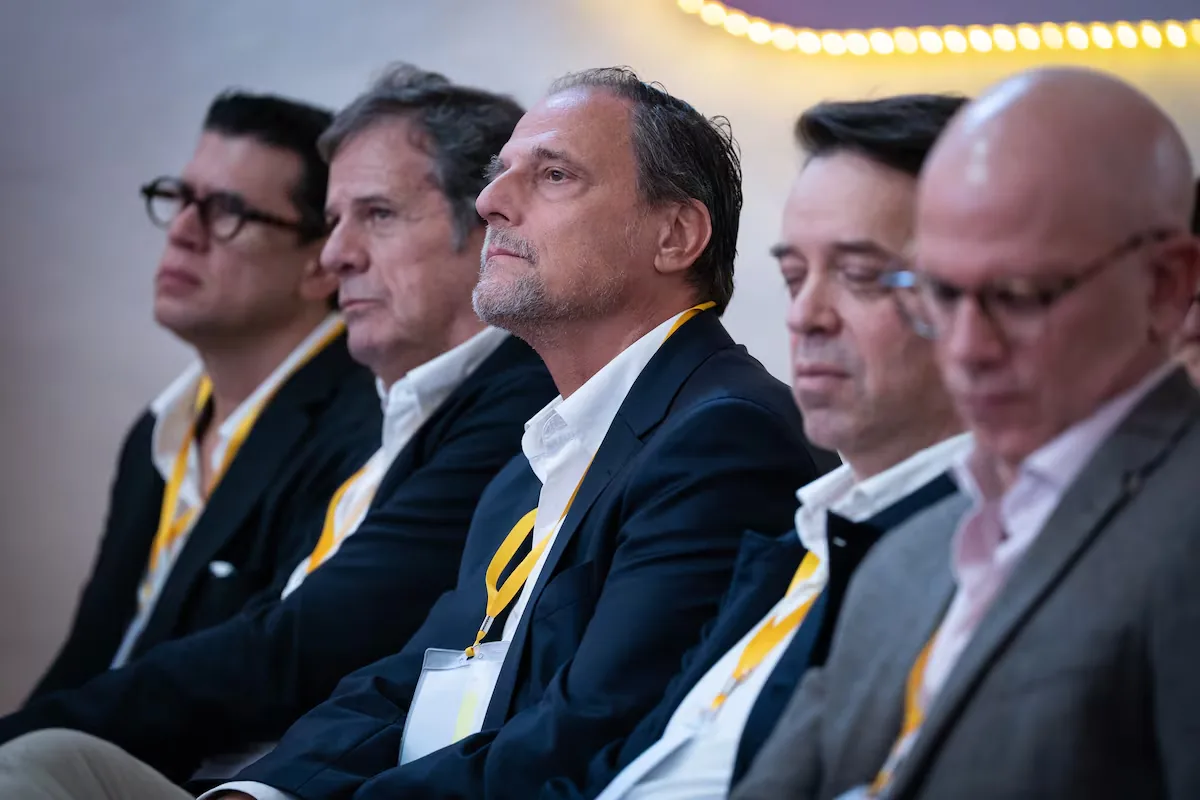



The heads of the three high courts of Colombia and the Attorney General of the Nation met this Saturday in a debate focused on the challenges of democracy, resulting in an assessment of the state of institutionalism after a highly polarized electoral process that put great pressure on the judicial system. This is one of the panels of the last day of the sixth edition of the Festival of Ideas, which was moderated by Alejandro Santos, content director of PRISA Media, the publishing company of EL PAÍS.
Read more Sevilla — Barcelona live, the La Liga match live
Paola Meneses, president of the Constitutional Court, began the conversation by stating that “democracy is stronger than we think on noisy days,” as she considered that there are rules and institutions that uphold the system that continue to function despite external pressures. Still, she added, it is also fragile because “no democracy stands alone.”
The magistrate acknowledged that the recent elections caused great distrust, which in turn has strained the Judiciary. “Does this weaken democracy?” she questioned. “It depends. Democracies rarely fall suddenly; they erode when tolerance for the other and institutional restraint are disregarded,” she responded. Furthermore, she assured that one of the greatest risks is when rulings are not complied with. “Anyone who dislikes a decision can debate and study it, but it must always be under legal channels.”

This is a position shared by Alberto Montaña, president of the Council of State, the highest court of administrative litigation. The body suffered several attacks from former president Gustavo Petro during his term, who questioned the decisions of this court that suspended and annulled decisions made by decree. Montaña has resumed this tension with the previous government, although without naming it. “Telling an Executive that they cannot make speeches, suspend a decree, or annul administrative decisions that sought to replace a supposed health reform, are some decisions with great weight,” he exemplified.
The Attorney General, Gregorio Eljach, has also lashed out, without naming him, against Petro. “I had never seen the way judicial institutions were attacked from the Presidency of the Republic,” he recalled and referred to the debate that centered the Festival of Ideas 2025: the challenges of the upcoming elections, and the need for all forces to recognize their results. “A year ago we were not here with the relative calm that accompanies us today; we were alert and about to lose hope in institutionalism,” he said. Eljach lamented that the former president did not recognize Abelardo de la Espriella’s victory.
Read more The Polytechnic University of Valencia inaugurates the first Spanish campus in China
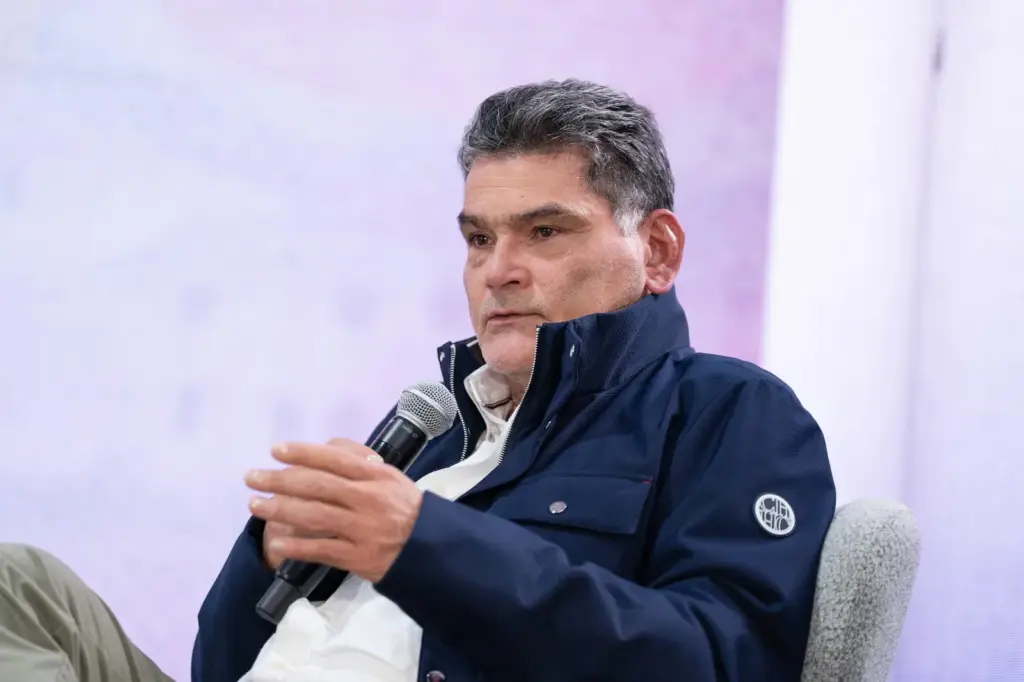
The president of the Supreme Court of Justice, Mauricio Lenis, resumed the conversation about the challenges for democracy. “There are tensions, but the country has shown that the democratic system holds. The important thing is that it can process them and not by force or abuse of power.” The magistrate celebrated that the elections were carried out freely and safely. Still, he admitted that there were great challenges. “Overwhelming misinformation affects social trust, but there were institutions that countered it, such as the Attorney General’s Office or the Registry Office.”
Lenis also referred to one of the great concerns of the public: delays in criminal proceedings, and the fact that many alleged criminals remain free. “It is a technical problem and the discussion is focused on the wrong issue. We have a liberal criminal system, with guarantees such as the presumption of innocence,” he emphasized before pointing out that he expects deprivation of liberty to be an exception. The magistrate admitted that currently “there are discourses saying that some rules should be changed,” but he pointed out that the main problem is the lack of resources, which translates into a lack of judges who can carry out the procedures.
The judges and the attorney general concluded that, despite democracy having gone through moments of great tension during the last year, the institutions have managed to maintain their independence. “Colombia stood firm for democracy,” concluded Attorney General Eljach.