








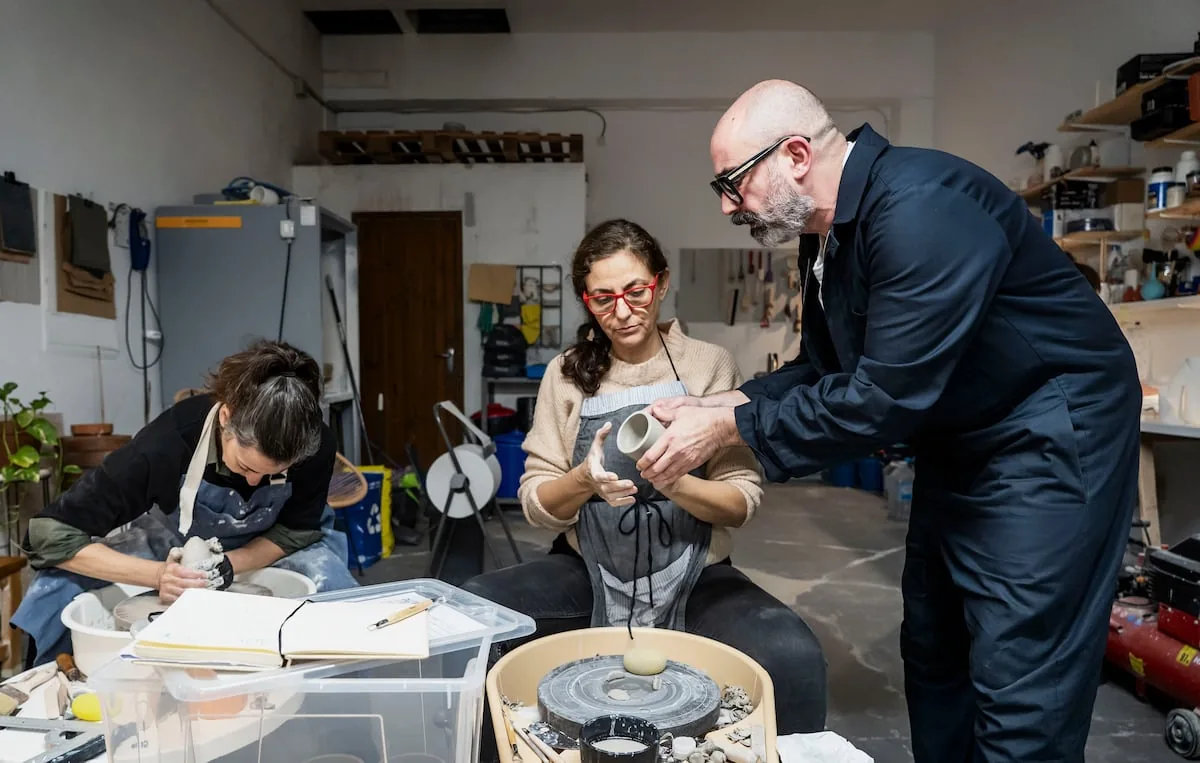
It’s hard to find a city that isn’t experiencing the boom of ceramic workshops. Without going into whether in some cases they are more aimed at leisure than training, the truth is that they encourage an approach to craftsmanship, to discover its processes and to touch clay without major pretensions.
Read more The great dream of Latin American mining
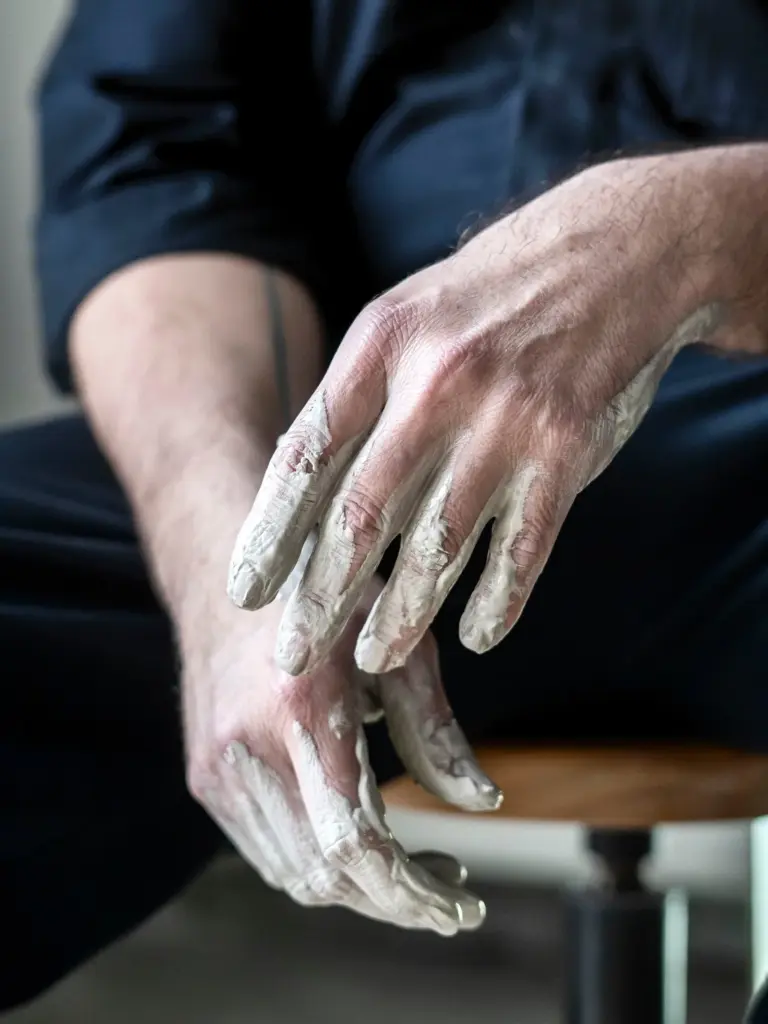
When he turned 40, Roberto Paparcone (Castellammare di Stabia, Italy, 54 years old) was given a course by a Japanese ceramist by his partner. At that time, he was working in Barcelona as an architect, after having trained between his native Naples, Holland, and San Sebastián. Nothing foreshadowed an eventual change of direction, but that course with Misako Homma awakened a very strong urge in him. “It was the beginning, and I’ve never stopped. In that course, I discovered the freedom to realize an idea with your hands, from beginning to end. As an architect, you always depend on other professionals to do your work. From that moment on, I began to combine architecture with ceramics.”
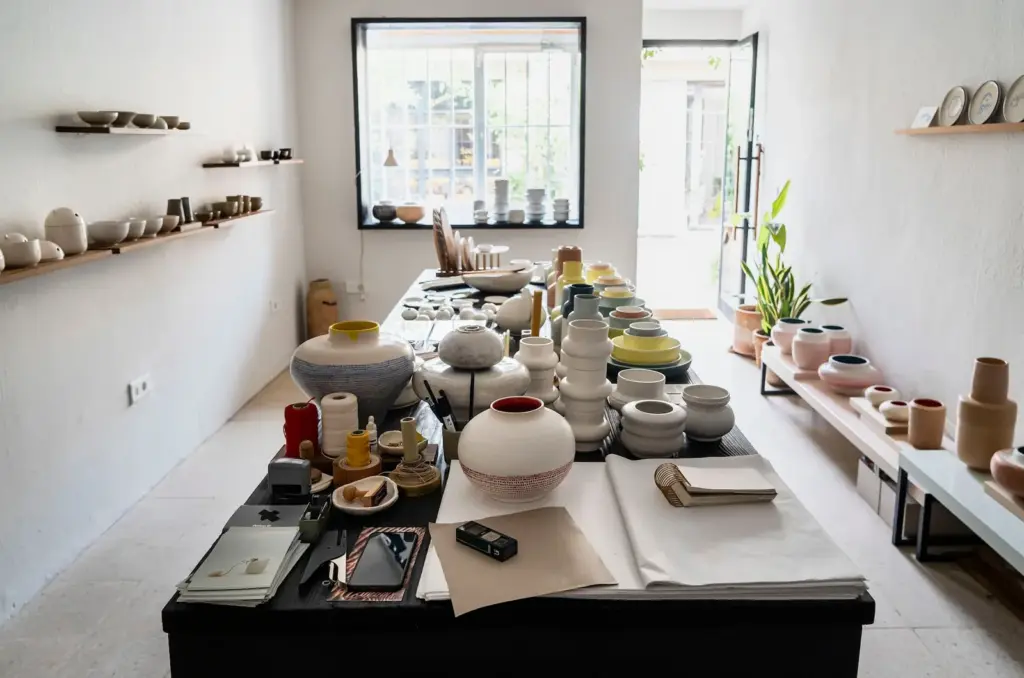
Roberto was touched by clay. But it took a long time, and a move to Mallorca, for him to abandon architecture in 2018 and set up his own brand, named Paparkone, with a shop in the center of Palma, in a passage known as the Sant Feliu coach houses. In another part of the city, he has his workshop, where he produces collections and gives courses. The environment of the Balearic island influences him, but he doesn’t exclusively draw from it and its tradition. His style is rather conceptual and experimental. “I’m very much a city person. I love defending urban ceramics. Not everything in this work is done in the countryside. It’s idealized and poeticized when it is, but ceramics can also be made in the city. Being an artisan doesn’t mean you have to be in a bucolic setting.”
His activity has been resonating more and more strongly on the island. The Consell de Mallorca has just awarded him the Premio Diseño e Innovación Artesana for his work Flora, a ceramic totem that functions as a multi-position vase. Three years ago, his piece Sa Gerreta was also recognized with the Premio a la Promoción Artesanal.
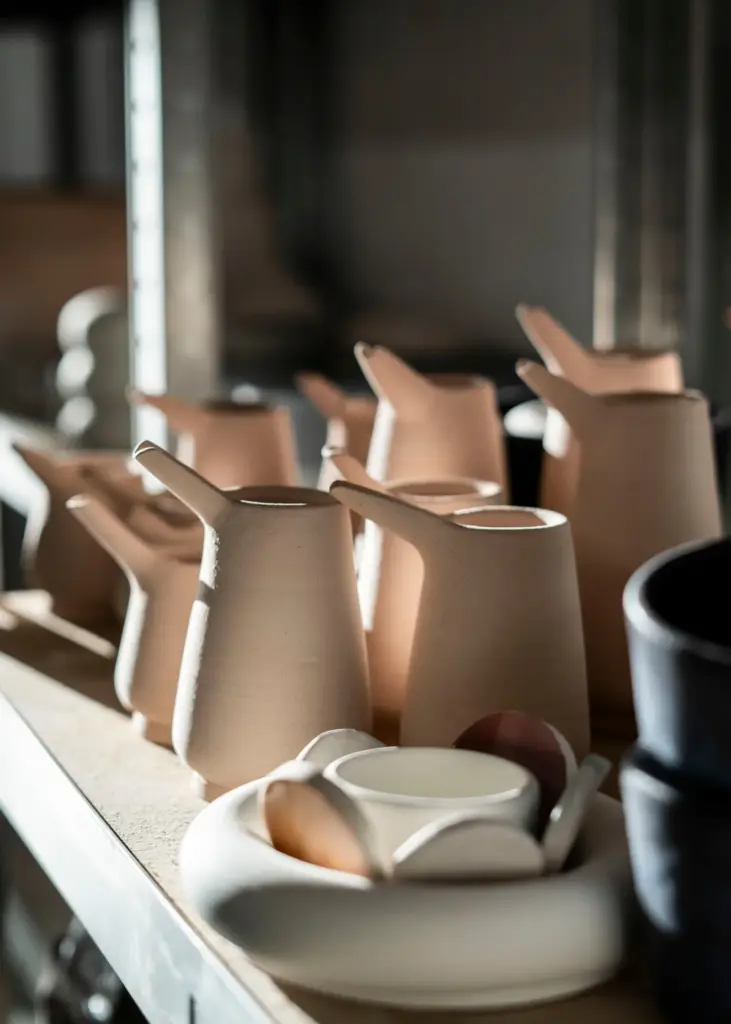
Flora is a very representative proposal of Roberto Paparcone’s style because, on the one hand, it stems from a conceptualization and narrative typical of an architect’s mental processes. On the other hand, its execution has been approached through silent experimentation, which doesn’t seek to attract attention for you to approach, but rather occurs more in the materials, processes, or formal innovation. Likewise, of all his production to date, Flora is perhaps his piece with the most architectural bearing, as his previous profession is not manifested in other previous proposals in such an obvious way, but rather in the refined forms and the poetics of his references, from Tadao Ando to the architecture firm Sanaa.
Read more Can robotics help improve school coexistence?
The story of Flora began when, as a young man, he discovered the botanical treatise De florum cultura, by Giovanni Battista Ferrari, in his grandfather’s library; a 1633 edition that included a chapter dedicated to garden design, floral arrangements, and how to decorate with plants. “The engravings showed the ‘artifacts’ that were fashionable at the time. It struck me that they actually used this word to refer to them. It was like a manual of botany and decoration,” he recalls.
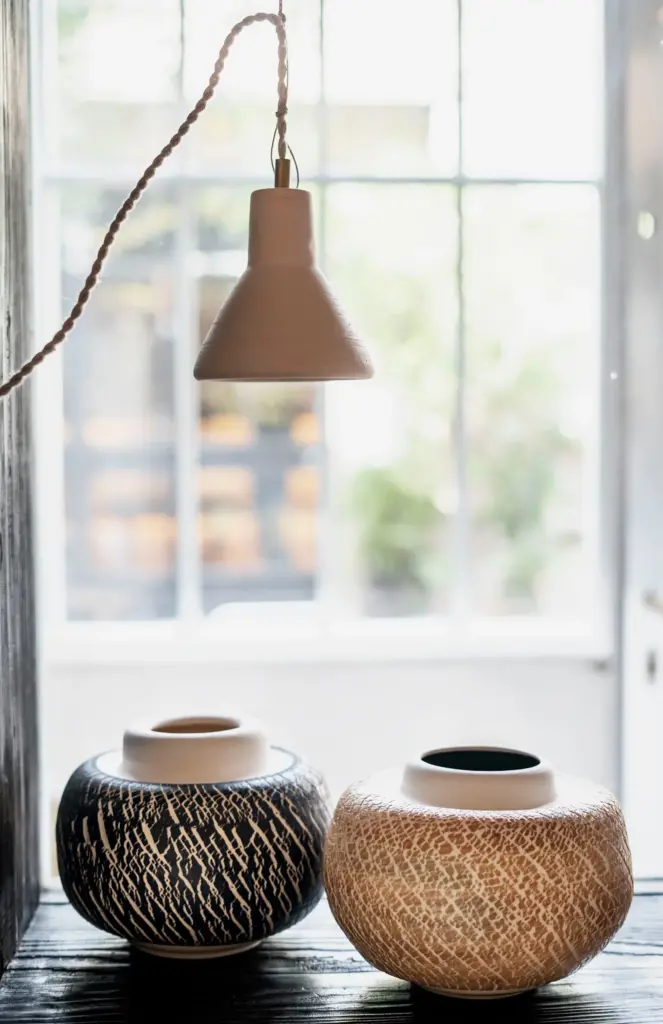
Inspired by this treatise he kept in memory, he created his own artifact, which fuses botany and decoration. The totem consists of four pieces. The central body alludes to the classical artifacts collected in the treatise. The other three smaller pieces are inspired by native plants of Mallorca: some shaped like bulbs and others with stems hollowed by the wind. The four pieces can be placed in multiple positions, together or independently. It is the user who decides its structure, how they position the flowers, and modifies it as much as they wish.
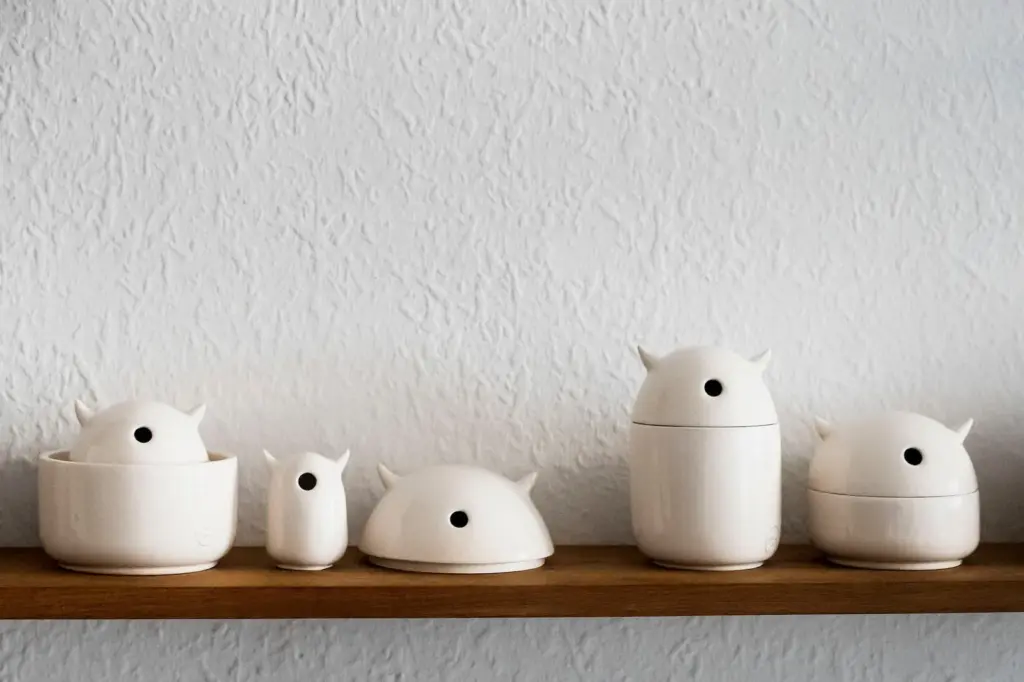
This interaction by the user, as well as a free invitation to use his pieces for whatever each person deems fit, is intentional and playful. On other occasions, the playful character is more formal than compositional. And sometimes, both, as in Antònia la Dimoni. Conceptually, this collection was born from a feminine revision of the typical Mallorcan pottery figures in the shape of a demon, their best-known representation being the traditional siurells. The idea was not only to expand their gender, give them a fun personality and make them function as a vase or container, but also to re-signify their condition as a souvenir: that their allusion to the demon would recall Mallorca, but from another perspective.
That opened a debate on how to refocus and modernize the consumption, design, and production of souvenirs while preserving the identity or traditions of a place. “Starting with Antònia, I began to delve into the concept of a souvenir, because I believe they are a symptom of how badly we are doing things. Now we travel with a small backpack, because if we go low cost, they charge us more. So, what do you take from a place if you don’t have space? In the end, you travel practically to eat, drink, and take 20,000 photos with your phone,” he reflects. “A souvenir should bring back the memory of a personal experience you had, remind you where it was made. It should be more conscious consumption. Perhaps through design, we can start to change this.”
Read more How the Sence tax exemption that Kast’s Government seeks to eliminate works