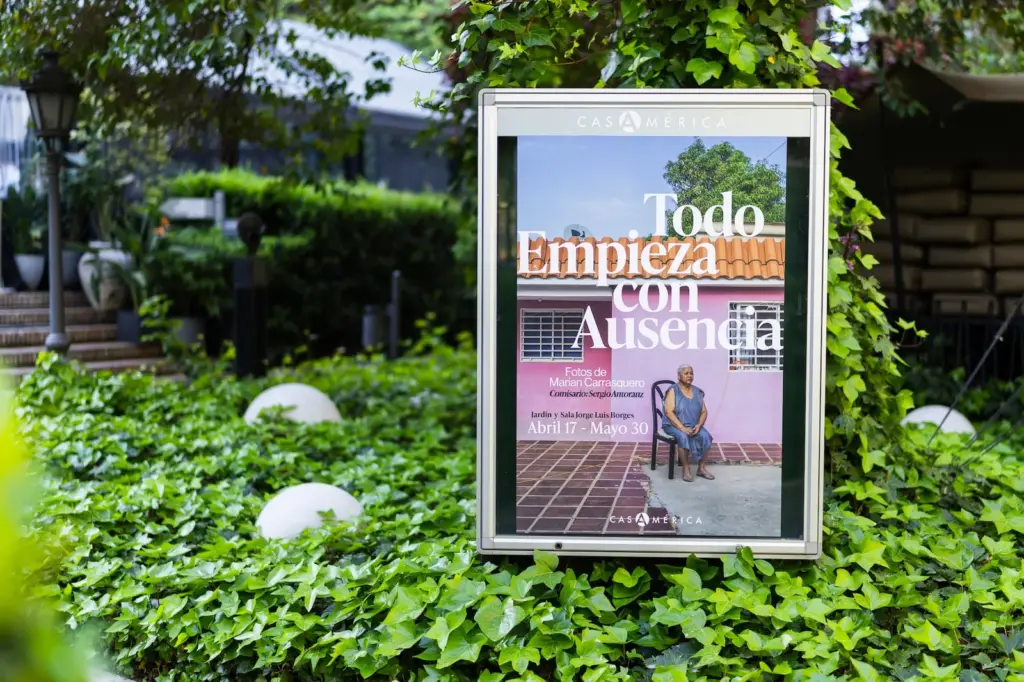
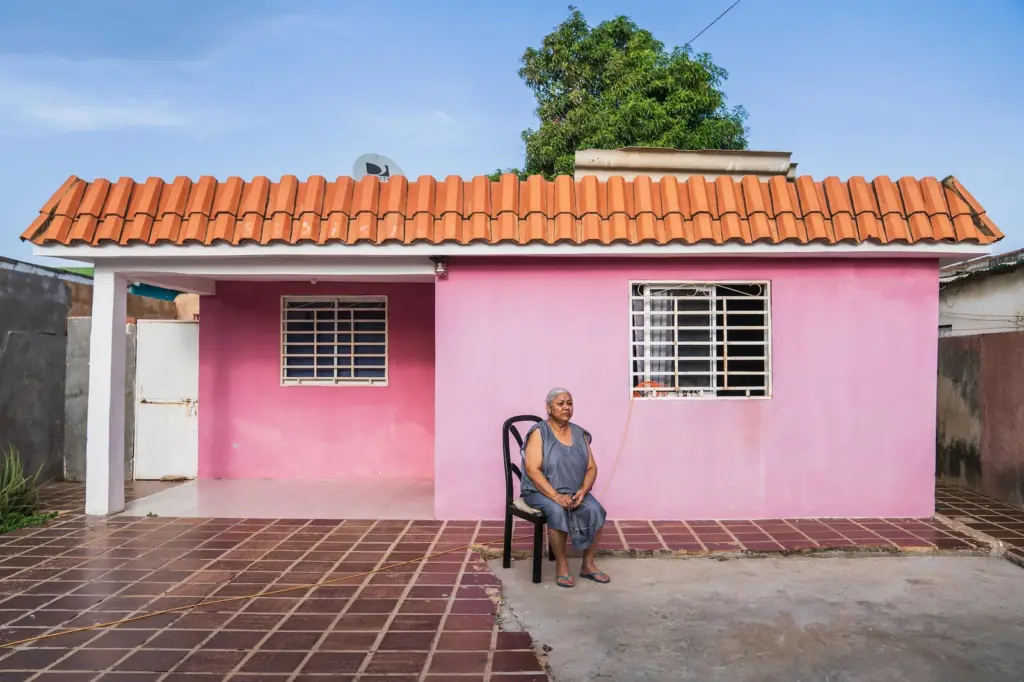
In the photographs by Marian Carrasquero (32 years old, Caracas, Venezuela) exhibited at Casa de América in Madrid, it’s hard to find men. They barely appear, and when they do, it’s peripherally, in the margins, or diluted in the crowd. At the center are women: Mexican mothers like María Herrera, who has been searching for her four children, disappeared due to violence in Mexico, for years. Or grandmothers like the Venezuelan Gloria Hernández Montiel, who lives in a house with intense pink walls and cares for her two granddaughters, orphaned after their father died trying to cross the Darién Gap, one of the most dangerous migratory routes in the region.
There are also children, sometimes captured mid-jump, other times eating mangoes, oblivious to the migratory limbo their families are going through, stranded in southern Mexico unable to return to their countries.
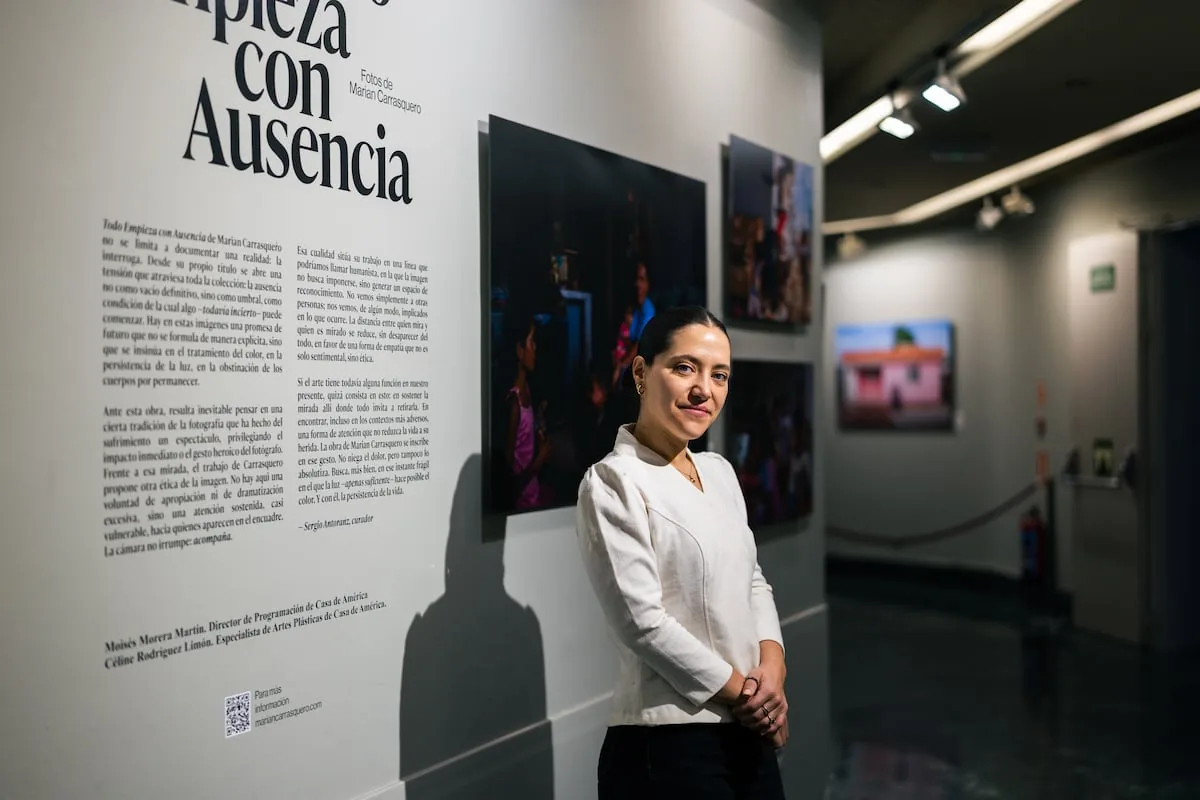
These stories make up Everything begins with absence, the exhibition that the Venezuelan photographer presents at Casa de América. A journey through images taken in Latin America, mainly between 2023 and 2025, which can be visited until May 30.
“I feel more interested in the experiences of women and children. It’s something that arises somewhat unconsciously, because this exhibition comes from commissioned works, mostly from The New York Times: a border issue, another migratory or social one, a political imbalance…”, explains Carrasquero in an interview with EL PAÍS in Madrid.
“Within these situations, I try to find something that takes us by the hand and makes us empathize,” adds the photographer, who lives in Mexico City and regularly collaborates with the American newspaper.
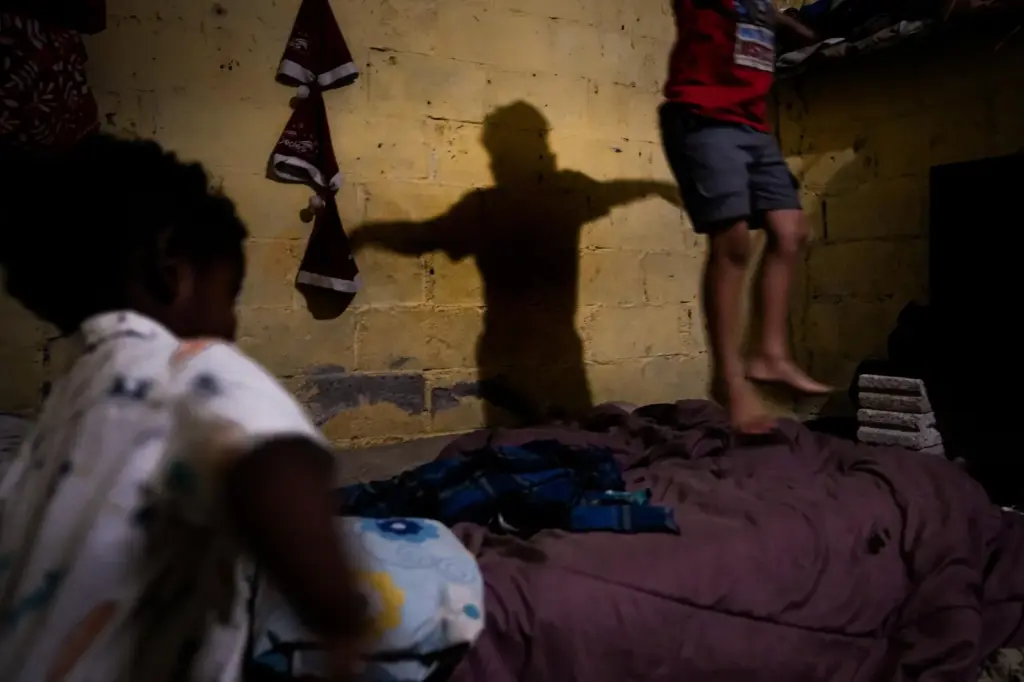
The exhibition, curated by Sergio Antoranz, is structured around themes such as motherhood, childhood, the migrant experience, and loss, but also the hope that new beginnings bring. “I believe that from that void, the possibility of something new is born. I have learned that from the people I have portrayed: the strength they have to keep caring, relating, to keep going despite having lost so much and had to leave so much behind,” adds Carrasquero.
You know you’re leaving something behind, but not where you’re going. Uncertainty is a big part of the lives of many of these people
Waiting, that suspended time, runs through many of the photographs: from Venezuelans awaiting the closing of polling stations in 2024 to families like Keila Mendoza’s, who are enduring in a shelter in Tapachula while trying to return to their country. “I am very interested in that meantime, which is neither the end nor the beginning, but a transition,” says Carrasquero. “You know you’re leaving something behind, but not where you’re going. Uncertainty is a big part of the lives of many of these people.”
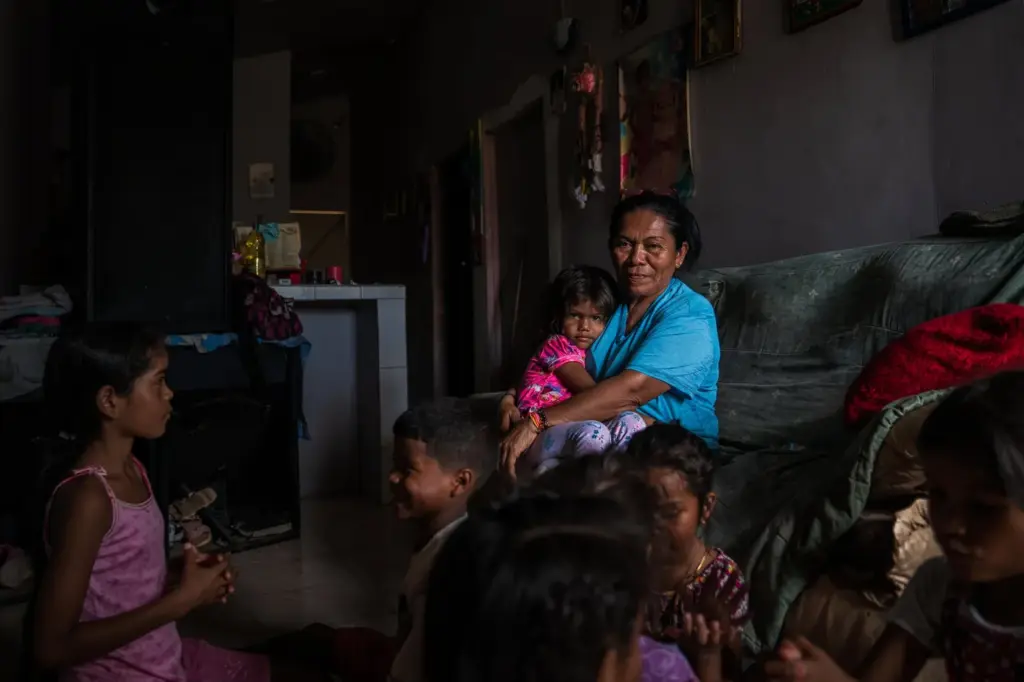
Furthermore, the photographer argues that it is essential not to approach the migrant phenomenon from victimisation: “They are in a complicated situation and in some ways they are victims of the system we live in, but they are also hardworking people, who arrive in new places without community, without work, sometimes without papers and without money, and manage to build lives that many cannot even imagine.”
Read more Ibiza completes the eviction of the largest shantytown settlement on the island
She recalls, for example, Sara and Jhon, whom she met in 2019 in the Colombian city of Cúcuta, when they were crossing from Venezuela with three children and another on the way. They had arrived with nothing and were sleeping in a shelter, driven by the impossibility of bringing their baby into the world in their country. “Today they live in Medellín, they have a chicha business, she is a manicurist and also works in a flower venture. They have risen in an incredible way, and seeing them flourish from that beginning when they first crossed the border and said ‘there’s no way to have this baby in Venezuela, there’s no hospital where we can bring this child to life,’ to where they are today, is a privilege,” she explains.
The fundamental thing is to arrive, sit down, listen, and connect before taking out the camera. Empathizing is the way to make the image have the power it needs.
The photographer considers it essential to build a visual language that does not exploit pain, but rather accompanies it. “I try not to reduce the experience of someone in a difficult situation solely to the wound,” she explains. “It is also important that this is part of the portrait, but I think that, as in life, all experiences have light and shadow,” she adds. To achieve this balance, the author puts the destination of the image or the medium in which it will be published in the background. “The fundamental thing is to arrive, sit down, listen, and connect before taking out the camera. Empathizing is the way to make the image have the power it needs.”
Carrasquero advocates for a more unhurried way of working amidst a context of informational overexposure that causes saturation. “I try to do work that breaks with stereotypes,” she believes. “I try to relate from more human, more feminine, and grounded spaces, and not solely from those that show masses of people moving, the line at the border, boats on the river, police stopping people in the desert, or the bridge in Cúcuta.”
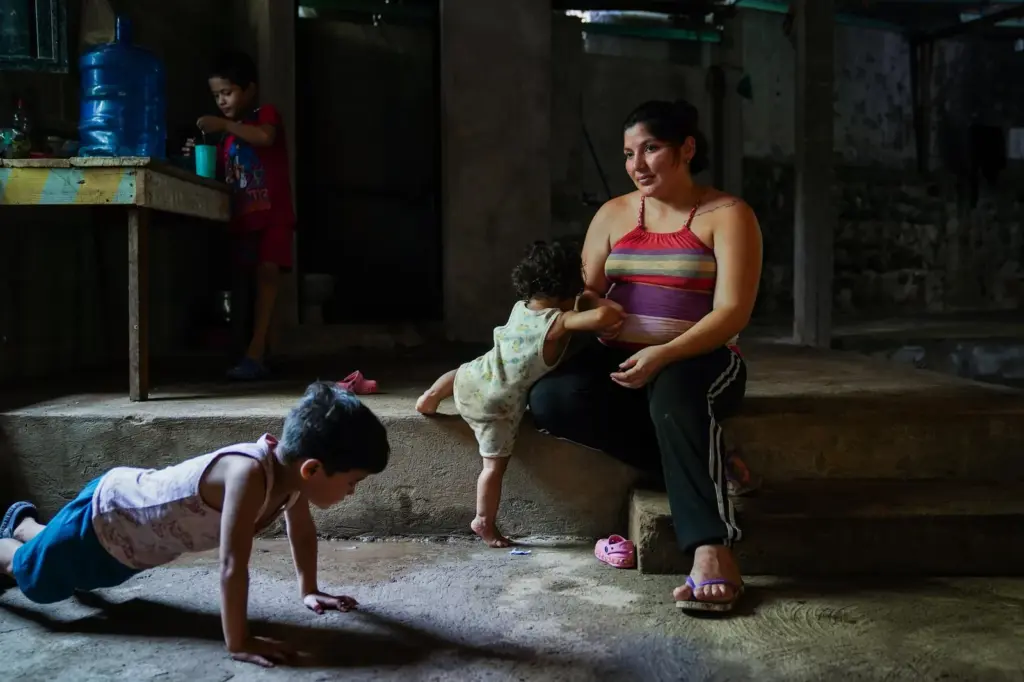
Carrasquero does not deny the documentary value of these images as a record of the phenomenon’s scale, but she believes that empathy is built in the everyday. “You have to enter more intimately into a person’s life,” she explains. To go into their home, even if it’s a temporary space, inhabited for just a week, and observe how they live, where they sleep, what their sheets are like, or who tucks them in.
“They tell us the word migrant and we think of a tattooed man who comes to take our jobs or steal,” she points out. “That is the political discourse right now, especially in the United States, which [associates] migrant with criminal. It is important to humanize,” she reasons. Her images, she insists, try to make us recognize ourselves in the other. Migration is not an exception, but a historical constant that ultimately affects us all. “Today it’s Venezuela’s turn, but Europe’s turn came after the war,” she recalls.
As a Venezuelan, Carrasquero champions other possible stories against the dominant narratives about her country, marked by politics, migration, and tragedy. She believes that the strength of its citizens is not talked about “enough.” “Venezuelans, because of everything that has happened to us, have become very resilient and fighters. They have learned to solve problems under any circumstances.” “I hope we can return to Venezuela to rebuild the country and do so with more awareness of who we are, of what we have,” she emphasizes.
Read more Bieito, Rigola, Liddell and Anne Teresa de Keersmaeker, at the 50-year Grec