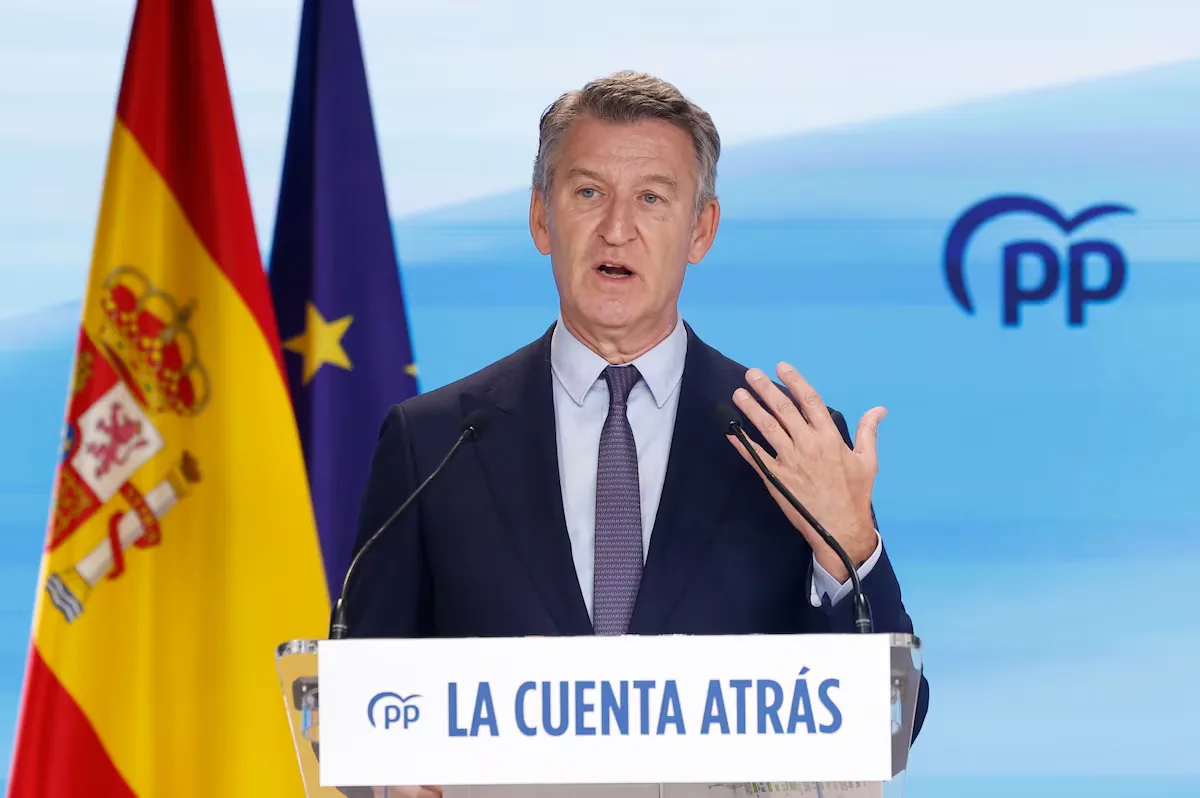







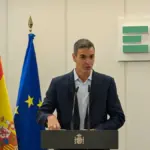

The leader of the PP, Alberto Núñez Feijóo, defended this Tuesday an investment of at least 300,000 million euros to correct the “degradation” that, in his opinion, Spain suffers in terms of infrastructure. In addition, he presented his commitments, among them, to carry out a complete audit of the railway network, recover compensation for delays, promote a “sufficient” budget for infrastructure, and entrust this matter to a manager, not to “a corrupt person or an agitator”.
Read more The National Court summons Jordi Pujol to testify on Monday and orders another forensic examination
“The conclusion is that Spain collects like a Nordic country and cannot have services like a third-world country, and that also has to be our commitment. The money of Spaniards must translate into better services, not into problems never before seen,” the popular leader assured at the closing of the event on infrastructure You pay more, you receive less organized by the PP in Getafe (Madrid).
For Feijóo, there must be “a change” in Spain because the country “does not accumulate small technical failures” but rather “suffers a multi-organ failure that makes everything that depends on this Government work worse,” also alluding to housing policy, energy policy after last year’s blackout, or failures in the protection bracelets for victims of gender violence.
In the specific case of infrastructure, Feijóo said that “they are probably at one of the worst moments in the 47 years of democracy” because “after having built them, they are probably at their worst moment in terms of conservation and maintenance.” And he stressed that “this decadence” does not appear “suddenly,” but is the product of facts that have been perceived in recent years, alluding, for example, to the fact that AVE delays have become “something habitual” or that “potholes” are found on roads due to lack of conservation.
At this point, Feijóo proposed a decalogue of actions whose purpose will be to invest “no less than 300,000 million euros to have the infrastructures that would make it possible to maintain a great country” and change the situation, through actions with public-private collaboration. Immediately afterwards, he pointed to three specific measures: establish and expand amortization freedom to favor the investments that companies need; expand R&D&I deductions; and reform the Contracts Law with two objectives: less bureaucracy for contracting and more vigilance to avoid cases of corruption.
In his speech, Feijóo listed ten commitments regarding infrastructure that he will undertake if he governs, starting by putting “a manager” of public works in charge of this matter and not “a corrupt person” or “a social agitator.” Secondly, he defended the approval of Budgets because “it is impossible to maintain and improve a country’s infrastructure when there is no country project.” That infrastructure budget, he continued, must be “sufficient” and today, he assured, it is not, because just to match the EU average, 10,500 million more per year are needed.
In addition, he advocated guaranteeing by law that new works cannot be undertaken without an independent entity first certifying that the maintenance of existing ones is adequate; a complete plan of infrastructure priorities, in which works have an economic memory and binding calendars; and recovering the prestige of the train. At this point, he defended an audit and recovering compensation for users for delays in the AVE.
In his list, he also advocated planning railway policy taking into account a majority, betting on quality commuter trains and on railway maintenance. And he reiterated his commitment to approve a National Water Plan, in which water security is an indisputable vector, and defended electrical grid infrastructures, with an urgent plan for access to the grid to avoid an “opportunity blackout.” The last point of his decalogue includes accountability. There he committed to report on the real state of infrastructure if he is President of the Government and that his Minister of Transport appears every three months in the autonomous communities.
Adamuz accident
Feijóo shared the thesis of one of the experts attending the event, assuring that the Adamuz (Córdoba) accident is “a symptom of a serious illness” that unfortunately ended in this case with a fatal outcome, after the death of 46 people. That said, he focused on the “lack of maintenance of the high-speed network.” “If we forget the 46 people who died in Adamuz, in addition to not having a conscience, it means we are forgetting that any of us could also be one of those people,” he said, adding that behind this tragedy there are “very serious deficiencies of continuous failures of the State.”
At this point, he asked Pedro Sánchez’s Government to “apologize” and provoke resignations, although he said that this would not happen because the Executive “systematically evades any type of responsibility.” According to Feijóo, Spain has been “too long without paying due attention to infrastructure” because “whoever should manage them has been doing whatever,” except “doing their job,” recalling the statements of Minister Óscar Puente announcing that the AVE would run at 350 kilometers per hour.