









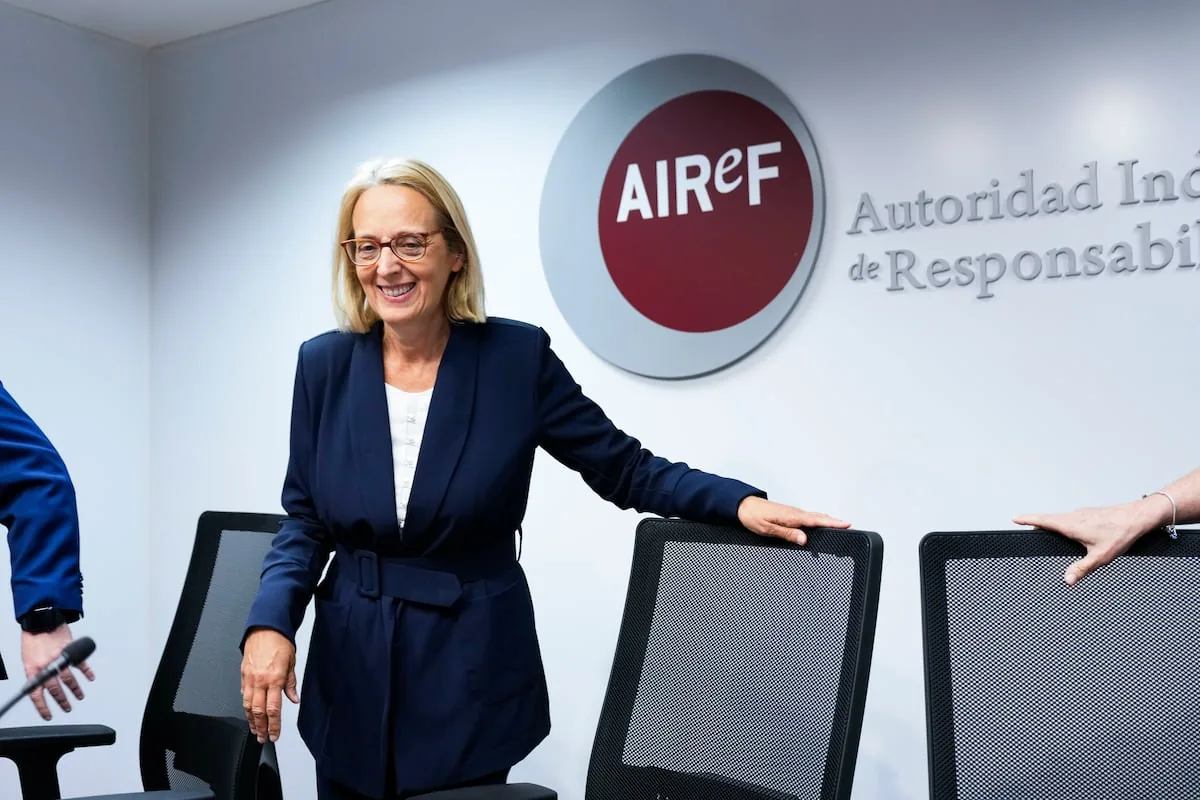
The Council of Ministers has satisfied the request of the Independent Authority for Fiscal Responsibility (Airef) and has once again requested an evaluation of the sustainability of the pension system, this time with the formula that the supervisory body demanded. The path initially chosen by the Executive angered Airef, to such an extent that it announced the paralysis of the examination required by Brussels. This governmental decision unblocks a very controversial evaluation, so much so that the previous president, Cristina Herrero, cataloged the assignment as a “private use” of the institution’s resources by the central government and perceived a “diminishment” of Airef’s independence.
Read more El Roto: relaciones
This episode began in July 2025, when the Government asked Airef for a new report on the sustainability of the pension system and to have it ready by June 2026, just over a year after the one the body already published in March 2025. Despite granting a barely passing grade, that analysis warned that the health of the accounts was worsening. Although with the calendar in hand, Airef was not supposed to do this review again until three years later, the Government requested this new diagnosis due to pressure from Brussels: the European Commission was annoyed by the fact that the examination took into account tax transfers to Social Security, according to sources familiar with the situation. Faced with this scenario, the previous president of Airef repeatedly expressed her opposition to this new assignment because she saw no point in repeating the examination. And it was not only a rejection of content, but also formal.
According to the organic law that regulates Airef’s operations, this body can issue three types of documents: reports, opinions, and studies, each with its own particularities. The Government requested a report, which clashed with the institution’s rejection. “It cannot be a report,” Herrero said in November last year, “because our organic law states that reports are only those established by law.” And she argued that the State Legal Service, which they consulted on the matter, supported this interpretation. Thus, Airef interpreted that the assignment was poorly formulated and that it should be a study, which the body would carry out within the timeframe allowed by its available resources (given the many other requests and obligations regarding other administrations, including regional and local) and with the methodology chosen by the body.
As requested by Airef, last week’s government agreement discards the “report” route and opts to request a “study.” The current president of the body, Inés Olóndriz, commented last week on the unblocking of this evaluation: “It is true that there were frictions with the Government in the past because Airef considered that the institution’s independence was being undermined and insisted that this could not be, that it had to act differently. And finally, the Ministry of Social Security has understood.” “We are glad,” Olóndriz insisted, “that they have finally understood that Airef’s independence must be preserved. Now we will start the action plan.” The new president indicated that they will present the study on June 1, despite the tight deadlines, as required by the first Social Security request.
Read more The Colombia we want: Marta Ruiz, journalism moving forward
Olóndriz gave these explanations last week in her first press conference at the head of Airef, after being ratified by Congress on March 25. The appointment has been heavily criticized by the opposition, given that she takes the reins of the supervisor after holding a high position in the Ministry of Finance. They question her impartiality because until weeks ago she was general secretary of Autonomous and Local Financing under the orders of María Jesús Montero. Olóndriz takes over from Herrero, who was very critical of the Executive’s way of proceeding.
System under tension
The Government barely passed the previous examination of the pension system, by only one tenth of a percentage point of GDP. Airef estimated in March a net expenditure of 13.2% of GDP on average between 2022 and 2050, just one tenth below the threshold at which an adjustment would have to be applied. This barely passing grade was achieved after a controversial methodological change imposed by the Government in that examination, which included transfers from the State to Social Security (funds that do not come from contributions) even though they were not originally contemplated. Airef only counted the transfers it considered legitimate (about three tenths of the 1.3 points of GDP they represent), but the change was heavily criticized by this supervisory body, an anger that increased after the new assignment became known.
Pension spending is one of the main topics of the current economic debate, amidst an intergenerational discussion. The retirement of the very populous baby boom generation, the increase in the amount of benefits, the revaluation of pensions in line with the CPI, and the low birth rate are some of the factors that condition the current and future scenario. Airef will once again analyze the situation and deliver its results in June, this time under the presidency of Olóndriz.
Read more More oil and a universal income: Fajardo’s program seeks a middle ground between Uribe and Petro