








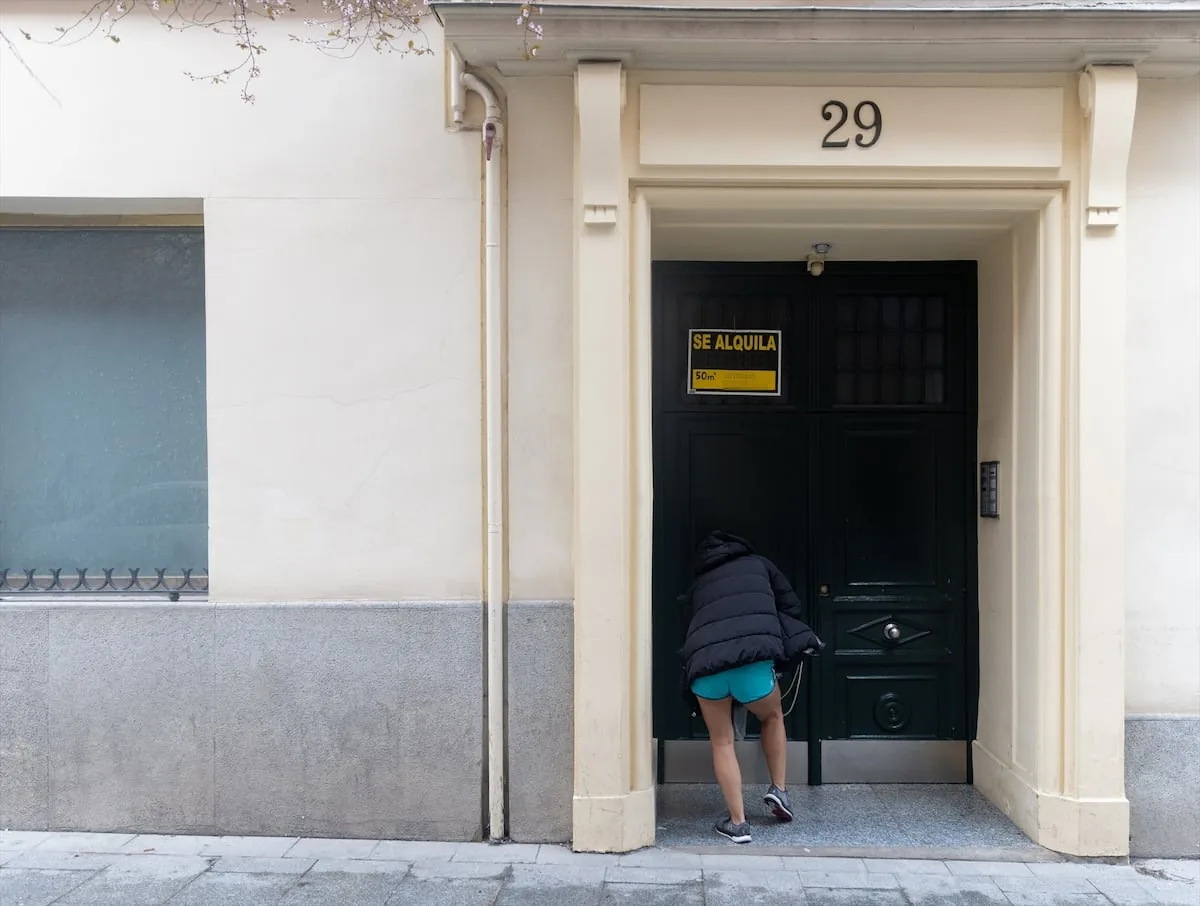
The intervention in the rental market to curb rising prices clashes head-on with the interests of many landlords. It is precisely those with a larger portfolio of homes under their charge who vehemently express their rejection of measures that may limit the returns on the rents they receive at the end of the month. However, definitively determining the number of apartment owners for rent is currently impossible, as there is no official registry where these names appear, nor their properties. Even so, a study prepared by the Ministry of Consumer Affairs, in collaboration with the Spanish National Research Council (CSIC), estimates that, among landlords who are not legal entities but individuals, a slight majority rent two or more properties: 52.8%, compared to 47.2% of those who only rent one home. If the division is made also incorporating public and private entities (such as companies or funds) into the total number of landlords, the balance is even more favorable to what the text characterizes as multi-landlords: 60.8%, compared to 39.2%.
Read more Neruda as a “magazine seller”
The Consumer Affairs report aims to X-ray private housing holders in Spain based on the income they obtain from rental rents and which the Tax Agency recorded in the 2023 fiscal year. With this source, they conclude that, with a slight margin of difference, there are more who have two or more homes for rent (it is not specified anywhere what the maximum extreme is) than those who only have one. Almost 53% of landlords are considered multi-landlords, a concept that substantially lowers other definitions, such as that of large holder, which the state housing law grants to those natural or legal persons who own ten urban properties for residential use or more than 1,500 square meters of built surface, also for residential use. “The figure of the small landlord is not the predominant one,” the document defends.
To define the real weight of these individuals or small investors within the rental market, the text contrasts their volume with that of the total number of tenants. Thus, using the 2023 Household Panel as a reference, it is revealed that 4.9% of the total population receives income from renting their main home (5.7% of the adult population). This percentage rises to 9.3% if measured by households. This is a much lower volume than that of tenants, who account for 20.8% of the total population or, alternatively, 20.2% of households, according to the Survey of Living Conditions for that year.
Based on tax data, the text offers a territorial distribution of multi-owners. The highest concentrations are found in island cities: in Las Palmas de Gran Canaria, 64.9% of landlords have at least two properties for rent; followed very closely by Santa Cruz de Tenerife, with 64.6%. After the Canary Islands capitals are Palma (63.1%), Barcelona (60.8%) and Madrid (56.4%). Meanwhile, in Valencia and Malaga the differences are somewhat smaller (55% and 51.6%, respectively). Seville is the only exception among the localities studied with a majority of owners of a single property for rent (53.2%).
“These figures reflect that, in large urban markets, the presence of multi-landlords is not a marginal or exceptional phenomenon, but a structural characteristic of the rental market,” indicate the authors of the report, signed by four researchers related to the CSIC and the ministry. “The difference with respect to the national average also suggests that the greater the real estate pressure, the greater the concentration of rental housing in the hands of landlords with several rental properties,” they add.
Strengthen position
Despite this majority, “the usual image of the small landlord with a single rented home does not correspond to the reality of the market,” the text indicates. Especially when legal entities—including investment funds, patrimonial companies, and other actors that operate rentals professionally—as well as public entities are incorporated into the equation. Taking as a reference the estimates made by official sources such as the Bank of Spain and the IRPF Household Panel, the volume of multi-landlords would climb to 60%, with the total of small holders remaining at 40%.
Read more The mystery of Kevin, the survivor of mass migrant disappearances in Chiapas
This current predominance is a product, according to the study, of the growth of the rental market between 2016 and 2023 strengthening multi-landlords, consolidating an increasingly dominant position. The report details that, in the last seven years analyzed, the stock of homes rented by individuals went from 1,900,883 to 2,570,845 homes. And that this increase caused landlords with a single home for rent to increase their representativeness less than multi-landlords.
“Over time, instead of narrowing, the gap between those who have only one home for rent and those who own several has widened. In other words, the data suggests a growing concentration in the rental market in which landlords with more homes tend to strengthen their position,” the text concludes.
If you have questions, suggestions or simply want to tell us your case, you can send us an email to vivienda@elpais.es.
The data you provide will be processed by EDICIONES EL PAÍS, S.L.U., (C/ Miguel Yuste, 40, 28037-Madrid), with the purpose of managing your questions and/or testimonies and preparing informative content. You may exercise your recognized rights regarding data protection through the address dpo@prisa.com by proving your identity and identifying the right you wish to exercise. For more information, consult the Privacy Policy.