








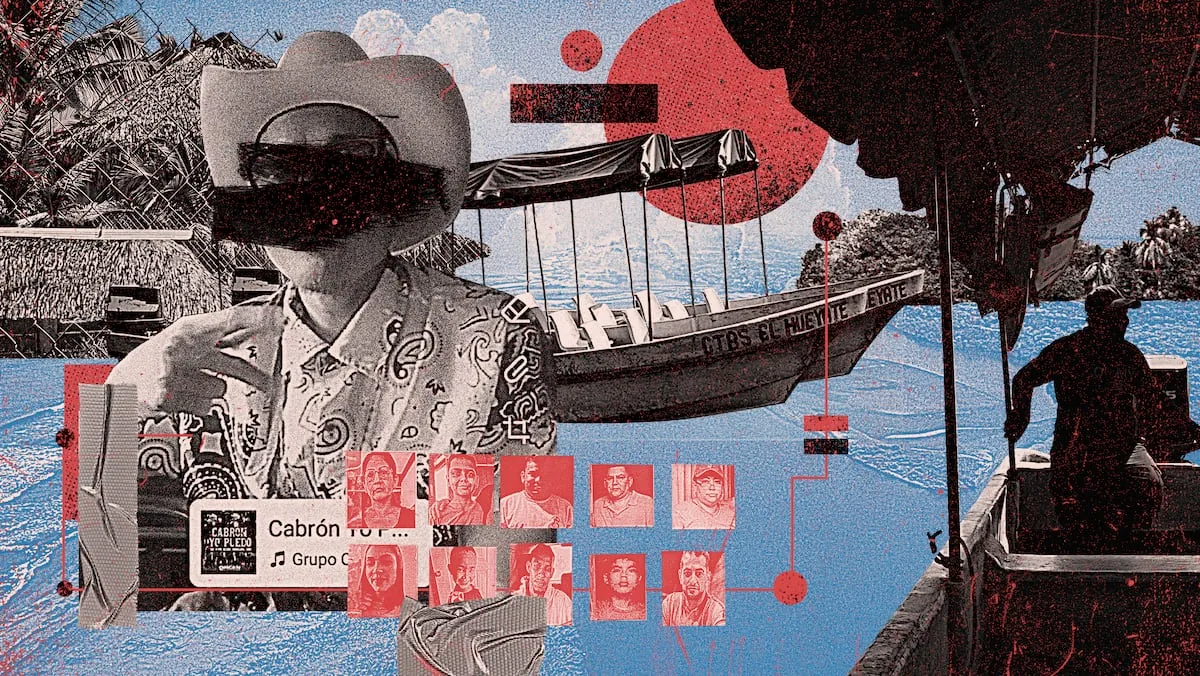
The reason Kevin convinced his girlfriend, Yosselyn Guerrero, to move from Tapachula to Mexico City was simple: a furnished room awaited them in the Mexican capital. They would even have a bed; they would no longer sleep on the floor of a borrowed home. The young Salvadoran woman, 30 years old at the time, resisted. She already had a job in a soup kitchen at the border, and furthermore, continuing north meant moving a little further away from her family, who remained in Santa Ana and begged her to return constantly. In the end, Kevin’s proposal won. He chose the coyotes and the type of trip, which included a boat ride across the ocean. The starting point was San José El Hueyate, a small, isolated village on the coast of Chiapas, where, from a safe house, Yosselyn spoke to her family for the last time. She confessed that she feared the long sea journey, and also that Kevin was “acting strange”: “He’s always on his phone, whispering, hiding something.” “I’m scared, I don’t want to get on that boat, but I’m already here,” her older sister, Claudia Guerrero, now recalls her words: “Don’t go, I told her, don’t go.”
At 3:20 PM on October 21, 2024, WhatsApp messages stopped reaching her. That has been all since then. She is one of the 83 migrants who disappeared on this stretch of coast between September and December 2024. Kevin is not on that list. He is, so far, the only survivor located. “I don’t even know how I’m here, because we fell and it was really bad, I swallowed water and I came out walking, like three waves hit me, they rolled me to the ground. I came out almost dead,” he tells this newspaper by phone: “I think what happened there has already happened. And whoever could get out, got out, thank God, there were some who didn’t.” How many? He doesn’t know. Who? He doesn’t know. Where? He doesn’t know.
Honduran Cindy Bueso was traveling on that same journey, with her one-year-old baby Daniel and her three-year-old daughter Valentina. Her family, who were waiting for them in the United States, is the only one of the 83 disappeared who has received any notice about them in these 17 months: they are told that they were seen in Puerto Madero, a few kilometers from El Hueyate, and also in Juchitán de Zaragoza, Oaxaca, where, they were assured, Cindy was controlled by organized crime. This lead is added to others from other families: a list with 40 names signed days after the disappearance, cell phones located months after “falling into the sea” charged with battery on land, or the number of a disappeared person used by someone impersonating them.
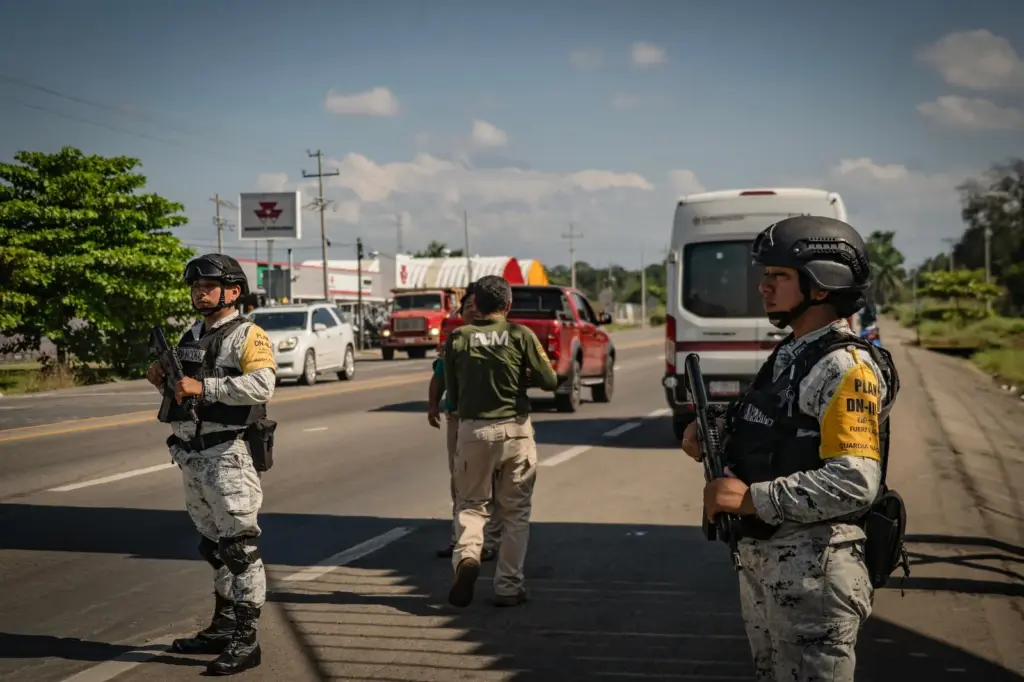
All federal and state authorities consulted by this newspaper state that they have no information, that they don’t know what happened, that they had never heard of such large, frequent cases. However, an official with information from Migration acknowledges the families’ suspicions: “On this border, migrant trafficking became human trafficking.” Chiapas was a co-opted territory from 2022 to 2024. A high-ranking official has confirmed to EL PAÍS that dozens of police officers were directly appointed by organized crime, that there was “a vacuum of authority” in the state, and that “the lack of control was total.” In that year, more than 400,000 migrants entered through Chiapas and were marked, kidnapped, executed, disappeared. In the best case, in plain sight of the authorities; in the worst, working with them.
A recent mega-operation in San José El Hueyate resulted in 11 people prosecuted for criminal association, four of whom were police officers. A source related to the case confirmed to EL PAÍS that the agents were working for the Jalisco New Generation Cartel (CJNG): “They are the group we know is behind the forced recruitment of people.” In Mexico, there is no public information on how many people may be enslaved by organized crime, but that idea is the shadow behind the disappearances; it is the fear and relief of families: that “the bad guys” have them, but that they are alive.
Claudia Guerrero, Yosselyn’s sister, points out, by phone from El Salvador, the change in life Kevin experienced after the supposed accident in the boat that was carrying them: “After 15 days, I found him on Facebook and he was uploading photos of himself in trucks, on a motorcycle, in a black car, even wearing a hat. He was out with the phone he had, with clothes my sister had bought him before. Well, if he supposedly lost everything at sea. That’s a lie. I told him. ‘Tell me what you did with my sister, did you sell her or what did you do?’”
From one to four miles
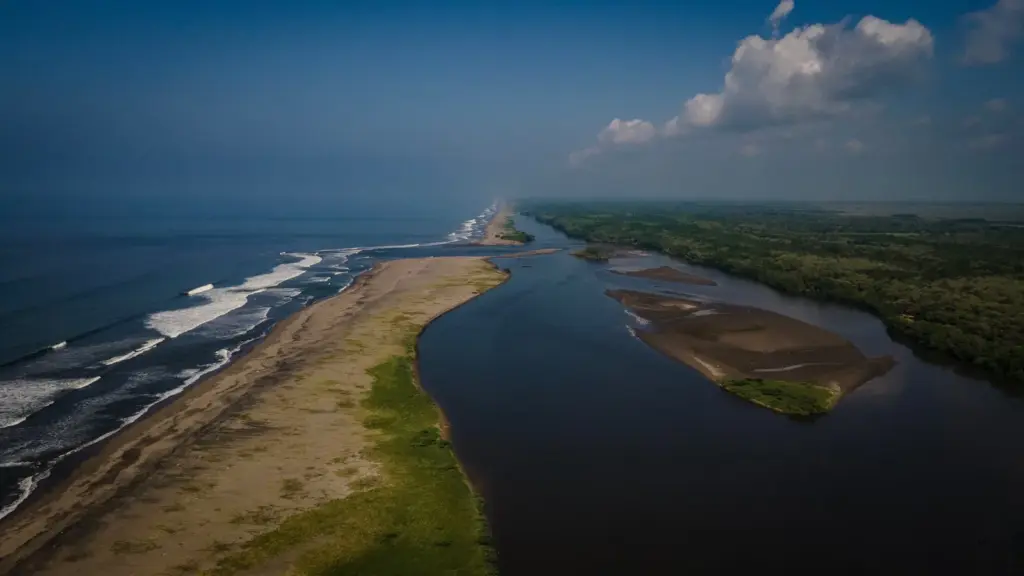
Perhaps someone believes you can walk along the beaches of Chiapas straight to Oaxaca, but no, nothing of the sort, say those who control the waters: here there are sandbars, stretches so lush that they cannot even be accessed by land, floating forests, estuaries and mangroves; it is a cut, wild coastline, impossible to control all its nooks, they admit. There are government documents —to which this newspaper has had access— that precisely identify that among the migrant trafficking routes to the north, there is one that leaves the land. For a decade, it has been the escape route when the road is full of checkpoints from the National Migration Institute and the National Guard. Authorities, organizations, and migrants recognize it: it is not as heavily guarded, but it is much more dangerous.
A warning: here the ocean swallows bodies. In the first mile of coast, breaks and currents churn, they are fast and treacherous. Just a few weeks ago, a family of bathers got disoriented and was swept away by a current; all drowned, but only the two adults could be recovered, it was impossible to locate the child’s body. This fury is well known by all who work at sea: fishermen, sailors, and also traffickers. They also know how the northerly winds strike, that the fiberglass of the boats disintegrates without a trace, and how close the Secretariat of the Navy’s ships can get due to their draft. This leaves a strip, which avoids the currents and is inaccessible to authorities, from one to four miles, that is the safe margin for the illegal transfer of people.

“You’re a rotten egg,” says a little boy, “who’s last?” asks another, “I’m the rotten egg,” laughs the youngest. In a video recorded on October 21, 2024, six children run around in a patio with green columns and a palm roof. Yosselyn is recording them from San José El Hueyate before leaving by boat, she sends it to her family. In that recording appears Valentina, Cindy Bueso’s daughter, wearing the same clothes as in the image her grandmother Teresa Barrera received in the United States from the coyote to indicate that he had already delivered them.
The migrants had arrived at San José El Hueyate separately, with different traffickers, without knowing each other. Cindy’s family tracked social media posts and news for months to find other people who had traveled with her, even calling Latin American embassies: “Do you have any report of a disappearance on October 21, 2024, in Chiapas, Mexico?” In all of them, including El Salvador’s, they were told no. However, they did have it, because Yosselyn’s family had filed their complaint there. Thus, even now there are figures from that same date who remain faceless, nameless: a Peruvian woman, whom both Yosselyn and Cindy mentioned because she was “very kind” (“she gives us coffee and bread,” the Salvadoran said) or the five children who appear playing with Valentina.
The wait
Kevin, Yosselyn, Cindy, Daniel, Valentina, the children, and the rest of the migrants left after lunch from the San José El Hueyate pier. The place is located on a sandbar, a kind of restricted lagoon that then joins the ocean. Kevin states that two boats full of people were going that day, that there were at least 40, that they were “big boats.” Cindy told her mother that they were already complete, that there were about 20. No one received a life jacket.
“Well, I was worried. Because we’re on the river and before entering the sea, the waves are hitting, pushing us out, and we got through them, the boat bounced and bounced, hit after hit. You get hit. And then slowly the boat settled, everyone was calm, and that’s where it all began,” Kevin recounts. They sailed all afternoon until night fell and they stopped. Only water was visible around them. They had to wait for another boat. “They didn’t explain why they were going to wait for it, it did have gas. I don’t know if it’s because it left late or if the one driving our boat didn’t know the way or I don’t know why, but we spent a day waiting for the boat, without eating, without drinking water, everyone feeling very sick, vomiting,” he recounts.
Read more Morena ‘in Excel’
When recounting this situation, a federal source proposes three options for this wait: there was surveillance by some authority and they were waiting for it to leave, there was a lack of fuel, or “diversification.” “It could be that from that boat they channel them to others, that if they have already charged for the trip, they direct that labor force. Perhaps they had some agreement and it didn’t arrive,” he considers, referring to the forced labor used by organized crime groups. Encounters at sea are common in illegal trafficking, especially of drugs, where boats navigate 60 to 200 miles offshore and need others to supply them with fuel along the way.
“We were all sick, very dizzy, with headaches, with the sun and with the night, but from there the next day the boat started,” Kevin continues. The young Salvadoran says he remembers what caused the accident, but he doesn’t answer. When asked what happened next, he hangs up the phone. He changes his number. He becomes untraceable.
The search for Yosselyn
Claudia Guerrero always had access to her sister’s Google account, so she could monitor her movements. On the night of October 21, she tried to track the phone, but it no longer showed a location. The next day, early, she saw that Yosselyn was still not receiving messages and began to worry. She spoke with Kevin’s family because they knew the people who were taking them. “They’ve already crossed land, they’ll communicate with you soon,” they told her and sent her a supposed photo of them in a kind of parking lot, but Yosselyn does not appear there.
At two in the afternoon, she received another call, from Kevin’s sister’s husband: “What I have to tell you, I don’t even know how to say it, the boat capsized and your sister wasn’t found. Kevin is bad, they lost everything, phone, backpack… the water took it. I’m going to give you the coyote’s number, ask him instead.”
—I didn’t say anything, I was speechless, I hung up the call. I felt like I was falling apart.
The coyote sent her an audio message: “We had an incident, the boat capsized, everyone fell into the water, there were about 15, even children were lost, we didn’t find any of the little bodies, we didn’t even find your sister’s little body.”
—Did you see her? I haven’t seen the news, when things like this happen, everything is published on social media, it’s a lot of people, the sea returns everything. I think you’re hiding something and don’t want to tell me. Where was it? On which beach?
The coyote didn’t respond anymore, he blocked her. Since then, Claudia insisted daily with Kevin’s family. His mother, who lived in El Congo, Santa Ana, just like them, and to whom they had paid the 1,500 dollars for the trip from Tapachula to Mexico City, left her house and moved cities three days after the accident. “We went to the Santa Ana Prosecutor’s Office to file a complaint against them, but they told us they couldn’t do anything because we had no proof, that we gave them the money voluntarily,” recounts Claudia, who managed to speak with Kevin many months later. He told her it was an accident, that he tried to save Yosselyn but couldn’t. Her sister never believed him. “God knows everything,” she told him; “God knows everything,” she says now.

“He mistreated my sister. He watched her, hit her, took the money she earned from work, left her without money, and took all her clothes and threw them into mud puddles; he wouldn’t even let her go out. She started telling me all that, perhaps because she was desperate, because she no longer wanted to be with him: ‘If you only knew everything he does to me,’” recounts Guerrero, who also sadly says how her sister forgave him every time he promised he would change, told her he loved her, and asked for forgiveness. “Someone who loves you takes care of you, they won’t mistreat you, here you had someone to defend you, there you are alone, he’s taking advantage of you,” the Salvadoran woman recalls: “She never wanted to listen to me.”
Yosselyn had resigned from her job at a maquiladora in El Salvador in August 2024. She followed Kevin, her sister believes, because she was “very much in love.” That October, she was fed up, tired of sleeping on the floor, of using her clothes as a pillow, her body ached. She accepted Kevin’s coyote. She launched herself into the sea. Her family is still looking for her, every day. Like her, 82 other migrants, who got on a boat and never spoke again.
Read more Claudio Castro, mayor of Renca: “Everything is more expensive in Chile, even getting a haircut”