







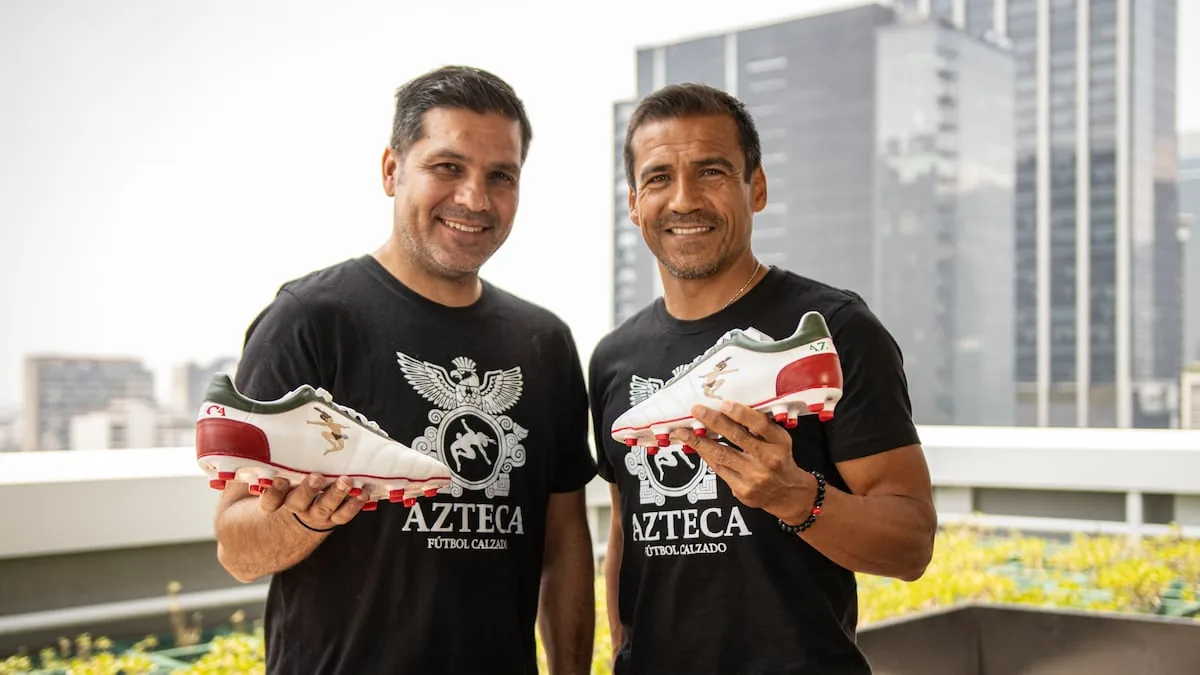
Pedro Solís (Petatlán, Guerrero, 45 years old) walks briskly down Avenida Paseo de la Reforma in unprecedented football boots. The colors of the Mexican flag stand out, but the logo shines brighter: a competitor from the ancient Mesoamerican ball game. On his feet, the former Pumas player wears an obsidian serpent, that is, Itzcóatl, one of the great rulers of Tenochtitlan. These boots, which honor part of Mexican culture, are part of a mission comparable to a battle between a warrior and a deity.
Read more More than half of landlords in Spain have two or more rental properties
Azteca Zapato is a company founded in 2025 thanks to a conversation between Solís and one of his partners, Víctor Alejandro Neri, a lover of pre-Hispanic studies. From talking about old memories of playing on an IMSS union team, they ended up launching a company that wanted to leave its mark on Mexican football. “I like it because the shoe has history, stories that link us as Mexicans. We started from nothing, from saying: ‘Alright, let’s go! Go for it!’” says Solís. The designer Johan is his son. Several partners have joined the project, including Ismael Íñiguez (Ocotlán, Jalisco, 45 years old), a legendary Pumas player, where he won the League three times.
“There wasn’t a Mexican brand that identified itself by name. When the issue of the rights to the Azteca Zapato brand as such was reviewed, they were free to use. The brand could be registered, the name used, the logo of the ball game man. This first model is called Iztcóatl, in reference to one of the great warriors,” says Íñiguez. “We wanted to bring the ball game into the present, many Mexicans forget our roots,” says Johan Solís.
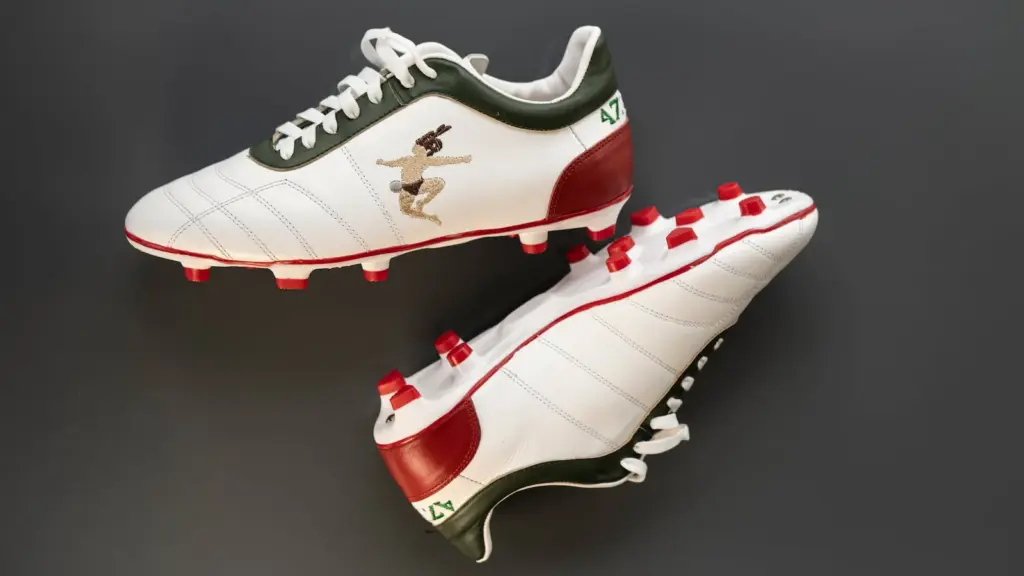
In a workshop in San Mateo, on the outskirts of Mexico City, the leather for these boots is cut, sewn, and molded. These sports shoes are a handcrafted work that takes a little over three hours to make each one. One of the artisans repeatedly taps the heel of the shoe. Each tap, tap, tap, is a blow that helps stretch the leather and give it shape. The machines that assist the process are the sewing machines for the stitching details, which require key precision. The boots come in two presentations: those that can be used on synthetic grass for 7-a-side football and those with studs, more intended for natural grass. They weigh only 370 grams. Íñiguez picks up one of the boots, bends it, crunches it, and says: “This is what you need to play, for it to be flexible.”
The founders of Azteca Zapato began to look at the agenda that football had provided them for many years and approached former teammates. This is how they managed to bring their first leather boots to Pablo Barrera, a former player for Zaragoza and the Mexican national team, who has played with them in semi-professional matches known as “la talacha” and in the Latin American version of the Kings League. “We have experienced the passion for football in the town and in the neighborhood. This is a product for Mexicans to identify with, to feel proud. When we go to play exhibition matches in the United States, family members, Latinos, and compatriots are the proudest of our roots. In the US, we are having a good impact,” says Íñiguez.
Read more Neruda as a “magazine rack”
“Sometimes when you’re starting out in professional football, sponsors and support don’t come your way, so part of Azteca Zapato is to support young Mexicans, their talent,” says Pedro Solís. “Having had a career in football, today we can have some doors open to search for and find the profile of a male or female player who can contribute to the brand and grow with them. The ideal would be to have a footballer in the First Division who gives us exposure as a brand and, consequently, in sales,” adds Íñiguez. The future bet is that the company will not only limit itself to football boots but also to sportswear.
Something they have had to contend with is the ingredient that sometimes Mexicans are the first detractors of something made in their own country. This has happened to other Mexican brands that, when trying to take some steps forward, receive excessive criticism, as has happened with Charly or Pirma. “I have read some comments that say: ‘They are too expensive for what they are.’ This is a handcrafted product, made by Mexican hands that can last a long time compared to other materials,” says Johan Solís. “In terms of price-quality ratio, the price is low (1,500 pesos). We kept it low, but it’s a sacrifice to position ourselves,” mentions Ismael Íñiguez. Transnational brands like Nike or Adidas price their boots at more than 2,000 pesos.
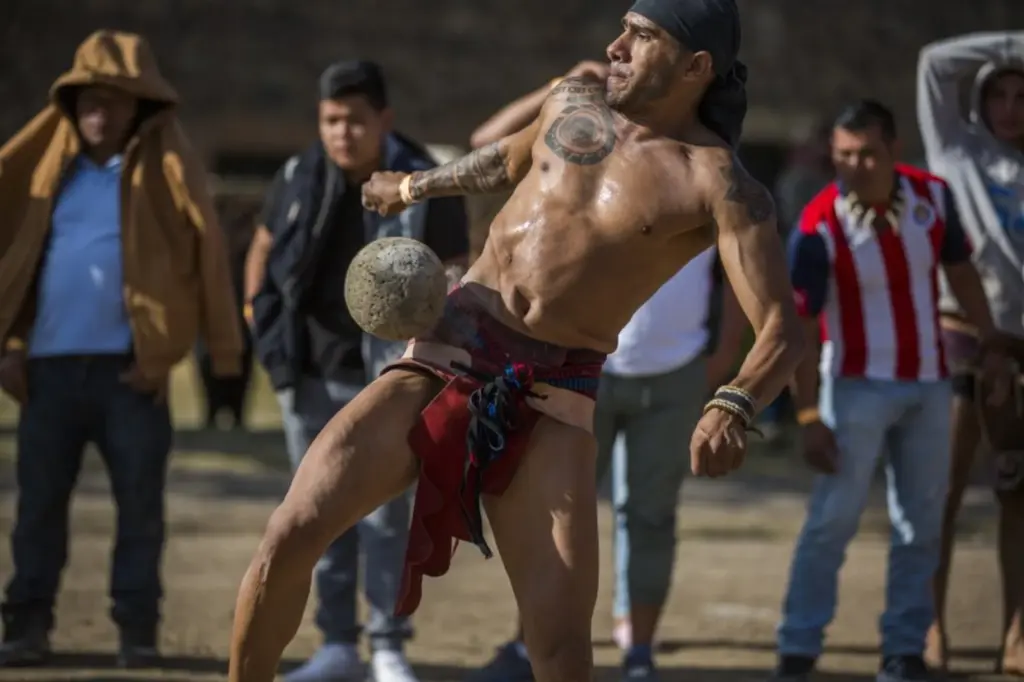
The aspiration of this venture is to compete with other Mexican brands in its own country and in the United States. The biggest dream is to see their brand captivate the world. “We want to get into places with difficult situations, in neighborhoods where we might be able to find a young person with the right conditions. We are supporting talent from basic forces. The important thing here is that we, as young entrepreneurs, want to promote sports. We also want to set an example for future entrepreneurs that you shouldn’t give up, don’t be afraid,” says Solís.
The partners of this company fondly remember their first sale. They were size nine shoes for a man living in New Jersey who had them sent to Querétaro. They are already preparing other designs to honor the legacy of a country that knew how to give a playful and religious use to rubber to create the first balls. “Mexicans have enjoyed the ball game since ancient times, as the president said,” mentions Solís in reference to the message given by Claudia Sheinbaum on the day of the World Cup draw. In Mexico, there are a hundred people who still practice the Mesoamerican ball game, and there is a group that will maintain the legacy in their boots.
Read more The mystery of Kevin, the survivor of mass migrant disappearances in Chiapas