









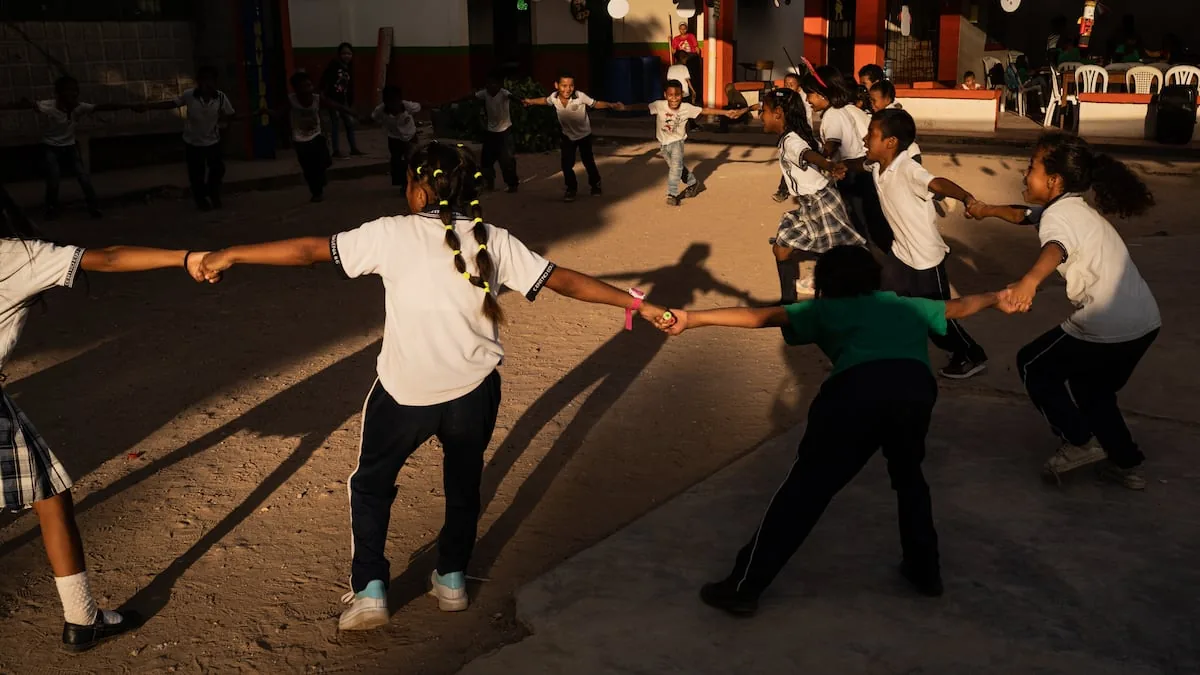
Fear and anxiety keep more than a thousand students in southern Huila, in the Andean region of Colombia, from attending classes. The residents of the municipality of Guadalupe refused to get identification cards, as ordered by the Ismael Ruiz structure, affiliated with the FARC dissidents commanded by alias Iván Mordisco. The criminals retaliated after the population refused to carry an identification document issued by the criminal group, which they demand as a requirement to move through certain territories. “If not everyone gets an ID, there will be no classes in any of this district where classes were prohibited,” says a voice message sent via Whatsapp, which generated fear in the hamlets of La Planta and Cachimbal. According to statements by Mayor Alberto Toledo to the regional media La Nación, there is no certainty about how long the threat will last. “More than 1,200 or 1,300 people are affected. (…) It’s the first time something like this has happened to them,” he said.
Read more Spain experiences the largest increase in sudden death in Europe
It is not an isolated incident. Just last week, it was learned that men from the so-called “Franco Benavides” front entered a school in the department of Nariño, in the south of the country, to spread propaganda among children. In the neighboring department of Cauca, according to a video broadcast by Caracol Radio, members of the same illegal group took refuge in a school’s facilities. All these situations have once again highlighted the state’s inability to protect educational environments, despite Colombia having signed an international commitment called Safe Schools some years ago, in which the State committed to building and following an action plan to protect children.
In 2025, several expert NGOs warned that the country suffers the most attacks on schools in all of America, surpassed only by Congo, Ukraine, and Gaza. Even so, in response to recent cases, the Government only reacted, through the Presidential Council for Human Rights, to what happened in Nariño. The office recalled, in a press release, that “school environments are assets protected by IHL (International Humanitarian Law) and, therefore, their entry constitutes a serious and inadmissible infraction.”
Read more Trump announces a three-week extension of the ceasefire between Israel and Lebanon
Following last week’s events, the Save the Children organization raised alarms and points out that it is urgent for the Government to address the resurgence of the war that is targeting children. “We make an urgent call to all armed actors and to current and future negotiation tables to guarantee the disengagement of girls, boys, and adolescents and to never involve them again. No dialogue process that seeks to build peace can evade this condition: the comprehensive protection of children must be non-negotiable.” Furthermore, the international NGO insists on the need for the State to comply with what was signed and contemplated in the aforementioned Safe Schools declaration plan. “The protection of children must be positioned more strongly in multilateral spaces, raising standards and learning about safe schools, child participation, and monitoring of serious violations.”
Threats to school environments become even more relevant given the worrying increase in cases of forced recruitment, which has precisely targeted the southwest of the country. According to the United Nations, recruitment in Colombia quadrupled in the last five years. On average, in 2024 alone, a minor was recruited every 20 hours. For now, Colombian children continue to await a real state commitment to their safety and their right to education.
Read more ICE again detains César Duarte’s wife after Mexico’s extradition request