






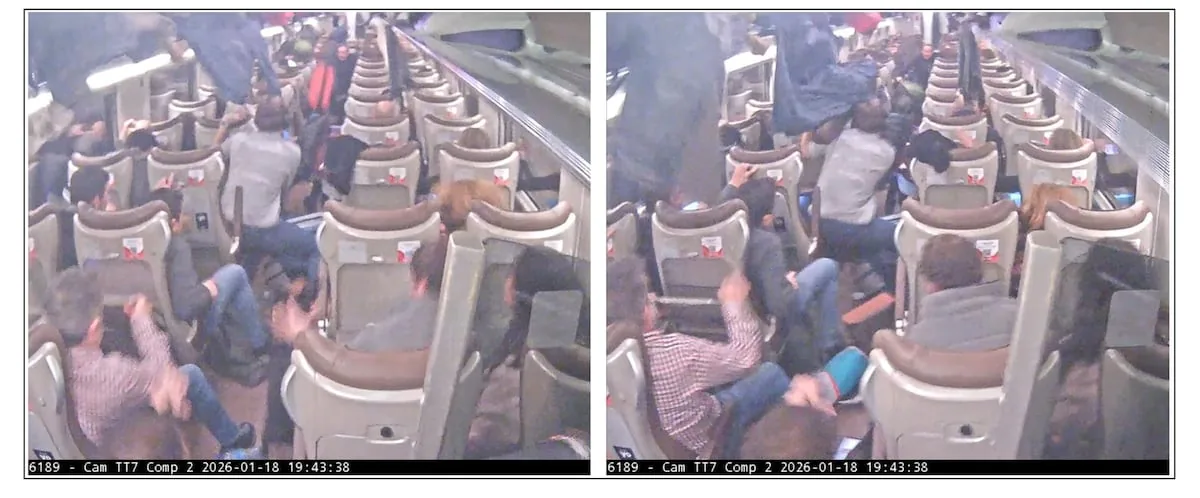
Abrupt lateral and vertical movements of the carriages. Passengers clinging on as best they can to avoid falling. Incandescent shards passing by the windows. The Railway Accident Investigation Commission (CIAF) has sent a report to the judge investigating the January 18 accident in Adamuz (Córdoba), in which 46 people died. After an exhaustive analysis of images recorded by cameras installed inside the Iryo train, one of the two involved in the accident, the report states that the “cause” of this train’s derailment and its subsequent collision with the Alvia was “the existence of a rail break” on the Madrid-Seville high-speed line. The document thus reinforces what has been the main hypothesis about the accident almost since the beginning of the investigation, as it also rules out that the videos show “anomalies in either of the two trains involved before second 19:43:33”, the moment the derailment occurred.
The new document, to which EL PAÍS has had access, details that its authors have collected, in addition to closed-circuit television cameras installed in the eight Iryo carriages — from which numerous frames are reproduced to illustrate the sequence of events — information from a dozen more sources already incorporated into the case file. According to the document, they also analyzed the Alvia train’s cabin audio, event lists provided by Adif, measurements made on a 3D model provided by the Civil Guard’s Criminalistics Service, the blueprints of the two trains involved in the accident, and the driving and personnel manuals of Renfe and Iryo. Thus, they have managed to synchronize key events to determine at what point of the railway section each carriage was during the accident.
The investigators detail the “relevant events” from 19:43:06 on that Sunday. At that moment, the Alvia train was traveling at 216 kilometers per hour and the Iryo at 215 kilometers per hour. Everything happens in a matter of seconds. The report initially focuses on the images recorded in car number 6, the first to leave the track. Regarding the videos corresponding to that car and number 7, it highlights that just as they passed the kilometer point where the track had broken, “the beginning of the vibration associated with the derailment is observed.” At that same moment, the cameras in car 8 record “what appear to be incandescent shards through the windows, presumably from the friction between the derailed wheels and the metallic parts of the infrastructure.” The train was traveling at 207 kilometers per hour at that instant.
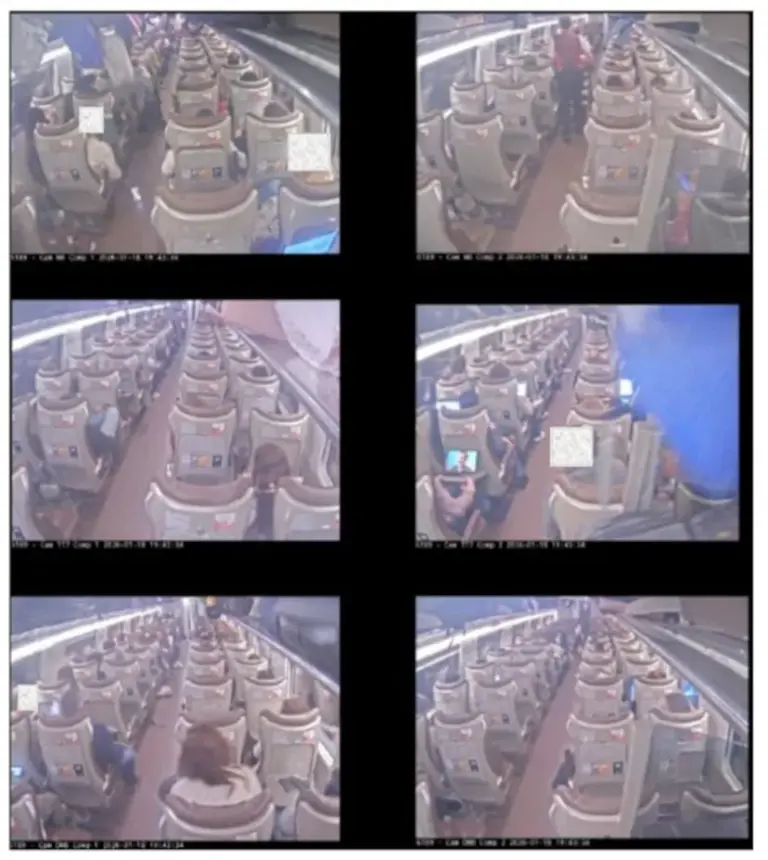
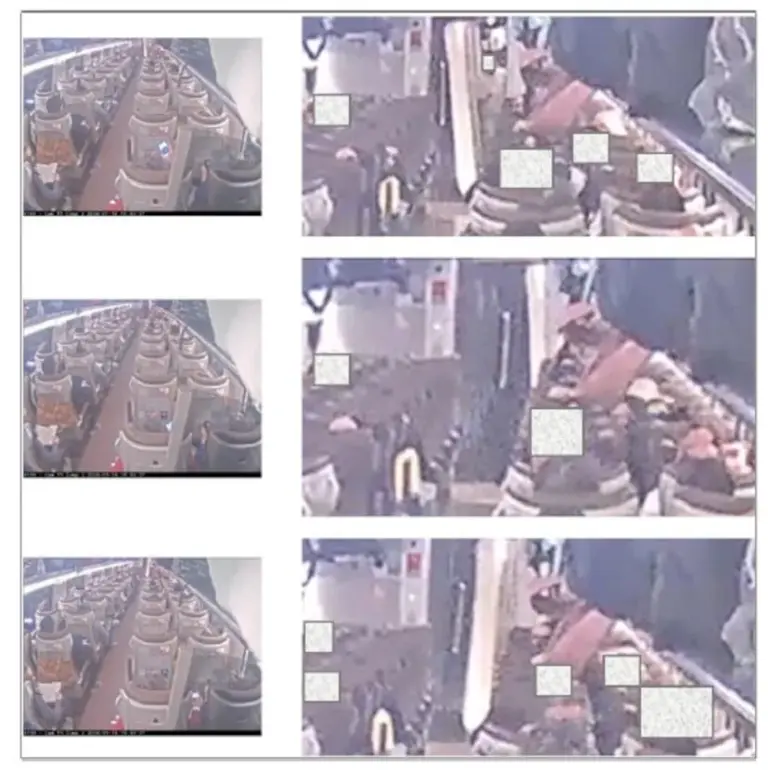
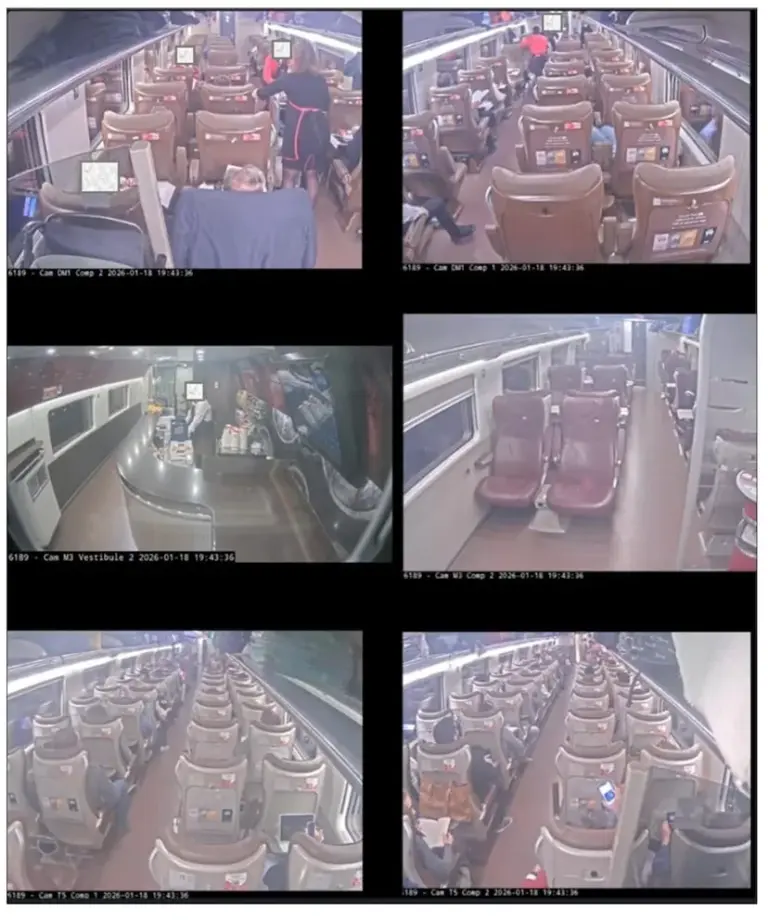
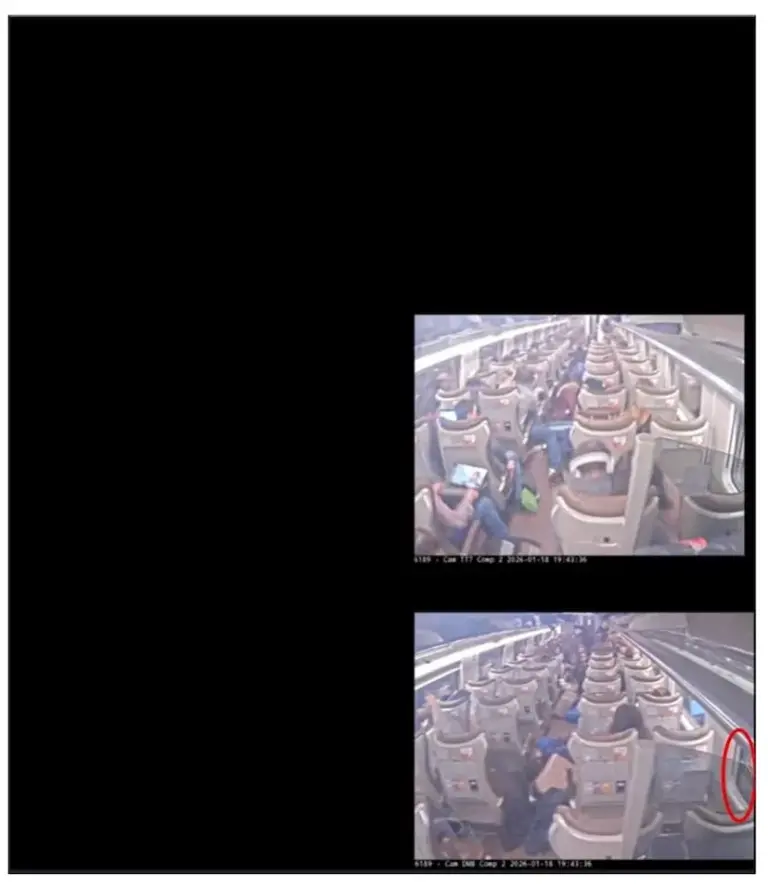
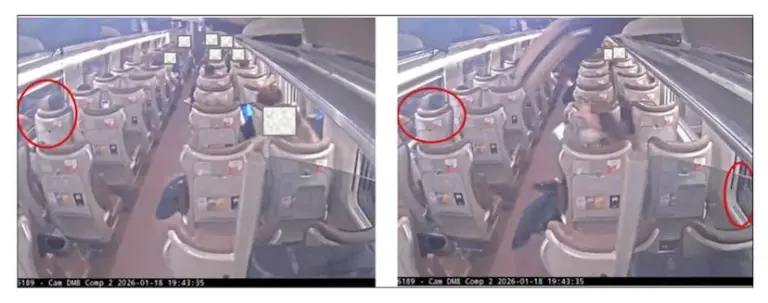
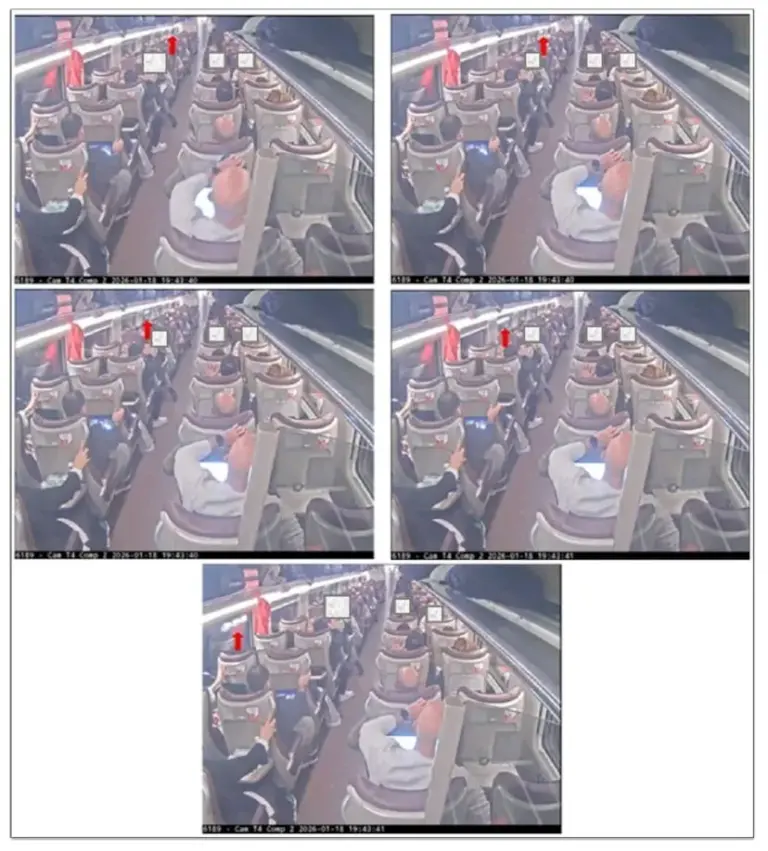
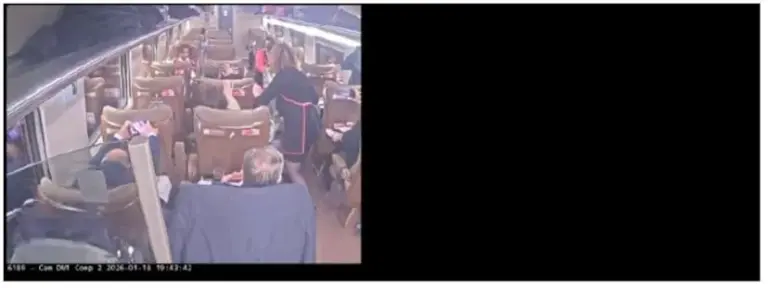
The CIAF emphasizes that, while this occurs in the last carriages of the convoy, in two of the first, 1 and 3, the cameras record what appears to be “braking inertia, which causes standing personnel to hold on to avoid falling.” In parallel, in the images of cars 7 and 8, “lateral and vertical movements” are observed and, again, “incandescent shards” before the recording cuts off in the last of the carriages. Those installed in number 7 continue to record what happens inside, where a “lateral movement” of the car is first observed, followed by a “vertical” one, both “towards the outside of the infrastructure.” Before the recording cuts off, these cameras show how this carriage “moves from the track gauge [the space between the rails of both directions] towards the outside.”
The authors of the report highlight that cameras in another carriage, number 5, recorded the “lateral movements” of car 6, the first to derail, and its impact with the Alvia train, which was traveling on the other track in the opposite direction. “Just at the beginning of second 42, vibration is observed in the carriage, presumably due to the Alvia’s impact with the end of car 6, and immediately afterwards, car 6 moves to the opposite side (outside the infrastructure),” details the CIAF document. Two seconds later, “the Iryo train’s speed drops to 0 kilometers per hour,” according to the black box recording. “This is presumably the train’s final stopping point, with the front nose located at PK 317.567, 1,113.6 meters from the derailment’s zero point,” the CIAF adds.
Read more At least 14 women die in two-train collision in Indonesia
The commission warns that the data contained in this new document, incorporated into the case on April 21, are “provisional until the final report is drafted.” Hence, it alerts that “new findings” may still emerge during the investigation that modify the hypotheses considered for the calculations presented to the judge. As CIAF president Íñigo Barrón explained this Monday during his appearance before the investigation commission opened in the Senate to clarify the causes of both this accident and the one that occurred in Gelida (Barcelona) days later, this body is still awaiting permission from the Montoro judge instructing the case to hire an external laboratory specialized in metallographic tests to analyze the rail and welding suspected of having collapsed.
The Civil Guard warns the judge that it lacks the capacity to analyze black boxes
Along with the CIAF document, the Civil Guard has sent an official letter to the Montoro judge informing her that its criminalistics laboratories do not have the necessary software applications to download the data contained in the trains’ black boxes, nor do they have “sufficient technical knowledge for their interpretation.” The agents thus respond to the judge, who on April 13 had asked them to provide the data and recordings stored in the black boxes or to inform her if they had difficulties in “taking appropriate measures.”
In another resolution, the judge, at the request of the armed institute, demands that Adif clarify within five days whether the track elements installed between kilometers 316 and 320 on the Madrid-Seville route were “newly installed or recycled,” reports Irene Dorta. Furthermore, it requires the company to provide traceability and certification information affecting the rails, ballast, and sleepers. Similarly, the judge rules out requesting recordings related to the accident from the 112 Andalusia Emergency Service, as proposed by Renfe. In her opinion, “for now” she does not consider it pertinent to make such a request as it is “not of interest for the instruction of the case.”