









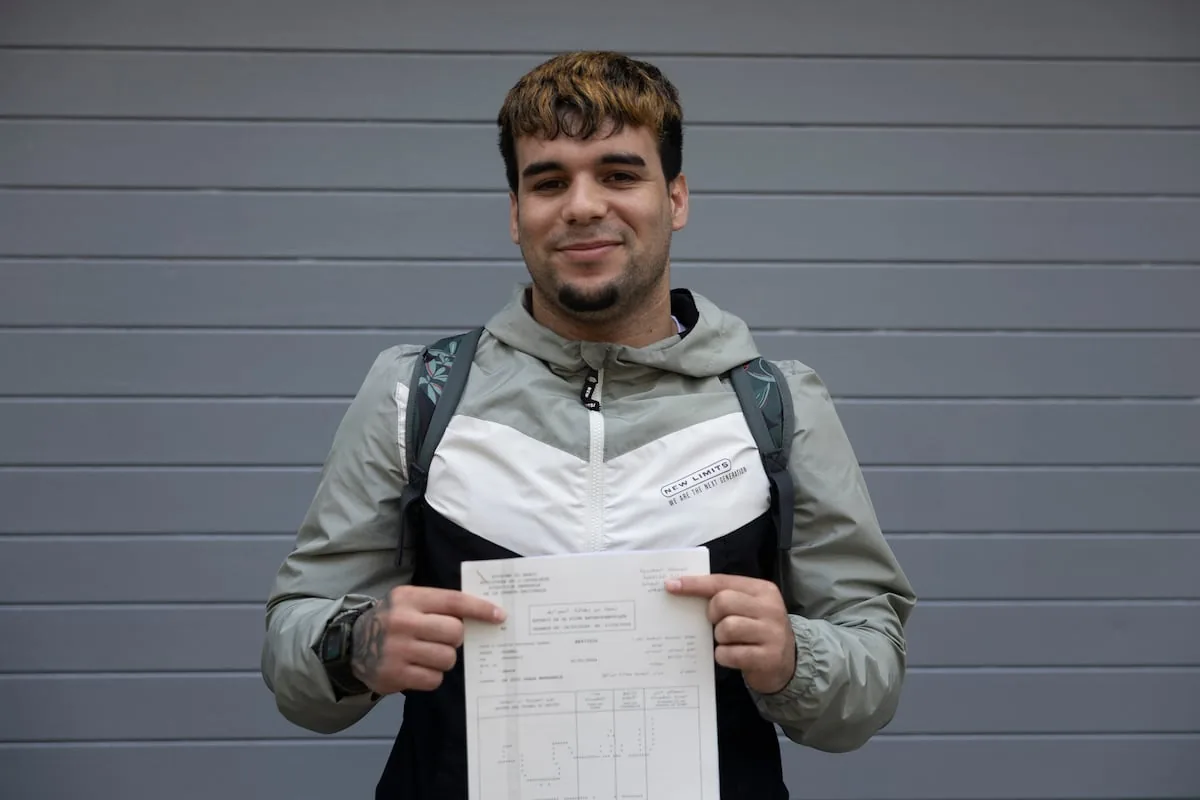
Youness leaves the Moroccan consulate in Barcelona with a paper under his arm that only cost him three euros, but whose value is priceless: the official document that certifies, with a “no record,” that he has not committed crimes nor been convicted in his country during the last five years. “I am happy. Now I will take it to be translated and with that, I think I will have everything,” says this 23-year-old man, who remains in an irregular situation and who will most likely become one of the more than half a million beneficiaries of the extraordinary regularization approved by the Government. Youness works in a home delivery company under precarious conditions. He trusts that, with the residence and work permit, he will finally be able to dedicate himself to what he has trained for and does best: “Bicycle and motorcycle mechanic.”
Read more The former attorney general puts his finger on the sore spot
The criminal record certificate from the country of origin is one of the requirements of the regularization recently approved by Pedro Sánchez’s Executive. That particular procedure is also one of the most worrisome for foreigners. The slowness and even the obstacles of some consulates when processing it threaten to deprive foreigners of benefiting from the regulation. Those who do not obtain it must formalize their application accompanied by a receipt indicating that they have requested it unsuccessfully and authorizing the Ministry of Justice to request it through diplomatic channels. The decree foresees that the process will be suspended for three months while this route is explored, essential to access the regularization.
However, this does not seem to be the case for the Moroccan community in Spain, the largest (1.1 million registered residents were born in that country) ahead of Colombia (almost one million) and Venezuela (700,000). The criminal record certificate, which must be requested and then collected in person, is currently being issued normally, within a time frame of between two weeks and a month, at least at the Kingdom of Morocco consulate in Barcelona, according to this newspaper based on testimonies from applicants. A reasonable timeframe in any case, which gives Moroccans some leeway, since the application deadline for regularization expires on June 30.
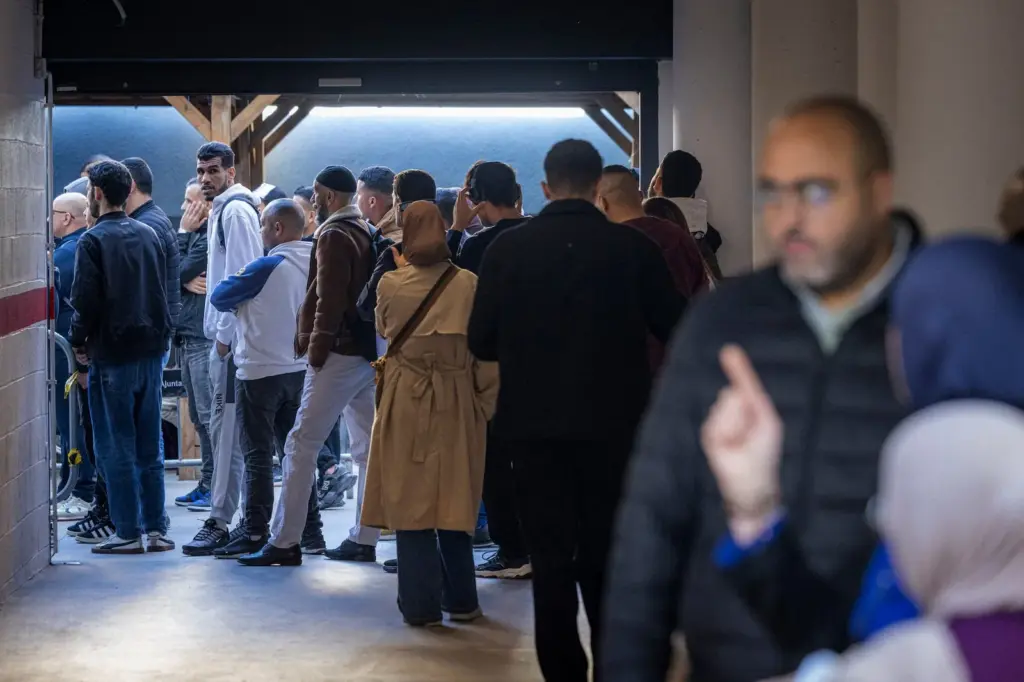
Like many other communities, the Moroccan one has also been cautious and anticipated: in February, when the Government announced the regularization and advanced that it would require a criminal record certificate, they began to flock to the consulate, which experienced moments of crowding. Youness was one of those early applicants. “I requested it in February and now I finally have it. I am happy because I will be able to work better,” says the young man, who arrived in Spain illegally two years ago and, besides working as a delivery person, has taken Catalan courses (“parlo una mica”) and mechanic courses during this time. The young man shows the paper, in Arabic, that certifies the absence of records.
The cost of regularization
This Wednesday Hasán also had an appointment to pick up the criminal record certificate. He lives in Granollers (Barcelona), where he works without a contract as a butcher. He smokes a cigarette before entering the consulate, on a street in the Poblenou neighborhood, where the small ecosystem born around the consulate (copy shops, advisory offices, sworn translation services, tea houses) coexists with the presence of tourists and expatriate workers who work in modern offices with open spaces. When Hasán enters, the friend accompanying him says that many young people like them are forced to live in substandard housing, and that working off the books is “a hassle,” as it often involves long hours and miserable wages. The regularization, which involves obtaining the work permit (he already has it), helps avoid abuses “by Spaniards, but also by Moroccans who suffocate their fellow countrymen.”
Read more The Fine Arts of Cádiz languish among scaffolding of works
Hasán has paid three euros for the official certificate issued by Morocco, will pay another 25 for the sworn translation (a service not offered by the consulate), and another 300 to a lawyer for the procedures. The regularization can be completed without needing to resort to legal specialists, but it is such a decisive moment in people’s lives that many choose not to take risks and leave it in the hands of a professional. “I prefer to pay, just in case I miss some paper I have to submit…,” he explains.
The most delayed Moroccans will also not struggle to get the certificate on time. “They told me they will have it in two weeks,” says a young bricklayer, who prefers not to give his name, upon leaving. After the final green light for the regularization, procedures have accelerated: the consulate has been open for weeks even on weekends so that no one is left out. Fátima also requested the criminal record this Wednesday. She has been in Spain for more than two years and combines a job as a caregiver for the elderly with another in a kitchen. One of her aspirations is also to recover her profession: “I am a teacher of people with disabilities,” she says before walking quickly towards the metro stop, amid a constant flow of people entering and leaving the consulate, where however no crowds have formed on the street.
Omar has been living in Spain for less than a year and does not speak Spanish. But he agrees to call his brother, who acts as a translator and warns that their concern is no longer the criminal record, but how to prove vulnerability. “We are worried about this, to see where and how we have to do it,” he explains in front of his brother, who has come to pick up (it takes about two weeks) the sworn translation. “Judicial sentences: no record,” says the document on one of its pages, where there are also other “no record” references to arrests.
Read more The vassal sovereignty