









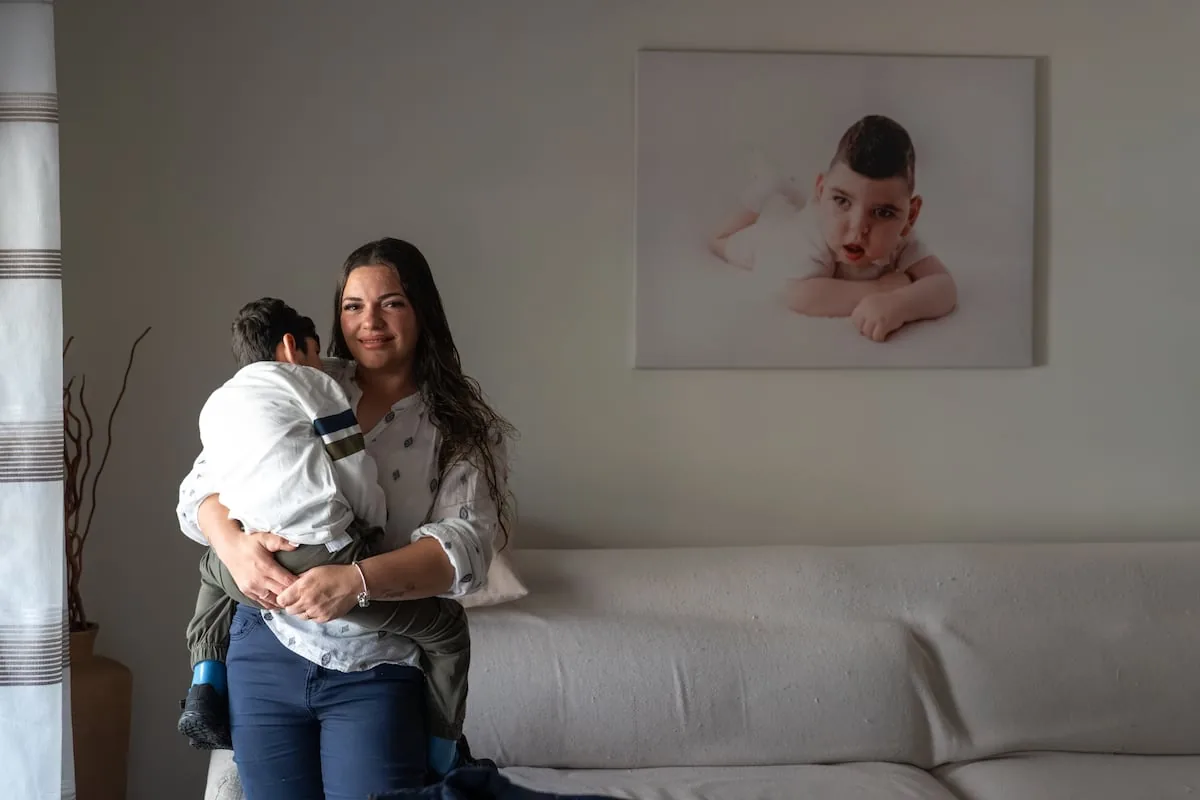
Thalía is 18 months old and crawls at full speed across the bed where her six-year-old brother Neizan rests. The girl hugs him and gives two kisses before looking with a radiant smile at the person recording the scene. “She adores him. Considering how little she is, it’s impressive to see the affection she gives him and how she pampers him. In some way, it’s as if she is already aware of all the care he needs,” explains Andrea Téllez while showing, in the living room of the house where she lives with her parents in Massamagrell (Valencia), images of her two children.
Read more Mónica García and Emilio Delgado, two different ways of trying to save the left
Neizan was born at the Sagunto Hospital — public and dependent on the Generalitat Valenciana — in the early minutes of the morning of November 18, 2019. The pregnancy had proceeded without complications and the first moments of labor were so conventional that the most notable thing was the nervous excitement of a 22-year-old first-time mother. Very soon, however, oxygen began to reach the baby’s brain with difficulty without the healthcare staff detecting it or making the appropriate decisions to remedy it.
“The result was very serious neurological sequelae due to hypoxia [lack of oxygen] that have caused the child cerebral palsy, developmental delay, epilepsy, vision problems, and difficulties feeding normally, among other damages. He has a recognized disability degree of 87%,” explains Rafael Martín Bueno, the lawyer who has advised the family and has now achieved the highest compensation for medical negligence ever awarded in Spain.
According to the ruling signed on March 26 by the Court of First Instance 103 of Madrid, which can still be appealed, Neizan’s parents — now separated — will be compensated with 13.3 million euros, of which 6,106,275 correspond to the principal and the rest to late payment interest. This amount exceeds the 11 million received by Chloe in another similar case handled by the same lawyer. The high amounts in these processes are explained because they seek to compensate for sequelae in babies who will require specialized assistance throughout their lives, as well as adapted homes and vehicles.

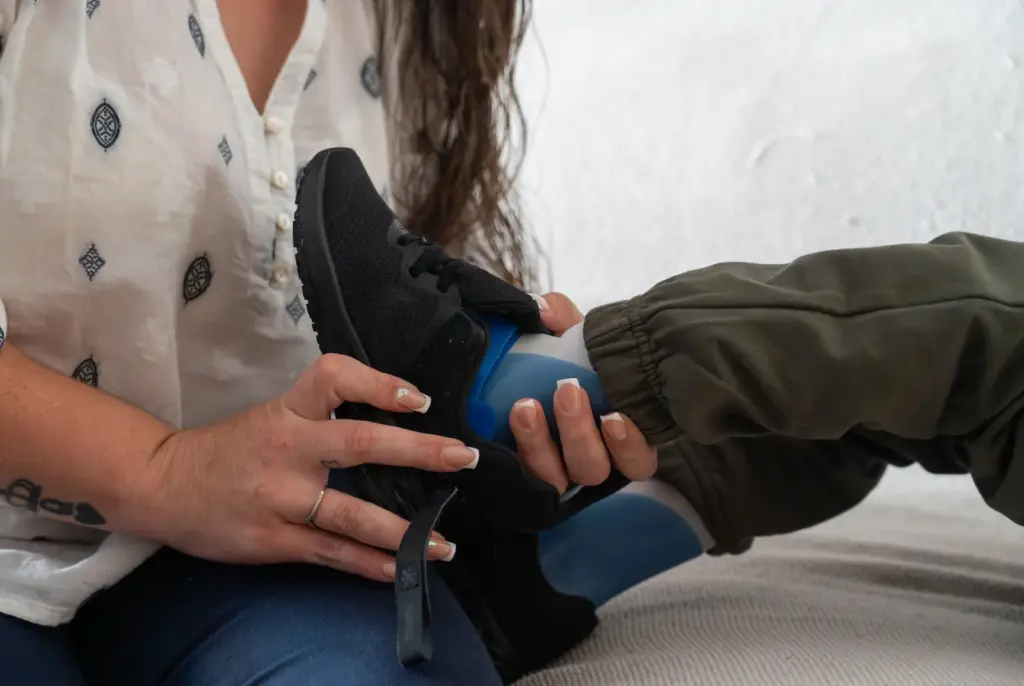
“Neizan needs the money to grow as well as possible,” summarizes the mother while explaining the care she now feels she cannot cover. “He goes to the pool once a week. I would like to take him more days, but I can’t because it’s 50 euros per session. Then he also has therapy and speech therapy. Part of it is covered by dependency aid, but doing everything the child needs would cost me more than 800 euros a month. Right now I can’t afford it,” she laments.
Andrea, who has training in cooking and hospitality services, works double shifts on weekends at a gas station and a restaurant. “We also need an adapted van to fit his stroller, but the repairs alone cost more than 10,000 euros and I don’t have that either. And, most importantly, the house. This one [she says while pointing to the living room] is not adaptable, the architect told us. It has three floors. The child still weighs little and for now I can carry him in my arms, but there will come a day when it will be unfeasible. With the compensation, I hope to be able to offer Neizan an environment tailored to him with all the care he requires for his development,” the mother reiterates.
The case ruling describes in detail what happened from when Andrea was admitted to Sagunto Hospital at 6:31 a.m. on November 16, 2019, 41 hours before the child’s birth. After the initial routine measures, problems arose due to “the absence of control of the fetal monitoring charts and an incorrect interpretation of them by the obstetrician,” which caused “an intrapartum hypoxia to go unnoticed.”
According to the ruling, by 11 a.m. “alterations in the cardiotocographic record were already evident and progressively worsened.” Under these circumstances, protocols establish the need to perform a diagnostic test to confirm fetal well-being, which consists of analyzing a blood sample taken from the top of the baby’s head. Something that was not done: “Despite the serious alterations observed in the monitoring chart, suggestive of intrapartum hypoxia, there is no record of any assessment by the midwife nor [that she] called the responsible obstetrician for evaluation,” the ruling continues.
Read more Immigrant regularization divides Spaniards: 38% in favor and 33% against
A final error by the team assisting the birth was attempting to use the vacuum extractor to speed up delivery when the baby still “had not reached the III Hodge plane.” This is a measure used by gynecologists and midwives to know how far the fetus’s head has descended through the mother’s pelvis. Neizan was still in the II, where the use of the vacuum extractor is contraindicated.
All of the above, according to the judge, “required immediate fetal extraction by cesarean section,” a measure that was delayed repeatedly. Finally, at 0:05 on November 18, “a child was born in a lamentable state of health,” with less than 60 beats per minute, not breathing naturally, and with very low blood pressure, the ruling states.
“They had to transfer him to the Clinical Hospital of Valencia, where he spent 35 days in the ICU. When I woke up from the cesarean anesthesia, the first thing I did was ask about him. Initially, they told me he was fine, but when I went to Valencia and saw him all intubated, my world collapsed,” Andrea recalls.
The case lawyer highlights the succession of poorly resolved incidents during the care process. “It is striking that the healthcare staff was not able to properly monitor the labor or detect problems in time. But then, moreover, they also did not know how to react or make the correct decisions to solve them,” Martín Bueno states.
Óscar Martínez, president of the Spanish Group for Obstetric Safety (GESO), warns that these problems are more frequent in small maternity wards. According to the reports of Sagunto Hospital, the center handles fewer than two births a day (about 650 a year). “Evidence confirms that the fewer births attended, the worse the health outcomes for mother and child. A small maternity ward will always have fewer resources and less experienced staff facing complications than a large hospital. In France, for example, services attending fewer than 1,000 births a year tend to be closed,” he explains.
The debate, this expert admits, is not simple, since “politically it is very complicated to close a maternity ward. Everyone wants to give birth close to home, but it should not be forgotten that small ones are less safe.” Only in some circumstances, he adds, “is it justified to keep services with few births open.” This would be the case for islands or places far from another large hospital, like Teruel, because “the risk that all women about to give birth have to make a long transfer at the last moment is greater than that of keeping a small maternity ward open.” GESO participates in these cases in a program called Guardian Angels to improve health outcomes in these centers.
Sagunto is 30 kilometers from Valencia and well connected by highway, Martínez recalls. A year ago it was made public that the Generalitat compensated the parents of another child who died due to poor care during birth at the same hospital in 2013 with 175,000 euros. The regional government has now declined to comment on the ruling or whether it plans to take any measures to strengthen care in small maternity wards.
Read more Vox confirms its downward trend and loses almost one point in vote estimation in a month