









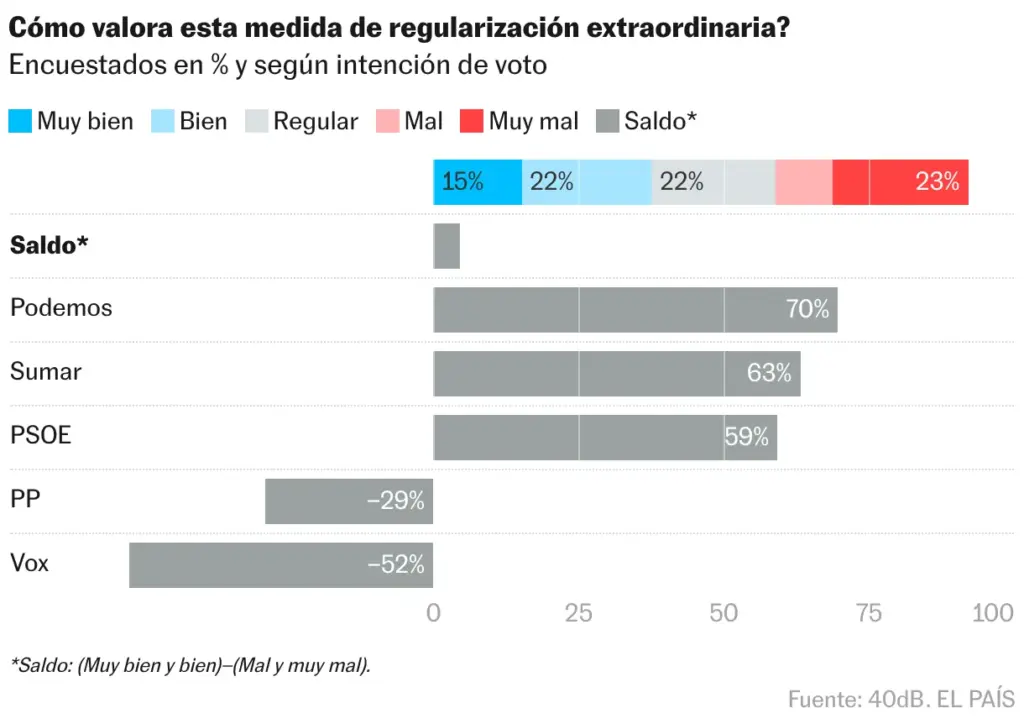
The extraordinary regularization divides the Spanish population: 37.6% view it favorably, 21.5% find it “average,” and 33% see it as bad or very bad, especially among PP and Vox voters. In the eternal battle of political narratives, the right seems to prevail in the one concerning the immigrant population: 60% of citizens with Spanish nationality consider them too many; expectations about this process to legalize the situation in Spain of undocumented foreigners are mostly negative, and the so-called “national priority,” that clause Vox has demanded from the PP to sign the regional coalition agreements, is the most popular option among voters, according to the 40dB institute survey. (2,000 online interviews) for EL PAÍS and Cadena SER. You can consult all the survey data here.
Read more Vox confirms its downward trend and loses almost one point in vote estimation in a month
Regularization: between ignorance and fear
Half a million immigrants, according to government estimates, will benefit from the extraordinary regularization promoted for those foreigners living in Spain without proper documentation. In the first week since the decree came into effect, 130,000 applications were submitted. Almost 51% of the population with Spanish nationality considers the number of beneficiaries “too high,” compared to 33.3% who find the figure “adequate.” According to voting intention, up to 80.8% of Vox supporters and 68.4% of PP supporters believe that number is excessive, a percentage that drops to 29.2% among PSOE voters and 22.5% among Sumar supporters, parties that make up the coalition government.
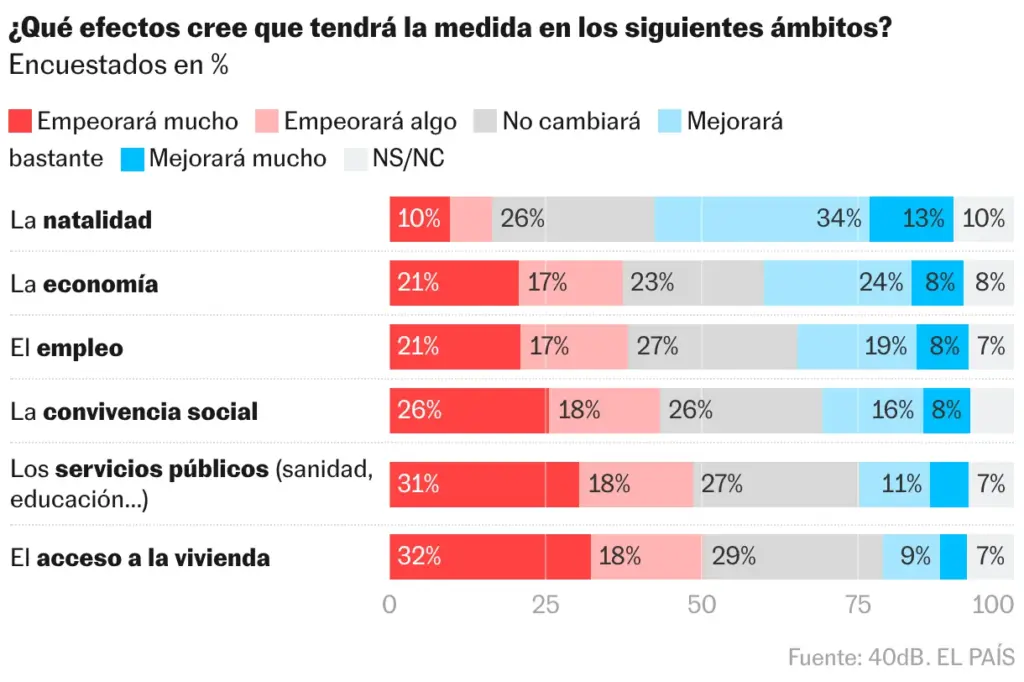
More Spaniards associate the extraordinary regularization with negative consequences than positive ones. When asked, in general terms, about the effects they foresee from the measure, up to 50.3% believe it will have a negative impact on access to housing; 48.6% think it will worsen public services, such as healthcare or education; 43.4% estimate it will harm social coexistence; 38.3% believe it will negatively affect employment; and 37.3% consider it will negatively alter the economy. Only one item on that list of expectations receives more positive evaluations (47.7%) than negative (16.5%): birth rates. PP and Vox voters are the most convinced of the disadvantages, but even among PSOE and Sumar supporters, the group that thinks it will have a negative impact on access to housing outweighs those who believe it will not affect the country’s primary problem.
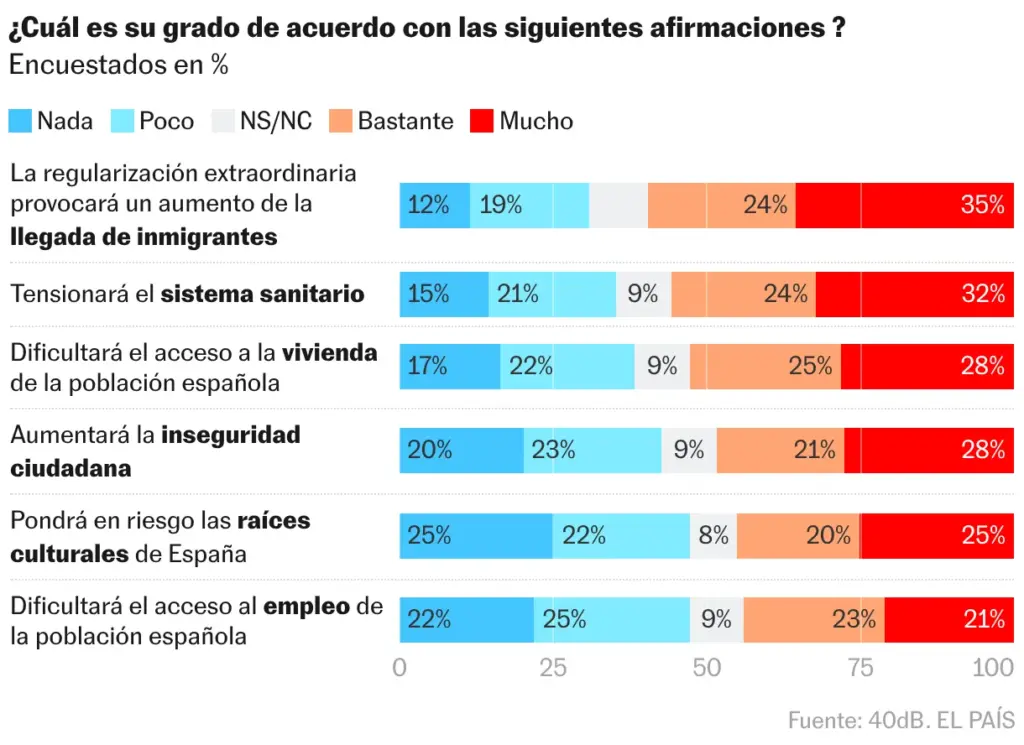
When respondents are asked to indicate their level of agreement or disagreement with a series of statements related to the extraordinary regularization, the majority (59.4%) share the idea that it will cause an increase in immigrant arrivals, which PP and Vox often refer to as the “pull effect.” 55.8% believe it will “strain the healthcare system”; 52.5% think it will make access to housing more difficult; and 48.4% believe it will increase public insecurity. In the “disagreement” category, those who do not believe it will “endanger cultural roots” or hinder access to employment prevail.
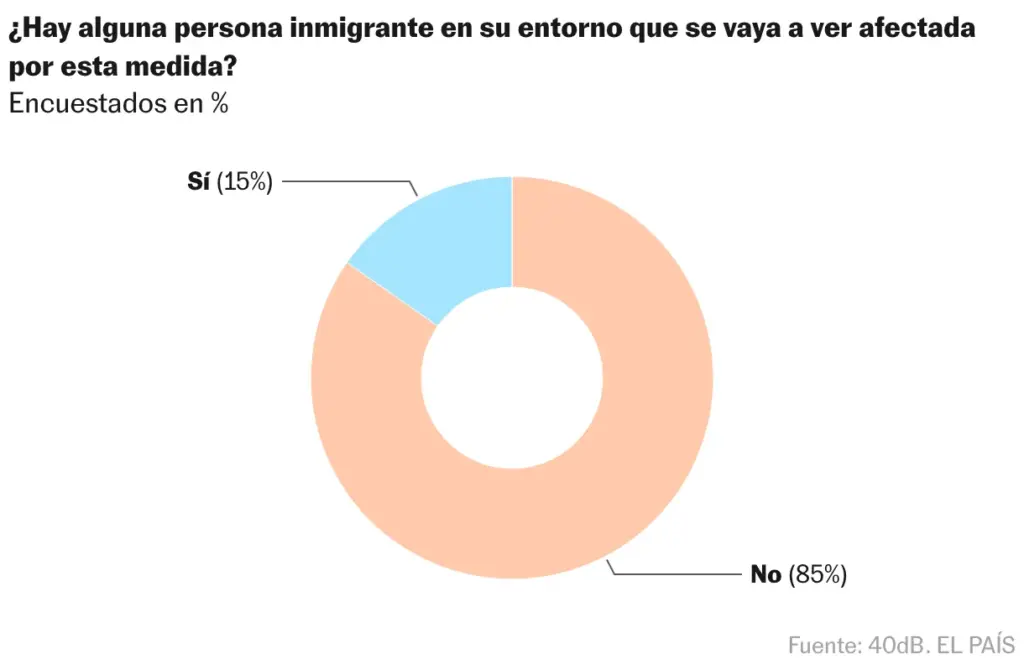
These fears about regularization have much to do with ignorance and confusion. The idea that the measure is “necessary” stands out especially among those who know people who could benefit, compared to a more critical view from those without such contact, and similarly, the fact that there is an immigrant without proper documentation in the respondent’s environment softens negative expectations about the effects of this process, especially regarding access to housing, quality of public services, and social coexistence. But only 15.3% know someone who will benefit from the regularization.
Up to 61.6% do not believe the government has sufficiently explained this measure to the public, and 63.7% deny that the regularization has had “sufficient political consensus.”
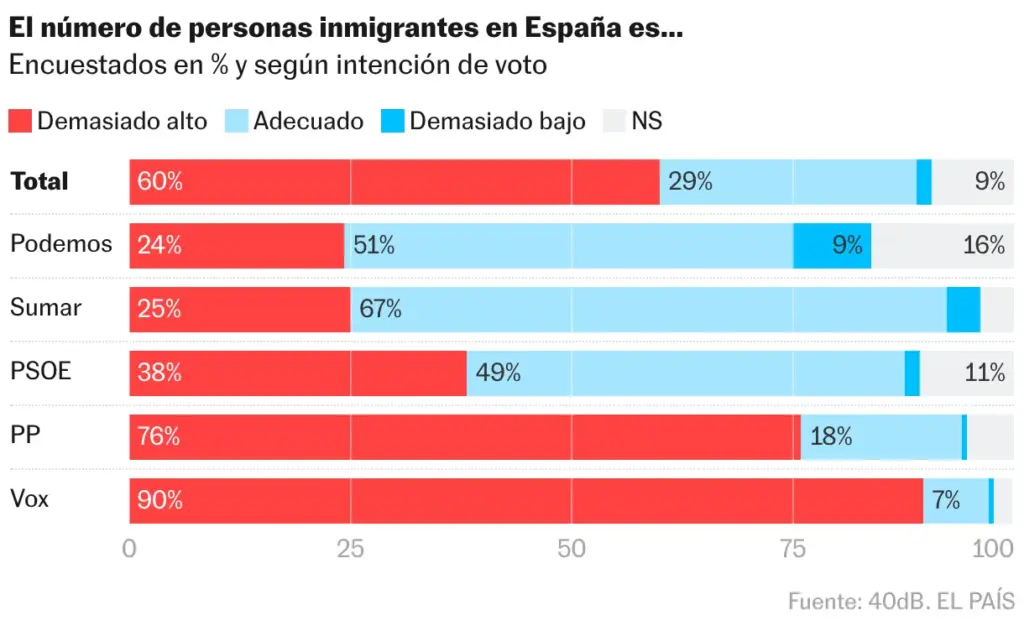
60% of the population believes the number of immigrants in Spain is “too high,” a percentage that rises to 90% among Vox voters, drops to 76% among PP voters, and to 38.2% among socialist supporters. Only 29% of citizens consider the current number “adequate” ―49.4% among PSOE voters and 7.3% among Vox supporters― and less than 2% believe that figure is too low. A 2024 report from the Bank of Spain warned that the country will need 24 million immigrants to maintain the ratio between workers and retirees in 2053, when the INE expects there to be 14.8 million pensioners.
The majority of the population (60.3%) knows that in recent decades there have been more extraordinary immigrant regularization processes, but it is no longer so clear (48.6% know) that governments from different parties have promoted them ―More than one million foreigners have benefited from similar initiatives approved since 1986, including those promoted by then-president José María Aznar, of the PP, in 1996, 2000, and 2001― and is confused about the advantages they entail. 40.5% know it is false that this regularization implies granting nationality, but 40.1% believe it is granted simultaneously ―the PP contributed to generating this misunderstanding― and up to 30.9% think it is automatically applied to all people in irregular situations, when a series of requirements must be met, including proving the absence of criminal records in the countries where the foreigner has lived in the last five years ―the Administration will automatically collect the criminal and police records both in Spain and Europe of the applicants― and being in a “vulnerable situation accredited by the competent entities in social assistance.” Vox voters are the most confused in this regard.
Read more United States will deploy destroyers, planes, and 15,000 soldiers to escort ships trapped in Hormuz
Asked about the positive aspects of regularization, 59.5% agree that it “will improve the living conditions of immigrants”; 53.5% believe it “will help cover the labor shortage in some sectors,” and 45.3% think it “will increase contributions to Social Security.” From there, the majority groups disagree that the measure will improve business competitiveness; contribute to maintaining pensions; reduce the underground economy; or allow for greater tax collection.
The reality is that undocumented immigrants already use basic services such as healthcare, but by working in the underground economy, they neither contribute to Social Security nor pay income taxes, so regularization initially represents a liquidity injection into the system. A study by the TransEuroWorkS network on 15 European Union countries showed that non-EU migrants represent a lower cost to the treasury than native citizens.
National priority
Asked which criterion should prevail in access to public aid, the most popular option is “giving priority to the Spanish population” (44.2%), compared to 31.8% who believe “all people should be treated equally, without establishing priorities,” and 19.3% who support that the first beneficiaries should be “people with the greatest roots in the country.”
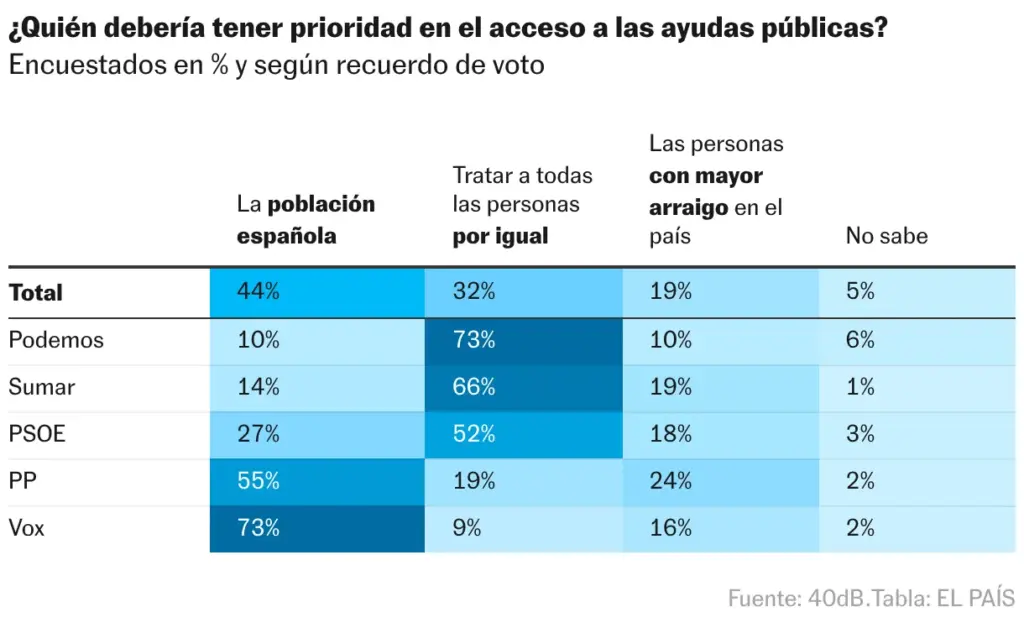
These percentages vary significantly according to voting intention. Thus, the criterion of giving priority to the Spanish population is the favorite (73.4%) of Vox and PP voters (54.7%), while it drops to 26.7% among socialist voters; 14.4% among Sumar voters; and 10.4% among Podemos voters. The option of treating all people equally, without establishing priorities, is preferred by 73.1% of Podemos voters, 65.7% of Sumar voters, and 52.1% of PSOE voters, while only 19.3% of PP voters and 8.5% of Vox voters support it. There are fewer differences regarding the priority criterion of “greater roots,” supported by 24% of popular voters; 18.8% of Sumar voters; 17.8% of socialists; 15.9% of Vox voters; and 10.4% of Podemos voters.
The Spanish Episcopal Conference has opposed this national priority criterion, which has earned it harsh attacks from Vox leaders. Already in 2024, Cáritas announced it was renouncing aid from the Burgos City Council after the Council, at Vox’s demand, removed budget allocations for three other NGOs also working with migrants. Its stance forced the PP mayor to backtrack.
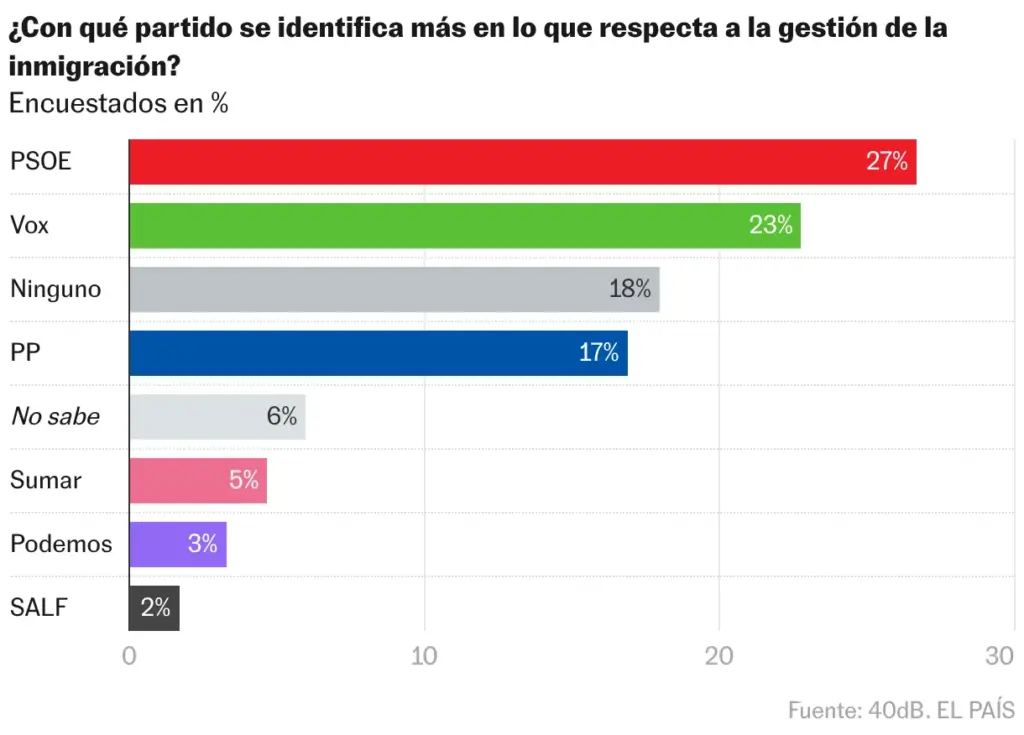
Asked about the party with which they most identify regarding immigration management, the first option among the general population (26.7%) is the PSOE, followed by Vox (22.8%), “none” (18%), and the PP (16.9%). Almost 40% of Generation Z men (18-27 years old) identify with Santiago Abascal’s party on this issue.
Read more Arbeloa: “It hurts me when all the rivals run more than us”