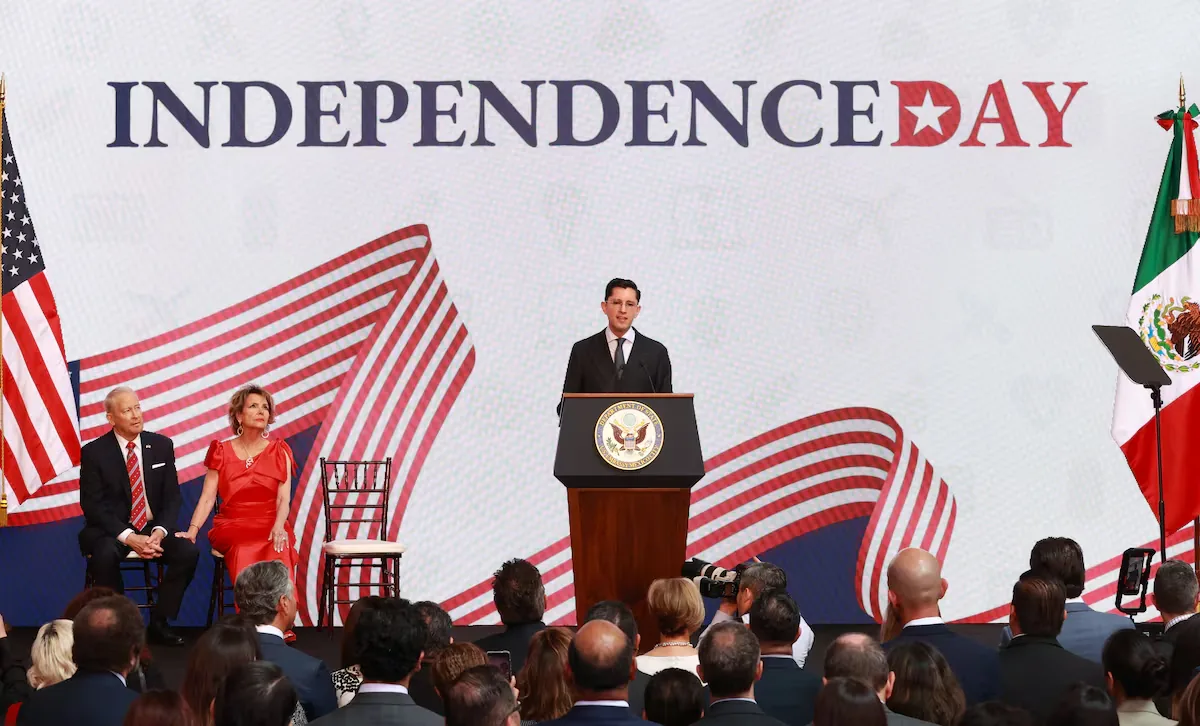









In an attempt to reactivate the Mexican economy, President Claudia Sheinbaum has given the green light to a series of measures to speed up and facilitate mixed and private investments. This Monday, the president signed, before a hundred businessmen gathered at the Museum of Anthropology in Mexico City, a decree for the immediate authorization of investments. Projects eligible for this benefit must meet one of these characteristics: be developed in a Welfare Pole, with an investment amount of at least 2,000 million pesos, or be executed in one of the strategic sectors, for example, electronics, semiconductors, automotive, pharmaceutical, energy, chemical, among others. For the rest of the private investments, all procedures must be resolved within a maximum period of 90 days or they will be considered authorized.
Read more Iran opens fire in response to the United States’ attempt to remove ships from the Strait of Hormuz
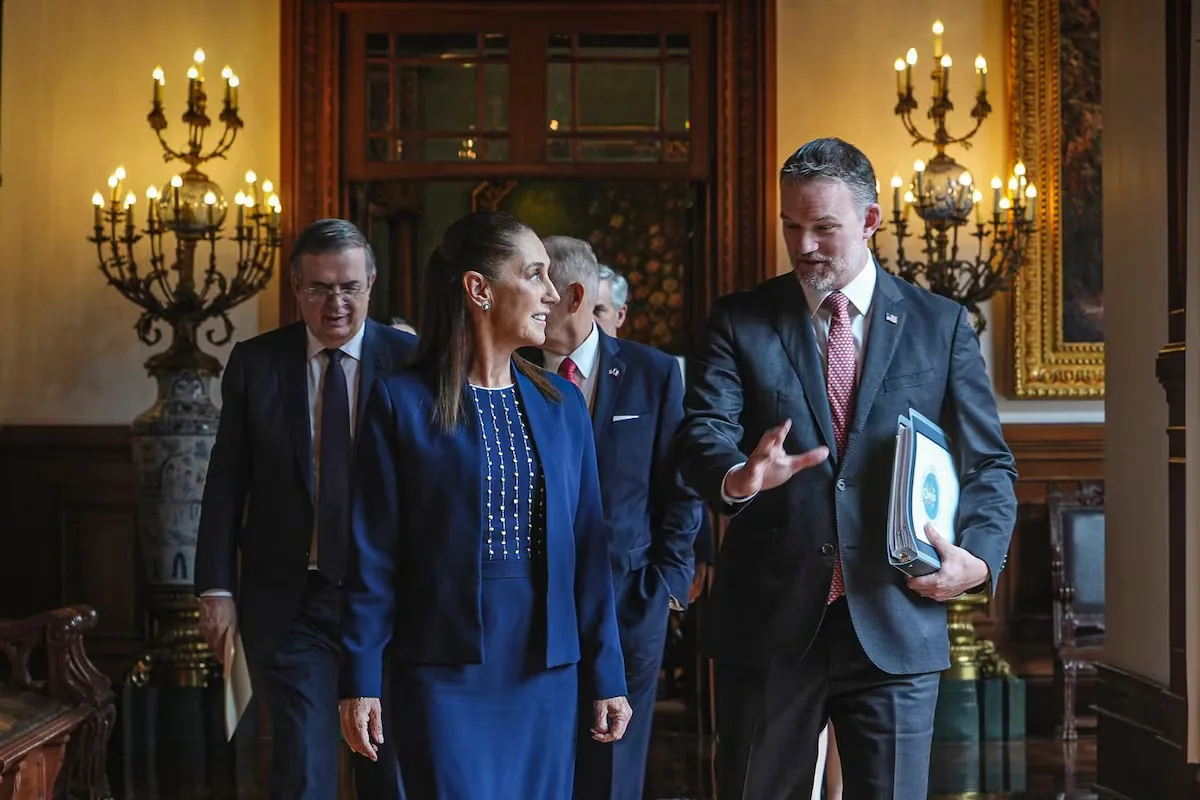
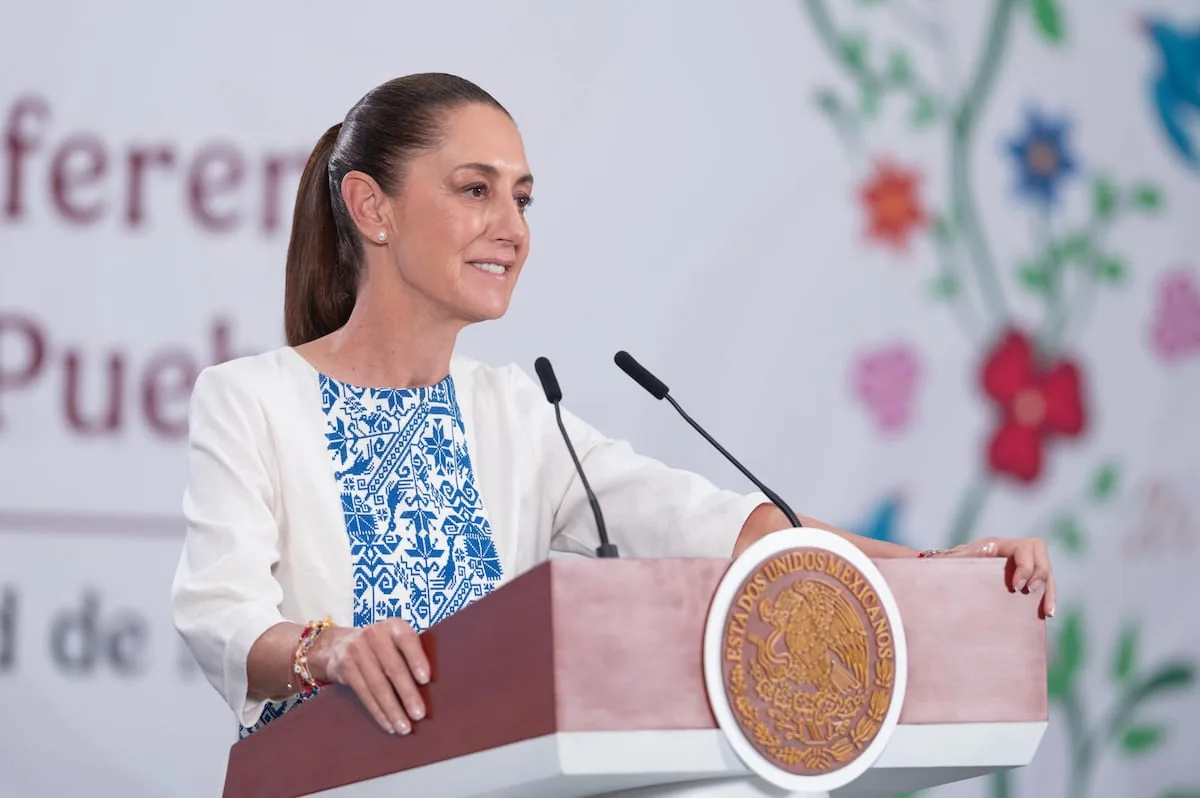
Faced with the protectionist policy of the United States, the uncertainty due to the conflict in the Middle East, and the contraction of public spending, economic policy has become Sheinbaum’s Achilles’ heel. Without a tax reform on the horizon, Sheinbaum has built bridges with businessmen to encourage economic activity. The president also signed a decree to create the Single Window for Foreign Trade Procedures, which will be operational within the next 15 days. This portfolio of measures also includes commitments to reduce oversight and to streamline procedures to get productive projects underway. “Today we respond to the requests that the productive sector has been making to us in recent months, reducing procedures to accelerate investments, improving conditions for small and medium-sized enterprises, speeding up access to energy, and strengthening public procurement,” Sheinbaum added amid applause from the Mexican business community.
In her message, the president recounted the positive points of the economy: the stability of the peso, the growth of more than 17% in Mexican exports, as well as the creation of more than 20,000 formal jobs in April, among others. “The package against inflation and high costs (called Pacic) and the reduction in fuel prices are the result of joint agreements that demonstrate that development with justice is possible. These results are not a coincidence, they are the product of responsible economic policy,” she mentioned.
José Peña Merino, secretary of the Digital Transformation Agency, announced that as part of this strategy, aligned with the Mexico Plan, a presidential investment office will be created to monitor projects. Minutes later, the Secretary of Finance, Édgar Amador Zamora, reported that an agreement will be published seeking to streamline the oversight of projects and promote investment. “The tax authority will ensure that, as a general rule, only one comprehensive review is carried out per fiscal year and per taxpayer,” he indicated.
Read more Anticorruption maintains its request for sentences and does not reduce Aldama’s sentence
The Government of Mexico has stepped on the accelerator to promote investment in an economy that still has not recovered. In the first quarter of the year, Mexico’s Gross Domestic Product (GDP) fell by 0.8%. The weakness of domestic demand, the contraction of public and private investment, as well as the persistent uncertainty about tariff policy with the US have weighed down the performance of the country’s economic activities, especially in agriculture and manufacturing. Beyond the Mexico Plan — the six-year investment strategy — most economists and experts warn that the decline in public and private projects has led to a spiral of slower employment growth and, consequently, lower consumption.
For this year, the Ministry of Finance forecasts economic growth in a range between 1.8% and 2.8%. However, more than 40 economic analysis and consulting groups from the national and foreign private sector, surveyed by the Bank of Mexico, estimate that the Mexican economy will have an average gross domestic product of 1.35% in 2026. GDP growth expectations for this year have decreased compared to the previous survey. In addition, uncertainty about the future of USMCA, to be reviewed next July, remains on the table. For the country, this trade agreement has been a shield to safeguard Mexican exports to the United States; however, it cannot be the only economic engine.
Read more Architecture that brings victories. This is the new factory of ‘txuri urdin’ talent