









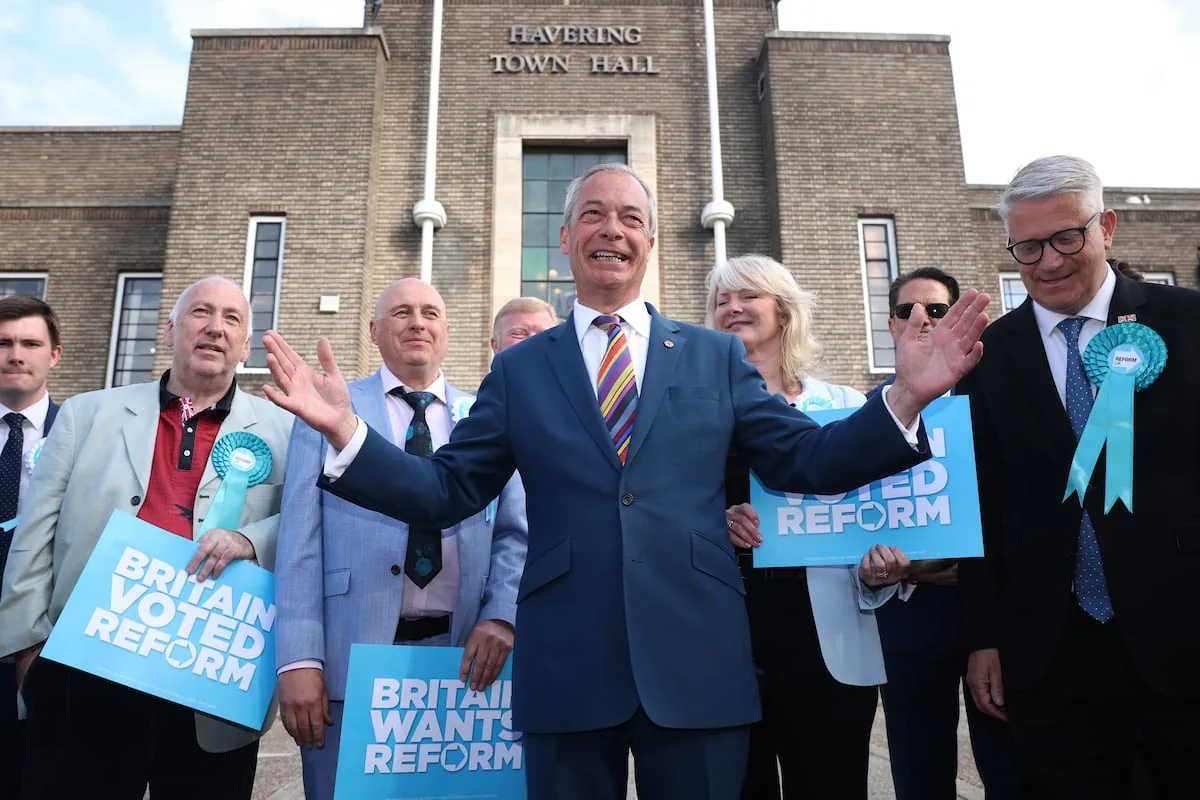
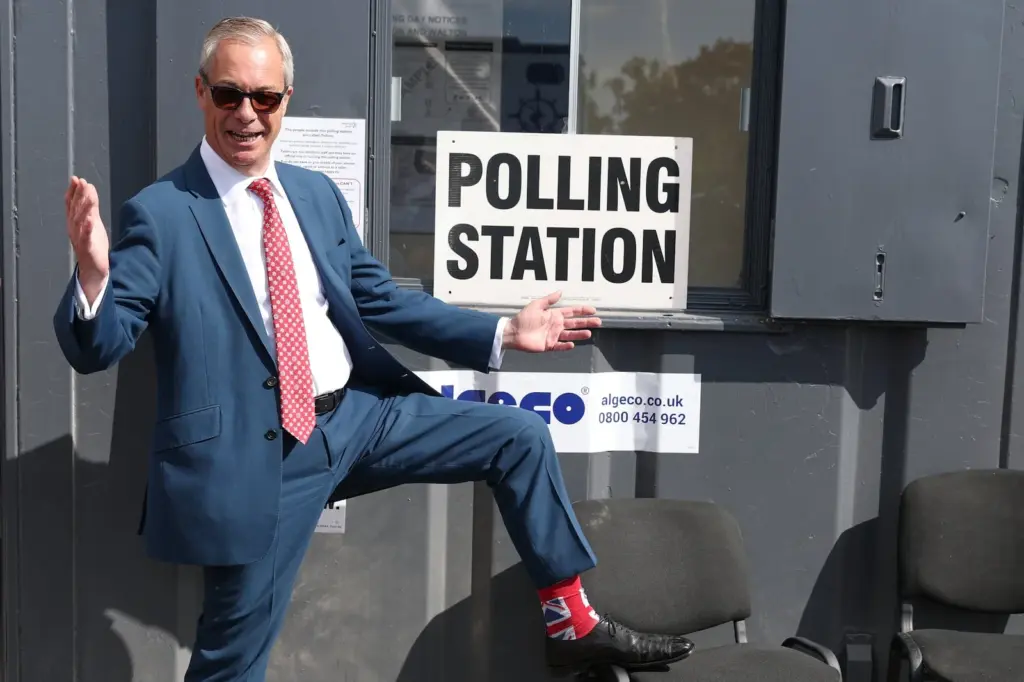
The far-right of Reform UK, Nigel Farage’s party, is set to be the big winner in the local and regional elections held this Thursday in the United Kingdom, according to initial counts. Keir Starmer’s Labour Party is on track to lose a historic number of representatives, and the prime minister’s political future is increasingly on shaky ground.
Read more The war against Iran magnifies the United States’ hegemony in oil and gas
The United Kingdom takes the vote count very calmly, especially if they are local elections. In the early hours of Friday morning, barely 20% of the councilors at stake across England, totaling 5,000, had been assigned. In many counting centers, the places where ballots are sent from the various polling stations for the final calculation of results, work was not going to start until nine o’clock (ten, Spanish mainland time). The same happens in Scotland and Wales, where their parliaments and autonomous governments were renewed.
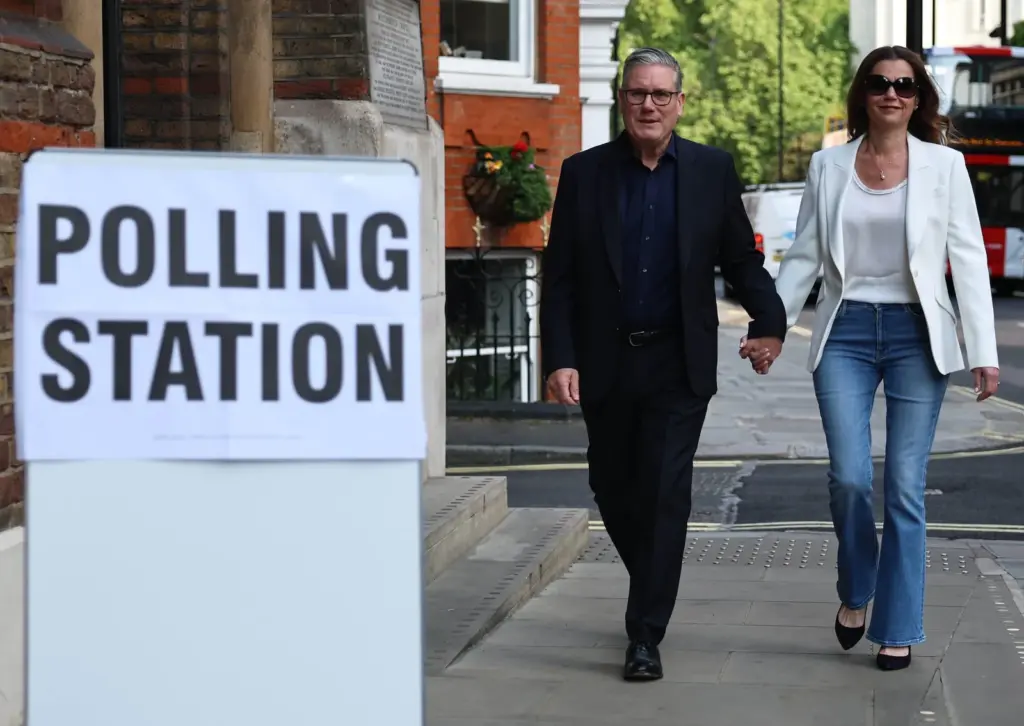
It is going to be a long and painful Friday for Starmer, who will not have a clear picture of the apparent debacle at least until mid-afternoon. But the results already handled by the media suggest that the defeat anticipated for weeks by all polls will be confirmed.
At six in the morning (seven in the morning Spanish mainland time), Reform UK had secured more than 300 councilors (starting from only two across England), while the Labour Party lost more than 230 of those it previously held. The Conservatives are preparing for a somewhat smaller but also significant defeat. By that time they had already lost more than 110 representatives.
Zack Polanski’s Green Party, which aims to take over popular counties and districts in London, was also gaining (almost 50 councilors, double what it already had), but the first results suggest that their previous expectations may have deflated a bit.
And the Liberal Democrats, who are usually the biggest beneficiaries in elections always used by voters to punish the party in power (Labour, in this case), were also growing in the first count. They accumulated more than 230 councilors (35 more than they already enjoyed).
The slowness of the process allows all parties, especially the Government, to gradually digest the results and design response strategies.
The Labour Party could come out somewhat less unscathed than expected in the various electoral battles in London districts, and Starmer would cling to that to indicate that the disaster was not so severe. Former Prime Minister Tony Blair, some recall these days, suffered a colossal defeat in the municipal elections held during his first term, only to later reaffirm his absolute majority in a general election.
Read more Real Madrid beats Hapoel and will play its eleventh Final Four in the last 15 years
Furthermore, in many municipal councils only a third of the representatives were renewed. Despite the losses already declared or those yet to come, after the count, Labour would still maintain a majority that would allow it to continue leading these institutions.
But Starmer’s popularity has nothing to do with Blair’s at that time. There is a general consensus among Labour members that the current prime minister cannot be the party’s next candidate.
The magnitude of the defeat will give his rivals an idea of the urgency needed to challenge Starmer’s leadership. “If it ends up being [the election result] the nightmare we feared it would be, there should be no hasty moves [against the prime minister]. The party must first consider why we have reached this situation, and the leadership issue will inevitably be on the agenda. But if there must be a change, it must be an orderly transition, not an internal coup,” said Labour MP John McDonnell, for many years Labour’s Economics spokesperson, number two to the previous leader, Jeremy Corbyn, and a fierce enemy of Starmer.
Votes are still to be counted in Scotland and Wales, where regional elections were held on Thursday. In the first territory, polls have pointed to a new victory for the Scottish National Party. If it manages to exceed the figure of 65 seats, the promise of a new independence referendum would regain strength, and it would be a real headache for the national government. And if Reform UK takes second place, as polls have also suggested, Labour’s humiliation would worsen.
What may be much more serious is what happens in Wales, where Starmer’s party has controlled the autonomous government and parliament since their restoration in 1999. If forecasts are confirmed, the two most voted parties would be the nationalist Plaid Cymru and the far-right Reform UK. Labour, suffering the disenchantment of its traditional voters, would be relegated to third place, far behind the first two.
“I believe this Government has made the right decisions on some major issues, both in stabilizing the economy and in returning our country to the center of the international stage,” Justice Secretary Jake Richards defended early this morning, one of Starmer’s government members spread across the media to try to stop any mutiny attempt. “But it is clear that people still do not feel these improvements in their pockets,” he admitted.
Starmer plays with the advantage that none of his rivals is yet in a position to launch a full challenge to his leadership, and he is preparing messages and strategies for the coming days to try to regain political momentum. For example, according to The Times, a speech for Monday where he would insist on tightening ties with the EU even more, one of the issues that still excites a large part of the British left-wing electorate.
Read more Chihuahua agents testify before the federal Prosecutor’s Office in the case of the CIA operation