








Sponsored by the freedom offered by the red carpet of the Met Gala, where all guests are encouraged to ascend the stairs of the New York museum dressed in the most extravagant way possible, it is increasingly common to see male celebrities taking the opportunity to break away from the comfortable tailoring tradition they are used to. In its most extreme versions, last Monday’s edition featured the actor from the series More Than Rivals Hudson Williams dressed as a bullfighter by Balenciaga; Puerto Rican Bad Bunny, dressed in Zara and aged 50 years; and the singer Sombr wrapped in a cloud of fringes by Valentino.
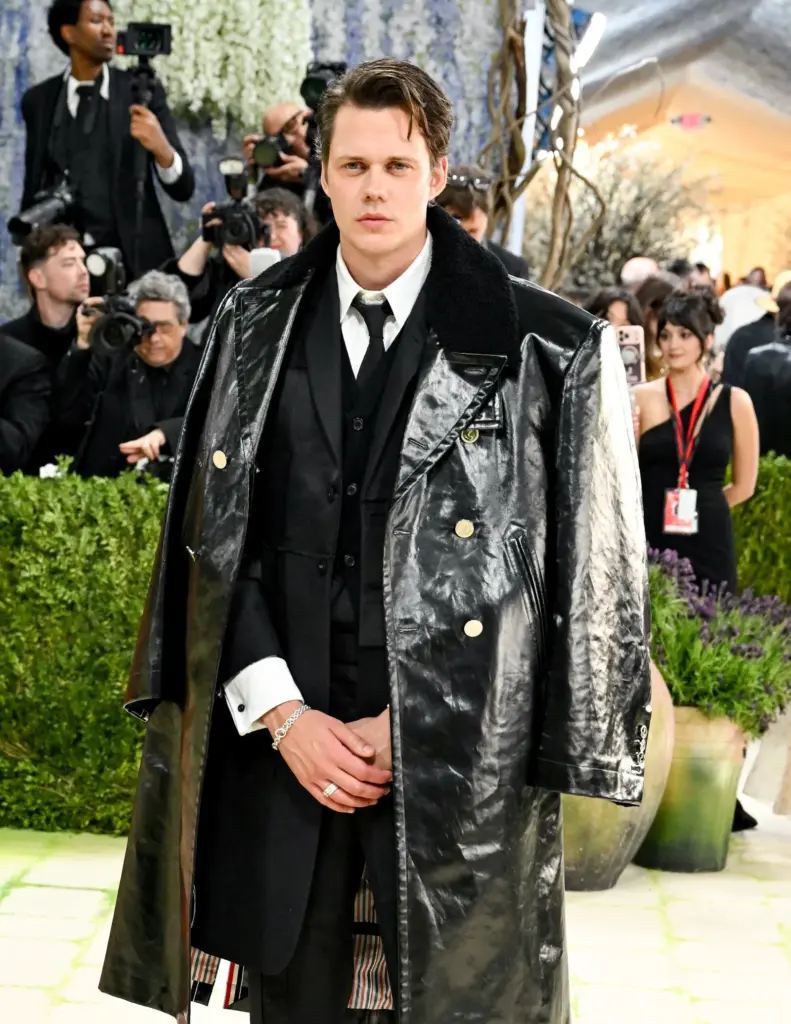
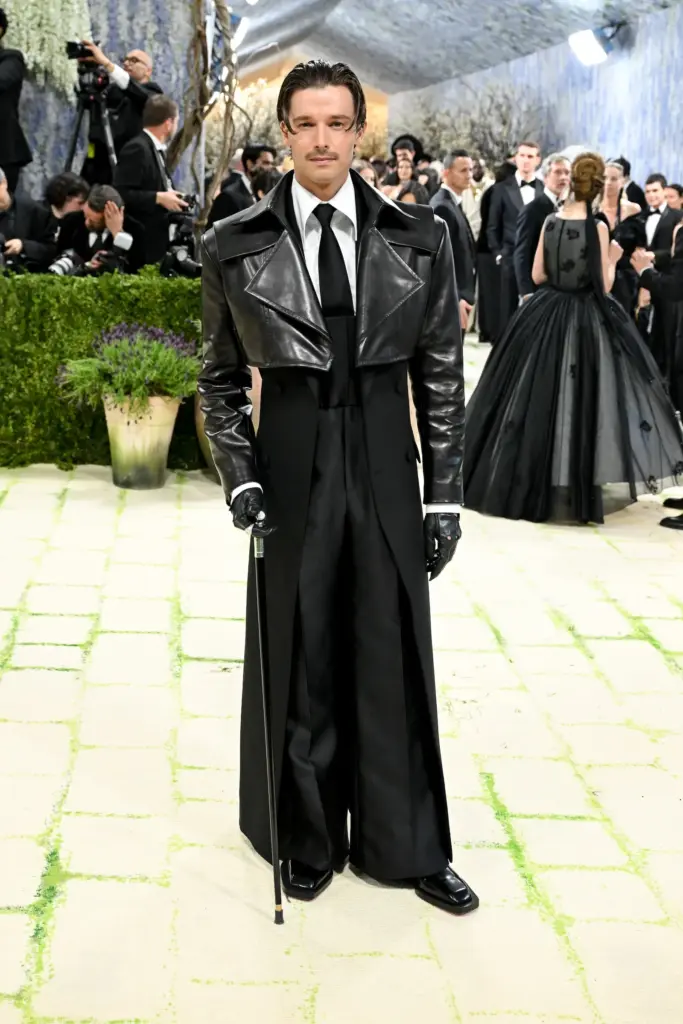
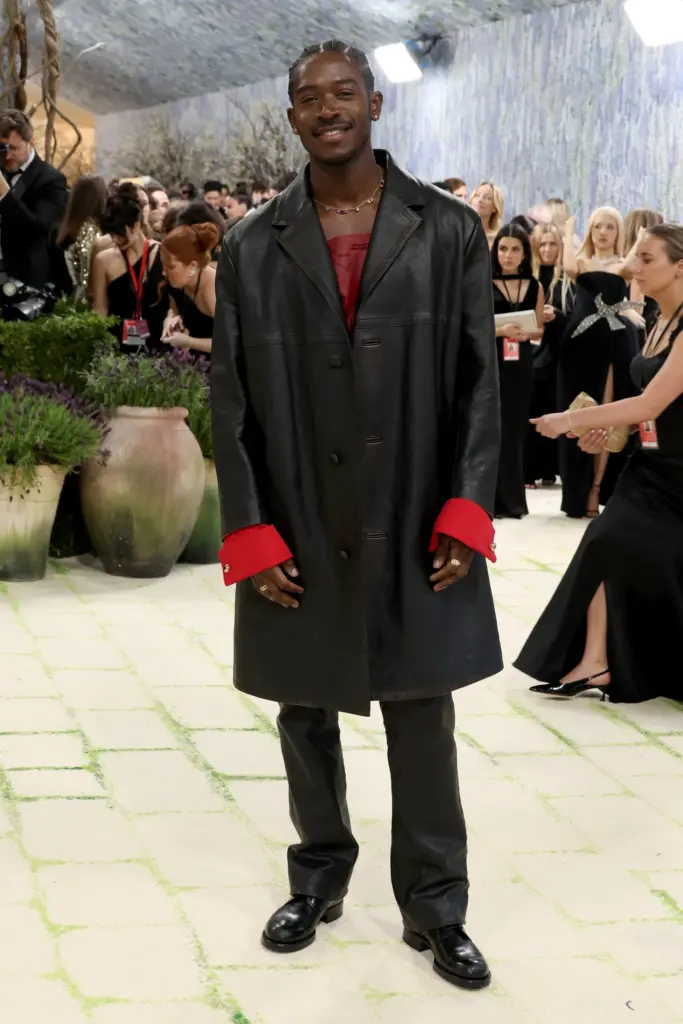
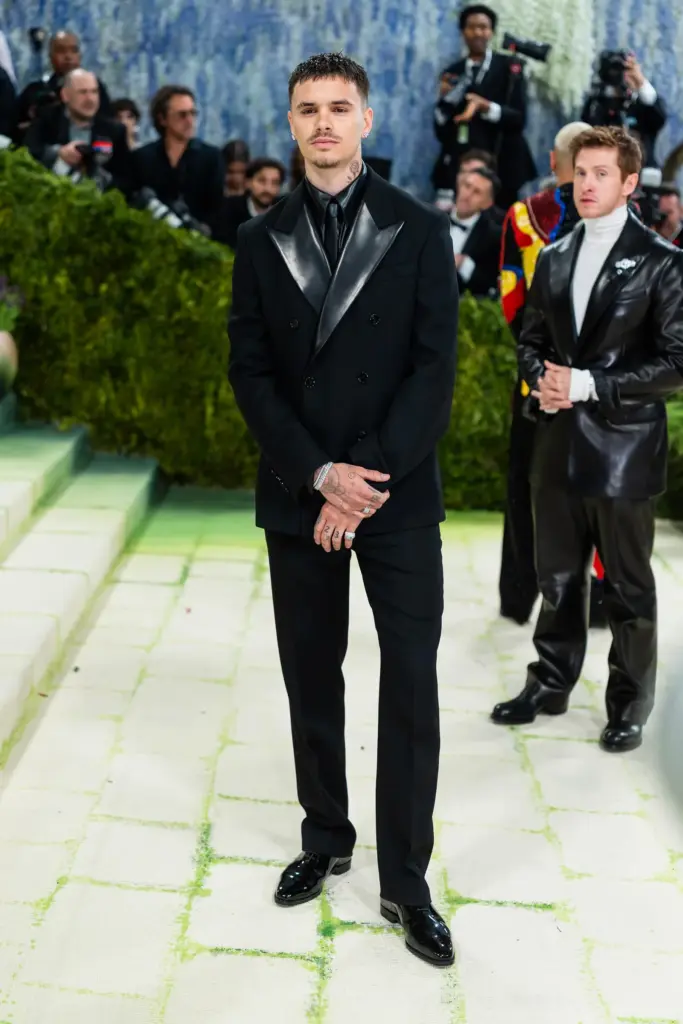
For those guests with less inclination towards melodrama, however, that innovation has been embodied through a specific material: leather. It was there in Thom Browne’s trench coat on Bill Skarsgård’s shoulders, in Damson Idris’s Prada coat and pants, in the lapels of Romeo Beckham’s Burberry blazer, and in the cropped jacket and gloves from Public School with which Patrick Schwarzenegger punctuated his villainous long wool coat.
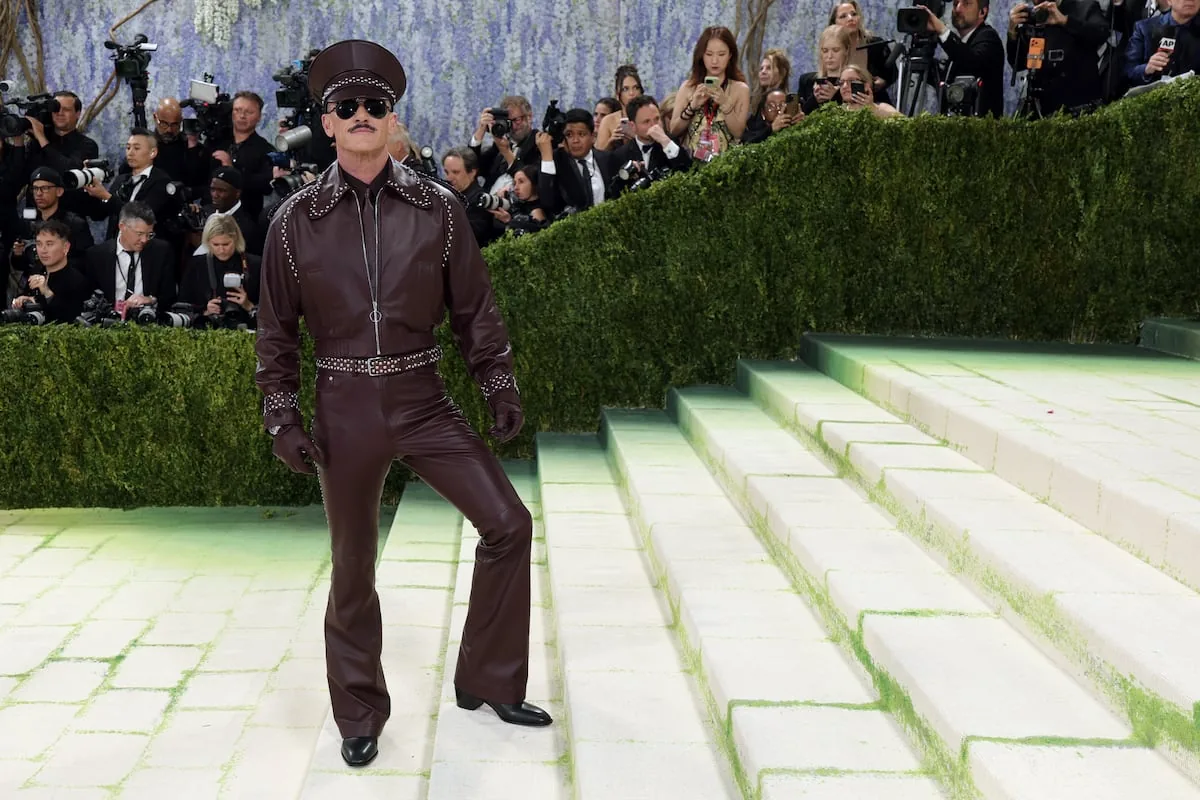
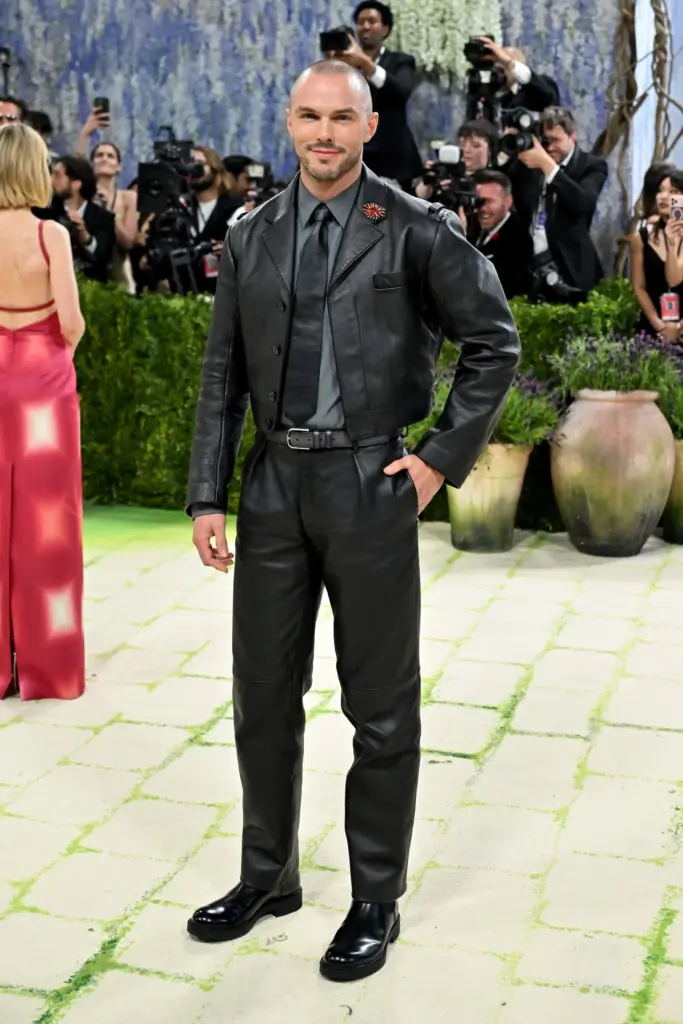
The most effective versions, however, had a very clear reference. In deference to this year’s gala theme, “fashion is art,” and surrounded by tributes to Klimt, Sargent, and Greek and Roman sculpture, Nicholas Hoult and especially Luke Evans decided to pay tribute to Finnish illustrator Touko Valio Laaksonen, better known as Tom of Finland. Fashion is art, and now also fetish.
With the butt exposed
They did it from opposite points. Hoult, with his black leather boots, pants, tie, and blazer signed by Prada, literally evoked the masculine aggressiveness of the illustrations the Finn created during the sixties and seventies. Evans, however, with a similar burgundy outfit from the domestic brand Palomo Spain based on the house’s star piece, the ‘Butt Exposed’ pants (designed with a back panel that can be unbuttoned to leave, as the name suggests, the butt exposed), evoked Laaksonen in a more lyrical way.
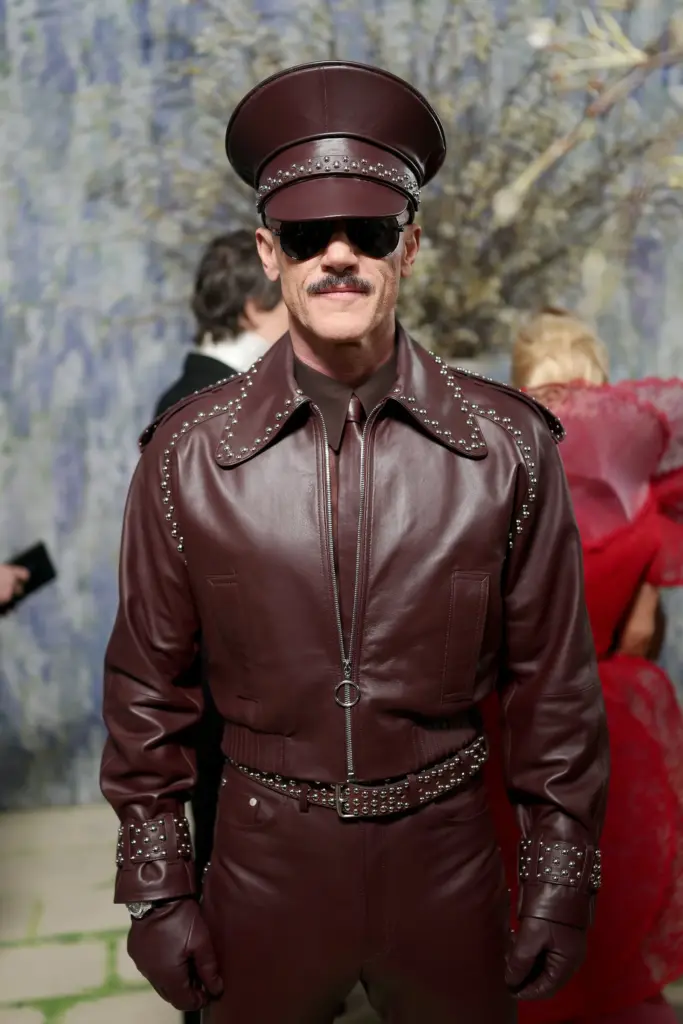
“For us, being on the Met carpet, and especially being like that, with a message so related to our world and our heritage, represents a milestone,” explains designer Alejandro Gómez Palomo (Posadas, 1992), the man behind Palomo Spain. “The look arises from conversations with Luke, his team, and ours. Of course, we wanted a reference to art, but also for it to be super queer and speak at the same time about our community and the moment he is living on Broadway with the musical The Rocky Horror Picture Show. We tried to bring the character from the illustrations out, but through fashion. The look aimed to make Luke a standard-bearer of this queer masculinity.” A claim that closes almost a century of dissent.
This coding of leather in the mainstream as a subversive exercise to deconstruct masculinity is ironic because, in its origins, the movement that would come to be known as leather daddies sought to do precisely the opposite. The first leather communities emerged after World War II in the United States, particularly among California biker groups, as a response by certain gay men to the more organized groups of the collective: those of musical theater and drag, which they considered too feminine. Something they wanted to emphasize they were not.
The look created to define that predominant masculinity was crystallized in the collective consciousness, first, by Marlon Brando in the film Wild One with his white t-shirt, jeans, leather jacket, and biker cap. Sexy, aggressive, and deeply manly. Later, Laaksonen exacerbated it even more through his illustrations as Tom of Finland in the magazine Physique Pictorial, where male pornography censorship was cleverly circumvented under the pretext of showing semi-naked men for educational purposes in the field of sports.
That look, however, continued to be exaggerated from the seventies onwards when, following the widespread decriminalization of pornography, Laaksonen was able to quit his job as art director at the Helsinki offices of the McCann advertising agency and fully dedicate himself to illustrating men with enormous muscles, buttocks, and genitals dressed in leather.
And this is where the process begins to feed back into itself until it reaches parody. “Laaksonen drew his fantasies and sent them to his friends, they hired a tailor and reproduced the sexiest garments from the illustrations, took photos wearing them, and sent them back to Tom,” recalled Durk Dehner, the curator of Tom of Finland’s work, in an interview with The Guardian. “So he got more ideas, it was a constantly evolving process.” What originally started as an attempt to distance from gay camp ended up turning around to collide with it, going from the renunciation of queer to being one of its greatest exponents.
That thing they call new masculinity
The six looks at the Met, with their different degrees of leather involvement, are direct heirs of this tradition, whether they are aware of it or not. And also part of a trend that Alexander Skarsgård inaugurated with the promotion of the film Pillion, in which he and his stylist Harry Lambert created looks inspired by the BDSM biker character the actor plays in the film.
Both in the case of Skarsgård and Hoult or Evans, their adoption of leather comes from a very specific context prone to creative freedoms, but more and more stars are incorporating leather into their style, particularly those who do not feel comfortable with the more classic versions of the male wardrobe, such as Jacob Elordi, Troye Sivan, or Manu Ríos.
“That adoption of leather is a response to other trends we are seeing,” reflects Gómez Palomo. “We are positioning ourselves against something more conservative. At the gala itself, we saw references to virgins and more angelic ideas, and that wave can even be felt in the sponsors themselves [referring to Jeff Bezos and his wife Lauren Sánchez, who contributed ten million dollars from their own pockets to the event]. The idea of playing with fetishism, the more sexualized reference, the darker and more underground world, I think it is not necessarily positioning against, but seeing things from another place. On one hand, this is happening. But on the other, I believe there is freedom, that beauty can be found in what we would see as more sordid. And leather represents this idea very well.”
Whether fetishism and leather will have life on the red carpet beyond the confines of one as extravagant as the Met Gala or a promotional tour as specific as Pillion is hard to predict. But if history in general, and the evolution of leather through Tom of Finland in particular, shows anything, it is that queer always manages to find a way to end up leading it. Dissent, once again, is inevitable.
Read more The other Ayuso fiasco in Mexico: kicked out of a gala that Madrid sponsors with half a million