







“Nursery of ruin with the trade of a quarry.” Architect Ignacio Gil Crespo adopts the analysis that art critic Juan Antonio Gaya Nuño used in the early fifties to assess the health of Spanish castles. “When you visit a town where the castle is a bit ruined, it is very easy to see some of its pieces in the houses,” describes the specialist, a member of the commission of the National Defensive Architecture Plan. Although today the general state of the fortresses remains, in general, ruinous, some things have changed in this last century. “We have 800 or 1,000 years of abandonment and 100 of awareness and restoration,” he specifies. However, in the national landscape — inseparable from towers, walls, battlements, and barbicans — the lack of information still weighs heavily. To prevent the progressive death of the fortifications, the country must first know how many there are and where they are, but successive attempts to count, classify, and specify their state of conservation have yet to be completed. “There is still no definitive inventory, many times it is not even known that they exist,” laments Gil Crespo.
Read more The other Ayuso fiasco in Mexico: kicked out of a gala that Madrid sponsors with half a million
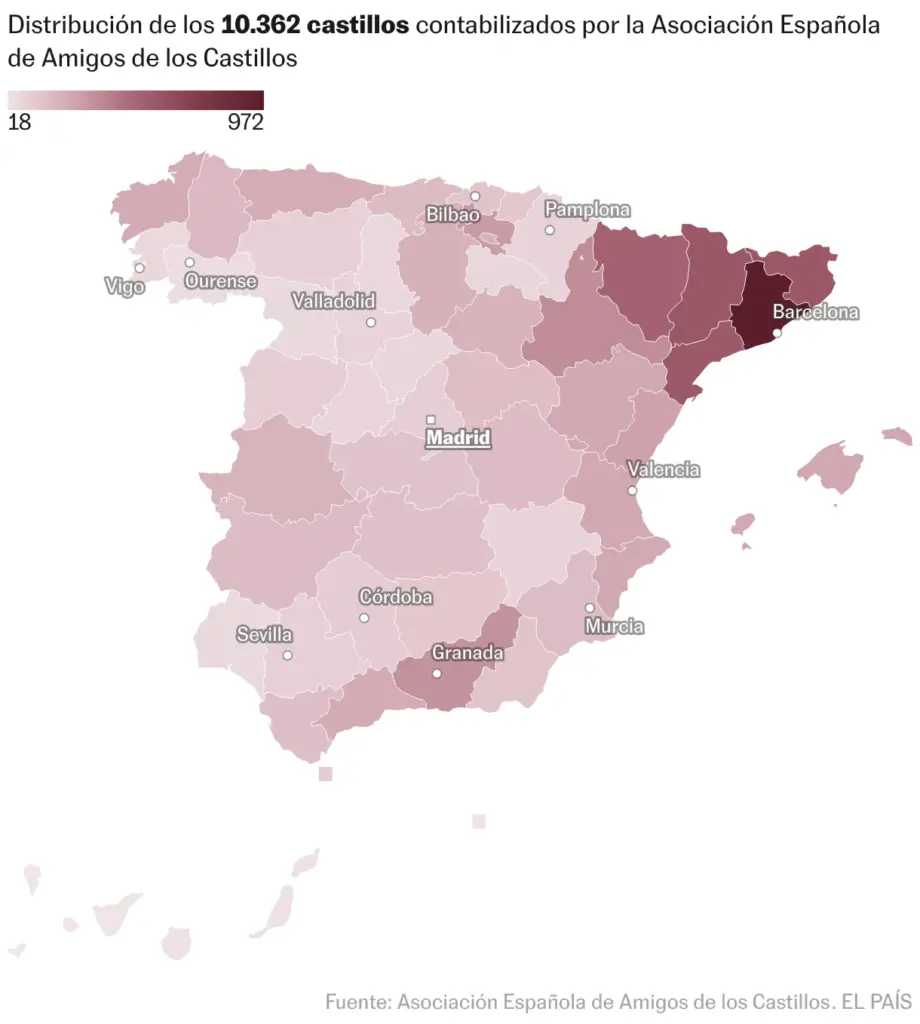
“The first catalog available is from 1968, it is the one recognized by the Ministry of Culture, but it is completely insufficient because the number of records is very low,” specifies Miguel Ángel Bru, executive of the Spanish Association of Friends of Castles. This organization has been committed to correcting that numerical gap and has been working for half a century to count all defensive structures, with a result of more than 10,000, but the complicated scrutiny is not yet finished (there could be almost double). “It is a bit outrageous that we cannot agree on something that countries like France or Germany have so clear,” criticizes the archaeologist, who points to the core of the problem: “That the autonomous communities have the competencies in heritage and intervene in the castles is even better because they are closer administrations; the problem is that, in practice, each one does a bit what it wants and even their regulations go against the Heritage Law of 1985.” And including or not a building in that hypothetical official list is not a minor matter: all castles have the highest protection since the 1949 decree (first national monuments and currently assets of cultural interest) and, in addition, can benefit from tax exemptions such as property tax.
The alarming state of neglect of Spanish fortifications has returned to public debate after, in March, a visitor recorded with a mobile phone the collapse of one of the towers of the Escalona castle (Toledo), fortunately without causing injuries. The violence of the fall and the timing of the filming caused a phenomenal stir, yes, but those who have been researching castles for decades remain unfazed. “Seeing the photo of a pile of rubble and comparing it with the previous image is always something painful, but it is only counted as curiosity,” warns Miguel Sobrino, author of the monograph Castles and Walls (La esfera, 2022). The communicator maintains that this phenomenon is relatively common and refers to other cases with less public dust, such as collapses in the castles of Almonacid, also in Toledo, or Peñarroya (Ciudad Real). Or the usual collapses in the walls, such as in Salamanca, Plasencia, Lugo, or Huesca. Archaeologist Miguel Ángel Bru puts figures on the high risk of destruction: “Six out of 10 castles in Spain are exposed to collapse, but if we refer to smaller collapses, partial falls, we would already be talking about eight out of 10.”
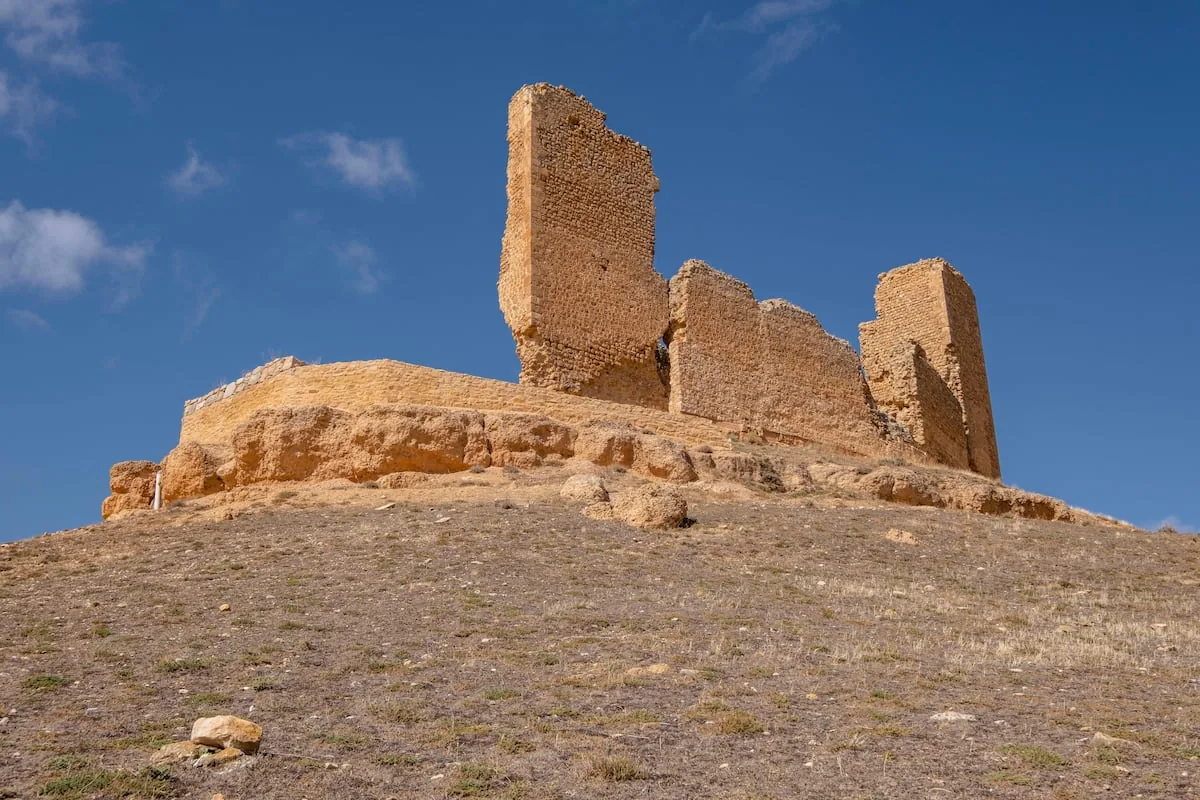
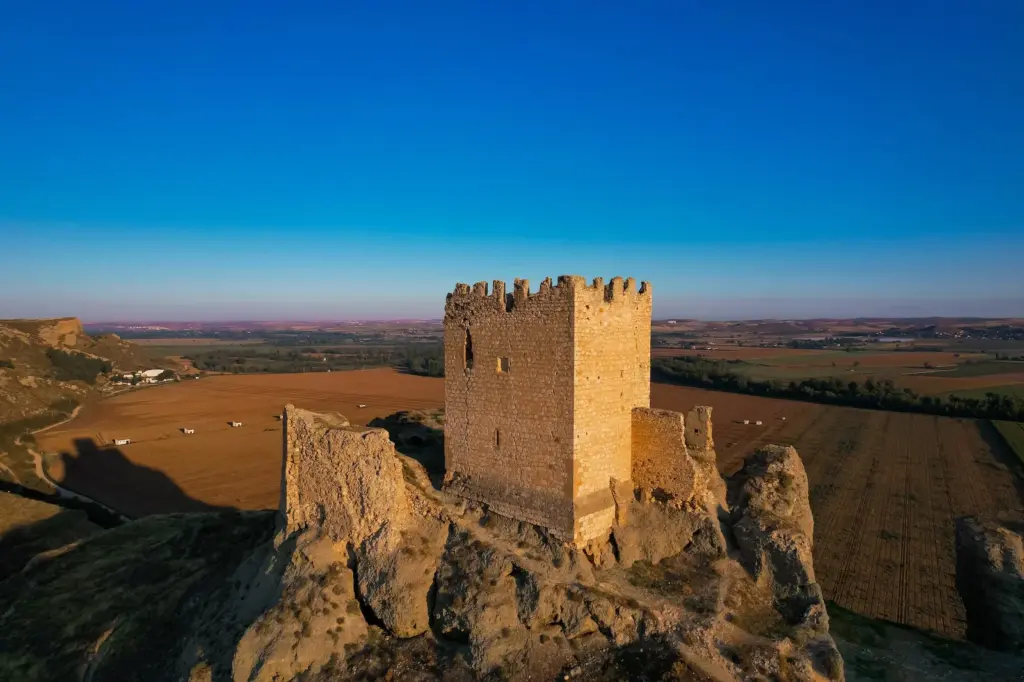
An “emblematic example” of lack of conservation and real danger of collapse — warns Miguel Ángel Bru — is found over the Tagus River, at the border between Toledo and Aranjuez. “The Oreja castle, built on an ancient Andalusian city and with an exceptional tower, has enormous structural problems and we have been saying it is going to end up falling.” Inaction and abandonment, in this case, are more than evident. “People have slept inside, like squatters, and rave parties have even been held inside,” emphasizes the archaeologist.
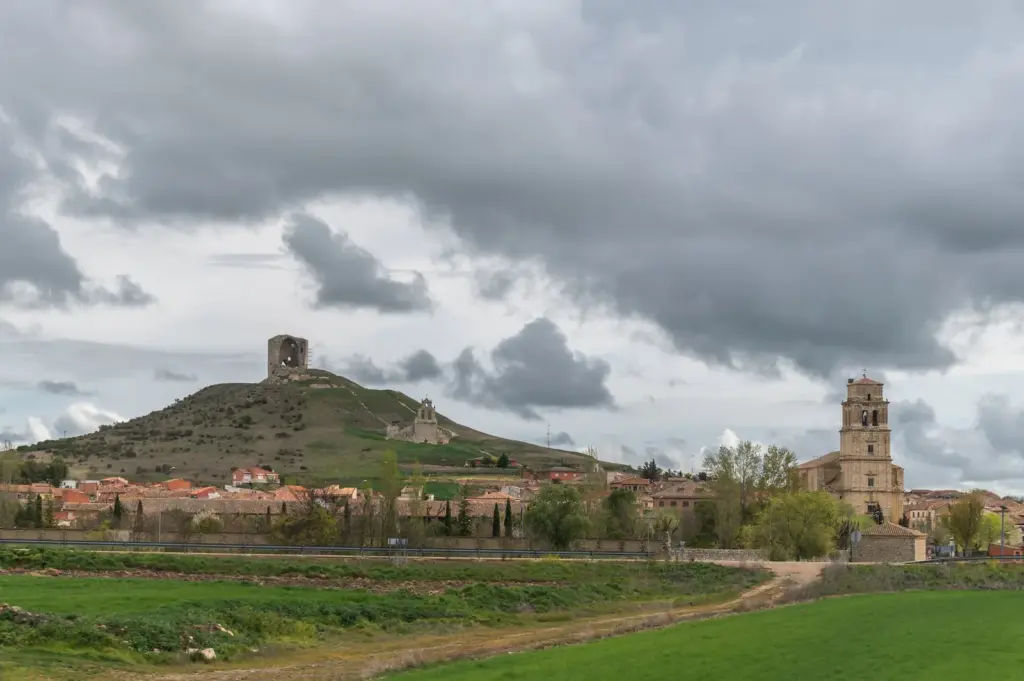
Another striking testimony is the last surviving element of a medieval castle whose silhouette can be seen from the A-6 highway when crossing the province of Valladolid. “The tower of Mota del Marqués, which has a spectacular vault, appears cut in half, as if levitating, waiting for a bad day when it might fall,” describes Bru. Researcher Miguel Sobrino, for his part, is especially concerned about other fortifications in Castilla y León that are slowly being consumed, such as those of San Leonardo de Yagüe (Soria) or Cea (León). Even so, he prefers to look to the horizon with some hope, given rehabilitation or consolidation processes of important fortresses such as those of Belmonte de Campos (Palencia) or Ucero (Soria).
Read more What do the polls say in Andalusia? The absolute majority of the PP is up in the air
Gil Crespo has perfectly identified the most damaging enemies of Spanish fortresses: “A castle is a functional element; when it loses its function, the defensive one, it is abandoned.” Some of them — he specifies — have been in that state of disuse for a millennium, a circumstance that has not occurred, for example, in religious buildings, such as churches or cathedrals. He also points to “the geology itself,” which “erodes the base, producing cracks and even complete collapses.” Precisely, this factor is what threatens the castle of La Raya (near Monteagudo de las Vicarías, Soria). “The edge of the plateau on which it is located is slowly collapsing and recently there have been collapses in some walls; these are very difficult causes to solve because we cannot stop the Earth’s tectonic plates,” he analyzes. Gil Crespo’s team has developed the master plan — a document that establishes future actions — for the castle of Atienza (Guadalajara), where “in some areas there is imminent risk, not only for the integrity of the monument but also for the safety of people.” The architect recounts how “one Tuesday at 10 in the morning, when we were working there, a stone from the wall fell at the door where neighbors pass to buy bread.” Fortunately, without consequences.
All in all, it is human behavior that most seriously threatens those ancient allies now out of play. “You shouldn’t blame the people of a town for taking stones from a castle to build their house, I think we all would have done the same.” Gil Crespo again points to the phenomenon of looting, very common in defensive buildings that became quarries of material when they collapsed, as historian Gaya Nuño denounced. “If you walk through the Segovian town of Maderuelo, you see stones from the castle on all the facades,” he describes. Although, when the architect talks about “anthropic causes” he mainly refers to the “bad actions” that humans have carried out on many fortifications due to ignorance. “If you build a parador, as happened a lot in the sixties, and open a door in the middle of a wall, that element ceases to have its function,” he explains. Or also, out of fear: “Sometimes inappropriate reinforcements are made with materials like reinforced concrete or cement, which is very rigid, does not breathe, and releases salts, so it ends up causing more damage.”
So, why has Spain turned its back on its castles? Bru believes the poor health of the fortresses is due to “the tourist vision” that is held of these buildings. “When investment is made, it is not done for the castle’s need, but for the profitability that can be obtained in its environment through tourism,” he opines. Sobrino, for his part, maintains: “We still have the opportunity to preserve medieval castles in a very authentic state, something that is very difficult in France.” Of course, the flip side of this circumstance seems to show the key to the current situation. “Perhaps, by not having transformed over time, sometimes we do not know very well what to do with them, and that is indeed a danger; the brainstorming in the case of castles can be an acid rain,” he warns. For Gil Crespo, the current panorama must be analyzed over a much broader time horizon: “Within the history of a monument that can be a thousand or fifteen hundred years old, we are only one more phase.” A simple stage that, in his opinion, should be limited to “preserving and documenting” this millenary legacy.
Read more Save turtles to keep alive the legacy of an environmentalist murdered in Costa Rica