








As soon as she opened her work computer at eight in the morning, Marcela Simonetta, a lawyer for the Migrant Women association, had already received more than 40 emails with requests from people seeking to apply for the extraordinary regularization of immigrants. The deadline to submit applications and send documentation electronically, as well as to request an appointment and carry out the procedure in person, opened this Thursday, on a morning when the association’s phone did not stop ringing. There were many doubts: “How do I request the vulnerability certificate? I need an appointment, I want someone to assist me to resolve some doubts, I’m sending you the documents to see if everything is correct.” From her office, Simonetta does not believe that “the surge of applications will be limited to the first day and then decrease,” but rather expects the volume to increase progressively in the coming days.
Read more Editorial earthquake in France over accusations of right-wing shift at the historic Grasset
Immigration lawyers and migrant associations confirm that the platform available on the Ministry of Inclusion, Social Security and Migration’s website has functioned normally throughout the morning, without registering incidents. However, the section to request an appointment remained inactive until noon. Although the application process is relatively simple, according to these same sources, to be able to carry it out electronically it is necessary to have an electronic certificate or to do it through authorized professionals or entities registered in the Immigration Collaborators Registry. Simonetta states that until Wednesday night, the associations had not received notification from the ministry informing them that they had been accepted as collaborating organizations.
The lawyer for Migrant Women considers that most people will opt for regularization not through family or work ties nor through the exceptional asylum route, but by claiming their vulnerability situation. The collaborating organizations are responsible for preparing that report, although they are still waiting for the ministry to send them the corresponding guidelines. “Throughout the day we will gather more information and our intention is to check if we can start issuing them from tomorrow,” Simonetta points out.
At the González Pulido Abogados office in Madrid, the lawyers have been managing their clients’ applications all morning and in a few hours have been able to send 10. “Since the regularization was approved on Tuesday, this has been crazy. Calls and messages from clients we already had and new ones keep coming in,” explains lawyer Francisco Pulido. Throughout this Thursday, the only issue they have detected is that in one of the forms, the X32, which all irregular migrants except those with international protection must fill out, it does not allow progress if you do not have a document of family ties. “Although in many cases this document is not mandatory, Mercurio, the program used, forces you to upload something. So, what we have done to solve it is upload a blank document,” the lawyer says.
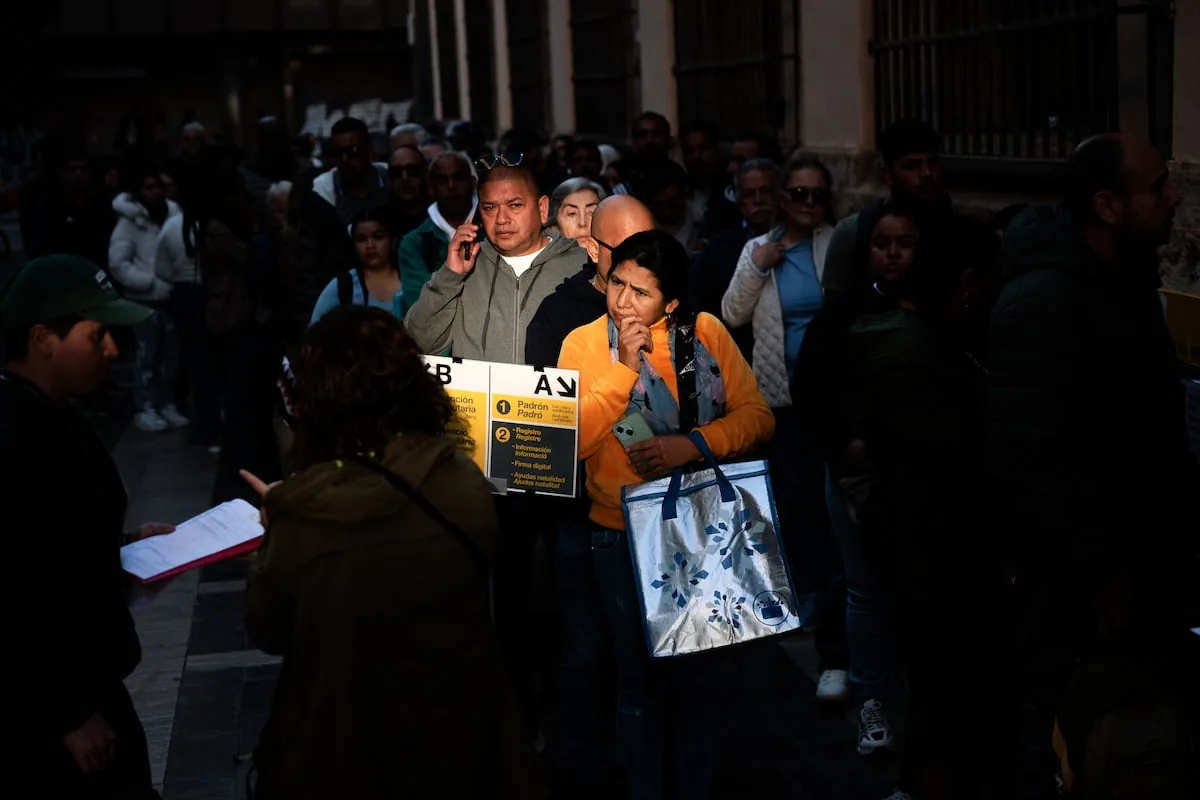
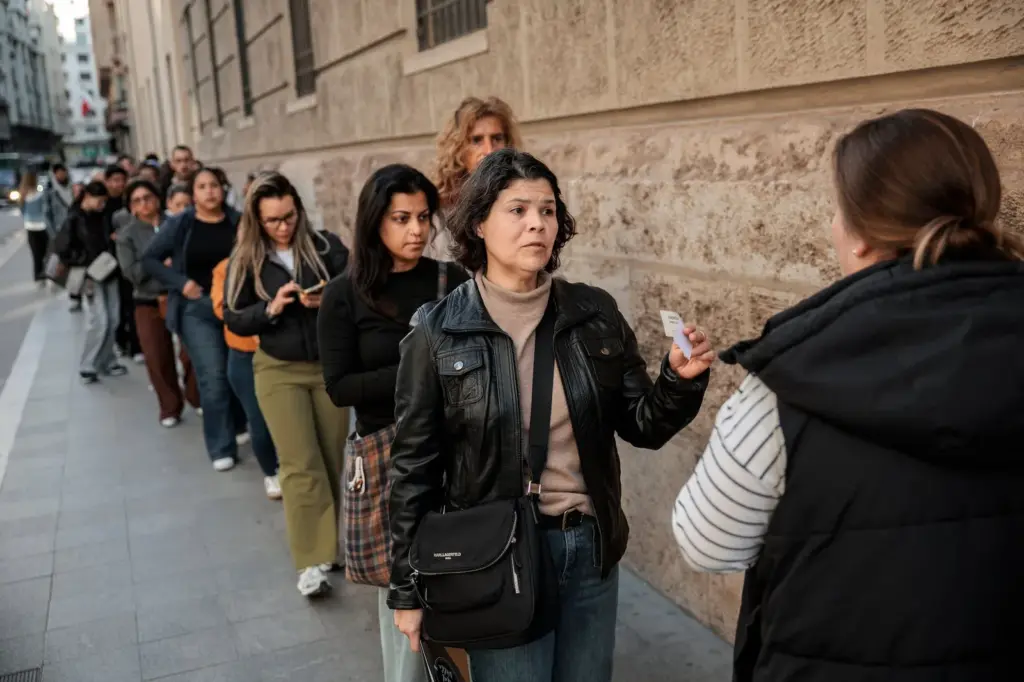
While the electronic process has not caused problems so far, administration workers anticipate a flood of requests to make the application in person. It will not be until next Monday that it will be possible to go in person to one of the points enabled for the procedure: five Immigration Offices (Madrid, Alicante, Valencia, Almería, and Murcia); 60 Social Security offices and 371 Post Offices in provincial capitals or cities with more than 50,000 inhabitants.
Read more Belén López, general secretary of CC OO of Catalonia: “We will not pay for this war again”
In the case of minors, applications from members of the same family unit will be managed in a single appointment, and the process will grant them a residence permit for five years. This is the situation of Tatiana Pinto, who lives in Madrid with her 10-year-old son. The 35-year-old Peruvian has not yet been able to finish gathering the documents because she lacks the authorization of the father, who also lives in Spain, certified by a notary. Despite being separated, Pinto and her ex-partner have decided to register together to speed up the process and submit all the documents as soon as possible.
The home where she currently lives has already reached the limit of registered people — sharing it with another family to reduce expenses — which has forced Pinto to pay more than 100 euros to an acquaintance to be able to register at another address. “I have met people who have paid up to 300 euros to be able to register. There are people who take advantage of others’ needs, because without that document you can’t do anything,” she says.
The young woman trusts she will be able to arrive on time and complete the process, although she still has to request the last document, for which she already has an appointment in early May. What has been impossible for her is to get an appointment at the only office that issues the transport card certificate in Madrid, a document that certifies months of residence in Spain based on the use of the card. “It is completely overwhelmed. They told us that at the Sol metro station they give you a statement with all the recharges made, and that is what we will attach, although at the office they warned us it might not be valid,” Pinto says.
One month after submitting the application and once the final favorable resolution is obtained, people accepted for regularization must process their Foreigner Identification Card. The government has clarified that this permit does not authorize settling or working in the rest of the European Union, but it does allow seeking employment regularly in Spain. Pinto, who currently works caring for babies, dreams of being able to return to practicing architecture, a profession she studied and practiced in her native Peru.
Read more A drug trafficking organization falls while extracting a cocaine stash from a shipment of corn flour