


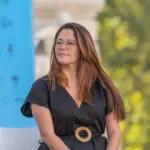
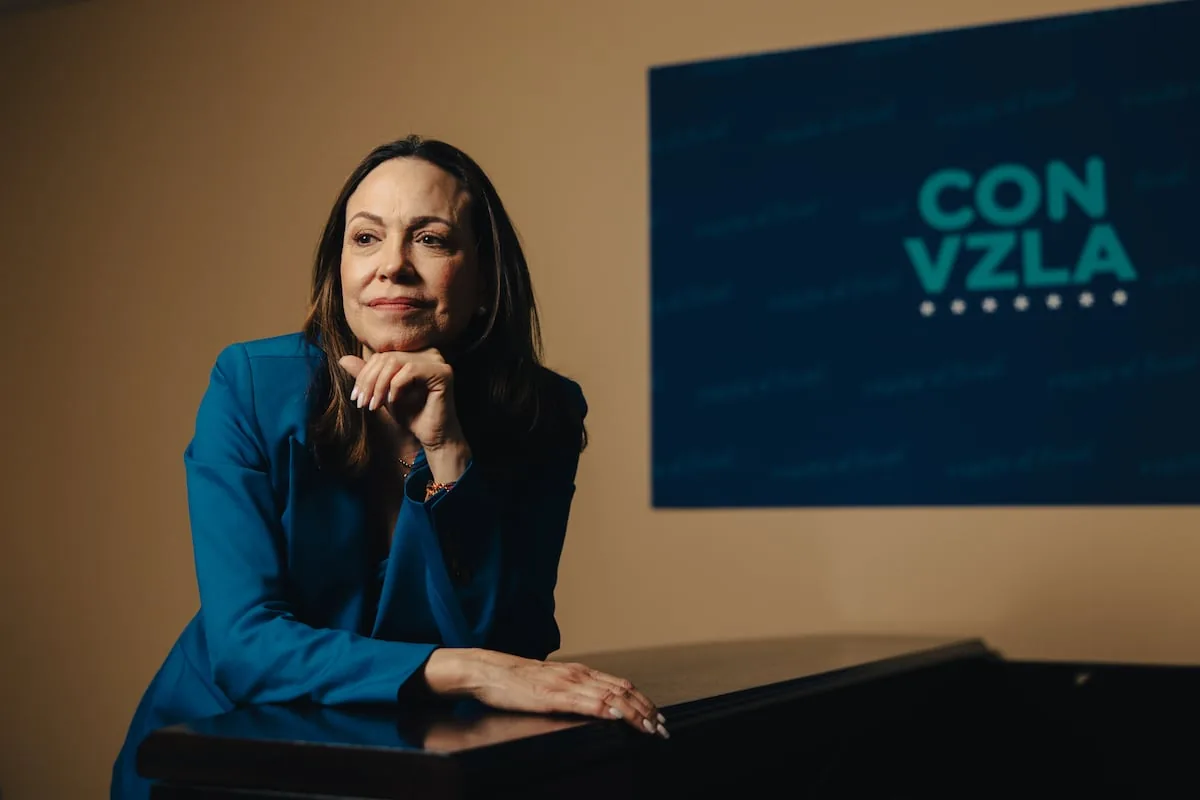
Seeing her travel the world to meet with leaders in Europe, with businessmen in California, or give interviews on YouTube, many conclude that María Corina Machado (Caracas, 58 years old) is a lost bullet: a leader in suspense, trapped in a limbo that prevents her from returning to Venezuela. There awaits her the mission she imposed on herself: to carry through to the end the task of removing the chavista regime from power. According to that view, every day she spends abroad is a gain for the Delcy and Jorge Rodríguez brothers, president and president of the National Assembly, respectively, and the strongman Diosdado Cabello, and a growing debt to the millions of Venezuelans who await her. But that is not the impression she conveys in person.
Read more Iran seizes assets of Iranians accused of «aligning with the enemy»
Machado is signing an English copy of her book The Manifesto of Freedom when she is informed that the Public Ministry has confirmed the death of Víctor Hugo Quero Navas, who disappeared at the hands of security forces a year and a half ago. She listens and it is as if she were hit. A second later she takes a breath and recovers: “It’s what we already knew. He was dead.” A collaborator blurts out: “Wretches!”
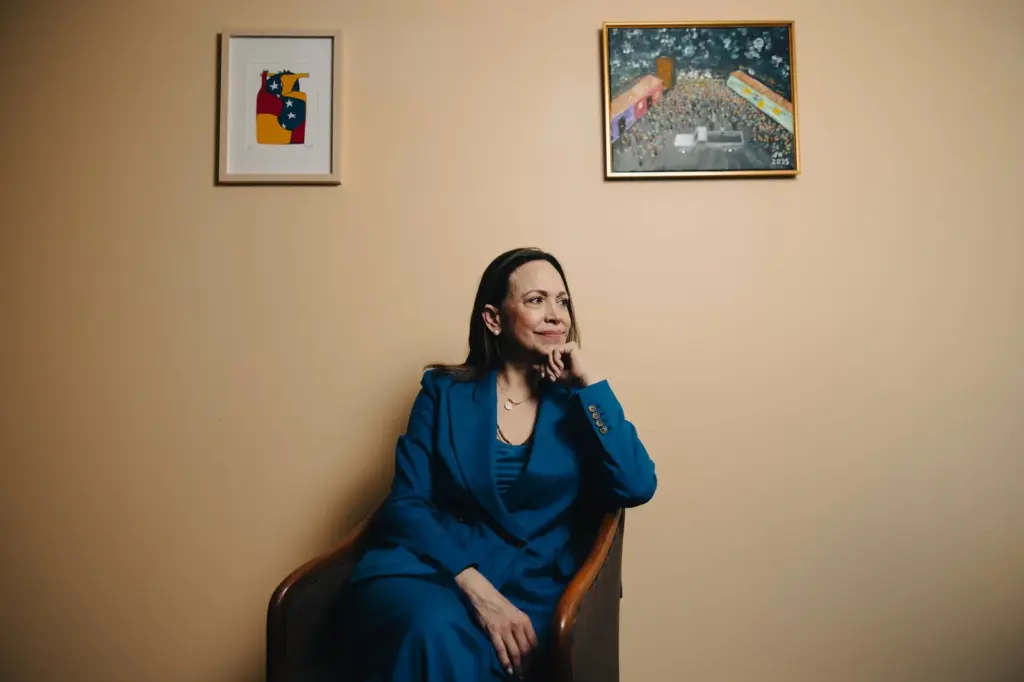
The Nobel Peace Prize winner and her team work in a modest office in Washington whose furniture saw better days years ago. She goes into the kitchen to make coffee, bursting with energy, and treats her collaborators with familiarity and camaraderie. Each seems to have a clear specific role within a broader mission: to think and plan the Venezuela they want to see in the coming decades. The beige walls are almost bare, except for a naive painting dated 2025 and some illustrations by Venezuelan cartoonist Rayma. Before sitting in front of the camera, she asks for help to hide the microphone cable. A touch of coquetry? “It’s to avoid distractions.”
Question. More than 100 days have passed since this new situation in Venezuela was inaugurated: without Maduro, but with chavismo practically intact in power. What has really changed?
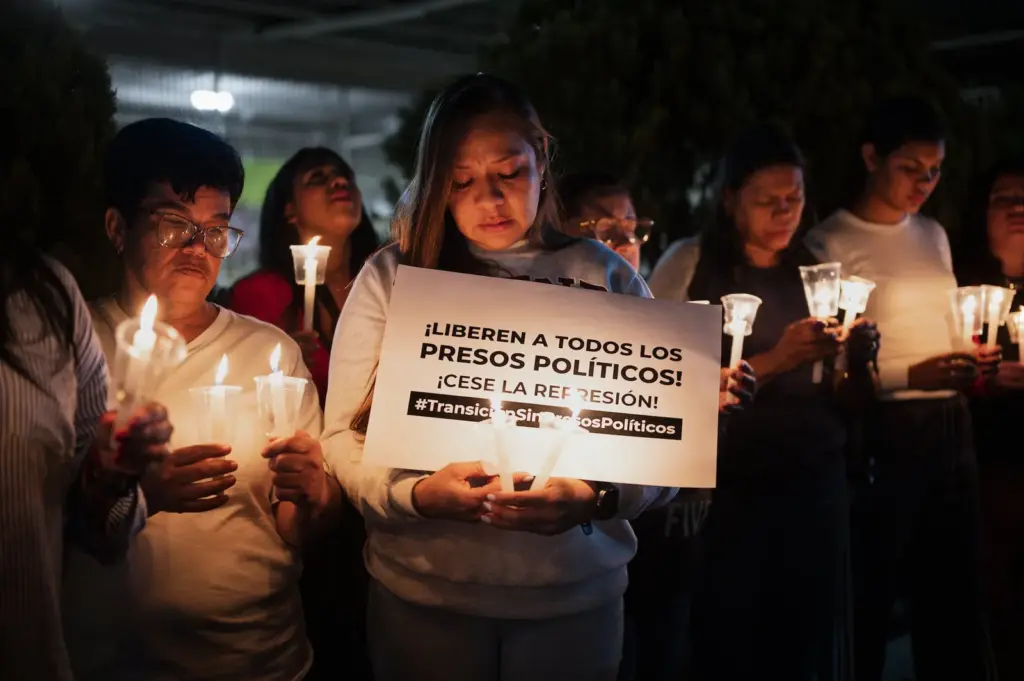
Answer. You have to see it on several levels. Politically, things unthinkable a few months ago have happened. In a country where people didn’t even dare to ask for political prisoners in a church, today you can have 30 or 50 demonstrations of various kinds in a single day. More than 600 political prisoners have been released, although hundreds remain in prison. You begin to see expressions of freedom of speech, mobilization, denunciation that didn’t exist. However, this is far from being a full restoration of civil rights. Economically, limits have been placed on the discretionary management of regime funds and investment has been allowed, although no one knows their size or the terms of the contracts. There is no oversight. The annual inflation rate is 650% and 86% of the population lives in poverty. And socially there is growing tension: products are on the shelves, but people cannot afford them. Venezuelans have learned the hard way that the economy cannot be solved without political change.
Q. Following what is happening in Venezuela, it seems that a feeling of fatigue and uncertainty is fermenting among the population. Is the expectation of change running out before the transition takes shape?
A. There is everything. There is genuine anguish from people who can’t take it anymore, who see their children not eating well or going to school. That is what I call the ethical urgency. And there is also a deliberate narrative of demoralization, which seeks to convince people that this process is not about democracy, but about oil, about external interests. That narrative suits the regime. But complexity does not mean it is not advancing. Trump and Rubio’s proposal, of the three phases leading to a free and fair election, is correct and urgent.
Q. President Trump said this week that Venezuelans are “really happy”. What is he not seeing?
A. I don’t want to interpret what the president thinks. What I can say is that there is growing concern, if not anguish, that this is taking too long, because for many people every day is existential. The way to prevent this from leading to a disorderly process is to give the assurance that through the electoral route we will be able to enforce the citizen’s will. That is what I tell Trump every time I talk to him. I say in public the same as I say in private.
Q. What do you say to him specifically?
A. That we have ahead of us a great opportunity for the Americas and that there is a momentum we cannot waste. Venezuela has the best-prepared society for an orderly transition: there are no deep religious, racial, or regional differences; there is a level of citizen organization we have never had before. I tell him that a schedule must be met to do this process well, that we have to turn these elections into a model for the planet.
Q. Is that possible this year? What is heard is that elections would not be possible before 2027.
A. From a technical point of view, you need about 40 weeks from the appointment of a new CNE. That is the trigger. It can be compressed somewhat, but we have to be serious. The important thing is to start now.
Q. Today Washington controls much of Venezuelan oil, revenues, and business access. Trump has joked that Venezuela could be the 51st state. Where is the line that separates support from the most powerful neighbor from tutelage?
A. An election. The exercise of popular sovereignty is that line. To reach it we will need the support of the international community and, first of all, that of the United States. Trump is the only head of state who has risked position and resources for Venezuela’s freedom. We would not be where we are without that support. A criminal system only yields to a real threat.
Q. If you came to power under current conditions, what would be your first concrete decision to recover sovereignty without breaking the alliance with Washington?
A. It’s all about trust. With the 2023 primaries we decided to trust the people and the people trusted back. Now we have to build trust in institutions: we need citizens, creditors, investors, other governments to trust. The key is the rule of law: a serious government, where there is autonomous justice, the law is respected, and everyone is equal before it. That immediately creates incentives for the country to transform.
Q. What happens if Washington feels comfortable with things as they are and does not move toward political transformation?
A. I don’t think that is possible. First, the migratory incentive: almost a million Venezuelans in the United States, 65% want to return as soon as there is an election. Second, the economic: Venezuela has potential for five million barrels, but reaching that requires 200 billion dollars in investment, and that only comes with the rule of law. Investors exploring the market today do so because they want an option. That option is worth something if we arrive; if we don’t, it’s worth zero. A regime that stole, confiscated, and persecuted will never generate that trust. And third: for these businesses to work, you need talent. The Venezuelan engineer working in Riyadh will not bring his family to a country without education or health.
Q. Chilean intellectual Fernando Mires recently said that Venezuela today is not a dictatorship, but neither a democracy. You yourself seem to have moderated your tone. What is the regime today?
A. The same as always, with some spaces of apparent freedom. First steps of dismantling a brutally repressive system. But if the Executive controls the Judiciary, the Legislature, and the Electoral power, what is that?
Q. A dictatorship?
A. Obviously.
Q. I ask you directly, and I hope you don’t dodge it: when will you return to Venezuela?
A. Soon. And I didn’t dodge it.
Q. In Madrid you announced your return in weeks. You said the same two months ago. When? May, June, July?
A. I have to finish the tasks I set when I left Venezuela in December: talk with heads of state, investors, creditors, thousands of Venezuelans around the world. And there is also all the internal preparation for this new stage. We are working very hard on it.
Q. What is the objective condition that still does not exist and prevents you from returning?
A. None.
Q. Then you can pack your bag tomorrow and leave.
A. No one wants that to happen more than I do.
Q. How much does Trump weigh in that decision?
A. The position of the United States and other allies undoubtedly weighs. It’s a matter of coordination. My return helps the process flow properly, and that’s why it’s important that the moment is right.
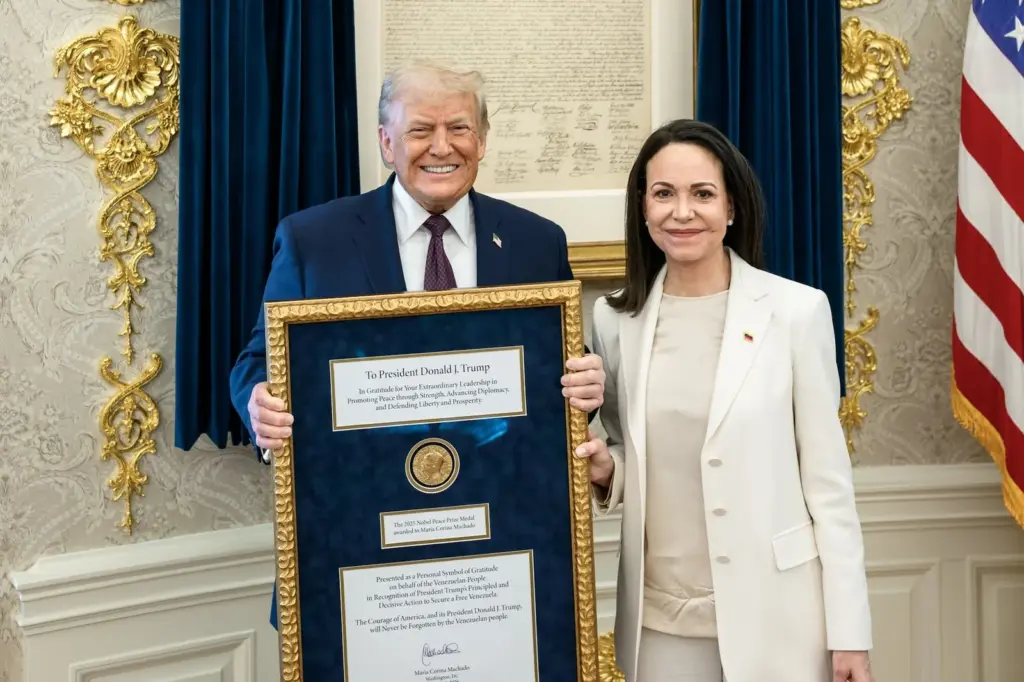
Q. According to several versions, at that breakfast Trump advised you against returning. What does that reveal?
A. I didn’t give that information, so don’t take it as true. There is a lot of speculation. What I can say is that the fundamental consideration of the United States government has always been my safety.
Q. Is there a moment when the wear of staying out outweighs the risk of returning?
A. I was 12 years without being able to leave and everyone told me: “Go, you have to speak outside.” Now that I left, everyone tells me: “You have to come back.” My filter is always the same: where am I most useful? I know I can help in Venezuela, contribute to everything going in a firm and civic direction. But there is also much to do here. I wish I could be in both places at once.
Q. Trump suggested on January 3 that you were not in the best position to guarantee governability. How would you control real power in a country where the army, courts, electoral council, and oil remain in chavismo’s hands, with criminal groups and guerrillas dominating parts of the territory?
A. It’s a core problem, and that’s why we have been evaluating in detail for years how the country is in each of those areas and how an institutional and territorial takeover process would be. My assessment is that the vast majority of those in those spaces, from ministry employees to police and military, would favor a transition. There are armed groups financed to generate disruption, like the DGCIM or some collectives, but they are very small and already identified. This is not about dismantling the Armed Forces, but freeing them: the yoke and persecution they suffer are intense. To those who fear retaliation, I give my word: we will guarantee the rights and freedoms even of those who denied them to us.
Q. In Spain you avoided meeting with Pedro Sánchez when he, along with Lula and Petro, sought to relaunch the left against Trump’s advance. If the opportunity arose again, would you meet? What role can the Spanish government have in the transition?
A. Every decision passes through the filter of whether it helps the Venezuelan cause and accelerates the transition. If the answer is yes, I meet.
Q. You have spoken of a great national agreement prior to the elections. Who should sit at that table and what would you be willing to negotiate?
A. I see it as something broader than the electoral process. It is a unique moment to verbalize the country’s consensuses we want to build: pluralism, limits to presidentialism, subordination of military power to civilian, real decentralization, subsidiarity of the state to the individual. That translates into concrete agreements like no re-election and bicameralism. The country is eager to discuss these issues.
Q. Would you support no re-election?
A. Without a doubt.
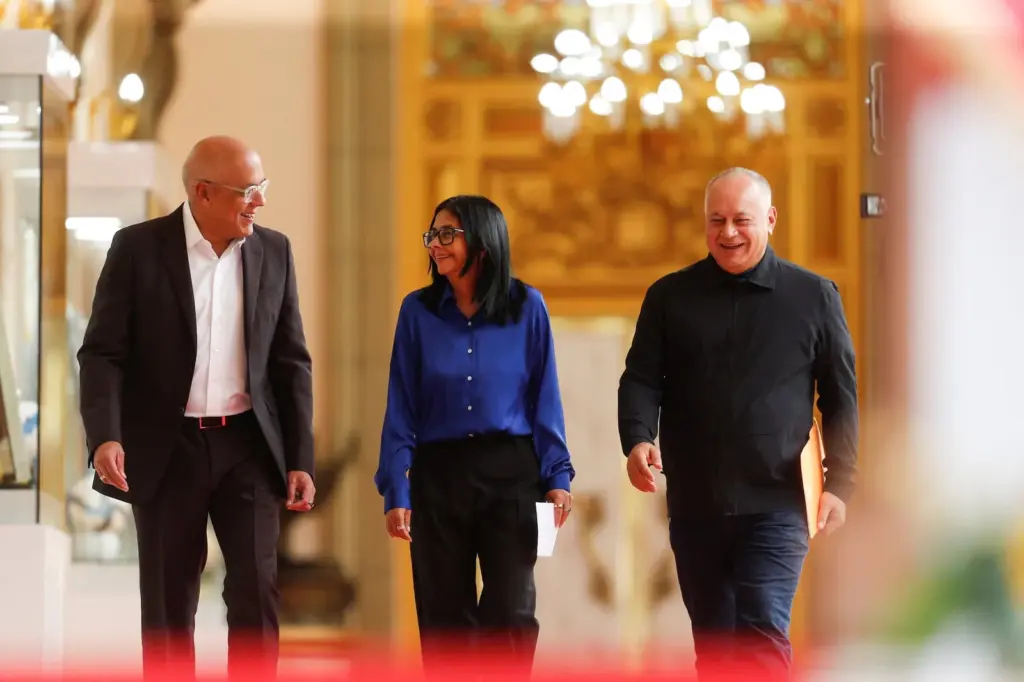
Q. And would you sit down to negotiate directly with Delcy and Jorge Rodríguez?
A. It depends on the terms. We have publicly and privately offered our willingness to advance a negotiated transition. What we will not accept is a new farce.
Q. When you see Delcy Rodríguez purging her environment and appointing ministers in strategic positions, aren’t they simply trying to normalize and stay?
A. They will do that as long as they are allowed. It can’t surprise us. They have had to release prisoners, open communication spaces, put restrictions on the use of funds. In other things, they have not yielded. Part of our work is to persuade key actors that certain decisions have to be accelerated.
Q. Under what conditions could chavismo survive as a political movement?
A. Felipe González told me in Spain: in a transition, there are two things that cannot be amnestied, crimes against humanity and acts of corruption, unless those who stole return absolutely everything stolen. I replied that he doesn’t know what he’s asking for, because this is the biggest looting in history. It’s very complex. But I am aware of the historical responsibility that this works well. A sustainable transition needs the support of the people, and that people will only accept difficult compromises if they trust the leadership that represents them. That’s why I tell those clinging to power: it’s in your interest to negotiate with leaderships that have legitimacy. You can achieve more.
Q. Chávez built a hyper-leadership caudillismo. Some compare you to him in that capacity to rally. How do you dispel the fear that you could also become a hyper-personalistic leader?
A. I am the antithesis of Chávez. He started in the elites and middle class; we started in the humblest areas and managed to overcome urban skepticism. Chávez spoke of division; we go out to unite. He promoted revenge; we, reconciliation. Chávez offered gifts; I asked for work and responsibility. They humiliated; we value dignity. He built a project based on hatred and violence; we, on love. They are totally antagonistic expressions.
Q. Today two Venezuelas coexist: one in accelerated economic opening attracting investment, and another where millions survive on miserable wages. How do you reconcile those two countries and prevent that fracture from becoming permanent?
A. I don’t think they are two countries. There is one country that wants to live with dignity, transparency, that wants its children back. That includes those who today see investment opportunities: if they do so transparently and according to the law, their best interest is a democratic transition, because without it those options are worth zero. I travel the world and tell the big capitals of the tech and energy sector: come to Venezuela, but let’s row in the same direction. A country with clear rules, no privileges, with transparent privatizations. My father, who was a great industrialist, told me: “Making money is easy. The hard part is generating wealth.” The true entrepreneur generates wealth from his workers and suppliers to the entire country. That is what we have to build.
Q. In Madrid there was controversy over the chants of “fuera mona” against Delcy Rodríguez at her Puerta del Sol event. What did you think and what does it reveal about the climate of the Venezuelan exile?
A. I can’t confirm it, but some believe they were infiltrators. What I can say is that those chants do not reflect who we are. When the event ended, the Spanish police told me: “We have never seen anything like this.” People cried, sang, prayed, hugged. A collaborator of the president of the Community of Madrid told me: “The last time we saw something like this was when Spain won the World Cup.” That is Venezuela.
Q. Is there a vein of racial resentment in Venezuela that would be worth addressing without taboos?
A. You’re right, there is no topic we shouldn’t touch. But what I know today is a level of cohesion around truly extraordinary fundamental values: respect for human dignity, pluralism, individual responsibility, solidarity, love of freedom, property, family. These are the values of our founding fathers. This has been a long march that has brought us back to our roots.
Q. When you are alone and think of Venezuela, not the strategy or the transition, but the country, what do you see? What hurts you and what gives you strength?
A. I miss the light of my country. The colors in Venezuela are different to my eyes. I miss grabbing my car and going alone on any road. I love getting off anywhere and talking to people. When we traveled on tours, there were eight of us in the car; we sang llanera music in Los Llanos, oriental in the east, gaitas in Zulia. Those very human things of the country I miss a lot. I am sustained by the messages of energy and prayers I receive every day. This movement has taken root culturally and socially. That’s why I always said: one day before, one day after, Maduro will leave. And now I tell you the same: one day before, one day after, this regime will finally leave. What is really relevant is this Venezuela that is emerging and how we ensure to build institutions that last for centuries.
Q. And the strength?
A. The people. This conversation. Being able to talk about the future. Sometimes I look back and say: how many times did they tell me it was impossible. And look at the incredible things we have done. I have deep trust in the power of the people and their love of freedom. And I also feel that we have gone hand in hand with God.
Read more The vote by mail for the Andalusian elections rises by 1% compared to those of 2022