




Iran has accelerated the repression against dissent following the war that began on February 28. This crackdown not only affects internal protesters but also reactivates tactics from past decades to strike more forcefully at exiles who criticize the regime. One of its key tools is the confiscation of properties, a practice advancing alongside an alarming wave of executions. Although official figures record 27 hangings since the outbreak of the war, the internet blackout and lack of independent sources raise fears that the actual number of victims could be significantly higher.
Among those affected by the confiscation of assets are, among other celebrities, actor Borzou Arjmand, singers Mazyar Falahi and Mohsen Yeganeh, footballer Sardar Azmoun, former member of the national team, and international referee Alireza Faghani. All of them have participated in protests against the regime or have supported the demands on social media. Other people, like Bita, a doctor about 50 years old living in Madrid, are unknown to most of Iranian society. This professional explains that in recent weeks her bank accounts in Iran have been blocked and that she has lost all ability to operate financially.
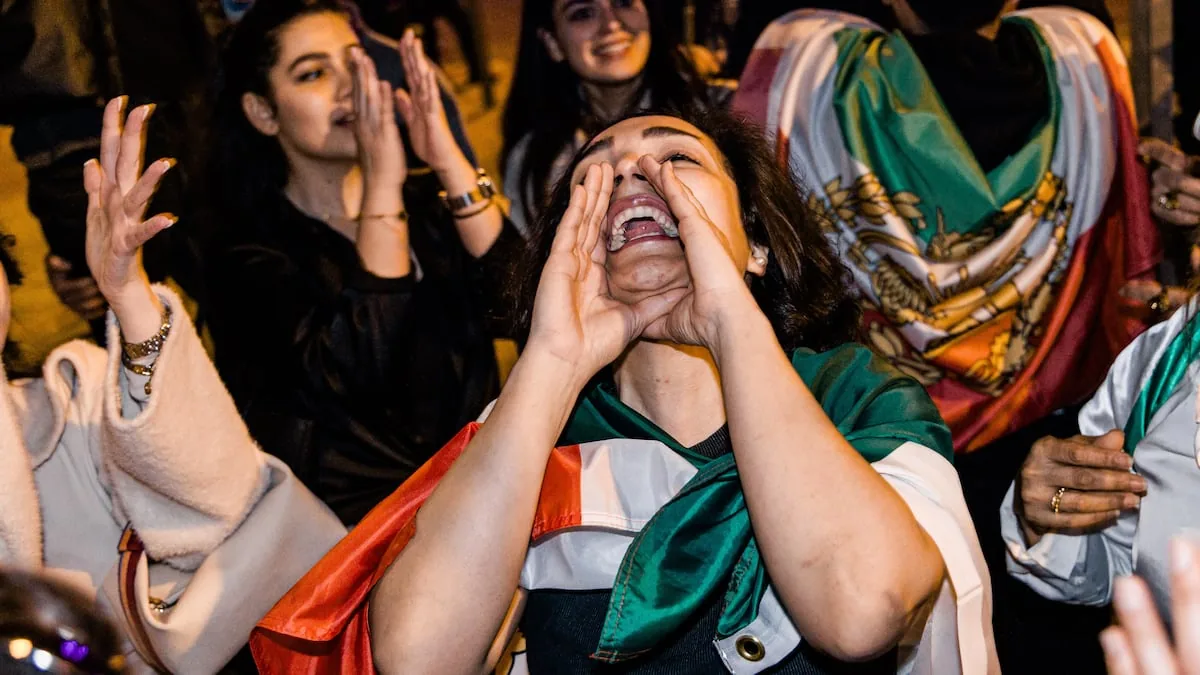
“My children and I participated in gatherings of Iranians in Madrid in support of the protests and the United States’ policies towards the Islamic Republic,” she recounts. And then she concludes: “The regime is aware of the strong impact of the diaspora protests and that is why it also persecutes Iranians abroad.”
The Iranian Judiciary has confirmed this by periodically publishing lists of people whose assets have been seized with the accusation of “aligning or cooperating with the enemy.” The Iranian Organization for the Registration of Documents and Properties has also ordered notaries that any property transfer based on powers issued by Iranian consulates be subject to authorization from the Attorney General’s Office.
A month ago, the Prosecutor’s Office also announced a court order directed at the Ministry of Foreign Affairs to suspend the issuance of powers intended for the transfer of assets of Iranians residing abroad. With these measures, they prevent critical Iranians living outside the country from securing their properties by transferring them to relatives or other close associates.
The United Nations has also denounced this practice. “It has been reported that authorities have confiscated assets of hundreds of Iranian citizens, including 400 residents abroad, labeling them as ‘traitors to the homeland’,” states a tweet by Mai Sato, United Nations Special Rapporteur on the human rights situation in Iran.
The house as bail
For years, Iranian authorities demanded, for example, that imprisoned opponents hand over the deeds to their houses as bail. This practice allowed prisoners to leave jail, but their homes remained at risk until the trial took place. Many Iranians have thus lost their homes. However, the confiscation of assets from Iranians inside and outside the country, just for supporting protesters or participating in demonstrations against the regime, is a measure that began to be applied after the start of the war.
Mandana, a woman about 40 years old, also residing in Spain, tells this newspaper that this was the demand made to her brother to get out of jail. The man had been “arrested on the night of January 9” in Tehran, during the latest protests against the regime. After spending weeks detained without his family “having news of him,” the woman says, he was released in exchange for handing over the family home. Mandana’s brother recounted how, in that wave of repression in which about 7,000 people died, according to the US-based NGO HRANA (3,117 according to Iranian authorities), “the number of detainees was enormous” and how many of these people “are still undergoing judicial processes.”
Mandana herself states that she is also facing a judicial process in Iran for having participated in gatherings against the Islamic Republic in Madrid. According to her, she is accused of “supporting the war and acting against the Islamic system on Instagram.” Furthermore, she claims that authorities asked her to publish content defending “the Islamic Republic and its policies” in exchange for a possible reduction of a future sentence.
Iranian authorities commonly use terms like “traitors,” “sellouts,” or “scum” to refer to those who participated in or supported the national protests in January and the mobilizations organized abroad. The main trigger for those protests was social unrest caused by inflation and the rise in currency prices, although the subsequent repression led to new mobilizations inside and outside the country.
Read more The vote by mail for the Andalusian elections rises by 1% compared to those of 2022
The Iranian Judiciary usually attributes charges such as “cooperation with Israel” or “membership in the People’s Mujahedin Organization of Iran,” an opposition group considered terrorist by Tehran, to detainees and also to those later executed.
Prisoners and their families then suffer threats. Dadban, a non-governmental organization made up of lawyers and jurists dedicated to defending prisoners, has warned that “numerous cases have reached irreversible stages in complete silence and without public oversight.” The organization also denounces that “in many cases, families are forced to remain silent through threats or illegal promises.”
One of the most prominent cases is that of Narges Mohammadi, Nobel Peace Prize laureate, who remains imprisoned in Zanyan prison despite suffering serious heart problems.
Abandonment
Meanwhile, various human rights organizations have expressed their dissatisfaction with the lack of international attention to the situation in Iran and consider that geopolitical priorities and the attention drawn by the war have shifted the focus that was previously on repression. According to these organizations, strategic and economic interests are prevailing over humanitarian considerations. “It seems that oil is now more important than freedom,” summarized Narges Mohammadi’s brother, Hamidreza Mohammadi, in statements to BBC Persian.
“The Strait of Hormuz is extremely important for most European countries and, unfortunately, they have decided to focus on their economy,” Mohammadi continued, referring to the feeling of abandonment many Iranians feel. And he concluded: “We are living in a suffocating silence.”
The most severe manifestation of repression — executions — has accelerated since the ceasefire, which this Friday marked one month. In the most recent case, the Mizan agency, linked to the Iranian Judiciary, reported the execution in Mashhad (northeast) of three participants in the January protests. According to the official statement, Mahdi Rasouli, Mohammadreza Miri, and Ebrahim Dolatabadi were hanged accused of “collaboration with Mossad and leading riots.”
Recent executions have not been the first nor will they likely be the last. Gholamhossein Mohseni Ejei, president of the Iranian Judiciary, has repeatedly urged prosecutors to process “without leniency” the cases of detainees, both those related to the war and those linked to the January protests, and that “sentences be carried out as soon as possible.”
The magistrate stated that “the political and propaganda apparatus of the aggressive enemy claims that certain criminals should not be punished or executed,” while insisting that Iranian justice “does not pay attention to their propaganda mouthpieces.” In just one week, Iran has executed seven opponents and protesters.
Read more Feijóo breaks into the day of mourning for the two civil guards attacking the Government