








Equipping educational centers for climate change is an urgent necessity that no one questions. And the investment required can be affordable for the Administration. A study by the Equitat.org foundation (new name of the Bofill foundation) estimates the cost of air conditioning about 1,200 educational centers at 1.3 billion, a figure that, if divided over 10 years, is easier to fit into strained budgets, such as those of Education.
The report, titled Heat in the school. How to adapt educational centers to the country’s new climate, reminds us that it is imperative to improve school conditions in view of expected temperature increases in the coming years. Following forecasts from meteorological agencies, the researchers warn that by 2030, the maximum comfort threshold—set at 27ºC—will be exceeded between 22 and 65 days a year, which translates to a quarter of the school year.
Exposure to high temperatures causes health problems, such as cramps, exhaustion, or heat strokes. But it also affects learning because students have difficulty concentrating, performing complex tasks, and memory is limited,” adds Mar Satorras, researcher at the Institut Metròpoli and one of the report’s authors, along with Isabel Ruiz Mallén, professor at the UOC, and Joana Ortiz, researcher at the Institut de Recerca en Energia de Catalunya.
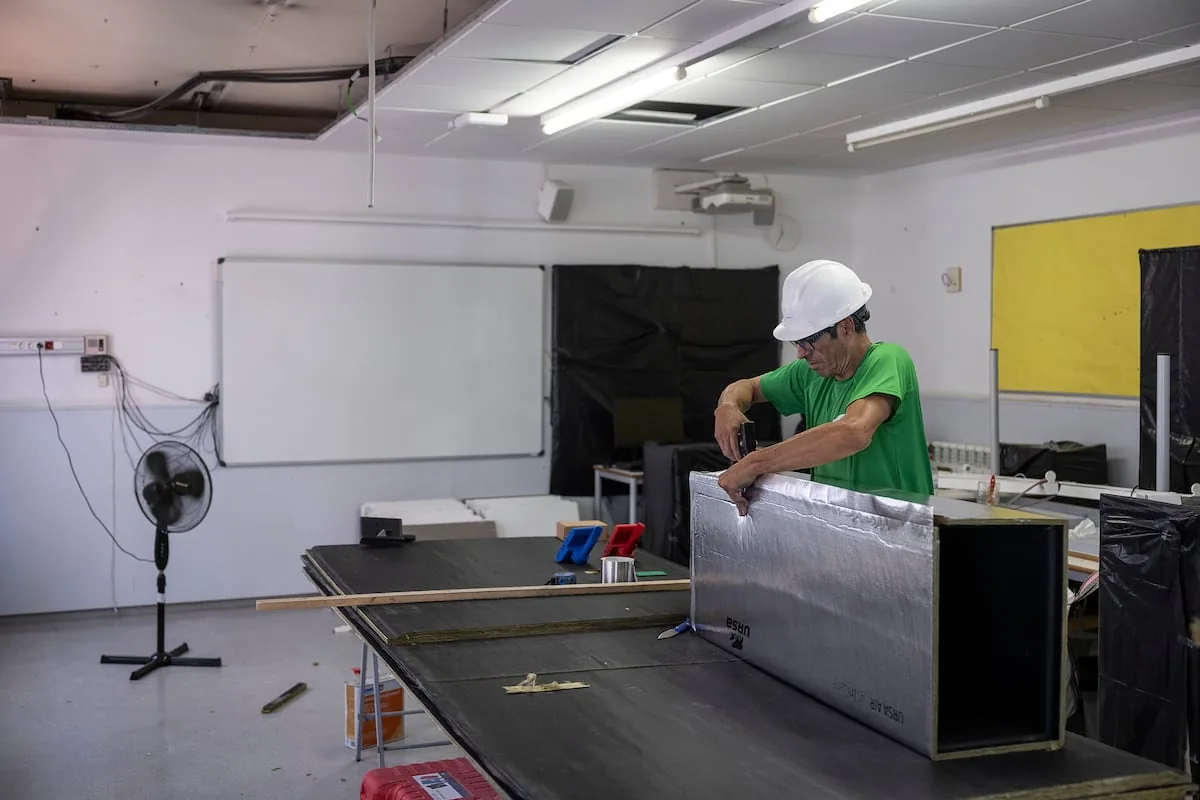
The foundation proposes two lines of action. With a more immediate effect, implement a shock plan to install fans in all classrooms of all educational centers, improve ventilation, enable shaded areas and water points in playgrounds, and air condition common spaces, such as the gym and the cafeteria. This last measure, precisely, is included in the latest shock plan promoted by the Govern—in 2022, led by ERC—after severe heat episodes that raised temperatures to nearly 40 degrees in some classrooms. That plan limited air conditioning to 200 high schools and fans to a limited number of centers, something the Equitat.org researchers consider “unequal and insufficient.”
At the same time, looking 10 years ahead, it is proposed to carry out a diagnosis of the building stock and a catalog of interventions that would include improving building insulation, installing air conditioning equipment, and renewable energy systems to reduce costs. It is also proposed to transform playgrounds (many are concrete courts without a tree or shade).
The researchers have done the math and estimate the investment needed to carry out their maximum proposal: 1.281 billion euros. The figure could be reduced to 464 million if only part of the renovation of the centers is chosen, which would include building insulation and a “modest” transformation of the playgrounds. According to the report, the centers pending transformation are 1,220, a figure the researchers derive from the 2021 Infrastructure Master Plan and the Climate Change Adaptation Plan, which Education made in 2023.
Finally, the researchers consider this issue so important that a political agreement and coordination between departments would be necessary to develop “clear regulations” focused on minors, just as there are for adults. “Children’s rights are being violated because there is no regulation to protect them. Also, the 27ºC maximum threshold is set from an adult perspective; it would be necessary to see what is appropriate for children,” points out Satorras.
The experts regret that with the change of Govern, the Climate Change Plan has been paralyzed and call for restarting it with clear criteria. “It is not known how the centers where fans or air conditioning were installed were chosen,” says Satorras. And she warns of the consequences of doing nothing. “Classes will be suspended; or the AFAs will end up paying for fans, which is not their role and creates differences between schools. There is also an equity problem between municipalities, because Barcelona can afford it, while other municipalities with fewer resources cannot,” concludes the researcher.
Almost two school years have passed, and the PSC Govern has still not made its own plan public to tackle the problem of high temperatures in classrooms. But it is working on it, and as this newspaper reported, the idea is to invest 20 million to install ceiling fans in all schools this summer and, in the medium term, another 2 billion in aerothermal systems.