








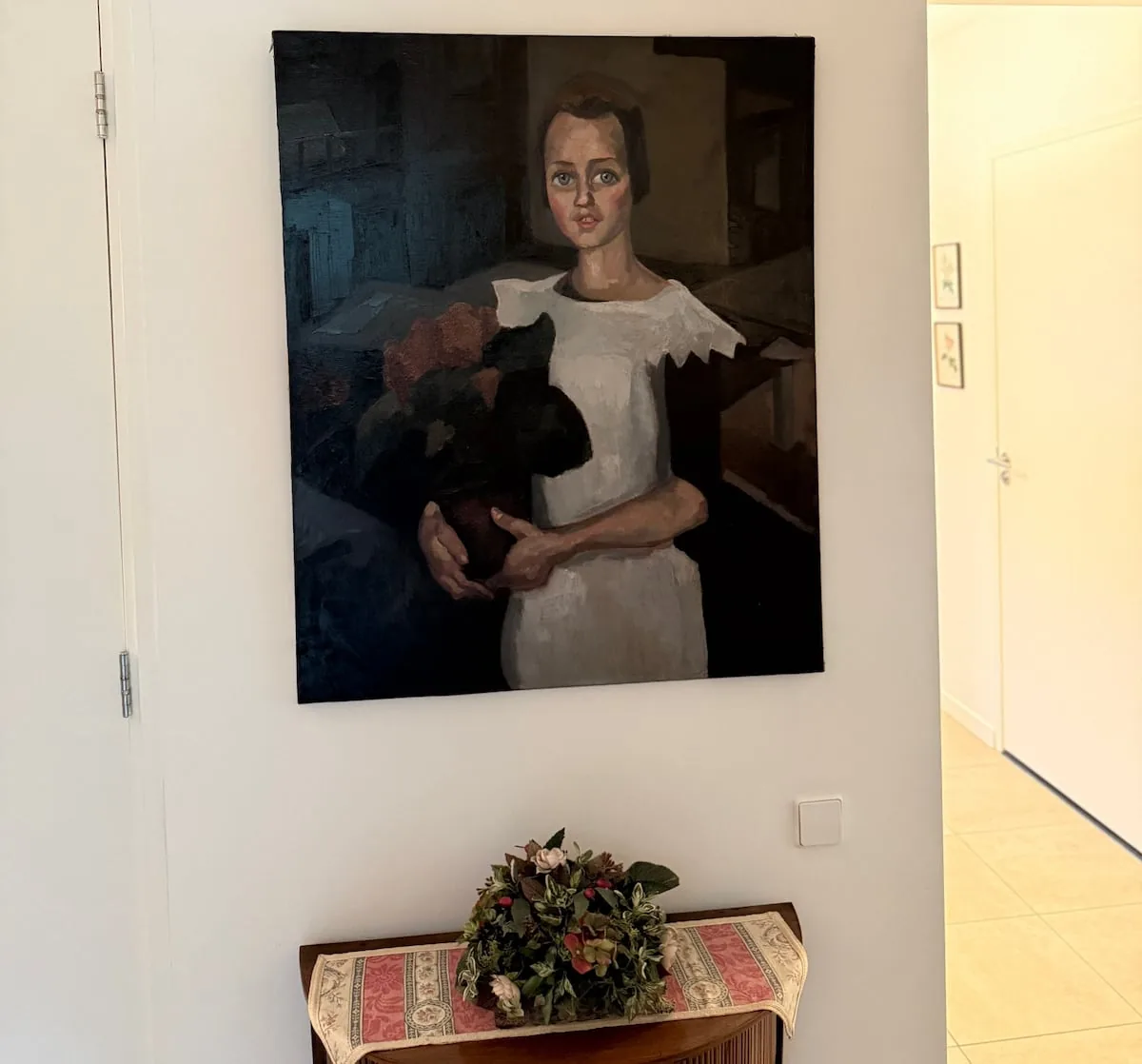
A painting by the artist Toon Kelder (Rotterdam, 1894-1973), titled Portrait of a Young Woman, stolen by the Nazis from the famous art dealer Jacques Goudstikker, has appeared at the home of the granddaughter of Hendrik Alexander Seyffardt, a Dutch general who during World War II commanded the Dutch Volunteer Legion. This was a unit of the Waffen-SS that fought on the Eastern Front. A descendant of the military man, who was unaware of the relationship, has made the existence of the work public through Arthur Brand, nicknamed the “art detective.”
Read more The Equitat.org foundation estimates the investment to climate-control schools at 1.3 billion
The story of the painting is doubly poignant for the relative in question, “whose identity we keep anonymous,” says Arthur Brand, on the phone. On the one hand, one must consider the profound emotional shock suffered, since “the informant did not know that his relative had been one of the most prominent Dutch collaborators of the Nazi regime.” In 1943, Hendrik Alexander Seyffardt was shot in his home in Scheveningen—the coastal district of The Hague—by two famous resistance fighters, Gerrit Kastein and Jan Verleun. The military man died the next day, and his two executors were arrested and died at the hands of the Nazis. Seyffardt had a son, Hendrik, with his wife, and that young man also collaborated with the occupiers. Married and divorced in 1944, his wife—the general’s daughter-in-law—with whom he had daughters, changed her surname and never spoke of the family past again. “That new surname, which we do not reveal, is the one carried by the descendant who contacted me, and the painting has remained with the family since the war,” explains Brand.
The second blow received by his informant is having discovered that the work by the painter Kelder belonged to Goudstikker’s collection, an expert in old masters and one of the best-known art dealers of his time in Amsterdam. His collection was looted and remains one of the most important claims of art stolen by the Nazis. Hermann Goering, supreme commander of the German air force, acquired the entire catalog in a forced purchase. “That painting must never be sold because it is Jewish art looted, stolen from Goudstikker. It is unsellable. Don’t tell anyone,” the granddaughter warned the relative who revealed its existence. Together they took it down and on the back, in the frame, there is a label with Goudstikker’s name.
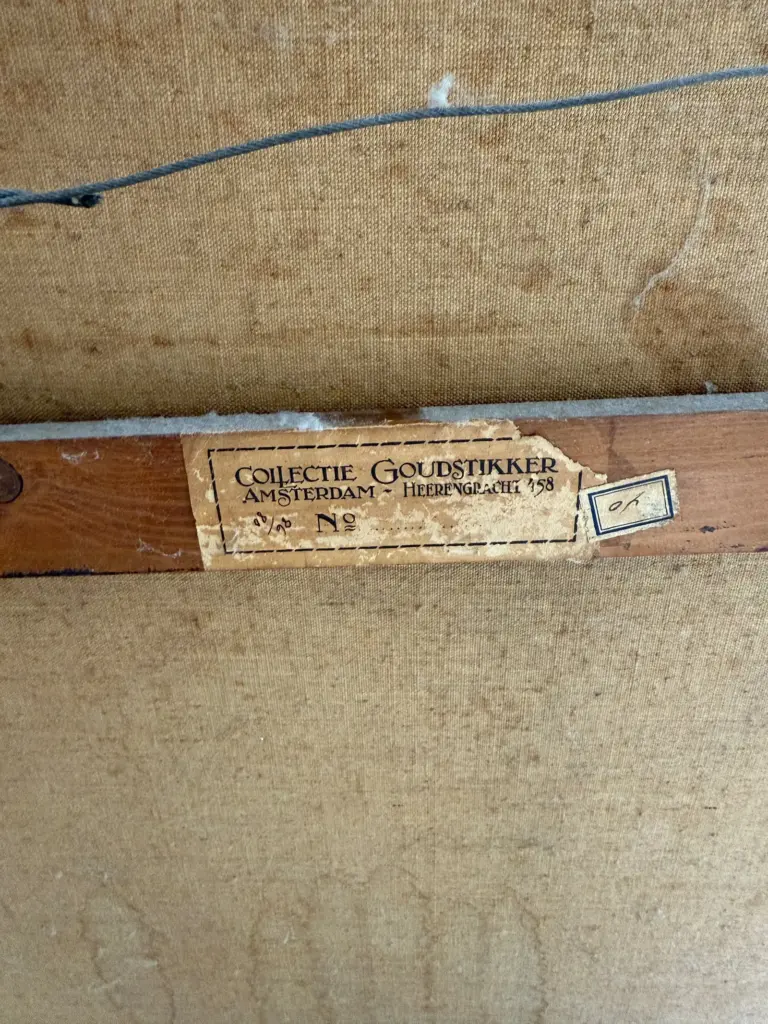
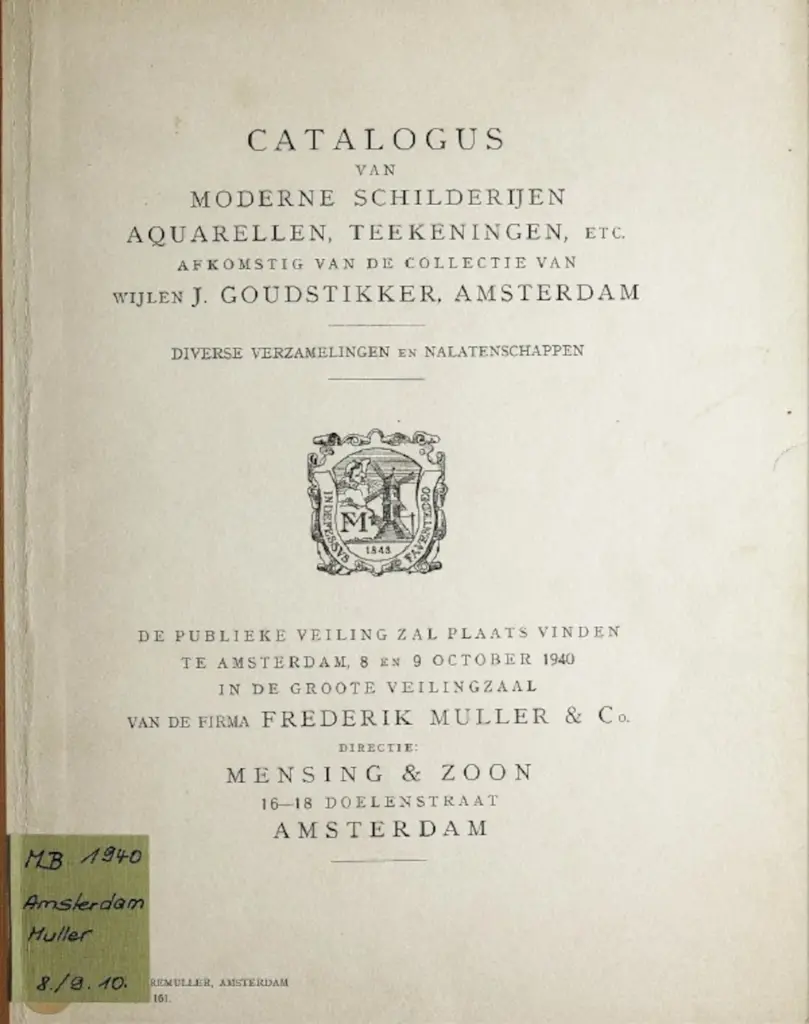
After receiving the call from the intermediary, Arthur Brand made sure that Portrait of a Young Woman was part of the lot looted by the Nazis. That it had not been sold on its own by Goudstikker at the time. On October 9, 1940, the Frederik Muller auction house in Amsterdam presented a portion of the dealer’s collection. “A few months earlier it had passed into Goering’s hands, so that auction is considered looted art,” says Brand. He looked for the signature of the painter Toon Kelder and found three works. “One of them was number 92, the same as appears on the back of this canvas.” Then, he contacted the lawyers representing Goudstikker’s heirs. In their response, they indicated that they could “determine that those three works were included in the Frederik Muller auction.” They added that “number 92, written in chalk on the back of the work, is further proof that it was in the auction.” “We have seen that type of inscription on other pieces included in that sale and that have since been restituted,” they replied.
The “art detective” was then sure that the canvas had been looted and that the dealer’s descendants wanted it back. “I conveyed my finding to the intermediary, who spoke with the family member,” Brand continues. “He wanted to do everything possible to return the painting and gave permission to make the story public.” He assures that “he feels deep shame for the family past and is furious about the years of silence.”
From a legal point of view, the Dutch police cannot confiscate the painting because the case has expired. For its part, the Restitution Committee, which advises the government on art stolen by the Nazis, lacks the authority to order searches or seizures. It only deals with claims made against the Dutch state. It has no authority over individuals.
“It is possible that Seyffardt bought the painting at the Muller auction in 1940. And it is also possible that it passed into the hands of his son, Hendrik, after the father’s assassination,” reflects Brand. He also considers it likely that the latter’s ex-wife “took it after divorcing in 1944, because it now hangs in the house of a daughter: the granddaughter of the general who collaborated with the Nazis.” The expert acknowledges that this has been “the strangest case” of his entire career. He recalls that “thousands of young people lost their lives under Seyffardt’s command, and after his assassination, dozens of innocent civilians perished in retaliation.” At the end of the conversation, he emphasizes that although the family “has no personal guilt for those crimes, they had the opportunity to return the painting.” “They decided not to,” he concludes.
Another piece from the Goudstikker collection, Portrait of a Lady, from around 1710, attributed to the Italian artist Giuseppe Vittore Ghislandi, appeared in 2025 in a house in Mar del Plata, Argentina. It was on a sofa in a real estate ad. The Argentine authorities acted quickly, and the family handed over the painting in September 2025. It had arrived there through Friedrich Kagdien, Goering’s financial advisor, who fled to Argentina after the war and lived there until his death.