







In the year 79 AD, Mount Vesuvius erupted and buried the city of Pompeii. Over time, we have learned more and more information about what happened that day: now researchers reveal that one of the victims was very likely a doctor. “He was caught by the tragedy while trying to flee carrying some instruments of his trade,” says the statement released by the Pompeii Archaeological Park.
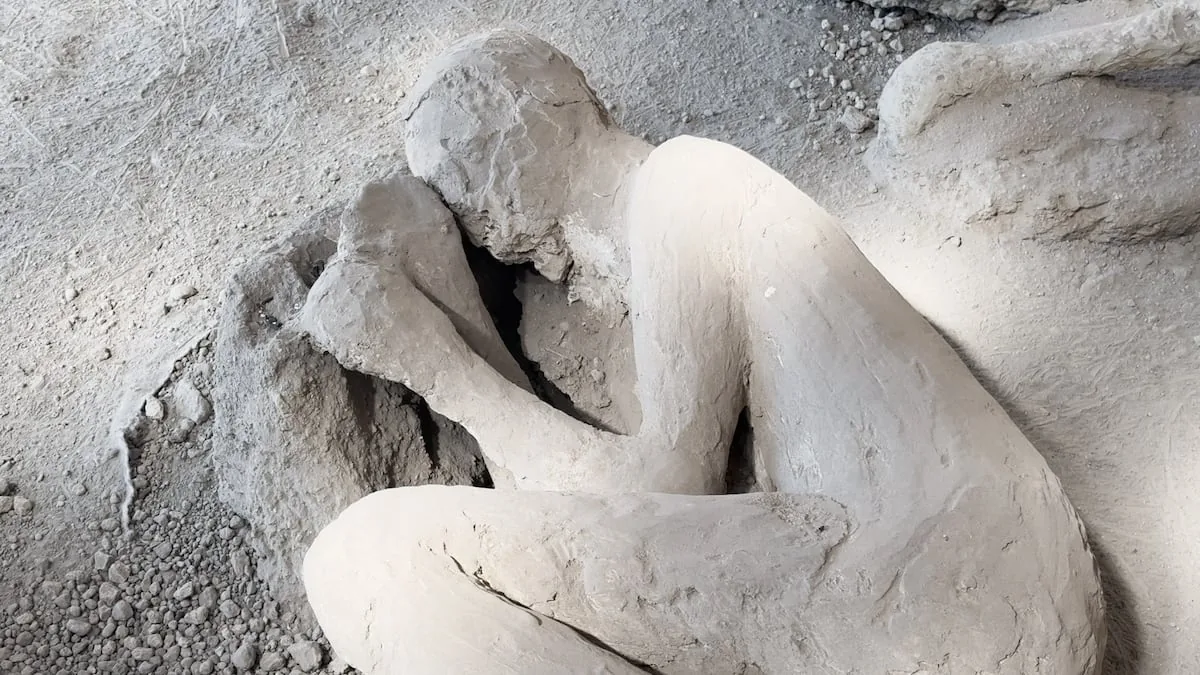
This discovery comes as the excavation of the Garden of the Fugitives has now been ongoing for more than 60 years. The pyroclastic cloud from Vesuvius caught at least fourteen people in that garden, a vineyard, whose bodies have been found as molds, in the dramatic pose of trying to save themselves. Like a three-dimensional photograph of fear and human fragility.
This conclusion was reached thanks to the study of a small case hidden inside the plaster of a human mold that had been found in the investigations led by Amadeo Maiuri in 1961. A personal set “of exceptional interest” appeared: a small box made of organic material with metal elements, a cloth bag with bronze and silver coins, and a series of instruments compatible with a medical kit.
Read more A new Ebola outbreak in the Democratic Republic of Congo already causes 65 deaths
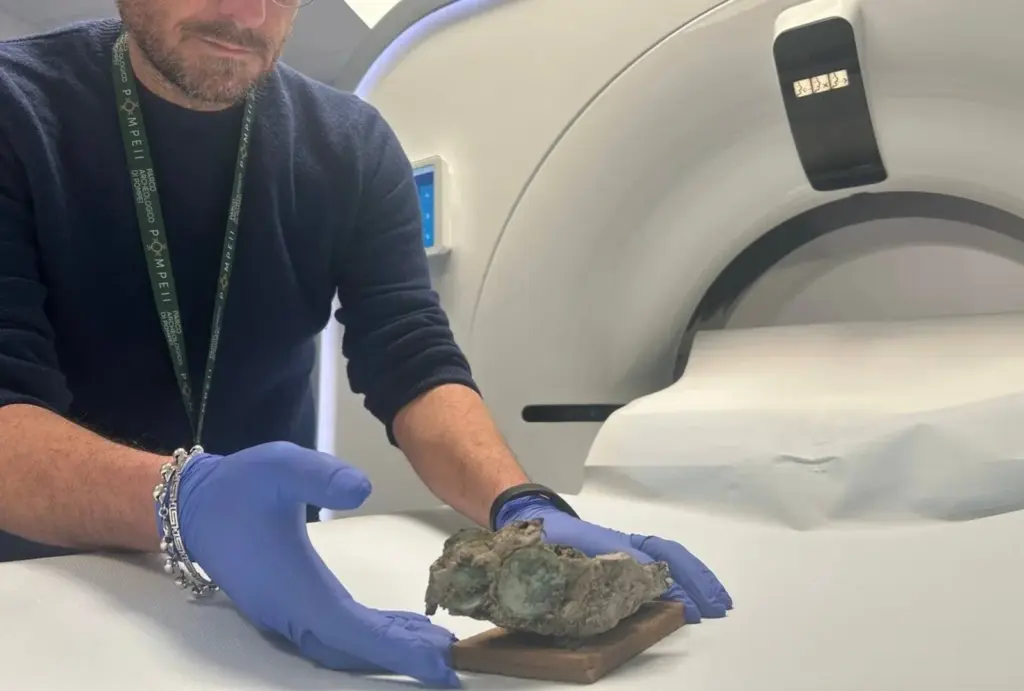
The diagnostic investigations, carried out through X-rays and CT scans at the Casa di Cura Maria Rosaria, (including CT scans supported by Artificial Intelligence and three-dimensional reconstructions) revealed inside the case a slate plate — used to prepare medicinal or cosmetic substances — and small metal instruments interpretable as surgical tools. The box was equipped with a sophisticated locking system with a gear wheel. These elements allow the hypothesis that the victim was a medicus.
“Already two thousand years ago there were those who did not practice medicine only during consultation hours, but who were simply doctors at all times, even at the moment of fleeing the eruption, thwarted by the pyroclastic cloud that reached the group of fugitives trying to leave the city through Porta Nocera,” says the director of the Pompeii Archaeological Park, Gabriel Zuchtriegel. “This man carried his instruments with him to be prepared to rebuild his life elsewhere thanks to his profession, but perhaps also to help others. We dedicate this small but significant discovery to all the women and men who today continue to practice this profession with a very high sense of responsibility and service to the community,” concludes the director.
Read more Sordo calls to push in collective agreements to reduce the working day