








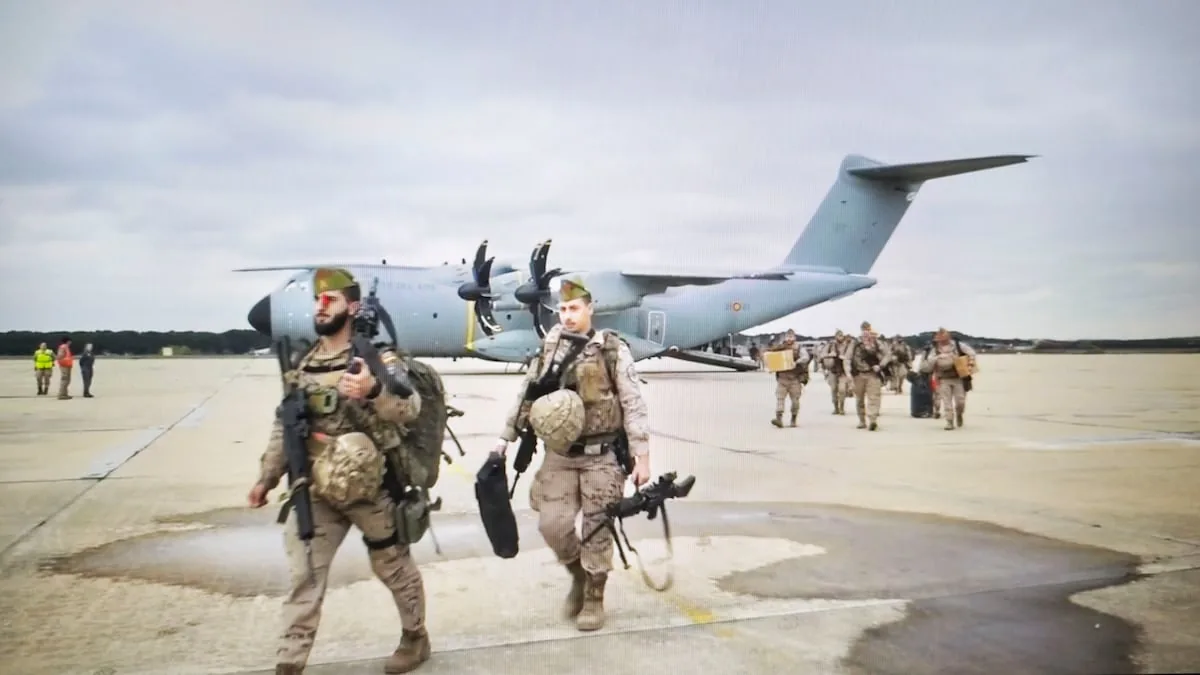
The difficulty in finding housing in saturated areas is one of the bottlenecks blocking the labor mobility of workers. This problem, which unions have been warning about for some time, knows no sectors or professions, and today also affects the military, especially those stationed in Madrid. To facilitate their stay, the Ministry of Defense has launched a pilot coliving project, with between 350 and 400 places, which will start operating from next July 1.
The Council of Ministers approved a budget modification last Tuesday to start this new shared housing model. It is a coexistence system in which residents have private rooms but share large common areas within the same building. Although it is a format originally designed for professionals with similar profiles or workers with high mobility, such as digital nomads, it now also fits the particular work conditions of the military. According to the ministry, coliving allows “a quick response to temporary housing needs without compromising public assets.”
This initiative stems from a simple idea: military personnel frequently change assignments and need housing solutions adapted to that reality. According to the project, coliving allows a quick response to temporary housing needs without having to sell or compromise public assets. It is a novel formula within the Armed Forces, implemented through the Institute of Housing, Infrastructure, and Defense Equipment (INVIED).
Insufficient options
The Ministry of Defense recalls that there are already several measures to facilitate the mobility of military personnel, all managed through INVIED. This body, created in 2009, is responsible for managing Defense’s real estate assets and helping military personnel access housing. Its master plan includes three main routes: financial compensation for change of assignment and location, allocation of military housing under a special rental regime, and assistance for purchasing owned housing. However, the Military Life Observatory, a body attached to the Parliament, points out that financial compensation, the most used, is useful but insufficient, as it does not reach all affected and has a time limit.
Read more Barcelona and Colombia strengthen ties at the García Márquez Library
As it is a pilot project, the goal is to analyze in detail how it works, if it is well received, and if it is truly effective. With that evaluation, Defense will decide whether to expand the initiative and incorporate it permanently into policies supporting military mobility. The need is evident. According to the Military Life Observatory, almost half of the military stationed in cities spend a portion of their salary on rent far exceeding the recommended 33%.
If you have doubts, suggestions, or simply want to share your case, you can send us an email at vivienda@elpais.es.
The data you provide will be processed by EDICIONES EL PAÍS, S.L.U., (C/ Miguel Yuste, 40, 28037-Madrid), for the purpose of managing your doubts and/or testimonies and preparing informative content. You may exercise your rights recognized in data protection matters through the address dpo@prisa.com by accrediting your identity and identifying the right you wish to exercise. For more information, please consult the Privacy Policy.