What will be at stake in the French presidential elections next spring goes beyond France. The victory of the far-right candidate, Marine Le Pen, could have a political and psychological impact in the limited scope of Europe comparable to the first victory of Donald Trump for the entire world in 2016.
Read more Gandalfs 1 — Peter Thiel 0: protests to watch those who watch
For the first time since 1945, one of the two countries that have been the driving force of the European Union — the other is Germany — would be governed by a party of this ideological orbit and, in the French case, heir to collaborationism with the German occupation during World War II. For the first time, a europhobic and pro-Russian formation that has even proposed taking its country out of the EU and the euro would take power. National Rally is a pioneer in xenophobic concepts such as “national priority,” and its discriminatory program would clash in many aspects with the 1958 Constitution. From France’s position in the world to the viability of the project of a united Europe, all this will have to be reconsidered if Le Pen becomes, as polls anticipate, the successor of Emmanuel Macron in the presidency of the Republic. The catastrophe — because this scenario would be disastrous for everyone — is not inevitable, but it requires efforts from the rest of the leaders of the democratic spectrum who are currently conspicuous by their absence.
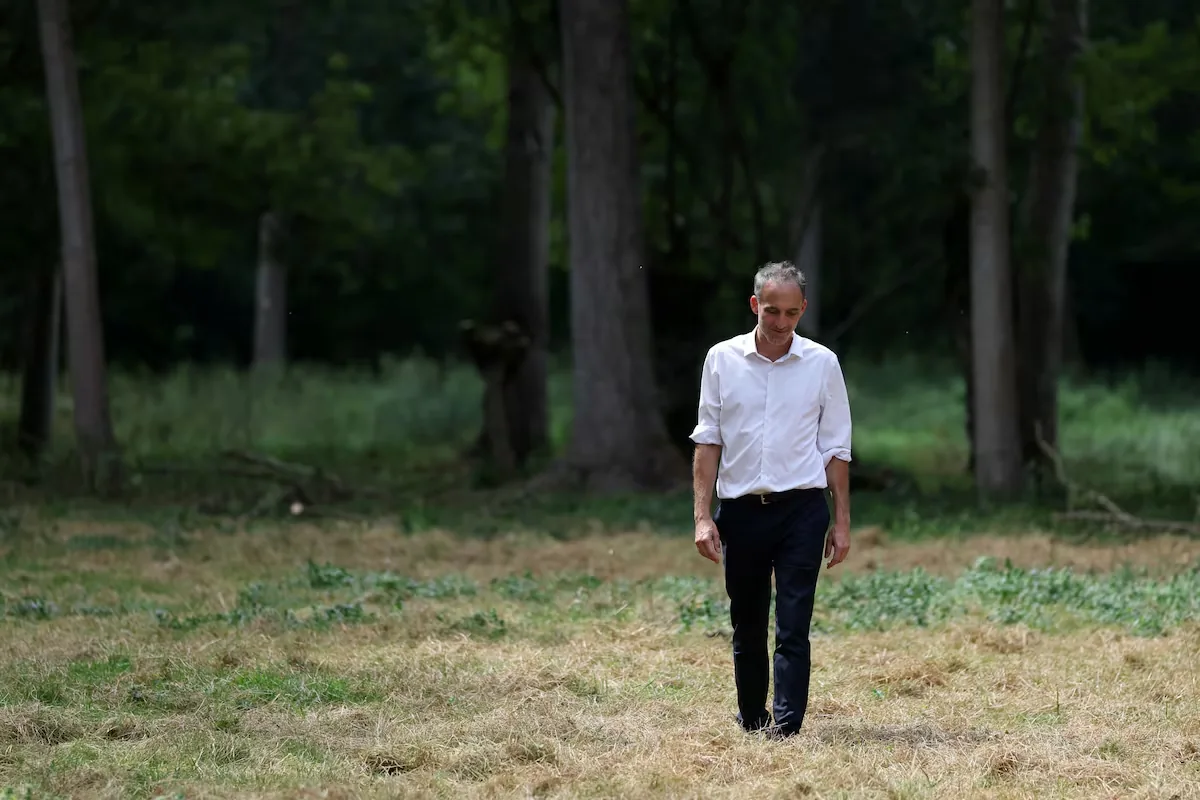
The left is divided between the radical sector led by Jean-Luc Mélenchon and the rest, in turn divided among several candidates competing with each other, such as the pro-European Raphaël Glucksmann. These are the “irreconcilable lefts” that former Prime Minister Manuel Valls spoke of a few years ago. In the center and moderate right, a multitude of politicians — former Prime Minister Édouard Philippe is the best positioned — also aspire to take the space that Macron has occupied until now. The division of the moderates guarantees that the two radical candidates, Mélenchon and Le Pen, will qualify for the second round. And there is no poll that does not confirm that, given such a configuration, the far-right candidate would win, who over time has managed to appear as the lesser evil for many French people. Mélenchon’s divisive rhetoric, his eurosceptic and conciliatory proposals towards Putin’s Russia, and his tasteless outbursts, which have included mockery of Glucksmann’s and other public figures’ Jewish-origin surnames, cause a broad sector of the electorate to reject him as much or even more than Le Pen.
The union of democrats and moderates does not guarantee Le Pen’s defeat, but today it is the most viable option to stop her. The risks for France and Europe — their social cohesion, their economy, their position in the world — are incalculable. It is not too late to avoid it.
Read more The bigmouths