









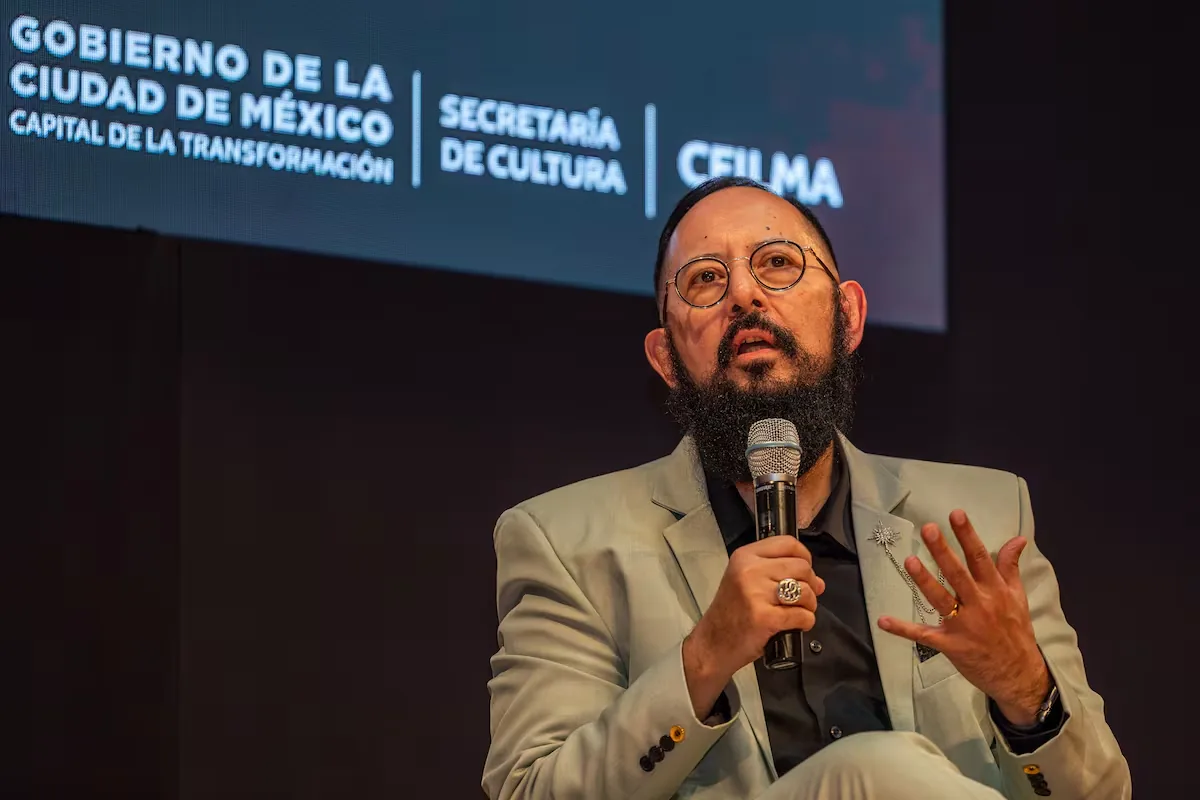
It has already been said that Mexico City is in fashion. This idea, coming from a significant number of annual visitors (44 million passengers in 2025), has turned the Mexican capital into a gigantic film set, where the streets of Mexico City are the stage for a culture that goes viral instantly, materializes, and generates its own economy that permeates multiple social sectors. This was made clear during the panel “Pop culture also moves the economy” at the Economy on Screen forum, organized by the Mexico City Film Commission (CFILMA) and EL PAÍS with the support of Amazon MGM Studios, UNOi, Santillana, New Art, and the Ministry of Economy.
“Mexico City has become a very hot, very Instagrammable city, it has one of the best hospitality services, one of the best production services,” said Guillermo Saldaña, general director of the Mexico City Film Commission. To put the phenomenon into perspective, Saldaña gave the example of filming a fight between Godzilla and King Kong on Paseo de la Reforma, or the visit of the band U2 to shoot a music video in the Historic Center. The figures support this boom: the audiovisual industry represented a direct investment of approximately 533 million dollars in 2025 and generated 110,000 jobs. For the official, facilitating filming is an essential public policy, since “it is an industry that generates shared prosperity,” where 70% of the budgets are allocated to paying families, services, and local suppliers.
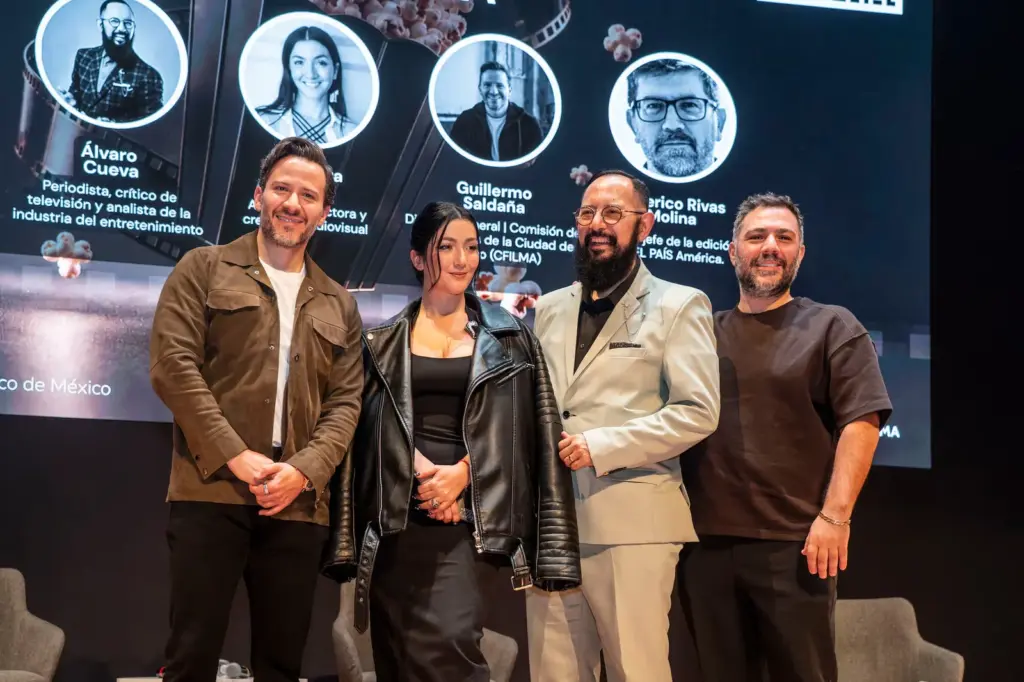
However, if the world looks at Mexico with such fascination, for television critic Álvaro Cueva, there remains a shame towards what is our own that hinders the true potential of the country. “Mexicans are ashamed of our culture,” lamented the journalist, questioning why Mexican popular culture is not assumed as a tool of soft power, just as South Korea has done with its entertainment industry. Cueva recalled an uncomfortable symptom of this lack of narrative sovereignty: “The Day of the Dead parade was not born from us, because someone from outside came and understood what we are,” he said referring to the James Bond film, adding the case of the animated movie Coco as examples of validation that, according to the critic, came from abroad.
Álvaro Cueva illustrates his criticism of how other countries use their industry to export their everyday culture, while in Mexico that opportunity is wasted on screen. He gave the example of Korea, where there is a ministry of the telenovela. “For every million dollars you invest, the government gives you another million as long as your characters eat Korean food. In Mexican telenovelas today, except for Juan Osorio’s productions, they spend their time eating pizza and spaghetti.”
Read more Kast rewrites the memory of Pinochet’s coup and calls not to remain «anchored in the past»
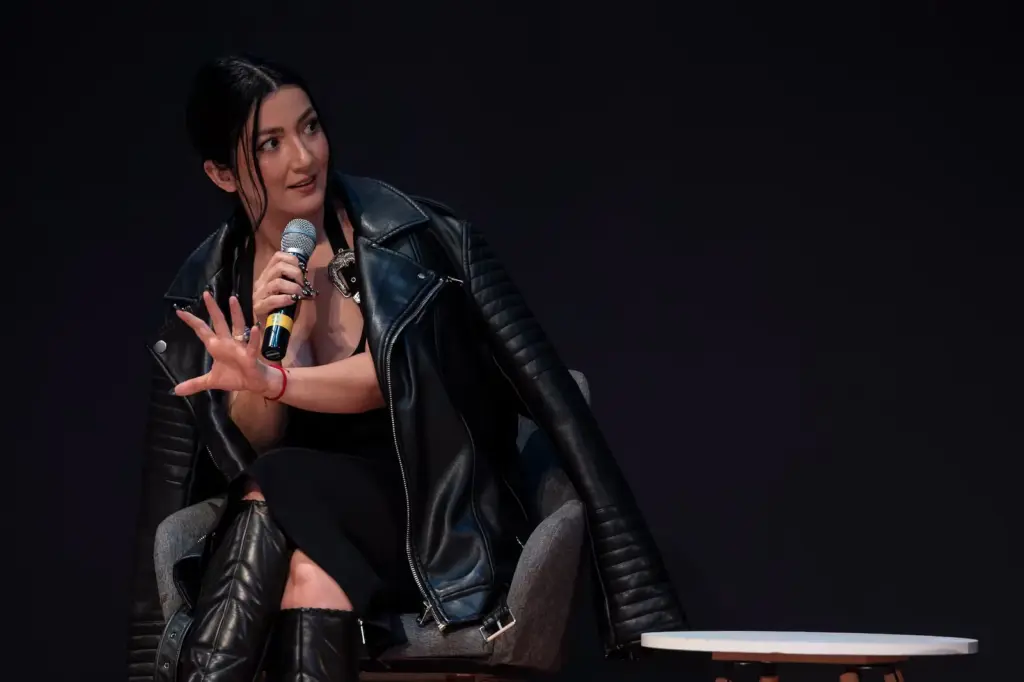
The response to this self-criticism came from actress and producer Eréndira Ibarra, who accepted the challenge of defending national pop culture, but with a nuance. “If Mexicans do not always embrace their cultural products, it is because identity has been monopolized for too long by a single company.” For Ibarra, it is time to look towards independent creation and detach from the traditional telenovela which, she accused, has functioned as a tool of indoctrination. “Mexico is indispensable for the world,” she assured, recalling how in the international series Sense8 they managed to capture the essence of the capital by documenting a real demonstration for the disappeared from Ayotzinapa on Paseo de la Reforma. “You see Mexico City in all its splendor with the city also full of shouts and also indignation, but of a love for the homeland that stands out,” the actress recounted.
The democratization of screens has been the escape valve for this new generation of creators. Marcos Bucay, screenwriter and director, recalled his self-managed beginnings on the internet with viral phenomena like Quiero ir al antro or Colibritany. Bucay confessed that he had to film without permits on the streets after realizing there were no spaces for the type of generational comedy he wanted to consume. Today, streaming platforms are the main allies of these talents seeking massive impact. “We are in the best time to create and build,” celebrated Bucay, highlighting that creators have finally stopped being condescending to the audience and are delivering quality products that become pop icons.
The unanimous conclusion of the panel is that pop culture is not a minor genre, but the historical memory of a country in constant boiling. From a self-managed music video by young people on the outskirts, to a Hollywood blockbuster right on Paseo de la Reforma, every work that portrays the city contributes to a living industry. The challenge is no longer to convince the world to come film in Mexico, but to appropriate our own story and celebrate our identity without the need for external approval, which we already have.