









Neanderthals and sapiens were more than sister species. Differentiated by just a few dozen genes, they had sex and offspring recurrently, which for some even questions the distinction between the two. However, the deep analysis of the remains of a Neanderthal baby shows that they were already different as children, at least in their bones. The work, published in Current Biology, also suggests that Homo neanderthalensis children developed at a faster pace than sapiens. The different and harsher environmental conditions could explain this vital difference.
Read more Alcaraz withdraws from the Godó due to a wrist injury: “It is more serious than we thought”
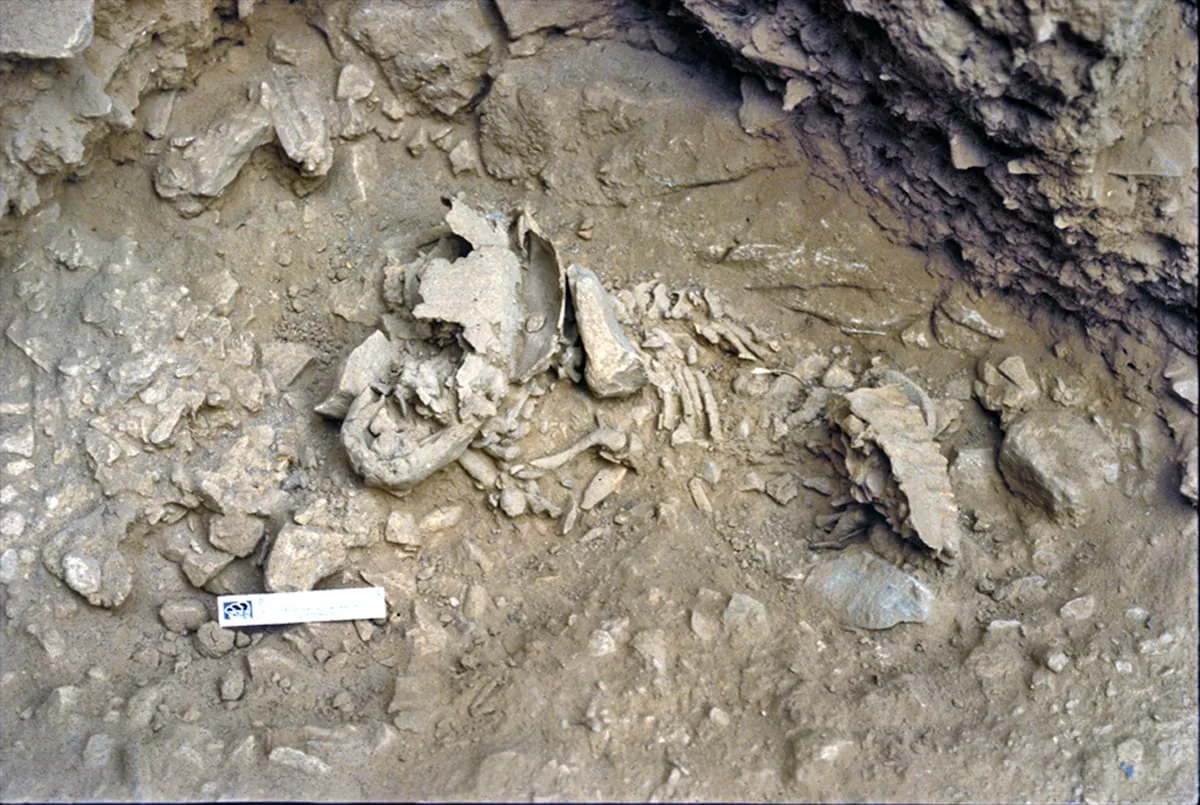
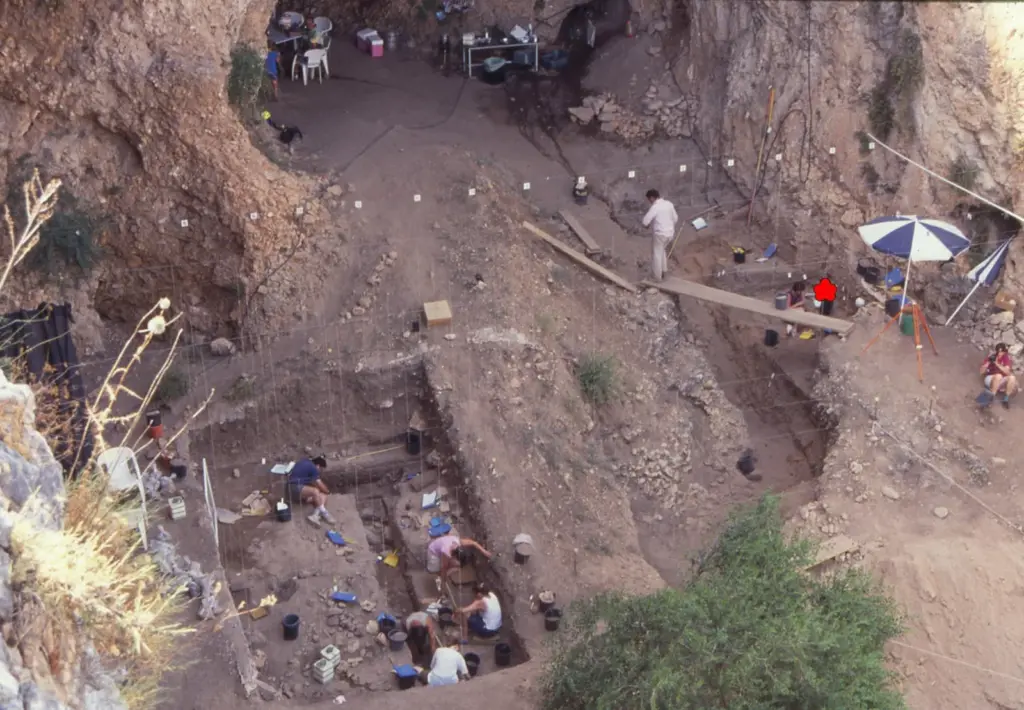
Amud 7 is a small child buried in a cave by the Sea of Galilee, in Israel, between 51,000 and 56,000 years ago. It is the smallest among the twenty Neanderthals buried there. Discovered in the 1960s, the first analysis of what was his little head took place thirty years later. But it has not been until now that a deep analysis of the 111 bones of his body that have been recovered has been carried out, which have yielded much information about what Neanderthal children were like, how similar and different they were from modern human children.
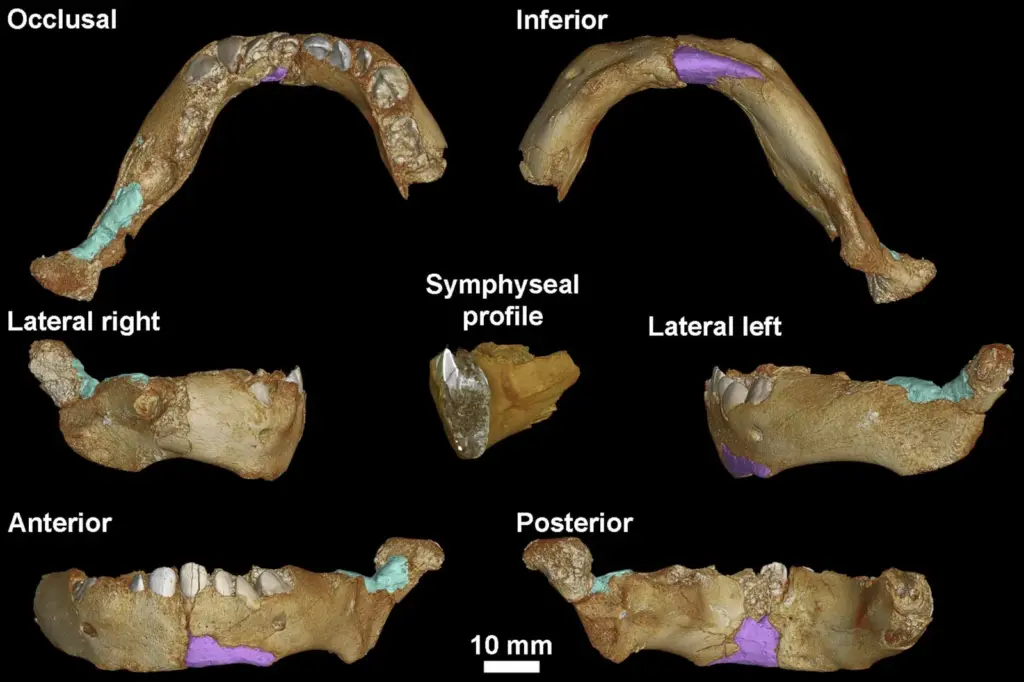
“I think Amud 7 was less than twelve months old, more like around six,” says Ella Been, professor at Ono Academic College (Israel) and first author of the study. The trained eye of a forensic expert could detect some of the key morphological traits of this child that differentiate him from a modern human (by modern, paleontologists do not refer to a current person, but to the alternative designation to the increasingly outdated Homo sapiens). “There are some notable differences: robust bones, a large endocranium, absence of chin, a very curved clavicle, a superior inclination of the scapular spine, an inferior orientation of the glenoid cavity, and a relatively short tibia,” summarizes Been, also a researcher at Tel Aviv University.
That a child of such a young age already shows such marked morphological differences is very relevant for the Israeli researcher. “The fact that these differences appear so early in life indicates to us that Neanderthal morphology is deeply rooted in their biology, and not shaped by environment or behavior,” she argues.
While Neanderthals thrived in Eurasia until a few tens of thousands of years ago, when climatic conditions were much harsher than today, modern humans did so on the African continent, in a more benign environment, before expanding into Neanderthal territories. Hence, environmental pressure on the phenotype was never completely ruled out to explain the differences between the two. But “the discovery of the Amud 7 bone radically changes our understanding of Neanderthal childhood,” Been adds.
The other major finding of this work has to do with the child’s age and the doubts Been expresses about it. If guided only by the state of his dentition (only the two lower incisors had emerged), Amud would be no more than six months old. But the size and level of ossification of his long bones and the capacity of his skull point to that, if he were a modern human child, he would be around one year old. “I consider the histological age of the teeth to be more accurate than the age measured by the volume of the long bones or the endocranial for estimating such an early age,” she justifies.
Read more Numerology uncovered the 4.7 million Primitiva scam in A Coruña
This would indicate that Amud 7 developed at a faster pace. His body size and volume under the skull (estimated at 879 cubic centimeters) correspond to those of a modern human baby several months older than his dental age. The discrepancy between skeletal and dental maturity points to a faster body growth rate among Neanderthal children. “Amud 7 is not an isolated case,” concludes Professor Been. “When compared with other known Neanderthal babies, the same pattern is observed: faster body and brain growth, suggesting higher energy expenditure. Understanding this pattern is fundamental to understanding who the Neanderthals were and how they adapted to their environment,” she finishes.
A few years ago, Daniel García, a physical anthropologist at Complutense University, was co-author of a broad study that reconstructed the rib cage of four Neanderthal children, from a newborn to a three-year-old. And they compared them with those of modern human children. As with Amud 7, the very characteristic shape of this part of the axial skeleton, shorter, deeper, and with more robust bones, was already present in childhood.
“Not everyone accepts that Neanderthals were born with differences, and some suggest they develop during their life,” García recalls. “The case of Amud 7 could be something specific to the Near East, but there are others in France or Russia and all show similar developments,” adds the anthropologist. Regarding the greater development or its accelerated pace, he acknowledges it is a more complex issue. “I think yes, there is evidence to talk about this rapid development,” says García, but leaves the following question: “Do they have accelerated development or are we the ones who develop more slowly?”
In the opinion of Carles Lalueza-Fox, this study with Amud 7 confirms what they found with the juvenile from El Sidrón: “Neanderthals had accelerated growth — compared to us — in childhood.” A few years ago, Science published a paper in which the geneticist participated about a child of almost eight years found in the El Sidrón Cave, in Asturias. Like Amud 7 and other Neanderthal children, he also showed greater development when compared to modern human children of the same age.
“I believe the underlying explanation is not found in the genes — Neanderthals and modern humans differ in only about a hundred genes — but in the regulation of the expression of those genes during development,” argues Lalueza-Fox. For him, we would be facing a more complex mechanism to study that would explain “differences in developmental patterns, rather than in their specific traits.”