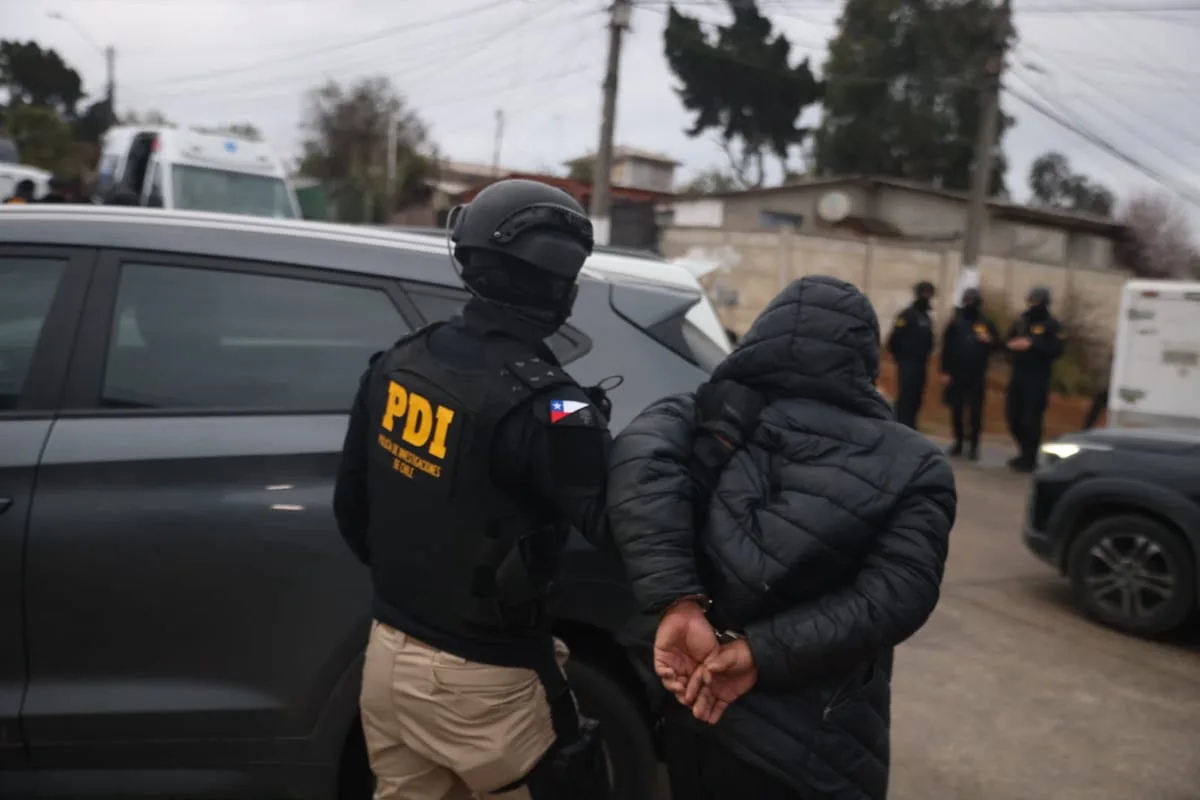









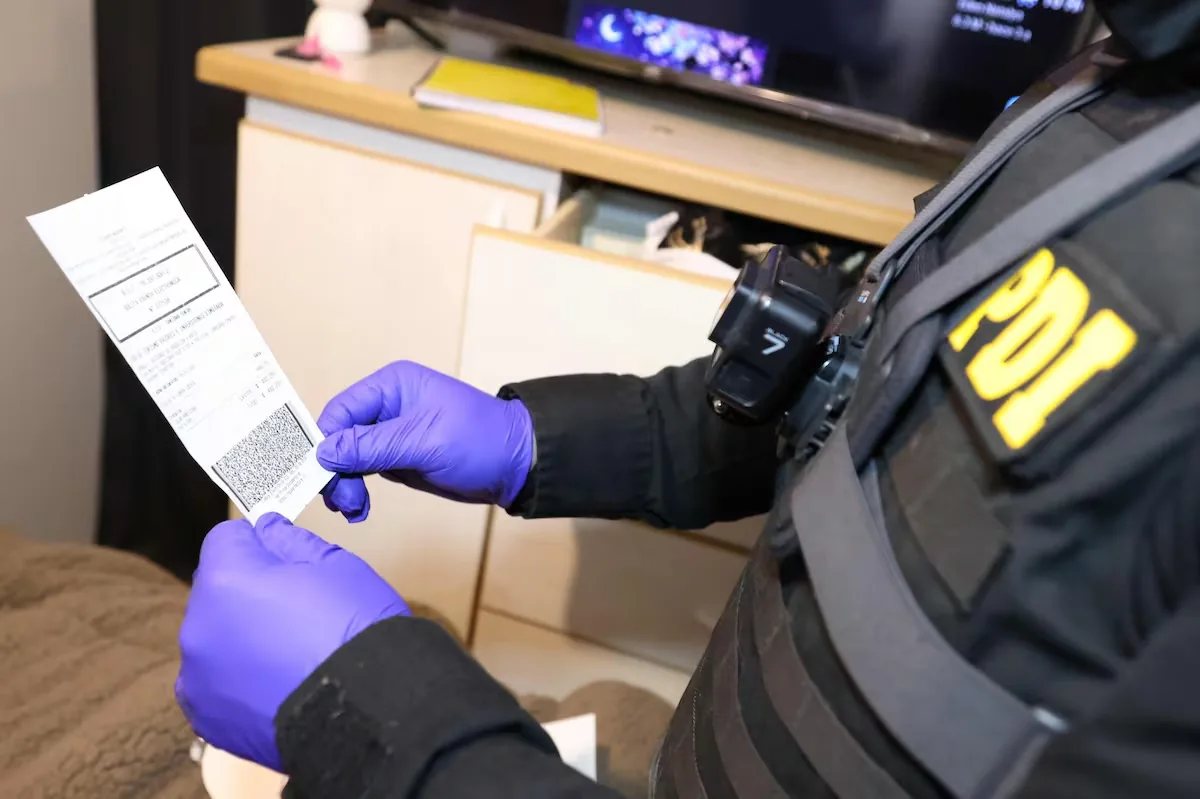
The Chilean Prosecutor’s Office, together with the Investigations Police (PDI), led a mega-operation this Tuesday in which 19 people were arrested, including José Pérez Asencio, a Venezuelan executive who worked at a Banco Santander branch in downtown Santiago, who is believed to have links with a cell of the Tren de Aragua (TDA). According to preliminary information, this is an investigation of more than a year, in which millionaire movements were tracked through money transfers abroad, especially to a leader in a prison in Colombia, and whose origin comes from the profits obtained from various crimes committed by the group in Chile. The amount established so far is about 85 million dollars.
According to Cristian Sepúlveda, deputy chief of the PDI and head of the Organized Crime Investigation Brigade (Brico), this is “a rather complex criminal activity,” involving crimes such as money laundering, extortion, smuggling, criminal association, and drug trafficking. He added that the investigation also established profits from human trafficking for sexual exploitation and kidnappings.
The investigation is led by the chief prosecutor of the southern metropolitan area of Santiago, Héctor Barros, who has said that the executive was arrested for his international operations linked to the Tren de Aragua. “We are not talking about the bank, or that he did this through the bank, but that he had many accounts open in different banks, and from there he started to operate (…) It is 78 billion pesos that left Chile through cryptocurrency companies to other countries,” he said.
Through a public statement, Banco Santander has indicated that it “has fully cooperated with the procedures requested by the competent authority.” “The Bank maintains a zero-tolerance policy towards any conduct that departs from the law or current regulations. In case individual responsibilities are verified, all appropriate measures will be taken according to our internal protocols and applicable legislation,” it reported.
The Tren de Aragua, a transnational mega-gang that originated in Venezuela, has been operating in Chile approximately since 2019 and 2020. During the pandemic, especially, its members began to enter stealthily through unauthorized crossings on the northern border, which borders Peru and Bolivia. More than 300 of its members are detained in Chile, and last year the initial leadership that operated in the South American country was convicted, including its first leader, Carlos González Vacca, alias Estrella. But the organization has a way of operating that usually allows it to reorganize.
Until Monday’s operation, the arrest in June 2025 of the Tren de Aragua faction, Los Hermanos Cartier, in Puerto Montt, in southern Chile, had been the biggest economic blow to the criminal organization, when a money laundering network was dismantled that took more than 13.5 million dollars out of Chile, the result of payments of criminal tributes or ‘vaccines,’ as they are called in the gang’s jargon, for migrant and drug trafficking, sexual exploitation, extortions, and kidnappings. This branch of the gang paid the Tren de Aragua a franchise to use its name – it is a brand in the criminal world, just like a company – and its leader, Gabriel Arturo Acosta Escalante, operated from Colombia. He was arrested in May last year in Antioquia, charged with homicide, attempted homicide, extortions, money laundering, robberies with intimidation, attempted robberies, and kidnappings, between 2022 and 2025, and his extradition to Chile was requested.
The Minister of Security, Martín Arrau, has said after the operation that “this is a successful case of police investigation, but it also alerts us to the level of penetration of transnational organized crime. That is why the call is to work all together.”
Read more Three occupants of a van die after crashing with a truck in Huesca