






Built in the second half of the 19th century, the Bassa Nova (new pond) of Reus had a very specific function: to store water to irrigate the surrounding fields and also supply the homes in that area of the Camp de Tarragona. Over time, the proximity of the water caused the area around the pond to become a recreational zone. However, in the mid-20th century, the mine that fed the pond fell into disuse. From then on, the infrastructure lost its function and that leisure space, close to the urban center, began to deteriorate.
Today, the Reus-based studio Gallego Arquitectura has transformed the old pond into a public space, a place for play, memory, and civic awareness. How did they do it? By connecting the old bassa with the Paseo de la Boca de la Mina that led to it. The architects’ intervention not only recovers an infrastructure with heritage value, but is also able to transform its use while respecting it.
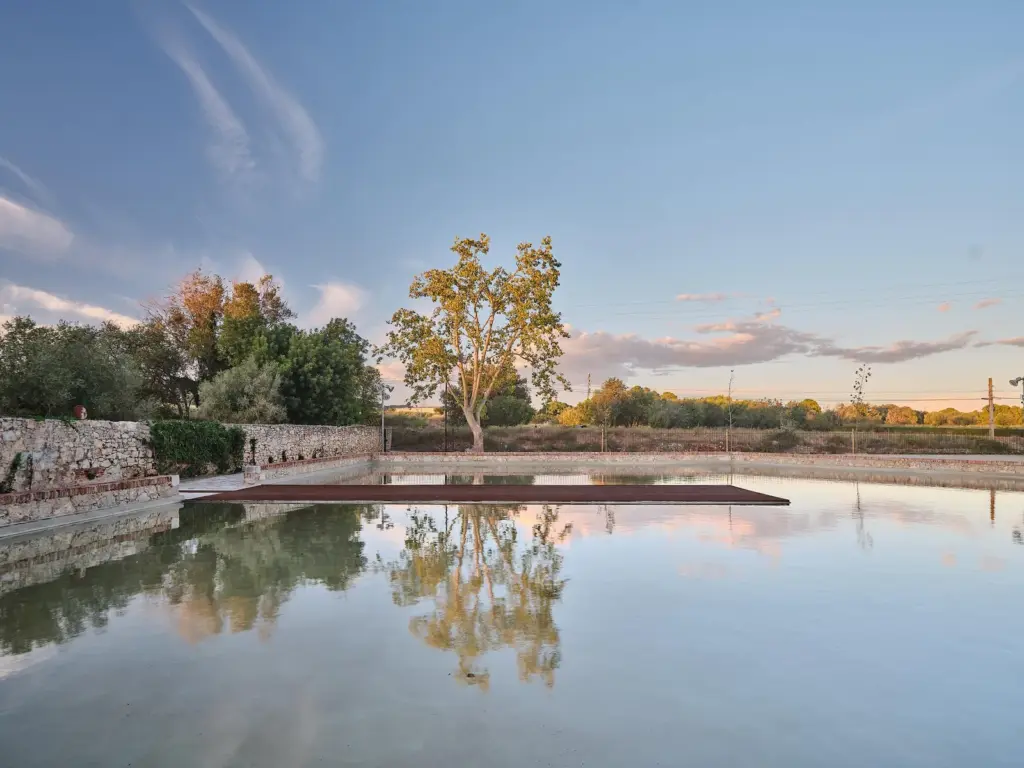
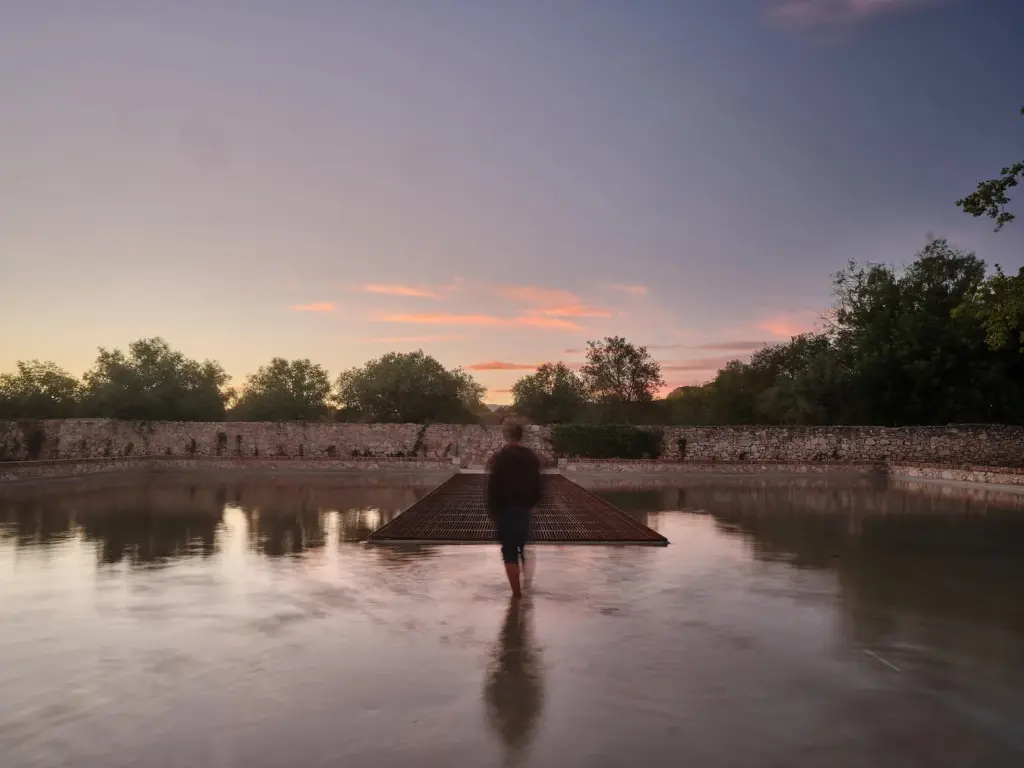
Thus, paying homage to its original function, water is present in the new space. It is a symbolic presence: a 15-centimeter-deep sheet that extends across the 676 square meters of the pond. To achieve this effect without damaging the old intervention, the architects proposed dismantling the original ceramic pavement, made of 23 by 23 centimeter square tiles which, once restored, were placed in the spaces adjacent to the pond. Thus, with the bottom free of ceramic pavement, they devised a lost formwork system on small pillars that fills the reservoir, raising the surface of the stagnant water without using reinforced concrete that would damage the infrastructure. Reducing the depth, from the original two meters to the current 15 centimeters, was key for the safety of the new park.
Next to the irrigation canal that fed the pond there is now a walkway made of corrugated round bars. This bridge allows access while informing about the original depth of the reservoir and the arrival of water to the pond.
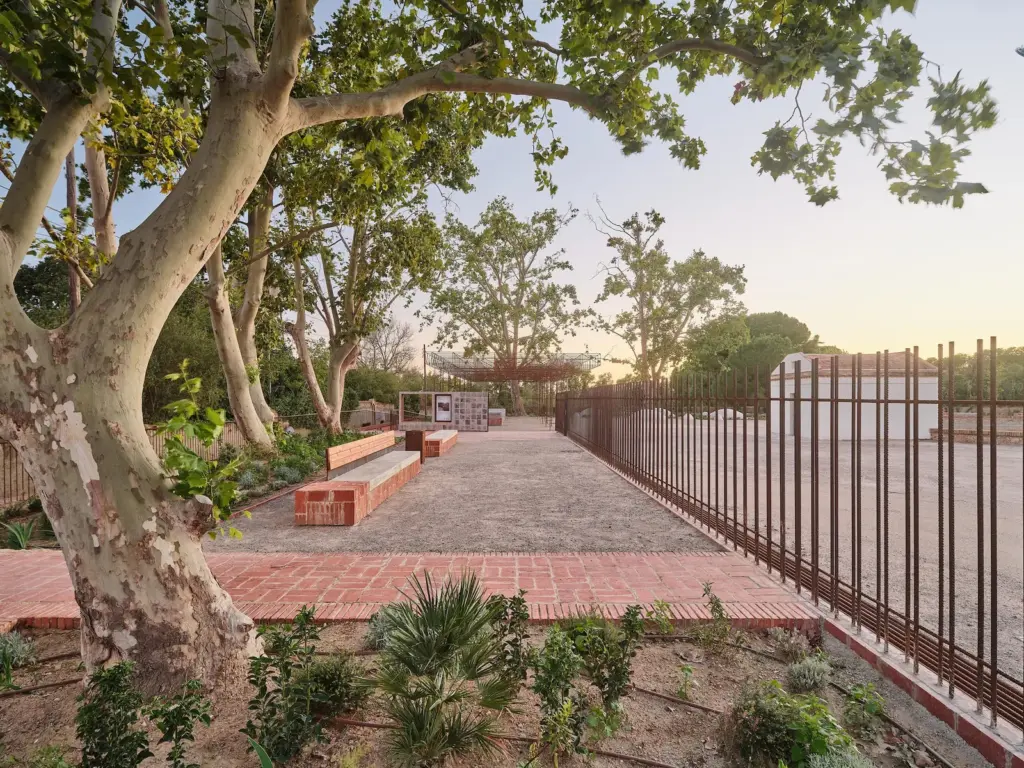
The perimeter of the site has been urbanized. Now, small retaining walls, which save the unevenness of the terrain, function as stands, that is, as seats, at the foot of the path. In part of these stands a garden has sprung up. The architects designed it using Mediterranean aromatic plants — such as rosemary or lavender —. To achieve shade in the pergola, they chose climbing plants and the addition of seven centenary plane trees, which also build a bridge with the place’s past.
For the fence surrounding the reservoir, the architects used the same resource as for the walkway next to the irrigation canal: vertical corrugated steel rounds. Here the bars function by limiting access without obstructing visibility. This same material — economical and typical of agricultural areas — is used in the railings and the pergola. That is why the place acquires, besides design coherence, the tone of the field’s clay.
Upon arriving at the pond, a fountain welcomes you. Concrete tables and benches host the visitor. Ivies and bougainvilleas create shade. The place is thus offered for walks, picnics, or rest. The plane trees still frame that public space, a place that has seen itself transformed over the centuries.