









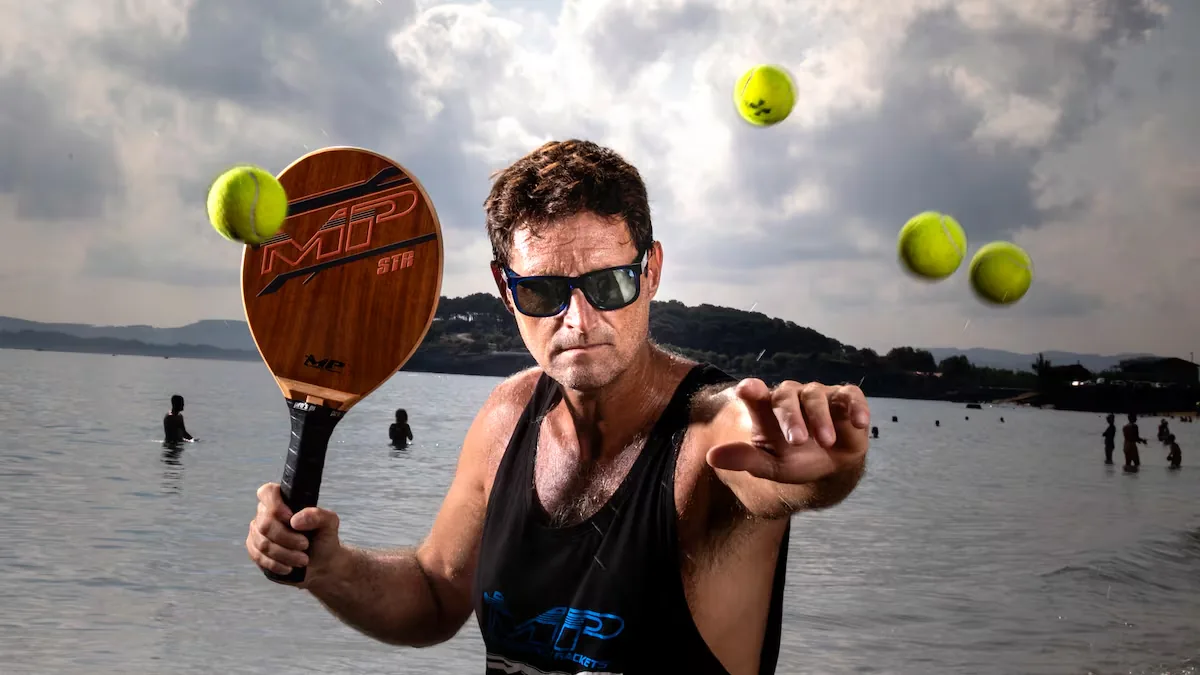
Clop, clop, clop, Pi! Clop, clop, clop, Boom! Clop, clop, clop, Fium! Clop, clop, clop, Meeec! The usual bouncing of balls like a gallop driven by wooden paddles echoing on the beaches of Santander has incorporated some new technological sounds. The historic clacks, booming for decades on those sands of Sardinero or Camello, have evolved and now there is a radar analyzing the level of bombardment. A group of enthusiasts aims to make paddleball an official sport and have introduced to this territory a system invented in Greece, which measures speed, total hits, and the times the ball kisses the sand, to weigh the degree of effort and skill. Its promoter, Ángel Ortiz, is the grandson of the first Santander native who created those wooden paddles that are so popular today. “I am carrying out his dream,” he explains, although purists are not convinced by this innovation in a game that consists of not letting the ball fall, despite hitting it at extreme rhythms, and the revolutionaries seek to make it more competitive by applying objective data.
Read more Robles against Marlaska: there was no report on Ceuta, but there was a warning
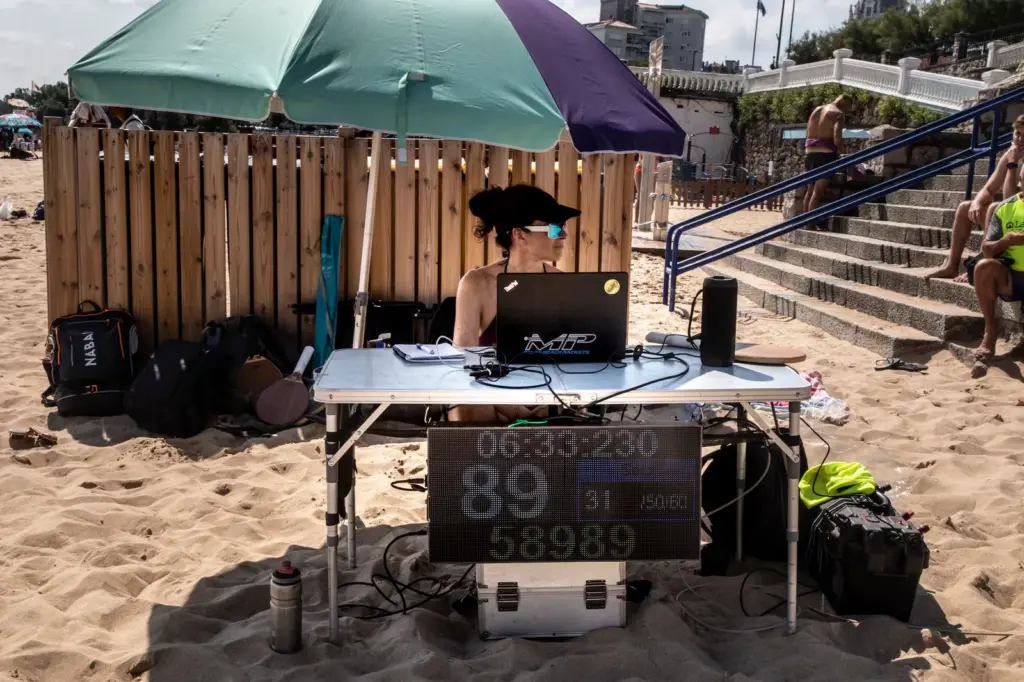
The mechanics don’t change. Two hit. All on the shifting sand and under the scorching sun, two elements that show on the players’ skin: coated, sweaty, toasted. “What a great backhand!”, “the ball goes like a shot”, “and that one?”, “and that one?”, “this heat is unbearable,” they cheer and urge each other on the Sardinero beach, in the Piquío area, in a space set up for this practice. The usual style only requires people, paddles, and balls; this court goes a bit further. There is a table covered with an umbrella at whose feet rests a portable battery and on which there is a computer, a notebook, a speaker, and hanging from it a LED screen that reflects the content of the software that allows recording the figures: the time left in the match, the hits made and their speeds. There are also tapes delimiting the space and behind, hanging on a wall, the radar protected by another umbrella. The rules are clear: the match ends after 20 minutes or after the ball falls 60 times; points are added with hits and these don’t count if they don’t exceed 55 kilometers per hour. And, the faster the pace, the more points, with bonuses if balls are saved acrobatically or miraculously. Pi, whistles the speaker if the ball flies between 55 and 70 kilometers per hour; from 70 to 80 it is a sharper pi; from 80 to 90 the fium of an arrow and from 90 onwards the boom of the explosion. The dreaded meeec comes when the ball hits the ground. The sounds place the contenders on the level and rhythm of their hits. The record in 20 minutes, 400,000 by the Greek champions. The Spaniards stay at 253,000… and rising.
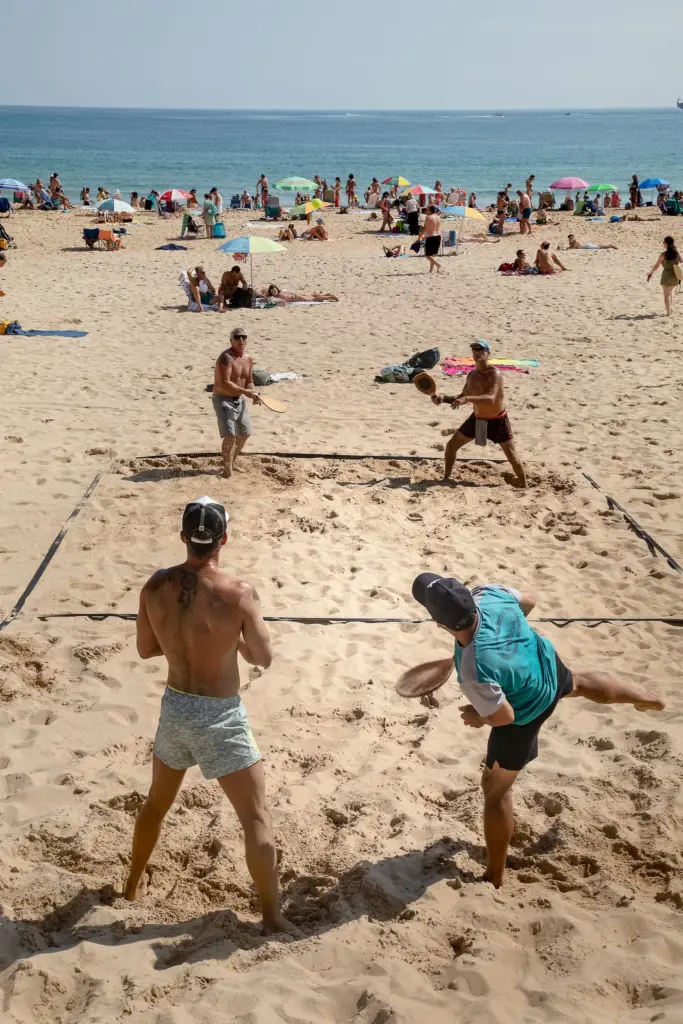
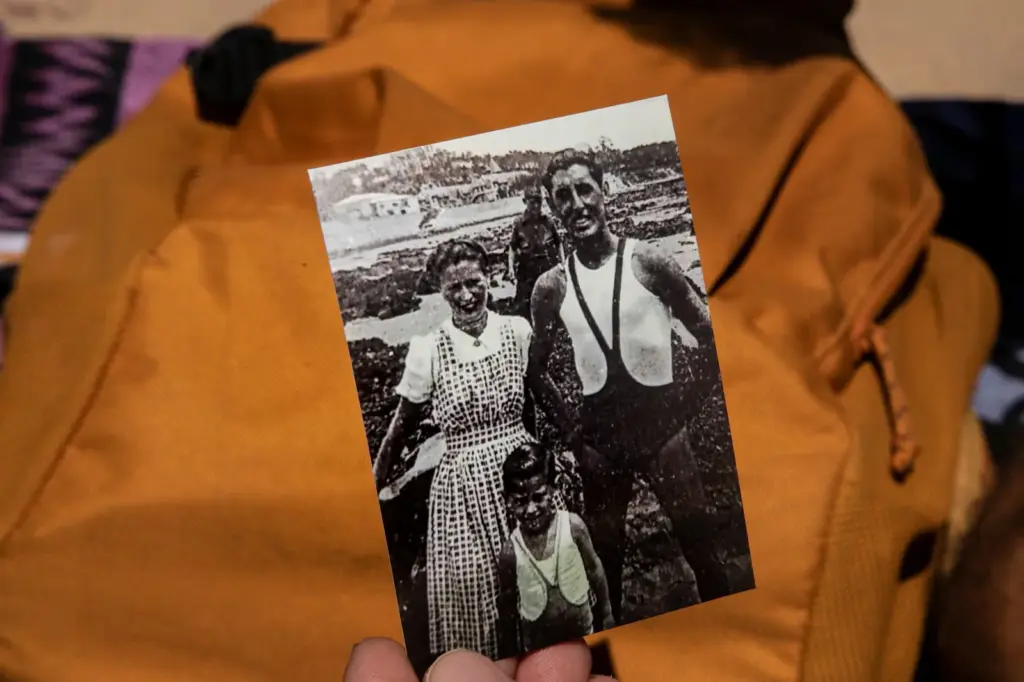
It seems like a beach remix between laughter and panting of the participants, dressed for the occasion: swimsuit, wristband, sunglasses, caps, and even small towels for the hands. Ángel Ortiz, an employee at the port of Santander, steals hours from the clock to hit and hit and hit by the sea. His tan and the joy in his light eyes reveal this, with bright blue polarized sunglasses, light blue swimsuit, and calloused hands, as he also makes homemade paddles: he has about 50 with his own distinctive mark. On all of them, on all, he puts MP for Mariano Pérez, his grandfather, the man who decided that beyond the elitist tennis of the Cantabrian coast, something similar could also be played, not with the expensive rackets but with wooden ones. His grandson proudly shows what is considered the first graphic evidence in the world of paddleball: Mariano Pérez holds one of them in 1930 dressed in a swimsuit of the time. Maybe someone played earlier somewhere else in the world, but he is not aware. “I was born with a paddle under my arm and now we work to make it a sport,” he explains during breaks on a Sunday morning of paddleball. Pi, pi, pi, boom, pi, boom, pi, fium, fium, pi, meeec. The Santander native played as it was done all his life, with paddles of about 700 grams, until in 2016 and 2017 the city hosted two Beach Racket world championships, what the Greeks, icons of this discipline, call Valetudo Racket. These Greeks brought lighter weapons, about 450 grams, and later, the famous radar invented by Lakis Zois, now allied with the Cantabrians: there have already been several trips of groups of players between Spain and Greece to meet and keep fighting.
In the early days, the locals were amazed, but Ángel saw the light. Finally, they could really measure the pace of a match through a scoring system, intensity, speed, endurance! Others are not so convinced. For example, purists, like a man who grumbles when passing by this side of the beach: “I’m leaving, they don’t play paddleball here.” Begoña Iglesias believes they do play: she comes down in summer and winter, during the lunch break at work, with a motto: “Little match, disconnection, and swim.” This former beach volleyball player describes herself as “competitive” and appreciates knowing the game records to improve. Ángel Ortiz avoids suspicion and respects traditional tastes, although he encourages trying this version before judging.
Read more Maxim Kuzminov, the Russian defector who failed to be discreet in Spain
He goes his own way: that this game becomes a sport. Bureaucracy and paperwork with federations and higher institutions slow down the pace to compete under conditions. The classics maintain that this is not a sport of winning or losing, but of endurance; true, but with technology that endurance can be scored. Grandfather Mariano, he assures, recognized that philosophy but was open to making it a competition by creating rules. They are working on it, he smiles. The small group of players, during breaks when they comment on the unusual temperatures and that “the water seems like the Mediterranean, there are even jellyfish,” hint that some critics might be annoyed to see that in reality they are not as good or powerful playing as they thought. The goal, to reach a renewed audience. “We have to give young people the dopamine that mobiles provide them!” sums up Ángel, affectionate with Adrián Carnero, 22 years old, a good receiver and judge to ensure the scores, a lifetime with paddles. He, a medical student, admits that his friends play more padel but sometimes he brings them along. Pi, fium, pi, pi, boom, pi, pi, pi, boom, meeec. The beach has forged friendships through the game, highlights Loreto Huelga, 46 years old, one of those who need action: “Something had to be done, I met them here in 2019.” Now they are close and travel to Hellas to play or receive Greek friends.
Everything fits as the modernized paddles gain followers. Ángel Ortiz names the key group: Loreto, Rubén Moreno, Julián Gutiérrez, and Andrés Pérez, five with him…, like when the instigator, his grandfather, formed a quintet of friends with whom he did sports on the Santander beaches, nicknamed The Five from Ribalaygua, after the shopping center where they worked. Now his heir aspires to give a future to that past. Pi.
Read more The Migrants’ Church: The Only Refuge Found by a Texas Community Hunted by ICE