

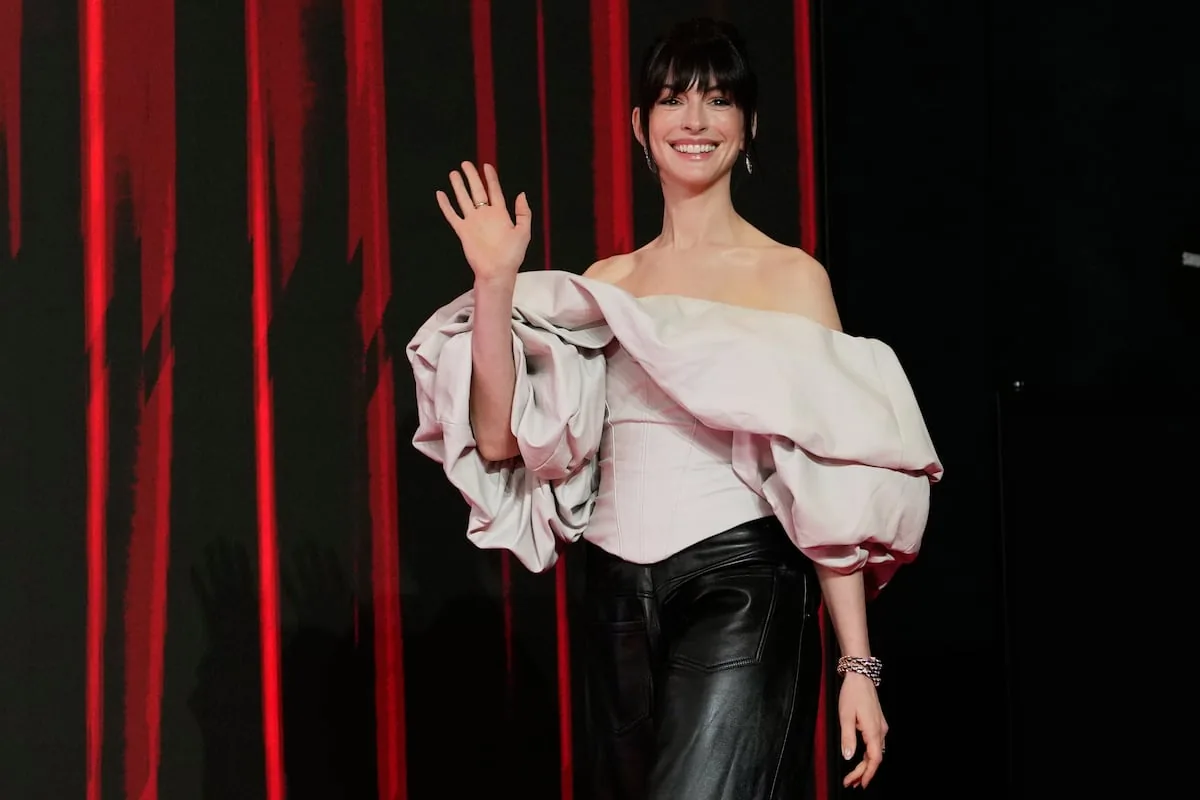
Actress Anne Hathaway has delivered a profound reflection on the restrictions on freedom of expression during Augusto Pinochet’s military dictatorship (1973-1990). The American has analyzed the history of the South American country while promoting the film The Devil Wears Prada 2 (The Devil Wears Prada in Latin America), the sequel to the successful 2006 film, in which she plays the rookie journalist Andy Sachs.
Hathaway spoke about the issue alongside her colleague, Meryl Streep, who joined her in an interview with the Chilean television channel Mega. During the conversation, Hathaway reviewed the difficulties of journalistic work in a context of restrictions and authoritarianism. It was in that dialogue that she addressed the situation of the South American country. “I clearly have to keep in mind that I am speaking with a Chilean journalist, to understand how freedom of expression was violated in her country. I don’t want to lightly say yes, keep talking, because I know many people in Chile paid too high a price for fighting for the right to freedom of expression,” the actress said.
The star of The Devil Wears Prada 2 also mentioned the current state of freedom of expression, with indirect allusions to her native country, where the Donald Trump administration has been criticized for pressures against its critics, such as host Jimmy Kimmel. “We must hold on tightly to stay united and be clear about where in history you want to be, and do everything possible. Speak as loudly as you can while it is safe,” she stated.
Meryl Streep joined her colleague’s statement with an additional comparison to the situation Chile experienced during the dictatorship with the current problems in the United States. The three-time Oscar winner said that many public figures in her country, including some authorities, have refrained from freely expressing their opinions. “I think people in positions of responsibility or in government are not raising their voices… that is their job, we trust them. But they are afraid for their physical integrity and that is something no one is publicly talking about. You [Hathaway] just mentioned what happened in Chile, and we take it as a warning for Americans,” Streep said.
Read more Euthanasia of hippos or how to deactivate a time bomb
After the 1973 coup d’état, which ended the government of socialist president Salvador Allende (1970-1973), the military advanced in imposing strong censorship against critical or opposing media. This was reflected in the closure of multiple newspapers, radios, and magazines. The persecution also extended to other expressions such as theater, cinema, and television.
The impact of Pinochet’s dictatorship on Chileans’ freedom of expression crossed the borders of the South American country. In 1987, a group of actors was threatened with expulsion from the national territory after being accused by the regime of being “front men of international Marxism.” This intimidating act was known by several Hollywood stars, who expressed their solidarity with local artists. One of the international actors who embodied gestures of support was Christopher Reeve, known for his portrayal of Superman in the 1978 film version. Reeve, who arrived in Santiago thanks to the efforts of writer Ariel Dorfman, stayed in the country for 72 hours and led a massive event at the Matucana garage, a cultural space located in the central sector of the Chilean capital.
The history of the Chilean dictatorship has also remained alive worldwide thanks to the voice of actor Pedro Pascal, who left the country as a baby due to his parents’ exile. In February 2023, during his monologue on the program Saturday Night Live, Pascal revealed his family’s status as political persecuted under the military regime. “I was born in Chile and nine months later my family had to escape from Pinochet,” the actor told viewers.
Read more Snap fires 1,000 employees, 16% of the workforce, to cut costs due to AI pressure