






The Valencian Anti-Fraud Agency, in a provisional report, has detected “flaws” that could jeopardize the legality of a series of contracts awarded by the municipal corporation due to the conduct of the Councillor for Major Projects, also a member of the Contracting Committee, of the Valencia City Council, José Marí Olano (PP), as revealed this Monday by the municipal group Compromís. The amount of these contracts totals 255 million euros, including about 21 million euros financed with European Next Generation funds. The PP spokesperson in the council, Juan Carlos Caballero, responded that the document is preliminary and the corporation’s allegations are still pending, so “we will wait for the agency’s final report to make an assessment.”
Read more Alexia Putellas’ tears at Camp Nou spark uncertainty about her future
The opposition in the Valencia City Council has been fighting for months for Councillor and lawyer José Marí Olano to publish the list of companies he works for given the contracting powers delegated to him since 2023. Due to the local government’s lack of response, the socialists filed a complaint with the Síndic de Greuges (regional ombudsman), who in a resolution asked Olano, with a partial dedication (75%) to maintain his private activity, to declare the list of companies with which he has a professional relationship.
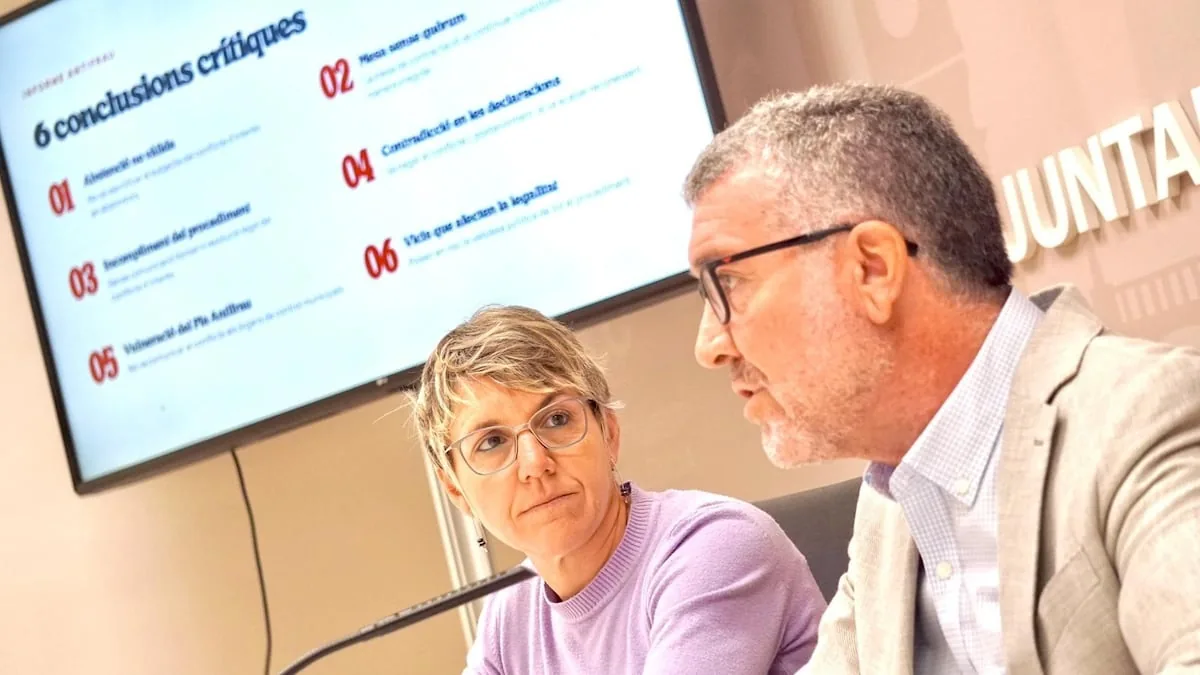
Now, the municipal spokesperson of Compromís Papi Robles and councillor Ferran Puchades have explained that Marí Olano should not have participated in several municipal contracting procedures because, “if these conclusions are confirmed, the councillor’s management could endanger fundamental investments for Valencia and even force the return of European funds,” according to a provisional report prepared by the Valencian Anti-Fraud Agency.
This report points to serious defects in Marí Olano’s participation in the Contracting Committee, with possible poorly managed conflicts of interest, incorrect abstentions, and irregularities in the constitution of the body. According to Anti-Fraud, the analyzed abstention communication “does not meet the minimum validity requirements as it omits the identity of the subject generating the conflict of interest,” and adds that for an abstention to be effective and allow the competent body to accept or reject it, a generic mention is not enough. The councillor [in this case, Marí Olano] must identify the affected natural or legal person that motivates the conflict and justify how that relationship specifically fits one of the causes” for abstention, “allowing verification that the professional or interest relationship is real and fits the actual type,” the document states.
According to Puchades, these “flaws” can directly affect the validity of the procedures. “We are talking about key contracts such as the sanitation service, the regeneration of Pérez Galdós, or projects financed with European funds. Anti-Fraud warns that these defects could compromise the allocated resources and even force their return,” he emphasized.
Among the affected contracts are significant actions such as the urban regeneration of Pérez Galdós and Giorgeta, the maintenance service of the sanitation system, the urban gardens of Orriols, or improvements in municipal facilities. For Compromís, this is a structural problem derived from “negligent management sustained over time.”
Robles recalled that the Valencianist party had already formally warned about Olano’s incompatibilities and had called for his resignation. “For eight months, the mayor looked the other way while this councillor participated in procedures in which he should not have been involved,” said the Valencianist councillor.
The municipal government spokesperson, PP councillor Juan Carlos Caballero, pointed out that he was not deeply familiar with the allegations presented “so we will wait for the Anti-Fraud Agency’s final report.” Caballero described the “interested leak” of the provisional document by Compromís as “serious.” “None of the contracts that Compromís has pointed out are at risk. It’s a lie,” he retorted.