









Australia is one of the favorite destinations for travelers seeking nature and contrasts: from the Great Barrier Reef to its red deserts, passing through large coastal cities like Sydney, Melbourne, and Canberra. With 3.6 million holiday trips, 11% more than in 2024, according to state sources, the island continent hopes to be discovered, why not, before the end of the year.
Read more This Amazon window film blocks heat and prevents outside views
In this regard, EL PAÍS Viajes has created a unique route through Australia that will start from Hong Kong, with a stop of several days, to continue for 22 days across the Australian continent, from the south —because the trip begins in Melbourne— to the north, finally ending in Sydney, on the most visited coast. On this trip, there will be moments to rest, but also to get excited, because travelers will have the opportunity to board The Ghan, the legendary transcontinental train to visit northern Australia.
This trip is not just a geographical route, but a transformative experience that invites you to look at the world with new eyes. Each encounter and each landscape builds a personal narrative that connects cultures, territories, and emotions. And it will be done with the support of Pío Cabanillas, one of the experts from EL PAÍS Viajes. Besides being president of the Spanish Geographical Society and the Spanish Geographical Foundation, he is a self-taught photographer and passionate about documentary photography.
These are some of the stops you will find in Hong Kong and Australia, from the lights to the outback on the mythical The Ghan, a great trip that will take place on October 30, 2026, and you can already sign up for.
Geographical route through Australia: part I
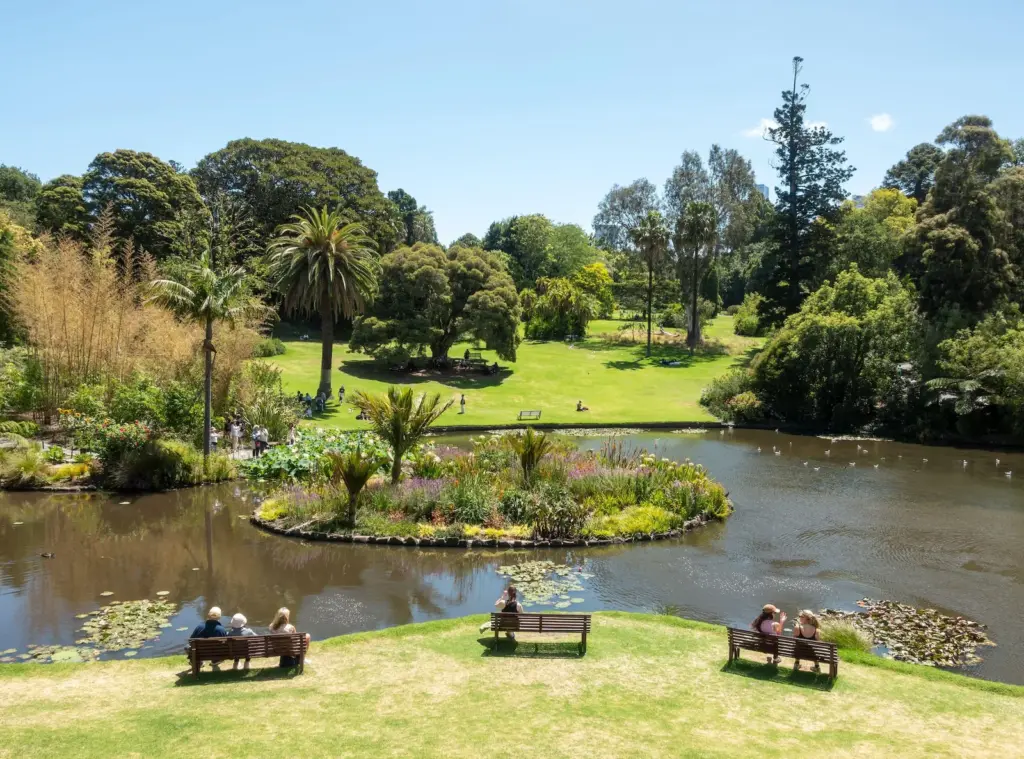
We begin this journey in the south, in the city of Melbourne. The day starts with a tour of its most emblematic places: the neo-Gothic architecture of St. Patrick’s Cathedral, the peaceful Fitzroy Gardens, and the majestic Parliament of the state of Victoria. Melbourne has many interesting museums, and its cultural offer is very varied: Melbourne Museum is a must for history enthusiasts; ACMI for those who are into gaming; and the National Gallery of Victoria is a classic for art lovers. The commercial streets in the city center are also a must, as well as a boat ride on the Yarra River. You can also opt for an excursion to Phillip Island to witness the charming penguin parade at sunset.
From Melbourne, you can take one of the most spectacular coastal routes in the world: the Great Ocean Road, 240 kilometers that run along the southeast coast of the country —from Torquay to Allansford—, and which are listed as a national heritage of Australia. It can be visited independently and according to the stops that interest you, although, of course, there are parts that are indispensable, as it features national parks, beaches, rivers, lakes, and waterfalls of great beauty.
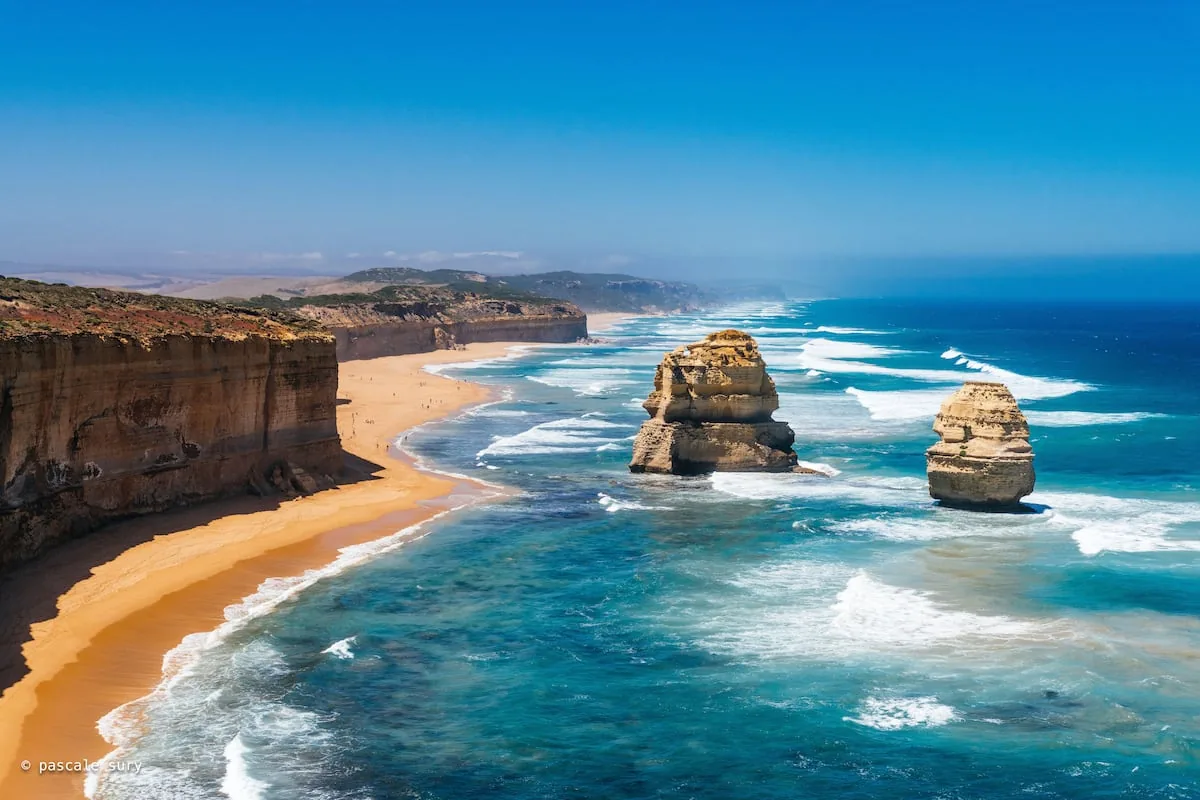
With EL PAÍS Viajes, you will leave Melbourne and pass through Geelong, to enter a landscape of charming coastal towns and golden sandy beaches. The most impressive stretch will be dedicated to the ‘Twelve Apostles,’ the rock formations that have challenged the ocean for more than 10,000 years, and the dramatic ‘Loch Ard Gorge.’
Geographical route through Australia: part II
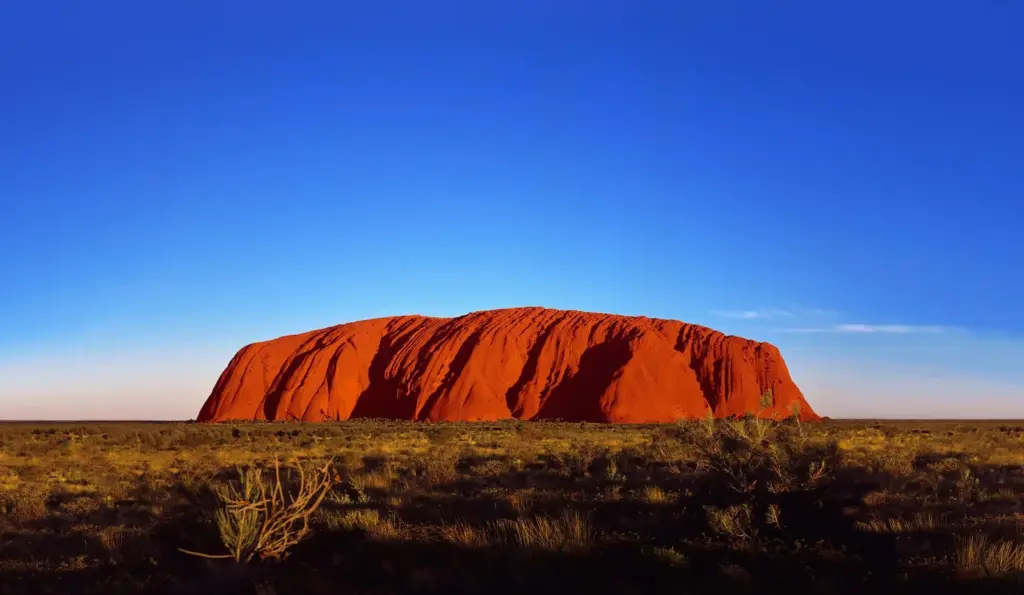
We move to the famous Uluru National Park (Ayers Rock-Mount Olga), an emblem of the country recognized by UNESCO in 1994. This sacred monolith, owned by the Anangu Aboriginal people, is made of sandstone about 500 million years old. It has a height of 348 meters and a circumference of 9.4 km.
Uluru, as it is popularly known, is shown in all its splendor at sunrise and sunset, when the golden light makes the colors of the rock come alive. Many take advantage of the desert landscape to do some of the hikes enabled from the national park, but you cannot climb the monolith as it is a sacred natural monument for the Anangu, which was protected in 2019 when the number of visits endangered its biodiversity.
From Uluru, within the same national park, the route heads to Kata Tjuta (The Olgas), also known as Mount Olga or The Olgas. It is a group of rock formations located 470 km southwest of Alice Springs, in the southern area of the Northern Territory of Australia. In a short hike, you reach these imposing dome-shaped rock formations.
Afterwards, the journey continues to Kings Canyon, located in Australia’s Red Centre. Watarrka National Park, in the Northern Territory, where this site is located, covers 710 square kilometers and has been home to the Luritja and Arrernte peoples for more than 20,000 years. The place stands out for its hikes among cliffs and its spectacular panoramic views.
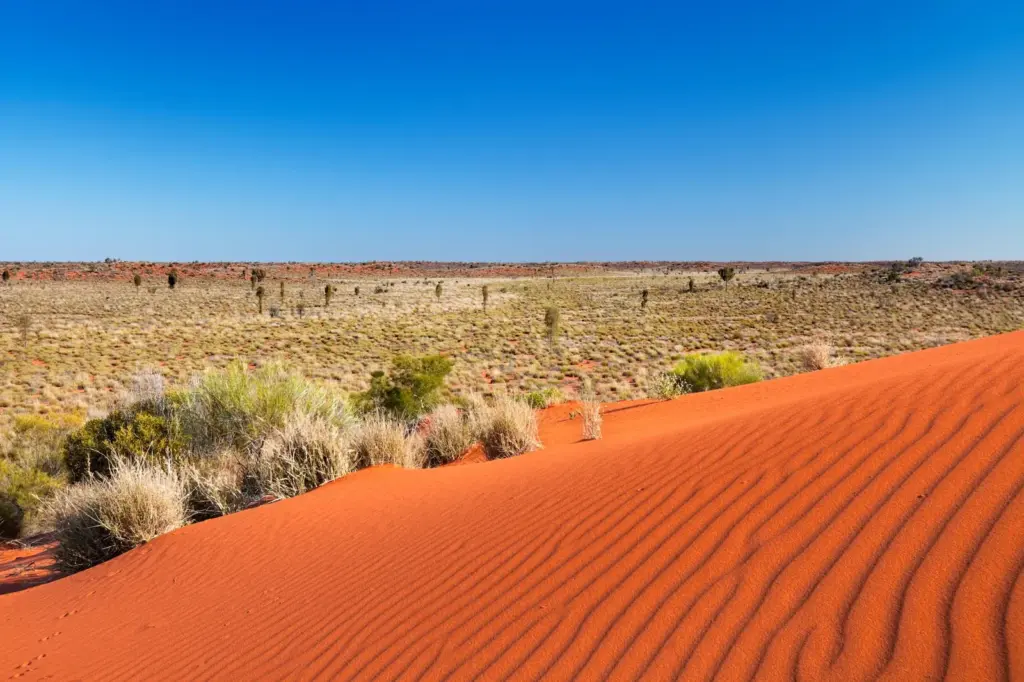
Alice Springs is the next stop in this part of the route, a city in the sparsely populated Red Centre of Australia that has preserved a strong pioneering spirit. Here is the Royal Flying Doctor Service, a non-profit organization dedicated to urgent and emergency medical air transport of patients in rural and remote areas of Australia, and the old telegraph station. Two places that bring you closer to the fascinating history of this remote Australian region.
Alice Springs Desert Park, where outdoor spaces with endemic fauna and flora recreate the landscapes of the Red Centre, covers 1,300 hectares. Here the desert comes alive with multiple encounters with animals. In darkened spaces, you can observe nocturnal lizards, snakes, and marsupials that are rarely seen in nature.
West of Alice Springs, the West MacDonnell National Park unfolds, with the impressive gorges of Standley Chasm and Simpsons Gap, where, despite the desert climate and rugged rock formations, water allows vegetation to grow lushly.

Geographical route through Australia: The Ghan
This part of the route is dedicated to the legendary train journey of The Ghan, one of the most important in the world and a favorite of EL PAÍS Viajes travelers. This transcontinental train — inaugurated in 1929 — makes a scenic journey to northern Australia making several stops (although it can also be in the opposite direction). Specifically, on this route, it stops in Katherine, to visit Nitmiluk National Park with a boat ride through the rugged and wild Nitmiluk Gorge.
After this tour, the train continues its journey to the exotic tropical city of Darwin. From this point, it is worth visiting another national park, Kakadu, because it is not only the largest nature reserve in Australia but also has enormous cultural value due to its amazing indigenous rock paintings. It is a UNESCO World Heritage Site. At Nourlangie Rock, the Aboriginal people left their mark more than 20,000 years ago.
The national park also features the romantic Yellow Waters lagoon, where there might be a chance to see a saltwater crocodile. The interesting Warradjan Aboriginal Cultural Centre, besides offering a pleasant air-conditioned environment, is a source of fascinating knowledge. Afterwards, you can visit another highlight of the national park: Ubirr Rock, whose rock paintings are thousands of years old.
Geographical route through Australia: part IV
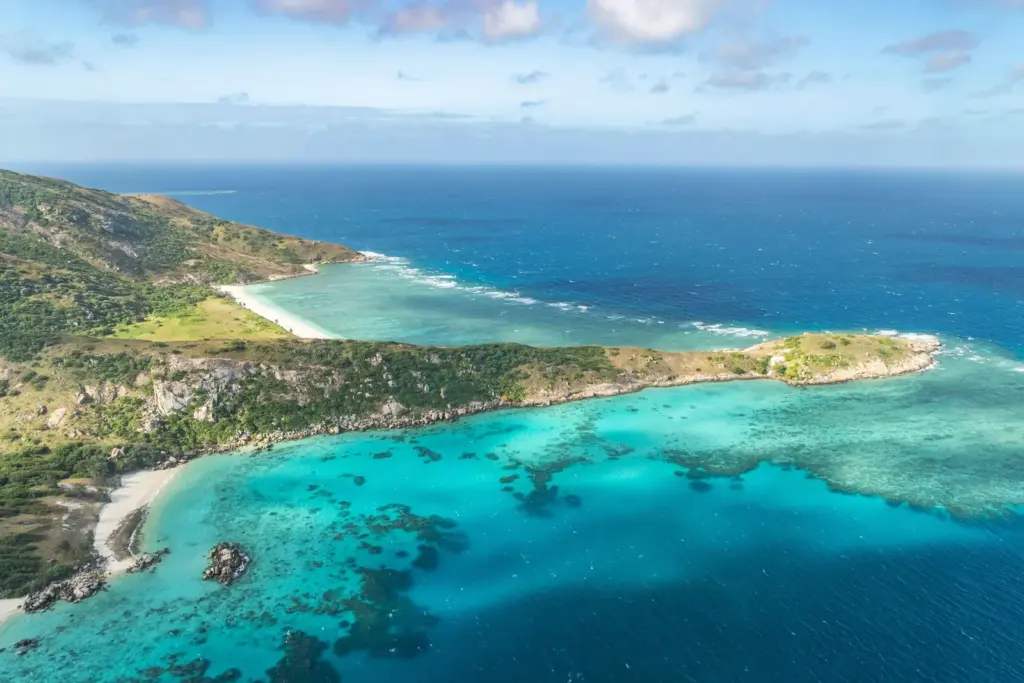
Cairns embodies the essence of the northeast tropical coast and is the quintessential city to explore the Great Barrier Reef and the Wet Tropics rainforest, declared a World Heritage Site. The city is also an island paradise full of life where it is worth spending a few days resting.
With EL PAÍS Viajes, it will be the Reef Magic Cruises cruise that takes travelers to an exclusive area of the reef, selected for its water clarity and coral quality. Aboard a fast and stable catamaran, the trip is comfortable and reduces travel time, allowing you to make the most of the day. The Marine World platform offers multiple ways to explore the reef: from snorkeling in the protected coral lagoon, diving without prior experience, to snorkeling safaris guided by marine biologists.
After this unforgettable experience, others will follow in the coming days, for example, a historic train journey that crosses the rainforest to the Atherton Tablelands. The views of the Pacific coast are impressive, and the final destination, Kuranda, is a charming jungle town. There you can learn about the history, mythology, and lifestyle of the region’s indigenous peoples. Afterwards, the return is made aboard the Skyrail Cableway, which flies over the rainforest offering a magical perspective of the surroundings.
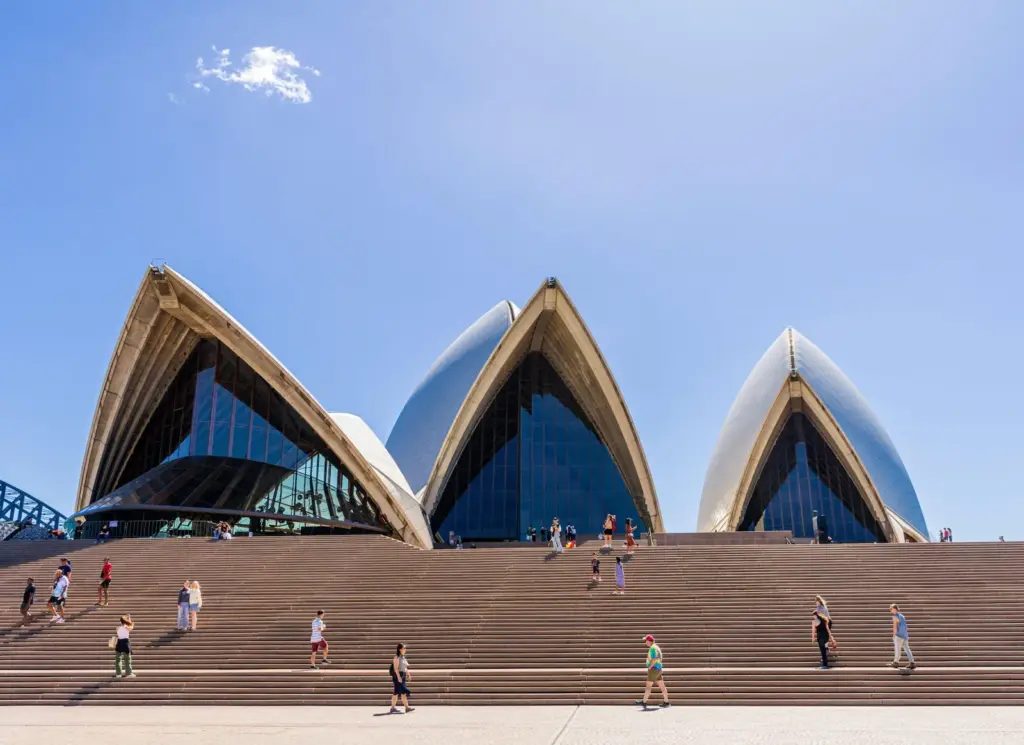
The last part of this geographical route through Australia is dedicated to the largest city in Australia and Oceania, and the capital of New South Wales, Sydney. The day begins with a sightseeing bus tour of Sydney’s most emblematic places. A special stop will be at Mrs. Macquarie’s Chair, inside the Botanical Garden, from where you get a spectacular view of the Sydney Opera House and the Harbour Bridge. Then, the beach side of the city will be explored at Bondi Beach, famous for its relaxed atmosphere and perfect waves. And finally, the iconic Opera House offers one of the most touristy views of the city. But, watch out, because the trip does not end here.
Before leaving, a final visit is made to the Blue Mountains, a natural World Heritage Site. The name comes from the bluish mist that covers the landscape, caused by the essential oils released by eucalyptus forests. We will visit canyons, waterfalls, charming towns, and the famous ‘Three Sisters,’ rock formations sculpted by nature. Now yes, the trip has come to an end.
*If you want more information about this and other similar trips, check our website of EL PAÍS VIAJES.
You can follow EL PAÍS VIAJES on Facebook and Instagram, or subscribe here to the EL PAÍS Viajes newsletter.
Read more I have tried four magnetic window screens and this is the one that convinced me the most