







Today is Sant Jordi, but I won’t be signing there. If you’re wondering why I should be signing and who I am, which would be a most natural question, the answer is: I am the author of this novel, this other one, this collection of short stories or this other novel, as well as an essay on Michael Jackson with beautiful illustrations (they weren’t mine) that made an admirer shout at a sales assistant at El Corte Inglés, “I don’t know how they can sell this rubbish!”. Which, deep down, I found amusing.
Read more Podcast creators are the new pop stars… in their own way: live tours that drive the audio industry
A few weeks ago, I asked my editor if they were going to take me to Sant Jordi to sign books. A bit out of writer’s egomania, because without ego, no one would undertake such a solitary, draining, and thankless task as writing novels, but mostly because the date would catch me in the middle of moving, and I had to choose between signing or moving. He replied:
−No, it’s better if we don’t bring you. Sant Jordi is what it is −I, having never been, don’t really know what it is, but I nodded my head on the phone as if I did− and I don’t want you to feel lost there among best-selling authors, youtubers and tiktokers.
It seemed fair to me. So, I won’t be the prop writer who stares into space while best-selling authors sign, kiss, and take photos with those who have seen them on TV. There’s something between the absolute misery of the thousands of books that don’t sell a single copy a year, according to data from the last Congress of Bookstores collected by EL PAÍS, and the world of bestsellers, presenters who relentlessly self-promote, and literary prizes of exorbitant amounts that reflect how often the same imbalance operates in cultural industries as in all others. That something in between, probably, is me and authors like me. The middle class of Spanish literature, the people who sell normally. As normal as a figure between zero copies and 300,000 can be, but you go further down. Further down. No, even further down. Those people for whom advances and annual settlements aren’t enough to live on, but help to live better.
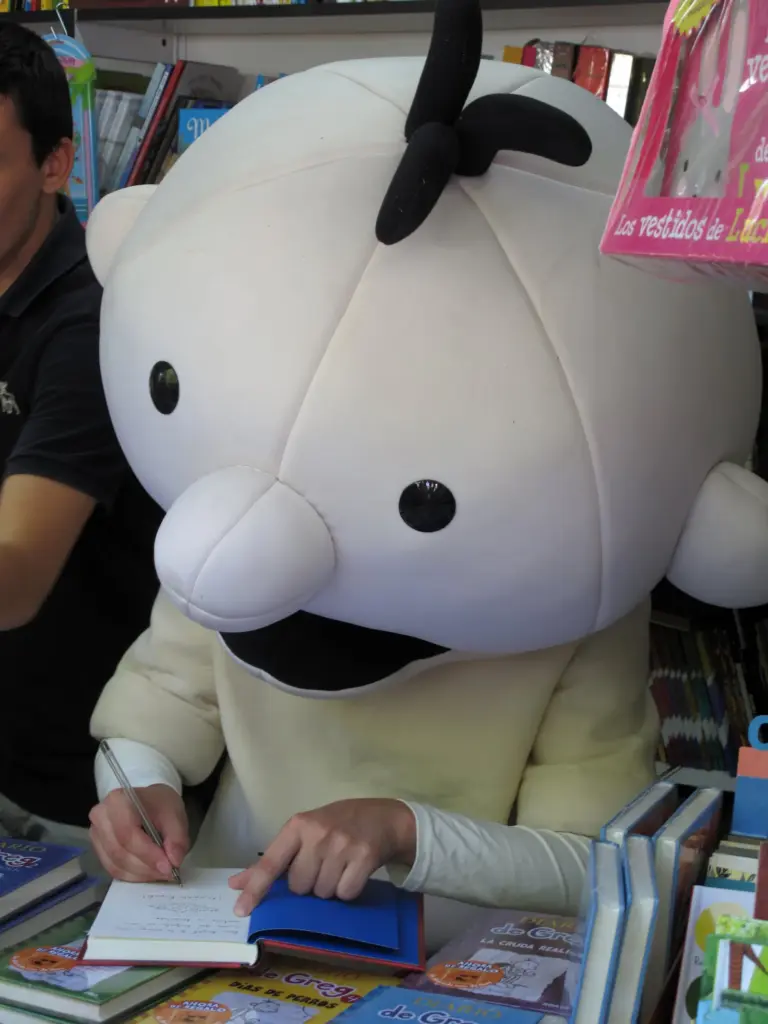
I proudly declare myself a representative of that literary middle class, although if one day they deem it fair or convenient (fair and convenient are two important adjectives here) to give me the AENA award, in case someone from the jury is reading this, I will become a proud representative of the other. As part of this class, I will therefore avoid measuring myself against youtubers, tiktokers, bestsellers, and famous presenters, and I will stay home during Sant Jordi. After all, and fortunately, thanks to having another stable job besides being a writer (depending on the time of year I have three or four), I have been able to buy one.
Belonging to this Spanish literary middle class, however, does leave interesting moments at book fairs and at signings and meetings in bookstores. Those kinds of bright or amusing moments that don’t appear in the grandiloquence of success (which I imagine as intrinsically bright and amusing), but rather in what we could call maintenance or survival, because it would be ugly and unfair to call it mediocrity. Recently, a young writer, one of those who self-publish as if they were Lazarillo de Tormes but self-promote as if they were Ken Follett, complained bitterly on X, formerly Twitter, that only one person had attended her book presentation. As the tweet went viral, the poor thing celebrated a few messages later having sold many books to internet users saddened by her situation. Be careful with pity as a promotional tool, I felt like telling her, it’s more viral than viral, although it works for some with autofiction. I also felt like telling her what many booksellers have told me: that there are signings where no one shows up. Absolutely no one. So, let’s agree, it’s already a comfort that someone did show up. Especially because, we can all admit it now, book presentations are, often, a real bore. A kind of legal public masturbation in which an author pompously talks about their own work, which many attendees haven’t yet had a chance to read and therefore sounds like an alien matter to them, followed by awkward silences when, to the question of whether there are any questions, there are no questions. If you ever come to one of my presentations, you can rest assured: my atavistic and incurable fear of being tedious makes me quite amusing on those occasions. I have a theory: the more successful the writer, the more boring and self-satisfied their presentation. And the more successful, the softer they speak. In the Spanish literary middle class, we have to shout.
Once, at the Badajoz Book Fair, the booksellers at the stand that had called me forgot they had called me. Or so I suspect. This isn’t a criticism of them; they were charming, had a wonderful bookstore full of Japanese titles, and invited me to dinner with Extremaduran delicacies after closing. But since they hadn’t given me a stool, there was no sign at the stand announcing my signing, and it hadn’t been communicated over the fair’s public address system that I was there, I assumed they had forgotten I was coming. The literary middle class handles these things well; we’re used to not being expected or simply being forgotten. In return, they gave me beer. And from there, at a stand, one is left staring into the abyss that pulsates beyond the counter, waiting for someone to notice you, exposed to the gaze of the casual fair visitor who looks at you, observes your displayed books, reads the synopsis on the back cover, looks at you again, and makes you feel like a product in a shop window to which someone has put the label “new!”.
In the end, some buy, others don’t, and the comfort is that it never depends on you, like almost nothing in literature or success in general. If the booksellers have already given me two or three beers, I dare to tell the undecided reader:
–Buy it, damn it, it’s really good!
In Badajoz, the booksellers supported the cause.
-Yes, yes, it’s very good –they said–. It’s not because he’s here with us, it’s just very good.
And I looked at them, touched and happy, thinking that I forgave them for having forgotten to give me a stool and announce me over the public address system. In the Spanish literary middle class, free alcohol and flattery make us forgive all the sins of others, and even our own.
In our literary middle class, we have another very particular situation at book signings: when you have been announced over the public address system, you have been given your stool, and a very striking sign with your book title and photograph has been put up, but fate has decided that in your very same stand there are three literary stars. Well, my editor was right about Sant Jordi. It happened to me in 2023. I was then promoting a book of short stories, I was even younger than now, and I had only published with independent publishers. And despite that, I had already had three signings at that year’s fair that had gone quite well. The fourth and last was on a Sunday morning. Upon arriving, already suspecting that the flute wouldn’t play for a fourth time for a literary middle-class author like me, I discovered that Benjamín Prado, Ray Loriga, and Juan José Millás were accompanying me at the stand.
Read more Sant Jordi starts with a vigorous defense of public libraries
What happened next won’t surprise you: long queues formed, but none formed for me. I entertained myself talking to the bookseller, reading, and tinkering (a book stand is a great place to get bored; I started reading Los reyes de la casa and also a beautiful essay on Benidorm from Barrett publishing house). But when you’re signing at a stand and you don’t sign much, what has to happen happens: all the attendees mistake you for a bookseller. So, at the first questions from fair visitors about how much Prado, Loriga, or Millás’s novels cost, I clarified that I was also there signing, but by the tenth question, with no pride left to wound, I decided to be practical and answer:
−Nineteen ninety, it’s eighteen with the fair discount.
And also:
−Yes, you can pay by card.
At one point that morning, when the Spanish literary middle class also turned me into a bookseller, I saw someone I recognized approaching through the crowd in Retiro, smiling and greeting me. It was Carolina Adriana Herrera! Famous, beautiful, elegant. And she pointed at me:
−Do you remember me? −she asked from a distance.
Of course I remembered! We had met on occasion through my profession as a journalist for this publication from which I write and for other magazines where I wrote, and we had spoken briefly. Many years ago, in London, a colleague and I almost decapitalized her company because in a very luxurious hotel in Mayfair where her brand had kindly invited us to present a perfume, we decided to order fish, ham, and wine for lunch (we had hangovers), not knowing that they had set up a small lounge with a special menu to entertain journalists. It was a bill of a few hundred pounds. Since it was my friend who had given her room number for the splurge, I whistled and walked away.
But in any case, she, Carolina junior, queen of Manhattan, pagan goddess, remembered me! And she came to save me, to show everyone else, the superstar writers, the booksellers, and all those queuing (not for me) that I was someone too, that I might be a writer from the Spanish literary middle class, but I associated with the upper classes, literary or not.
−Of course I remember you! −I replied, standing up with the card reader in my hand.
But the answer didn’t just come from my mouth. Beside me, a famous writer uttered the same words.
−Carolinita! –it was Ray Loriga’s voice overlapping mine−. Of course I remember you!
−Ray, Ray, how wonderful that you remember!
They kissed, I sat down. I thought again about the Mayfair hotel, the ham, the fish, and the wine. Someone asked me about Benjamín Prado’s book (“mate, how much is this one?”) and pulled me out of my reverie.
−Nineteen ninety −by this point my speech was robotic, my salesman’s soul had abandoned me−. You can pay by card.
I won’t be at Sant Jordi this year, but I will be at the Madrid Book Fair and hopefully others. You can look up my dates and stands (I don’t even know them yet) and come see me and tell me you’ve read this column and liked it, if you did. Even if you don’t buy a single book. In the Spanish literary middle class, we are easy to please. The flattery of a stranger is valuable currency for us. There is, I will never tire of saying, an intimate and indescribable pleasure in writing, an inexplicable joy that one only feels when one believes they have written good pages. Whether it’s published or not, sells or not. And that pleasure cannot be bought with money. But the pleasures that money can buy, ah! We love those too.