EL PAÍS offers the América Futura section openly for its daily and global informative contribution on sustainable development. If you want to support our journalism, subscribe here.
Read more Entertainment
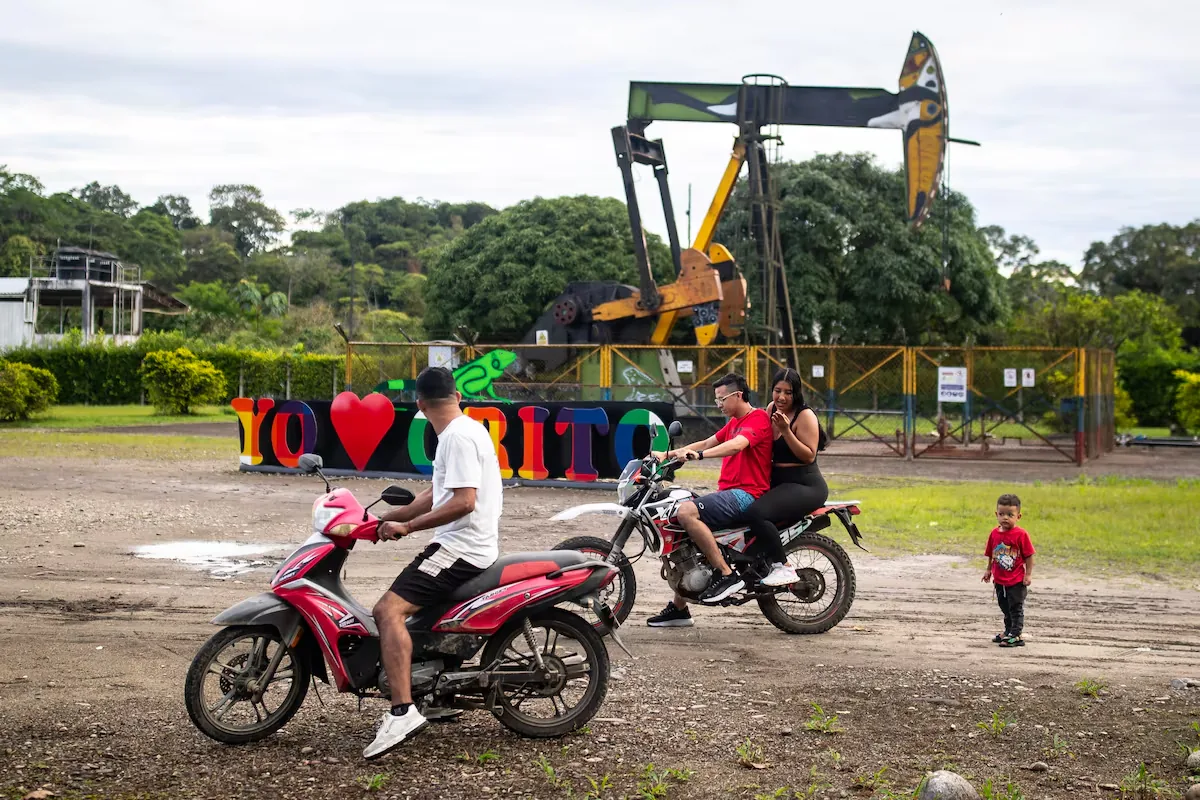
In Orito, Putumayo, a Colombian municipality located in the Amazon foothills, the classic tourist sign of “I love” followed by the name of the place has as a backdrop an oil pumpjack and an abandoned well: Orito 119. The horsehead of the machine, that part that looks like a hammer, is painted as if it were the beak of a toucan: it is an image that absorbs the dynamics of the municipality. Located in the jungle, precisely the Amazon, oil exploitation has been in its skeleton since it was born.
The Orito 1 well, which gave it its name, was the first to be drilled in the entire Putumayo department in 1963 and, only 15 years later, in 1978, at the request of settlers who migrated there seeking employment and wanting to use the royalties that extractivism left, the State recognized it as such. Its popular nickname, for a long time, was “Orito, oil capital of Putumayo”: that is, the capital of what, even by 2026, is the sixth oil-producing department in Colombia, according to the National Hydrocarbons Agency (ANH).
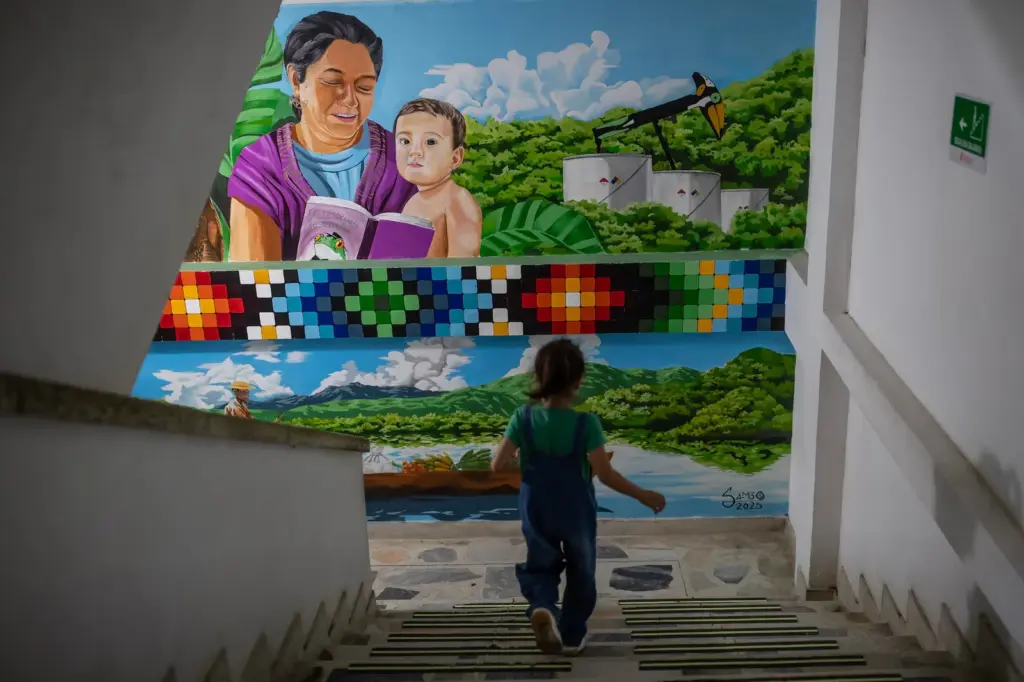
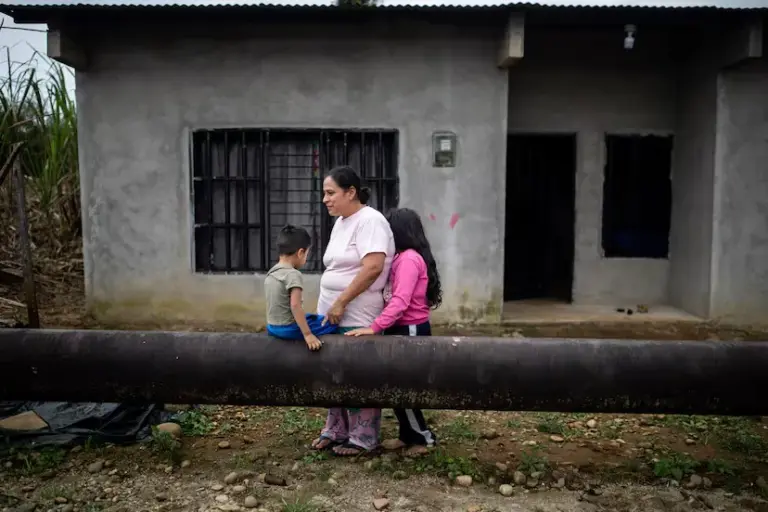
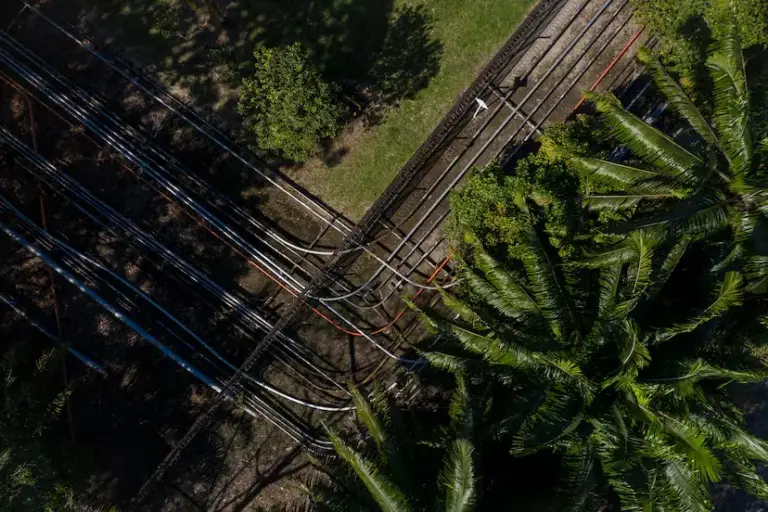
Unlike other places in the Colombian Amazon, the settlement of Orito was not due to riverside colonization, but by the oil companies of the time. “The industry machine was the one opening roads and, behind it, people came,” says geography PhD Yolima Devia Acosta, who researches the relationship between extractivisms and settlement. It is an origin that is felt to this day: in the pencil cases and backpacks that children carry to schools and that have the Ecopetrol logo, and in the pipes that transport the hydrocarbon and frame much of the municipality. Towards the northwest and north of Orito, also crossing the Guamuez River, the landscape is crossed by a line: that of the Trans-Andean Pipeline (OTA) that used to take the crude oil to the maritime terminal at the port of Tumaco, on the Colombian Pacific.
There have been several times when oil has threatened to run out. “For 20 years or more it has been said that ‘there are five years left for the oil to run out’,” says Edinson Humberto Ramírez Delgado, mayor of Orito. “But what no one thought was that there would be a crisis in its price,” he adds, referring to what happened between 2015 and 2016. “That was a blow, a buffer for what was coming: a policy of Gustavo Petro [now former president of Colombia] in which we knew that the oil issue was going to decline a bit and that we had to look at other sectors.”
According to a report from the Interdisciplinary Center for Development Studies (Cider) of the University of the Andes, published in 2025, the period between 2014 and 2016 was the peak exploitation in the municipality and, since then, the trend has been a decrease. In 2024, moreover, oil production fell to its historic minimum possibly as a consequence of the Petro Government’s decision to stop exploration and reduce hydrocarbon exploitation, says Cider. For Ramírez, however, the biggest break remains that of 2016.
“The Petro Government’s issue in the end didn’t hit so hard,” he comments. “It was with the 2015 and 2016 crisis that we had to start looking at other alternatives.” They have explored cocoa, specialty coffee, and Amazonian fruits. With the Peace Agreement signed with the former FARC guerrilla in 2016, ecotourism also began to be discussed. “These were territories that were, in quotes, hidden because of the conflict,” adds Ramírez. Data from indicates that, between 2001 and 2020, 995 cases were reported in Orito that left 705 victims with some violent impact. Although the FARC are no longer present, the Border Commands, one of their dissidences, are.
Multicolored economy
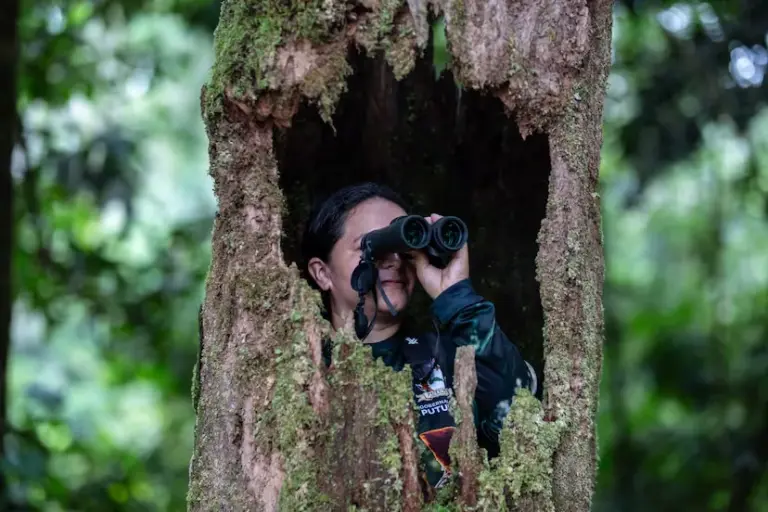
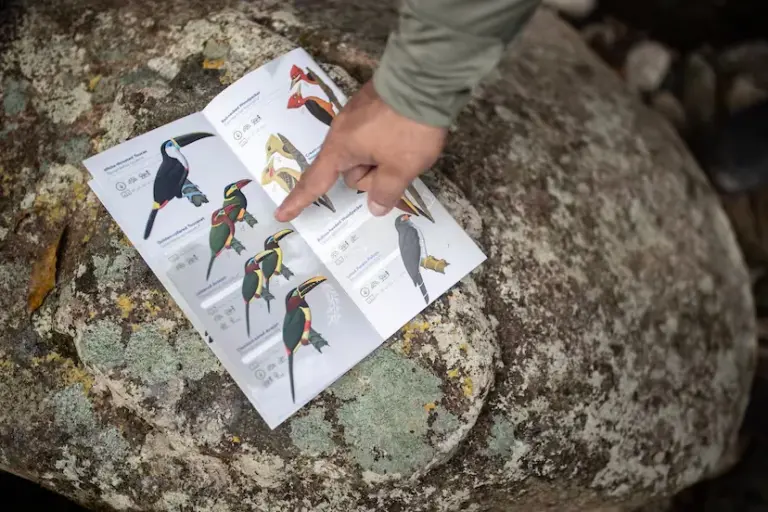
She is able to recognize every bird species from meters away and does not trust the apps that use their song to identify them. “Those platforms sometimes fail. Until I see it, I don’t believe it,” says Yasmin Pantoja as she raises her camera to focus on a oropendola (Psarocolius decumanus). The path she is on is part of a birdwatching tour she offers to tourists when they stay at Sagy Ecolodge, a business she created with her family in 2020. “Before, we all worked in the oil sector,” she says. She was an accountant for a hydrocarbon transport company and her husband, a construction officer. “He was always waiting for a job opening at Ecopetrol.”
After the 2016 oil price crisis, when there were layoffs or the need to accept heavier workloads for lower pay, they started looking for a property with water. “We wanted to build a rural hotel like Decameron,” she recalls with some laughter, referring to the international resort chain. “But when we found this place, with the river, the creek, we understood how we were going to destroy that: nature speaks for itself. And well, the money wasn’t enough either.”
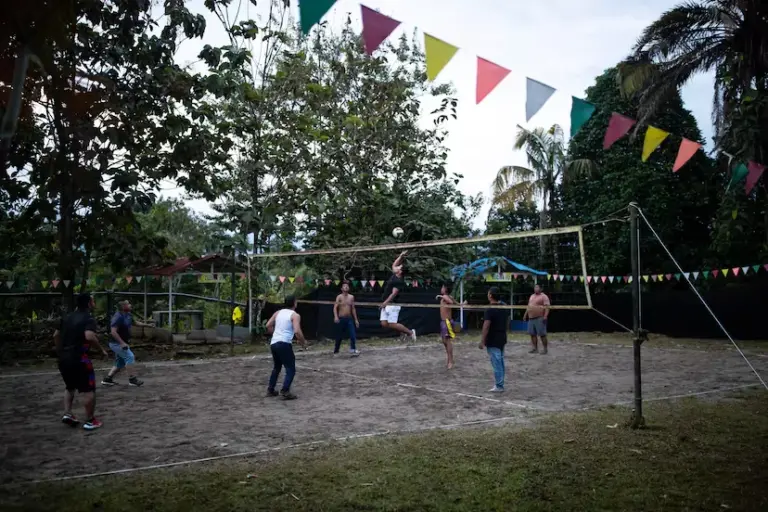
Sagy Ecolodge is part of what a group of locals wants to build as “the Orito tourist corridor”: a series of ventures surrounding the Caldero, Orito, and Gaumez rivers. They already have 35 experiences mapped out with the Mayor’s Office. Some of these, like the one led by Pantoja, want Amazonian biodiversity to seduce people. She, for example, has been joining the Global Big Day for more than two years, one of the largest citizen science events in the world, promoted by the Cornell University Ornithology Lab, in which, during 24 hours, people try to record the highest number of birds possible. On a more modest scale, Pantoja replicates that exercise with her tourists. She has also experimented with “globals” of herpetofauna (reptiles and amphibians) and butterflies.
Read more The new ECLAC report paves the way for the great transformation of Latin America and the Caribbean
“But here no one lives off tourism,” adds Carlos Hernán Castro, a sociologist specializing in Amazonian studies and one of the people promoting the corridor. Pantoja, for example, has not yet achieved it. “I’m not going to lie: the oil sector is still what people live off in Orito; I still provide services to them. Although I am on that path of detaching from that.”
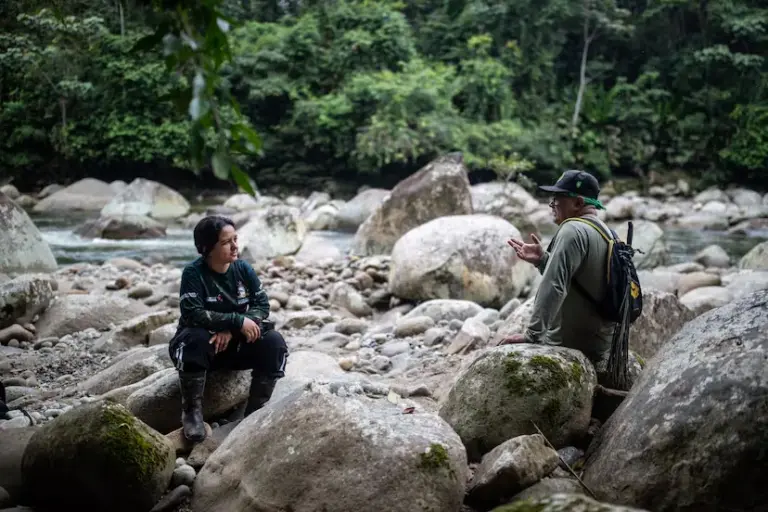
The challenges are multiple and even fall into an energy contradiction. Some tourist sites are not connected to the electrical grid — in one of Colombia’s oil municipalities —, have no internet access, and the roads are not good. “Unless there is an oil well nearby,” adds Castro. Identity also comes into play: the idea that there, in Orito, you can only live off the hydrocarbon sector. “If I had the money and they told me to build a Decameron [hotel], I would say no now,” says Pantoja despite everything.
Orito, with a little more than 60% of the municipal area covered by forests, has strong potential for conservation strategies, agricultural systems, and nature tourism, estimates the Cider report.
Boost to crude
If oil production in Orito goes up or down, people’s pockets do not feel it. When coca stops being sold, however, the economy on the street does change. Castro and Wilderman Pai, governor of the Alnamawamí reservation of the Awá indigenous people, say this in the middle of a conversation.
Alongside the latest from the United Nations Office on Drugs and Crime found that coca was reduced between 2023 and 2024 in the Orito Vides enclave — the one on the border with Ecuador —, Cider estimates that between 2014 and 2024 there was a 71% drop in oil royalties in Orito, going from 48,948 million pesos to 13,992 million pesos (around 15 million dollars to 4.3 million dollars).
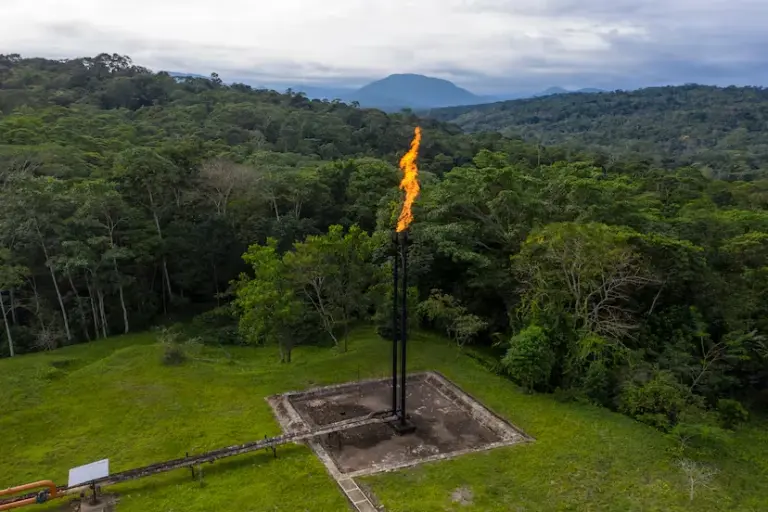
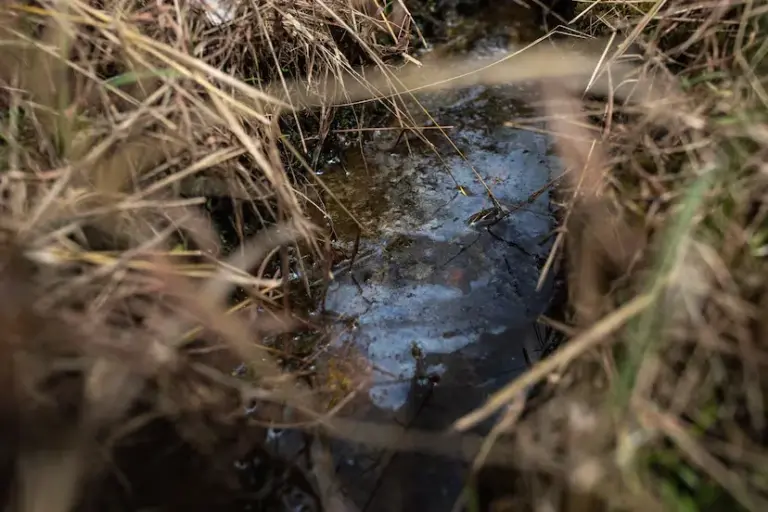

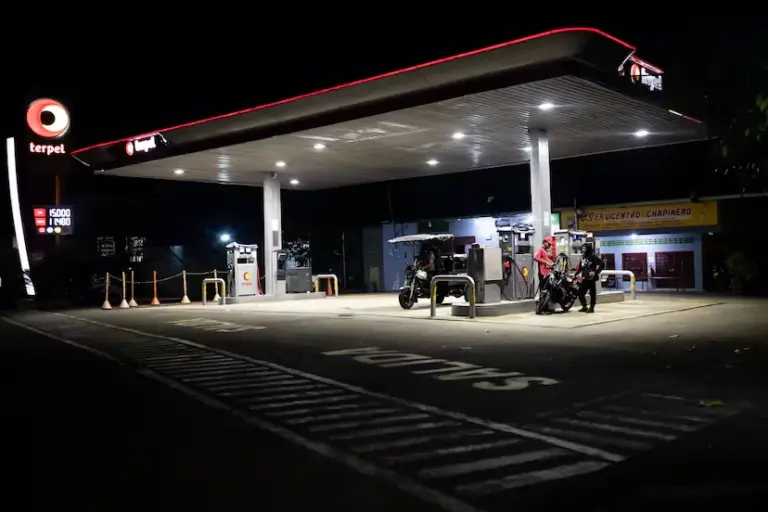
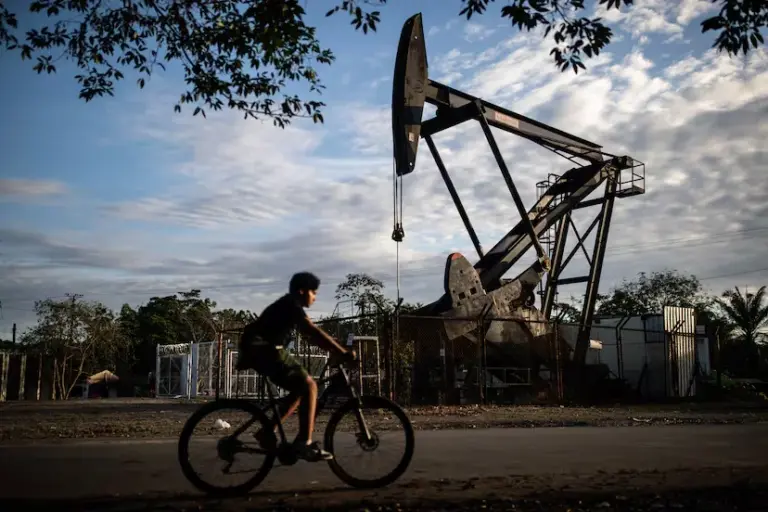
Almost parallel to the entry of the new Government, that of Abelardo de la Espriella, Mayor Ramírez also announces a new boost to crude. “We have expectations because [the company] Parex will resume an Ecopetrol campaign to exploit oil and Gran Tierra has another project, already with prior consultation and everything, and they are ready to start.” The goal he has for Orito is that “it returns to producing at least 20,000 barrels per day.” He believes both projects could even exceed this goal. Based on the information of production supervised by the ANH in the different fields of Orito, the same figure was 5,900 for June 2026. Although this medium consulted both Ecopetrol and the Unión Sindical Obrera, the oil industry union in Colombia, to know their perspective on the matter, it received no response.
Being oil and Amazonian
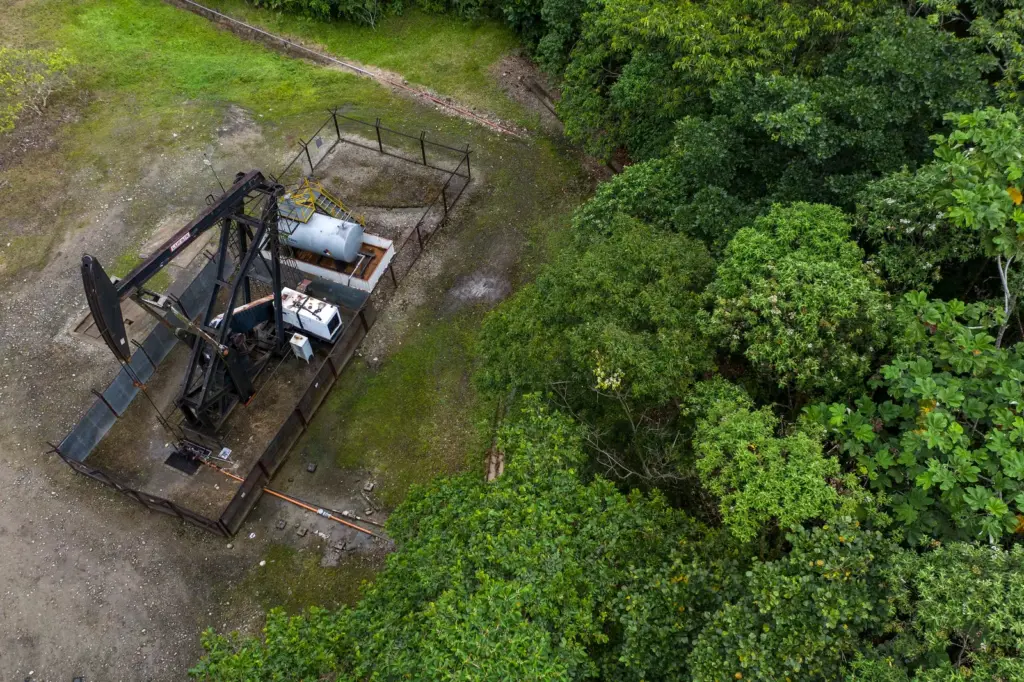
Putumayo, the department where Orito is located, is Amazonian and at the same time oil-producing. That is why the Mayor’s Office wonders why they were not consulted about a resolution published by the Petro Government just one day before leaving office in which the Colombian Amazon biome was officially declared a natural resource reserve. That is, a territory of 483,283 square kilometers in which new concessions to explore or exploit hydrocarbons will not be authorized.
However, the document is up in the air. The new president, De la Espriella, could reverse it: especially because part of his campaign was based on promoting the oil and mining industry as a counterpoint to the narrative carried by Petro. And Orito is among the places where those discourses land.
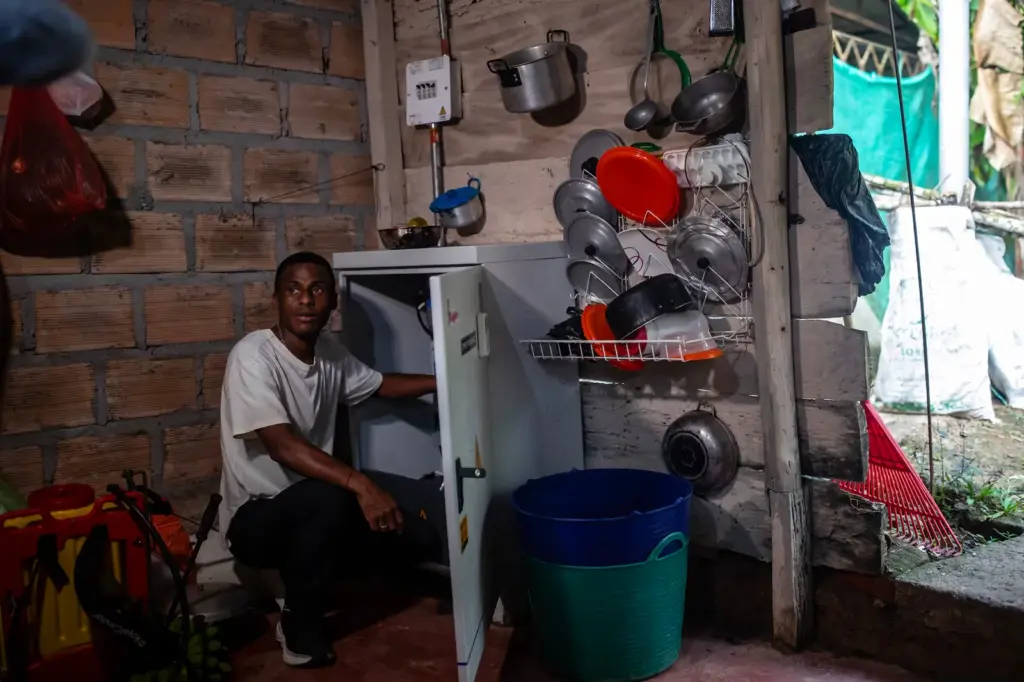
There everyone is a neighbor of some oil infrastructure. In front of the school in the Porvenir neighborhood — called neighborhood 1 when it was just a field — there is an active well. One of Castro’s first childhood memories, when he first arrived in Orito with his father, is the constant flame that rises in the oil batteries to burn off excess gases in a controlled way. One of those batteries is in front of the Alnamawamí reservation, just across the street. Also on that side there are a few houses powered by individual solar panels: some that were given to them precisely by the oil companies.