Suddenly, an earthquake radically changes the scenario and what seemed relevant becomes trivial. The focus shifts to the human drama. Politics takes on an unexpected character to urgently address the mess. The presidential inauguration that seemed like it would fill the headlines fades away. It stops mattering that it is more than a ceremonial act; that its symbolism was linked to normative provisions of a constitutional nature, long-standing traditions, and the opportunity it opens to outline a government plan or even the individual future of the person assuming office.
Read more The new ECLAC report paves the way for the great transformation of Latin America and the Caribbean
It is far from politically assuming that the changeover occurred satisfying a fundamental premise of the democratic order. When, moreover, the political color of those who left office and those who assumed it is different, it is said that the effect is even more positive. Indeed, an alternation is consummated, a situation even more favorable, if possible, to consolidate democracy.
It should not be forgotten that the delivery and reception of symbolic attributes also has a significant theatrical component. From the place where it is held to the invited people who are placed in a prominent position in the ceremony. Theatricality is a substantive component of the human being that is sublimated when power is present. In fact, the term “possession” that defines the execution of the act is related to that. Even in the ordinary work environment, taking possession involves a certain degree of ceremony.
However, in the entertainment society we find ourselves in, presidential inaugurations increasingly emphasize their condition as festive rites in which everything evokes an empty signifier. Their configuration is a sign of the times in at least four aspects that must be observed. The reaffirmation of the attributes of the invested president, their proposals for the future, the demonization of the outgoing president, and the cohort of guests who are inevitable sycophants.
The inauguration of Abelardo de la Espriella on August 7, which now seems so far away, has much of this and constitutes another link in the chain articulated in different countries in the region over the last three years. It should not be forgotten that the act was capricious as it was carried out successively in two different non-capital locations to reaffirm its decentralizing message: a university and a barracks. The initial position of holding it only in a barracks entertained Colombian society because Gustavo Prieto blocked this option thanks to his position as commander-in-chief of the Army until the last moment, considering it unconstitutional.
The oath and the imposition of the presidential sash took place at the University of Cali before about 2,500 people and ten heads of state, with the outgoing president absent and a delegation from the United States composed of personnel of a lower rank despite the State Department having offered a $1 billion package to support the new security strategy based, once again, on coca eradication, the war on drugs and narco, and Colombia’s adherence to the Shield of the Americas, for which Medellín will be the capital in this project.
At the battalion, de la Espriella, within the framework of a sermon wrapped in highly religious content, reinforced before a silent contingent of soldiers formed in formation and in dress uniforms his ideology of waging “the cultural battle to recover the value of the family, merit, discipline, respect for the law, love of the homeland, belief in God, and individual responsibility.”
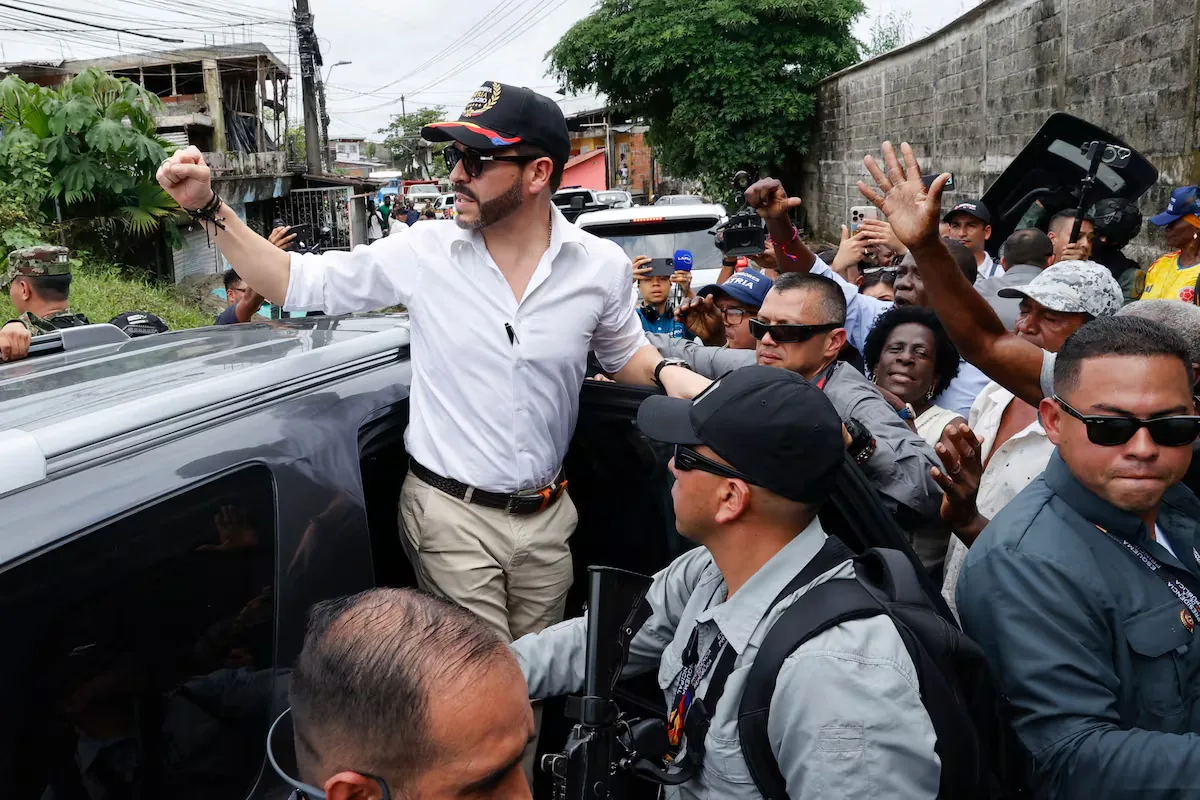
Faithful to his epigone and admired Nayib Bukele, who did not attend the ceremony, once the trauma of the earthquake was overcome, the new Colombian government will keep people entertained, just as his predecessor did, through his communication on social networks in which it has already been warned that “we will be sending statements, images, and videos of everything that is happening all the time.”
Perhaps attention should be paid regarding the risk that the latter might have in terms of a certain connection with the inauguration of the White House occupant on January 20, 2025, and especially with respect to some of the drifts that that act prefigured. Then, the magnates of the main tech companies accompanied someone who would transform his Truth Social network through Truth API in his second presidential term into the most lucrative asset of his entire career. The novelty consisted of charging Wall Street clients up to $1.2 million a year for a license that would give them an instant advantage over publications that could—and often do—shake global markets.
According to Axios, access to the 10 most popular accounts on the platform costs between $60,000 and $100,000 a month. The innovation is that the entertainment that the social network initially represented today is a novel form of speculation: the unparalleled power of the presidency to influence markets, packaged and sold as a subscription. Truth API provides trading algorithms with a direct, machine-readable data source on which they can act before most investors receive an alert or update their screens. The news website The Intercept and the Freedom of the Press Foundation, a consumer advocacy organization, sued Donald Trump for this. A president who apparently devotes 70% of his time to his projects of ostentation, construction, renovation, renaming, and tributes. The entertainment of many becomes the business of one, the entertainment of one means accentuating the irresponsibility of political action.
Read more Weather alert for precipitation in northern Chile: how long will the rains last