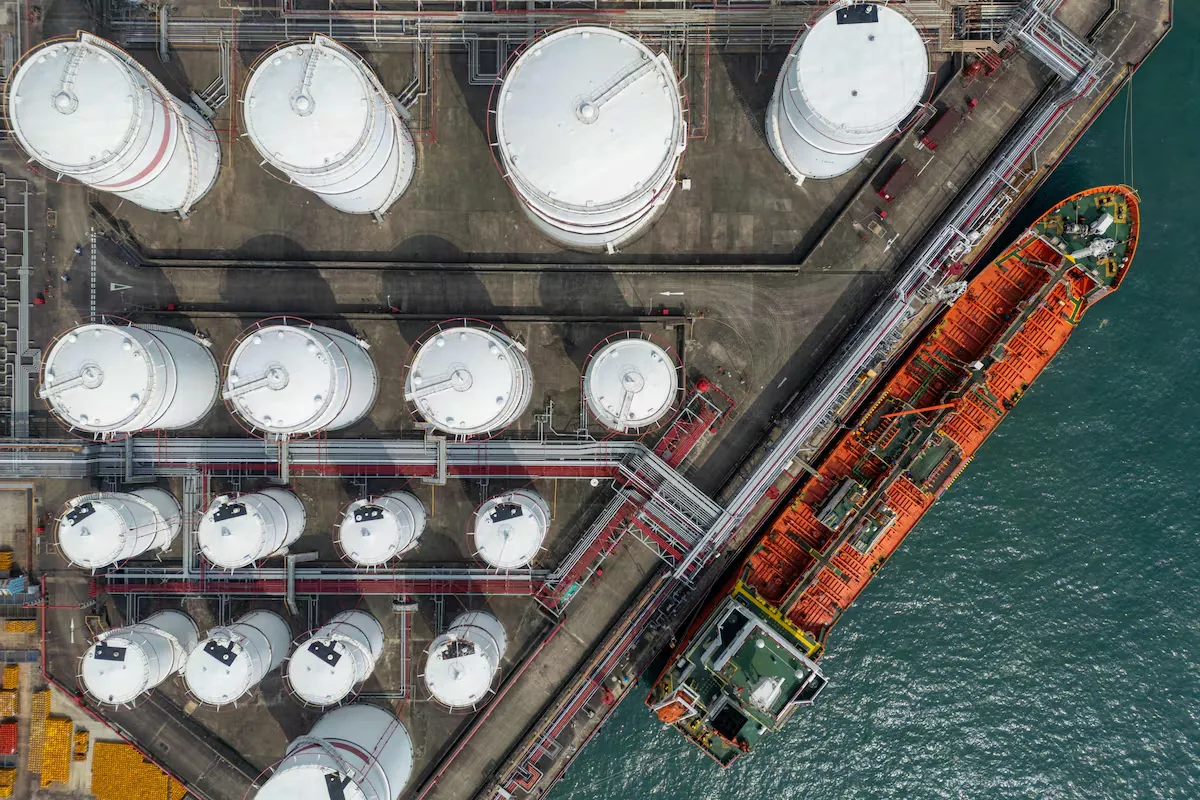









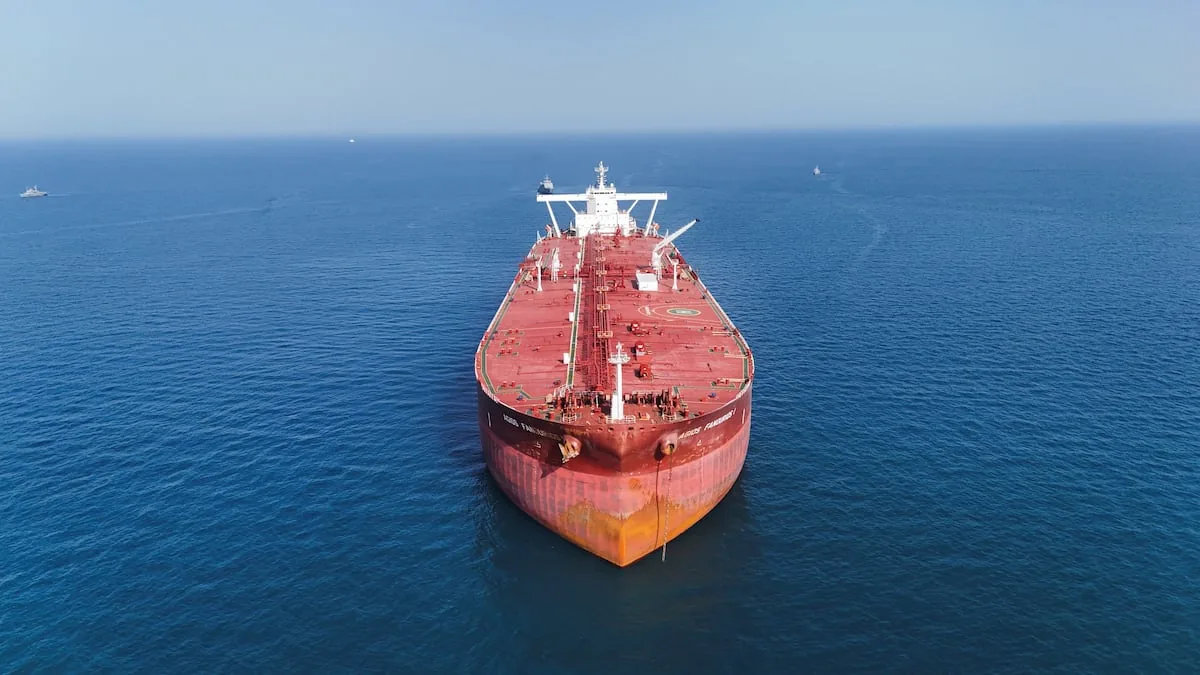
The price of oil is at its lowest level since the United States and Israel began their attack on Iran, following a 10% plunge this Friday. The full opening of the Strait of Hormuz announced by Iran as part of the truce agreed with the United States, and conditioned on Israel’s ceasefire in Lebanon, has brought the news that was expected since the truce between Tehran and Washington was announced last week. Although there is still no peace agreement and Donald Trump has announced he will maintain his blockade, the announcement is the first step in recovering from an oil shock with few precedents.
The road ahead is long. The recovery of the gas and oil supply lost in the last month and a half will not be immediate, but the reopening, initially, strongly lowers the price of energy. And, above all, it comes at a time when supply shortages threaten to become widespread and more acute. In the physical oil market, refineries are paying about 30 dollars more over the price of the nearest-term brent futures, an unprecedented premium that attests to the emergency and magnitude of the energy shock.
For now, and pending shipping companies deciding to transit the area, the most urgent task is to organize maritime traffic in this strategic enclave. To return to normal, production activity that has been halted will also need to be reactivated and damaged facilities repaired.
2,000 ships trapped in Hormuz
The strait controlled by Iran promises to become a real bottleneck in the coming days. About 2,000 vessels have been blocked in the area since the start of the conflict, according to the Secretary-General of the International Maritime Organization, Arsenio Domínguez, who told this newspaper that he is working with Iran and Oman — the two countries bordering the Strait of Hormuz — on how to get the ships out. “Evacuating the ships there will take us a few weeks, to then gradually restore transit again. But before evacuation, it must be ensured that there is no danger from mines,” Domínguez said this Thursday. The IMO has no official record of their existence but it is an obvious concern for shipping companies.
The Norwegian shipowners’ association, one of the most powerful in the world, has acknowledged that many uncertainties remain, including mining. “Mine clearance is an extremely slow process. According to naval sources, even in peaceful and cooperative circumstances, opening a channel with escort could take 3 to 4 weeks, and a full commercial restoration between 8 and 12 weeks,” says Jorge Molinero, analyst at Vortexa.
Ships that have crossed Hormuz in recent weeks have done so via a different passage enabled by Iran, closer to its coast. Shipping companies will now have to decide whether they trust that it is safe enough to cross Hormuz during these days of truce via that route, which is not the safe maritime passage recognized by the IMO. The German shipping company Hapag-Lloyd, one of the giants in the sector, said this Friday that it will probably navigate through Hormuz soon, although it acknowledged that it is “too early to confirm.”
Three weeks of navigation to reach port
Shipping companies are essential in overcoming the energy shock caused by the closure of Hormuz and will only cross the strait again with full safety guarantees. Their refusal to cross it, and the decision of insurers covering them to suspend war policies, came even before Iran began launching attacks on ships in the area. The start of US and Israeli bombings on Iran on February 28 was enough to make the lockdown effective due to ships’ refusal to sail in a conflict zone.
Read more Economic discomfort and lack of expectations: why young people are moving away from the tax system
The first barrels of oil arriving at port from the Persian Gulf will be from ships following the guidelines established by Tehran, and ahead lies a journey of about three weeks to reach Europe via the Red Sea and the Suez Canal — another two weeks if going around the African continent — and between three weeks and a month to reach Asia — or at least 10 days if it is India.
A critical situation
The reopening of the Strait comes at a moment that was becoming critical for the global supply of oil and gas. The last ships that had crossed Hormuz before the war broke out are already arriving at their destinations in full, and there are no more ships with new cargo pending arrival at port, as exports from Gulf producing countries have been halted. “April will be much worse than March,” warned the Executive Director of the International Energy Agency (IEA), Fatih Birol, earlier this month. This week he warned Europe that it has “six weeks” of jet fuel.
The closure of Hormuz meant depriving the global energy market of 10 million barrels of oil per day in March. And its recovery, even with the Strait reopened, will not be solved overnight. Once the logistical challenges of maritime traffic are overcome, the supply shortfall will last weeks and even months.
Two weeks to repair half the damage
It is not just about ships sailing: it is necessary to reactivate facilities that have been forced to stop, as Gulf countries had exhausted their storage capacity and stopped extracting crude. Well reopening is not immediate. “The problem does not end with ships passing through the Strait. Ships need to enter the Gulf to load, tanks need to be emptied, wells and refineries restarted. The damage to infrastructure is considerable,” summarizes Molinero. The IEA estimates that half of the closed fields in Gulf producing countries could operate at full capacity in two weeks, and it would likely reach 80% within another month. Recovery of the remaining 20% would take longer. In some of them, the conflict’s footprint will extend in the medium term, such as the Qatari natural gas plant Ras Laffan, which has been damaged in 17% of its capacity and whose repair will take up to five years.
The card of 400 million barrels in reserve
While interrupted supply due to the war is restored, developed economies rely on their strategic reserves of oil and fuel. “There is no fuel shortage in the EU at the moment. However, we are preparing for a possible shortage of jet fuel,” community sources told Reuters this Friday, also pointing to a possible coordinated release of jet fuel reserves if necessary.
The IEA already agreed in March the largest release of oil reserves in its history, amounting to 400 million barrels. The release of these reserves began in the last week of March and is expected to continue throughout April and, although it has barely helped soften crude prices in recent weeks, except briefly at first, it offers a valuable cushion against supply problems. Just as Brussels has already proposed a mandatory telework day in the EU and cheaper public transport, and after energy and fuel rationing has been a reality for weeks in Asian countries, the most dependent on Hormuz supply.
Read more How should Europe respond to Iran