









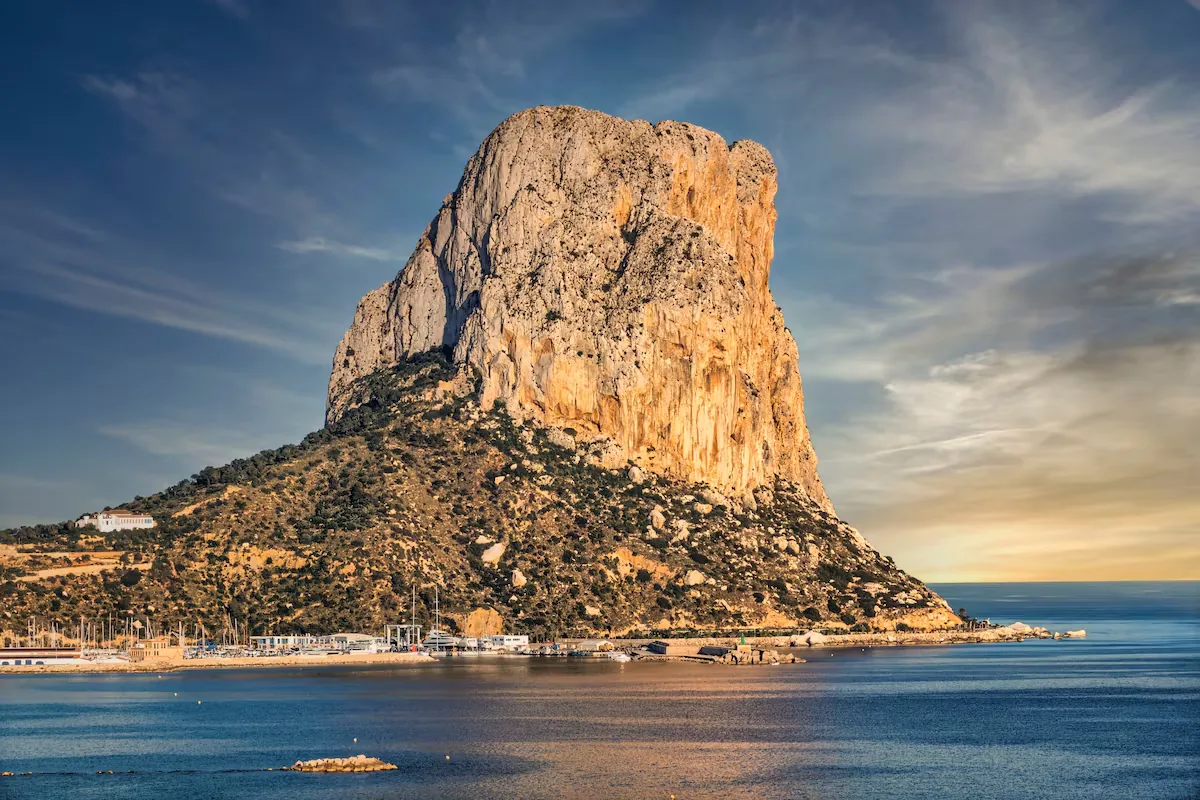
Whenever I return to Calpe (something that happens less often than I would like) I am surprised and exhilarated by the relentless colossal presence of the Peñón de Ifach. This pachyderm-like protrusion, occasionally wrapped in clouds like the halo of a saint, always seems ready to leap into the sea, which is its refuge and not an abyss. Indeed, this rough polyhedron is an extension of the Betic mountain range, which boldly dives beneath the waves heading towards Mallorca. A prodigious totem, an excessive offering and, perhaps, in its cosmic priapism, a taboo.
Read more With hands stained by catastrophe
The resemblance of this great rock to Gibraltar has given rise to various theories, usually wild but always entertaining. That Gibraltar and Ifach were physically connected before the Strait opened is one of those legends. It is true that, in ancient times, the name Calpe referred to the Rock of Gibraltar. In a time so given to superstitions and other chest-beating of supreme ignorance, I am surprised that no one has proposed that this titanic boulder could be an offering to some god. Or perhaps a monument created by extraterrestrials, as some fervent supporters of delirium tremens say the pyramids of Cairo are. Unconcerned by all our speculations, the Rock remains here, like Monterroso’s dinosaur: a cyclopean erection, an insolent and defiant limestone uprising, an extravagant morphological whim.
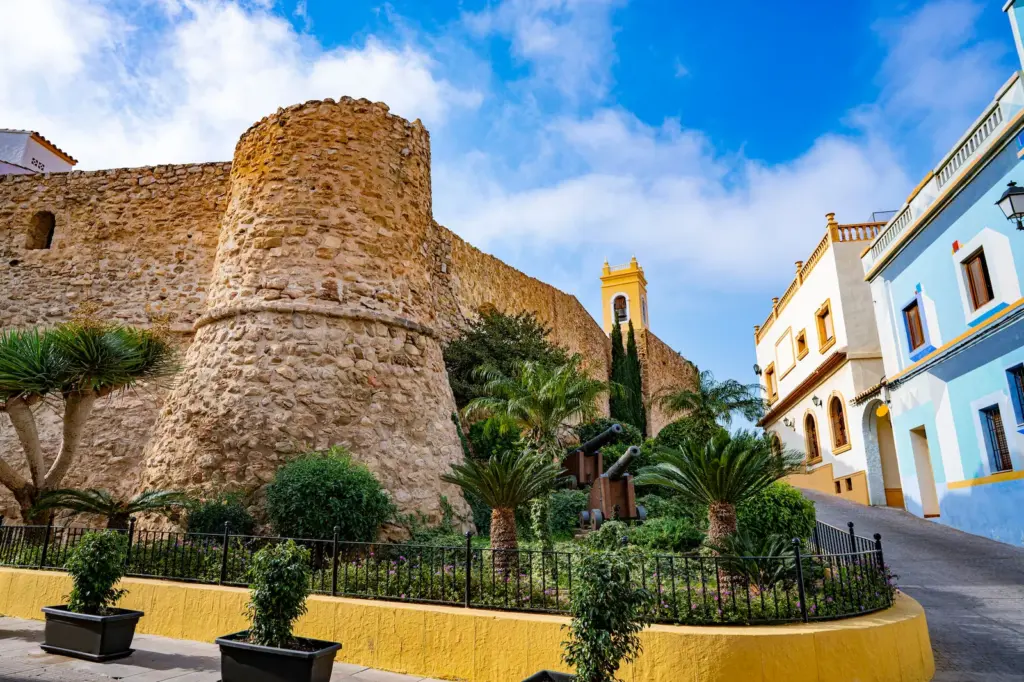
With this scenic appeal, the Alicante city needs little more to attract visitors. Yet, the quality of its offerings continues to increase. It is well known that for decades it has received a large number of foreign tourists (many now permanent residents), mainly from the United Kingdom, Germany, Belgium, and the Netherlands. This cosmopolitan character has not made it lose personality. Its old town with remains of medieval walls is very evocative, with its narrow streets, traditional squares, and historic buildings such as the Antigua church (15th century) and the Torreó de la Peça (a defensive bastion of the old wall). Added to this is a varied offer of dining and shopping, as well as nautical activities at its marina or hiking that can be done on the Rock.
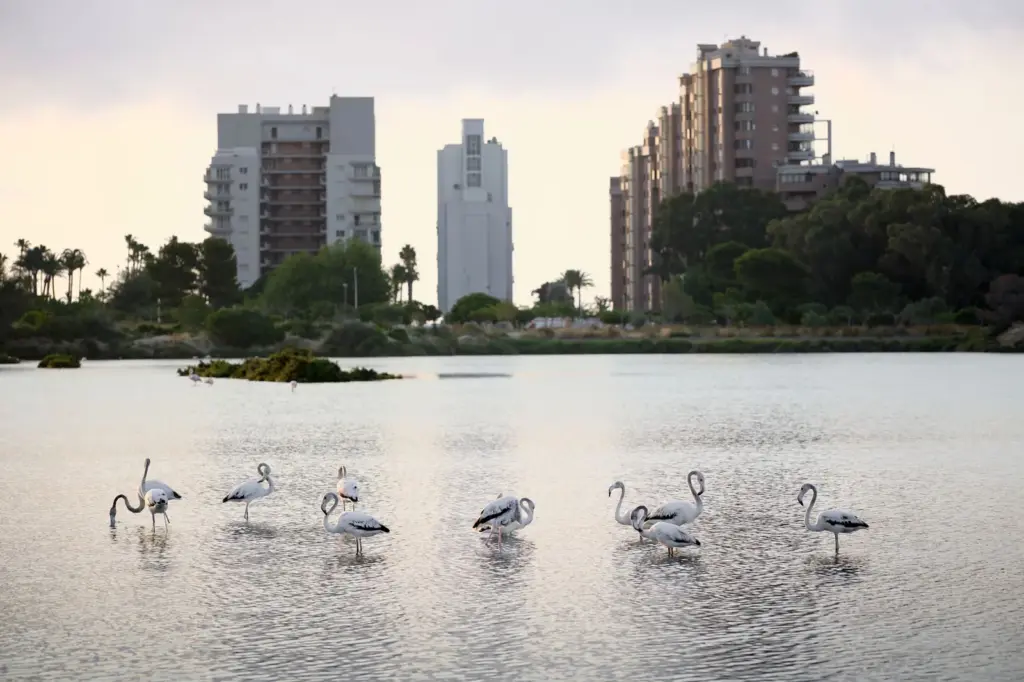
Among its natural attractions are the Salinas and the Baños de la Reina archaeological complex. The Salinas are part of an ancient bay closed off by a dune barrier that connected the Rock with the mainland. Salt extraction ceased in 1988, so, with the industry closed, biodiversity has flourished: 173 different bird species live there. As for Baños de la Reina, it is an archaeological site adjacent to the Salinas, where a Roman noble likely lived. Besides his luxurious villa, it includes a fish farm (where fish salting was carried out), baths, a water wheel, and four cisterns.
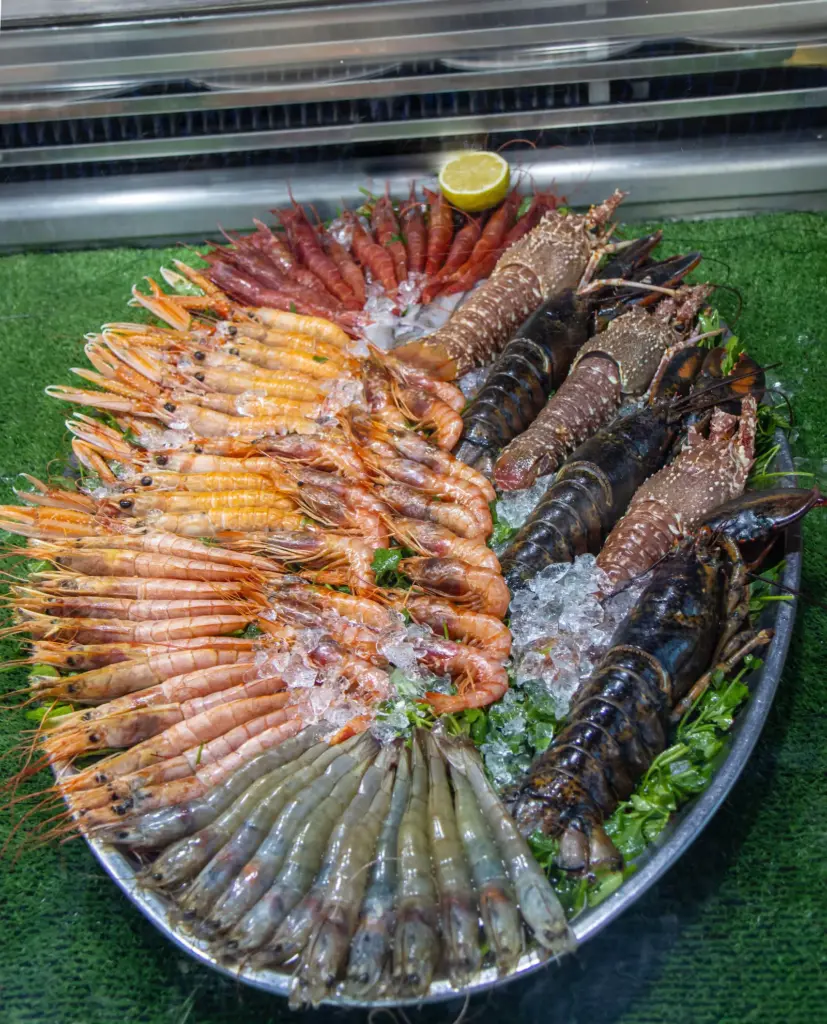
This ancient fishing activity has continued to the present day. Unlike other destinations focused exclusively on tourism, Calpe has maintained a significant trawler fleet. Its port houses one of the most important fish markets in the area, where the ancestral and essential auction of local fish and seafood takes place.
Its great marine treasure is the white shrimp. Although the red shrimp from nearby Dénia has a more established reputation, the qualities of the white shrimp (its natural sweetness, firm and silky flesh, the gentle iodine aroma just caught) are not to be underestimated. Since 2025, this seafood has enjoyed its own quality brand. According to the Generalitat’s Portal Agrari, that year more than 1,600 tons of white shrimp were caught and marketed in the Valencian Community (almost all on the Alicante coast). It is the third local species in terms of catch volume (after anchovy and sardine): it generates 13.5 million euros, surpassing the red shrimp and anchovy, which led the marine ranking years ago. And now that treasure, which was quantitative, has begun to become qualitative.
Read more ‘Blood Sacrifice’ and ‘Glory’, crimes and boxing
It is precisely in gastronomy where Calpe has most refined its renewal in recent times. The culinary versatility of this prodigious crustacean has caught the attention of the most renowned chefs in the area. Two examples: the restaurants Onami and Beat.
Onami opened this past June in the A.R. Diamante Beach hotel. This impressive establishment already had two other dining venues, Audrey’s (Calpe’s first Michelin-starred restaurant) and Amas. Onami shares a chef with Amas: Diego Laso. The difference between the two — both inspired by Japanese cuisine — is that Onami has no menu and dining is at the bar. The service is conceived as a tasting menu in the kaiseki-ryori style: the most refined and traditional form of high Japanese gastronomy. Onami is a play on words between ona (wave, in Valencian/Catalan) and umami. This reflects its philosophy: to offer a dialogue between Valencian and Japanese cuisine. Hence the white shrimp recipe at Amas (cured with sake and served with custard and Galician seaweed), or the nigiri of this same crustacean at Onami, simply peeled and served over rice.
View this post on Instagram
Second example: the restaurant Beat (one Michelin star), located in The Cookbook. This hotel has just undergone a thorough renovation. Beat has been led for ten years by José Manuel Miguel, the only Valencian chef to have earned Michelin stars in both France and Spain. If Onami dialogued local and Japanese cuisine, here the fusion is between Valencian and French. José Manuel Miguel’s great reference is Paul Bocuse, emblem of the French nouvelle cuisine. He cooks lobster in the style of Bocuse’s Salade de homard à la française, but the white shrimp requires no further transformation: its charm lies in the absence of cooking.
View this post on Instagram
With all this, one can now revisit Calpe and savor more than just the always imposing view of its Rock. Tradition and modernity, they call it.