

Iván Cepeda had never wanted to govern Colombia. With Gustavo Petro’s mandate about to expire, many looked to the left-wing senator to take the step. They asked him jokingly and seriously, and he cut them off with a “stop with that.” Until a letter arrived. The mothers of Soacha — women who lost their sons, husbands, and relatives murdered by the military who presented them as guerrillas — told him he had to be the one. And Cepeda, despite all he dislikes about a campaign and knowing that governing will require him to give in on things he never believed in, ended up saying yes. He, who has been a man of opposition all his life — defender of victims, accuser of the State — accepted to become the head of State.
In a campaign where politics is exercised loudly and on social media, Cepeda, a 63-year-old from Bogotá, is an anomaly. A senator for more than a decade, he is the most authoritative voice of the victims of crimes committed by the military, paramilitaries, and their allies in the State, and he always maintains the same tone: calm, methodical, reserved, almost sleepy. No matter what he talks about.
His way of dressing completes the portrait, that of a man of few surprises: Mao collar shirts in neutral colors, cardigans or wool sweaters, glasses perched halfway down his nose. On several occasions, he has been advised to dress more modernly, but he — on this topic and about his campaign — always repeats the same thing: “I am not going to change.” He reiterated to EL PAÍS: “My appearance as a presidential candidate is not to manufacture an image or a discourse.” Cepeda writes his speeches for public squares — something his opponents do not do — but he also reads them, as if he still lived in the analog era. His friends do not recall any funny anecdotes about him; instead, they point to his commitment and coherence. Nothing about him invites improvisation, much less spectacle.
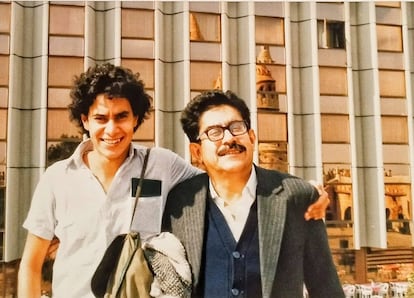
There is a story that defines Cepeda more than any other: the murder of his father. Manuel Cepeda had been a communist senator of the Patriotic Union for two weeks when hitmen shot him dead in his car on August 9, 1994. The son was on his way to the Javeriana University, where he was a young professor, when he came across the shot-up car. He got off the bus and mourned it in front of everyone. Television reporters interviewed him on the spot, and he launched his first political plea, directed at then-president Ernesto Samper. He demanded that he stop the offensive against leftist leaders. “Let this crime not go unpunished, like that of so many just and brave men,” he said before the cameras, with a choked voice but without breaking down.
“He knew they were going to kill him. It was inevitable, and his father had prepared them for it,” recalls Jorge Rojas, a friend of both Cepeda father and son, and one of Iván’s campaign chiefs. It was perhaps the first great example of the politician’s composure, a trait that accompanies him to this day. He is the unalterable candidate.
That calm in the face of the worst storms does not come from any Zen method or Eastern technique, writes León Valencia in his recent biography, but from life experience: having lost his mother to a brain tumor when she was 39 and he was 18, having seen his father die in front of him, having overcome two cancers.
Cepeda has no children, a singularity in a country where the traditional family is still a currency in electoral exchange. His most loving side is reserved for his nieces, his three chow chow dogs — the only ones who make him lose composure — and his partner, anthropologist Pilar Rueda, who has accompanied him in his struggles and illnesses. Only in that intimate circle does he shed the uniform of senator, victim, and defender. “Iván faced cancer twice very bravely. He has a family core that surrounds him; I think we have been partly his strength,” says his sister María. Precisely, his health has been and is a matter of attacks and questions about his presidential suitability. But his life, they say, has always been that of a survivor.
That plea before the cameras after his father’s death was the first of many. In the following years, Cepeda built his public figure from denunciation: as a researcher, as a human rights defender, as an organizer of victims. Until in 2004, just returned from his last exile, he starred as a victim and activist in one of the tensest episodes of the Uribe era.
Then-president Álvaro Uribe was negotiating the demobilization of paramilitary groups, responsible for thousands of massacres, and the AUC leaders — the far-right army that had acted for years in alliance with sectors of the Army — were invited to appear before Congress, in downtown Bogotá. The paramilitary commanders filled Bolívar Square with thousands of followers who arrived by bus. Cepeda and a handful of companions tried to demonstrate, but only two managed to sneak into the Capitol. “There was no correlation, we were just a few; there were no conditions to protest,” recalls Lilia Solano, philosopher and activist who accompanied him that day. Inside, they held signs with Manuel Cepeda’s face. Most congressmen stood to applaud the paramilitaries; only a handful resisted.
From that protest was born the National Movement of Victims of State Crimes, with Cepeda as the main promoter. Six years later, in 2010, he returned to the Capitol through the front door: as a congressman for the Democratic Pole, the first party that managed to unite the Colombian left. And it was inside that same building where the judicial battle that would make him famous throughout the country began.
In 2014, from the seat he debuted as senator, Cepeda publicly exposed the alleged links of Álvaro Uribe with the paramilitaries. Uribe left the room and crossed Bolívar Square on foot to denounce him before the Supreme Court, which is right across. Uribe said Cepeda had defamed him, fabricating witnesses in Colombian prisons. But the case turned against him. In 2018, the court not only dismissed the charges against Cepeda but also opened an investigation into Uribe and his lawyers, suspected of having bribed those same witnesses to retract and accuse the senator.
In 2025, the former president was sentenced to 12 years in prison — the so-called “trial of the century” — although a second instance acquitted him already in the middle of the electoral campaign. Cepeda filed a cassation appeal to keep the case alive. The trial had made him a candidate. Now it was time to win.
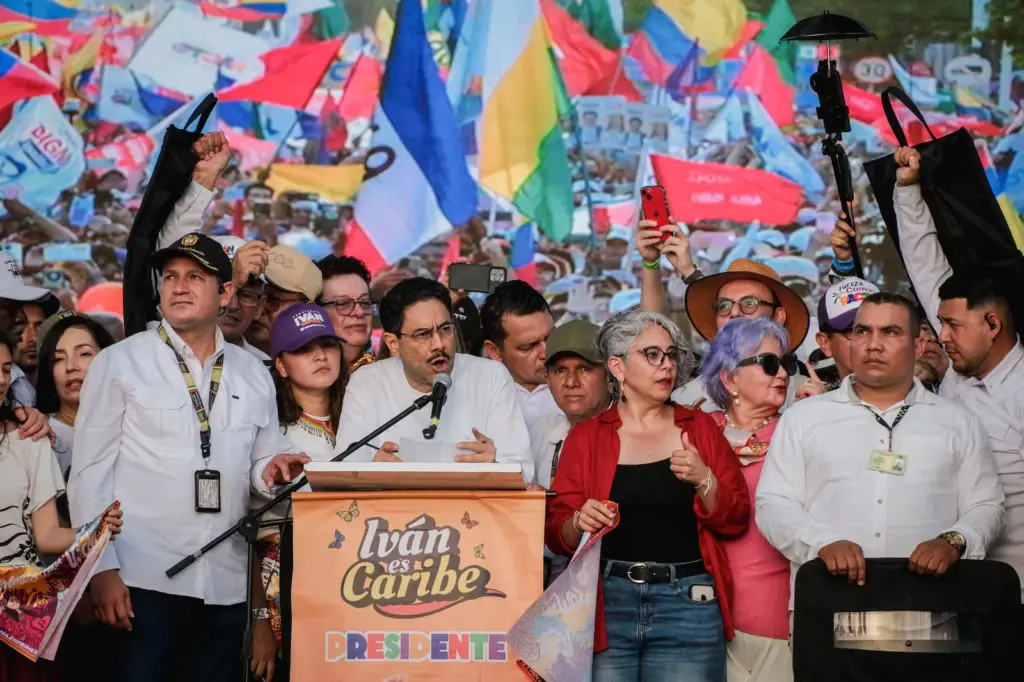
Cepeda has made the war against Uribe the engine of his campaign. Last Friday, he filled that same Bolívar Square along with his vice-presidential running mate, indigenous senator Aida Quilcué, and at some point, the crowd burst into chants against the former president. Cepeda encouraged them. “Uribismo is fascist, it represents the ideology of contempt,” he told them. The senator hovers around 40% voting intention and leads the two right-wing candidates vying for second place — the far-right Abelardo de la Espriella and senator Paloma Valencia, Uribe’s candidate — but he does not talk about them. In an interview with EL PAÍS, one of the few he has granted, he made it clear: “Our confrontation is not with Paloma or Abelardo. It is with Uribe.”
Cepeda and his right-wing adversaries represent two models of the country. He promises continuity — and deepening — of Petro’s social reforms and talks about three revolutions for Colombia: ethical, social, and political; always bloodless. He does not rule out new peace talks with armed groups, in contrast to the hard hand that made Uribe popular. “One of the fundamental aspects of my future mandate will be standing by the victims,” he told this newspaper. He also points to what he calls macro-corruption as a major problem in the country: criminal networks that capture state institutions. It is an evil that Petro has not been able to combat. Instead of a formal Government plan, Cepeda has compiled speeches read in more than a hundred public squares across the country.
Those who fear him keep labeling him as a communist, as his father and mother were. Cepeda studied philosophy in Bulgaria in the years before the collapse of the Soviet bloc but returned in 1987 with serious questions about Marxism, which led to heated discussions with his father. In Bernardo Jaramillo Ossa, then leader of the Patriotic Union — the same party as Cepeda’s father — he found the left he was looking for: practical, without dogmas, Valencia recounts in his book. Cepeda considered him his “political godfather.” His assassination, four years before his father, was another blow in his life.
Many voters will not vote for Cepeda on May 31 out of fear that he is more radical than Petro. The right and even centrist voters feel dread imagining him in the Presidency. The candidate is careful not to give details of their activities together and treats his conversations confidentially, but he has proposed a tribute to the “comrade president” as one of his first government actions.
Regarding Petro’s initiative to change the Constitution, one of his ideas that generates the most rejection, Cepeda has been ambiguous. He has barely explained how it will differ, beyond promising more rigor against corruption. The candidate cannot yet detach himself from a leader who, about to leave office, hovers around 50% approval. But Petro and Cepeda are not so similar. “My campaign has only one strategist, and that is me; I am not a copy, nor a clone of anyone,” he has defended.
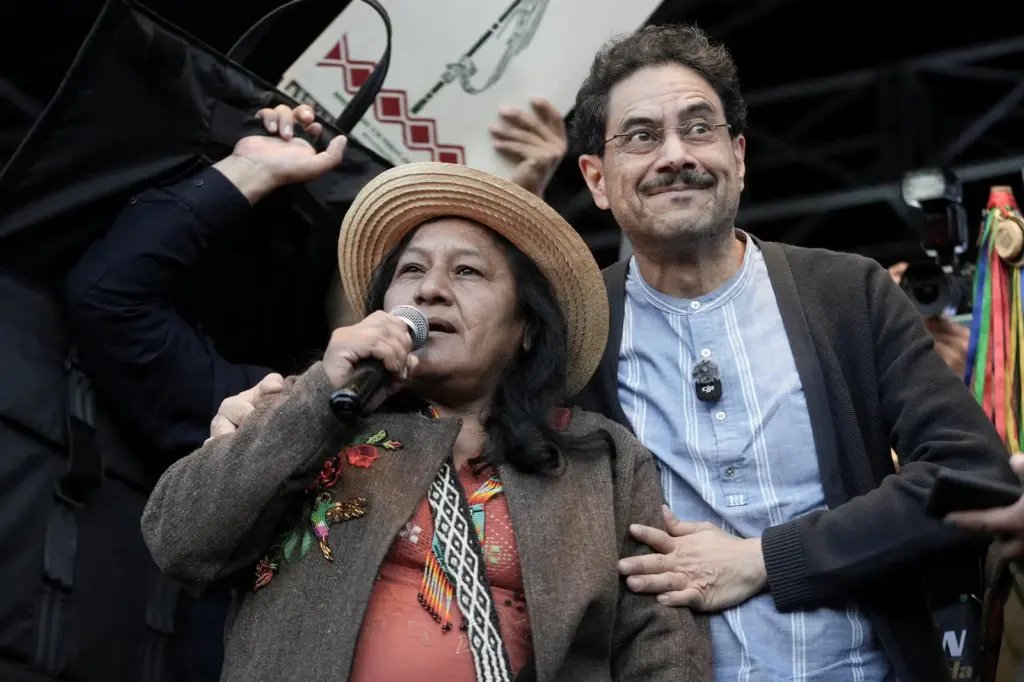
“Petro is a rebel and Cepeda is a revolutionary,” says Jorge Rojas, who was chief of staff to the president and has known the candidate since 1984. “Petro likes to confront hard, but Cepeda has the gift of dialogue.” His close associates often point out that distinction: while Petro attacks, compulsively tweets, and opens diplomatic crises, Cepeda listens, analyzes, and is very cold in his calculation. He is, perhaps, too rigid. Petro improvises and gives impulsive orders, while Cepeda “has shown calm and persistence in long causes,” says León Valencia. “He can be more radical than Petro, but more sincere, more predictable,” says former president Ernesto Samper, who has just announced his support. Samper sums it up this way: “He is anti-Petro in form and pro-Petro in substance.”