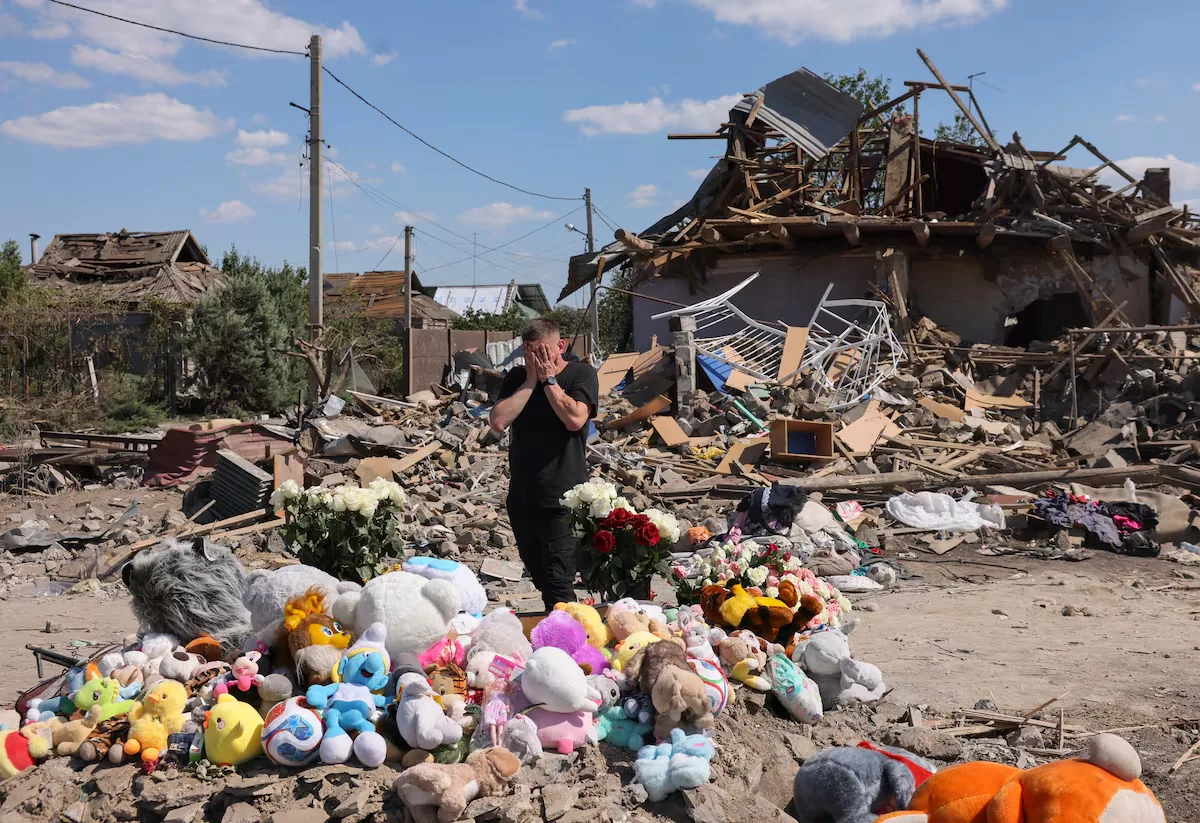
The war unleashed on the eastern border of Europe following the large Russian invasion more than four years ago is causing an increasing number of civilian deaths and injuries. The year 2025 was the deadliest for the civilian population since the first year of the conflict, when many civilians lost their lives in the early months. In 2026, this trend continues. Both sides deny that civilians are the target of their attacks, but the casualty figures show that these citizens who do not actively participate in hostilities are increasingly caught in the violence.
“Unfortunately, we expect this year to be even deadlier than the previous one,” says an analyst from the independent Russian organization Conflict Intelligence Team (CIT) who requests anonymity for security reasons.
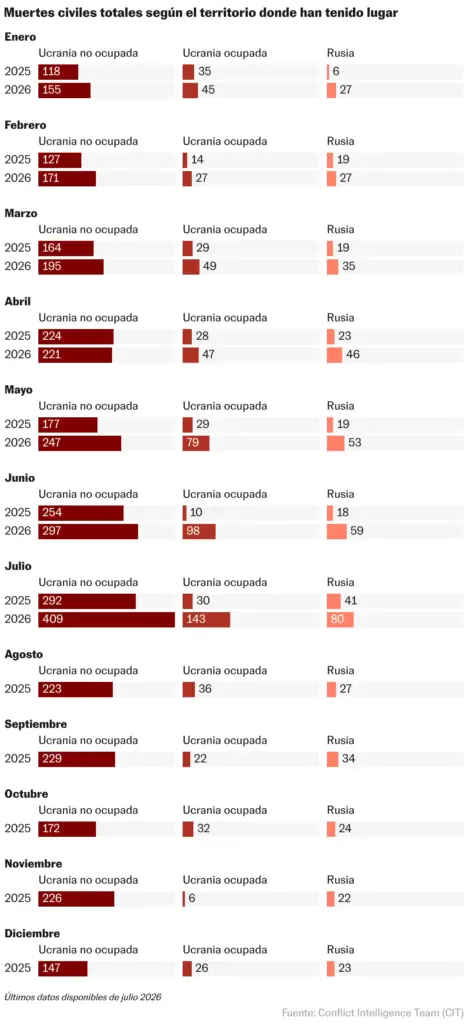
The CIT counted 2,650 civilian deaths in Ukraine (297 in the occupied areas and 2,353 in the rest of the territory) during 2025. On the Russian side, the death toll reached 275. These data are mainly sourced from official records of regional governors, along with information from independent media. This team classifies them into three categories: Ukraine, occupied Ukraine, and Russia, and also excludes attacks on military facilities.
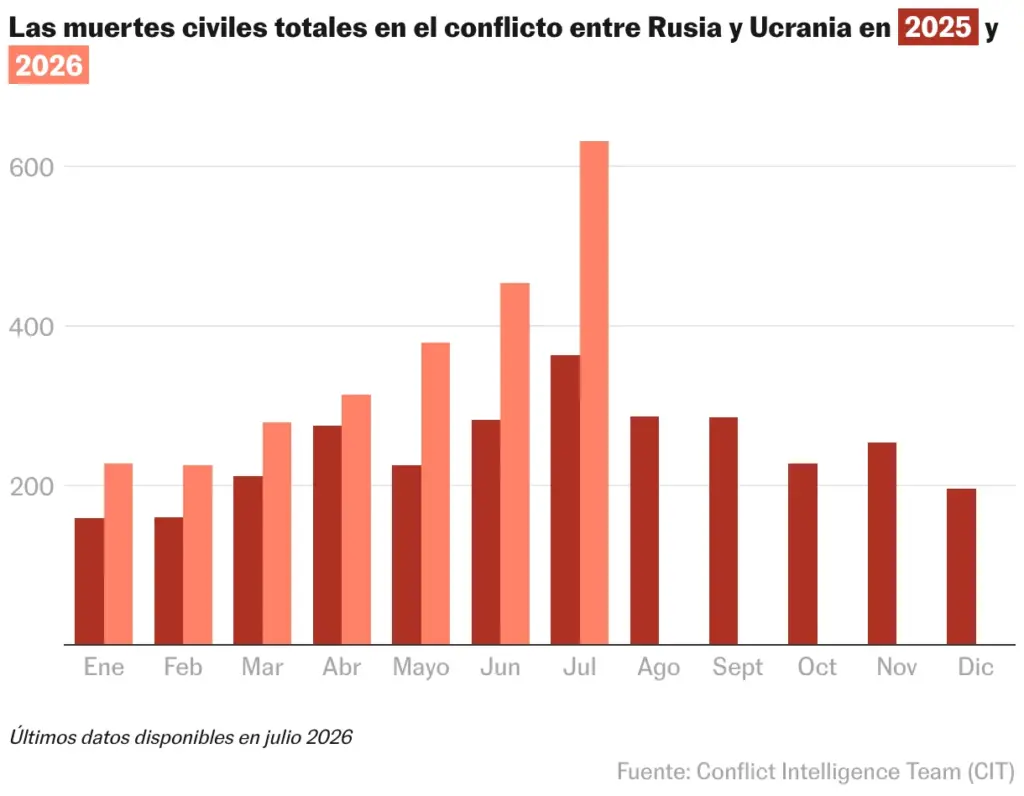
In 2026, the United Nations Human Rights Monitoring Mission in Ukraine (HRMMU) reports that the number of civilian deaths (1,396) and injuries (7,978) during the first six months is already 37% higher than in the same period of 2025 and 114% higher than in 2024. Meanwhile, the CIT has counted that up to July (which had a high number of deaths) 2,183 people have died across Ukrainian territory. In comparison, in the first year of the war, 8,423 people died, according to HRMMU data.
In Russia — a figure not counted by the United Nations mission — the toll rises to 327 so far this year. With that, the total civilian deaths in the two countries during the first seven months of 2026 (2,510) are already approaching the total for 2025 (2,925), according to the Russian research center. July has been the deadliest month of the year: 632 deaths.
The main cause of the increase in civilian deaths in Ukraine is long-range weapons (powerful missiles with area effects and drones), launched over urban areas, according to the HRMMU. At the same time, near the front, the number of civilian deaths caused by short-range drones reached its highest level of the entire war in June. Kiev has also increased its offensive capacity and has begun attacking targets in Russia at increasingly greater distances from the front, so the number of Russian civilian casualties has also started to rise.
On the other hand, in the case of Ukraine, its main vulnerability lies in the lack of interceptors for its air defense systems, leaving the population at the mercy of Russian ballistic projectiles, according to a Substack analysis by Phillips P. O’Brien, a war expert and professor of Strategic Studies at the University of St. Andrews.
This trend is partly explained by the increase in attacks with long-range projectiles (such as cruise and ballistic missiles, and drones), capable of striking distant urban areas. “The front is stalled, with fighting that does not seem to have any chance of success. That is why both sides are now dedicating more efforts to this type of warfare: long-range warfare. It is said to be like a war of cities, like in Iraq,” explains the CIT analyst.
Deliberately attacking the civilian population during an armed conflict constitutes a war crime and a violation of international humanitarian law (a protection regulated by the Geneva Convention and its additional protocols), which stipulates that belligerent parties must distinguish between combatants and non-combatants.
The war of drones and missiles
Between January and June this year, civilian deaths and injuries caused by missiles and drones increased by 60% compared to the same period in 2025, according to the HRMMU. But resorting to this new strategy still lacks a clear explanation: “We don’t know what they expect, because, from a historical perspective, these air attacks alone do not lead to victory. We also see this in the war between Iran and the United States. But they hope that, for some reason, it will give them an advantage,” admits the CIT expert.
Moscow has intensified its attacks on Kiev in recent weeks, and Ukraine has also carried out more attacks on Russian territory, especially since last month, against facilities of the company Wildberries, known as the Russian Amazon, which already has more than a dozen damaged warehouses.
Read more Follow the Current, the campaign that seeks to protect the urban channels of the Metropolitan Region
While long-range weapons are increasingly used to attack urban areas far from the front, in localities close to the combat lines Russian forces mostly use short-range drones, according to the HRMMU. “Although the integrated cameras allow operators to view possible targets in real time — known as first-person view (FPV) — these drones have become one of the main causes of civilian casualties in Ukraine,” the organization notes on its website.
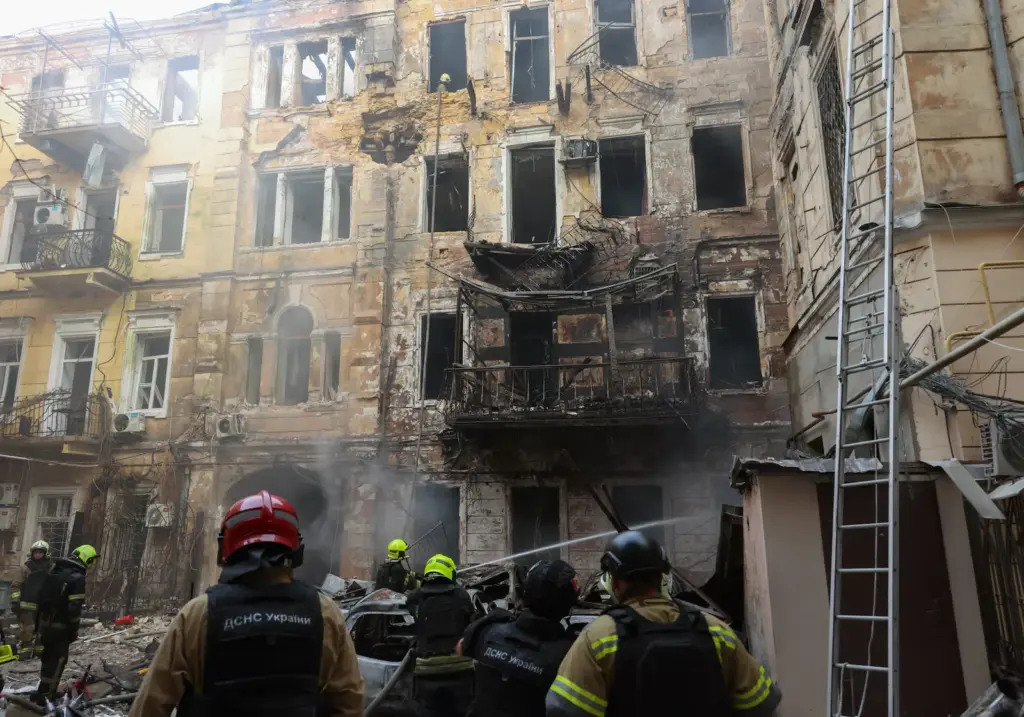
Throughout Ukrainian territory, the HRMMU has documented at least 237 attacks on cars and buses near the front line, forcing residents of these areas to drastically limit their movements.
The increase in Kiev’s armament capacity has allowed it to rethink its strategy in the conflict: “Until now, Ukraine had attacked almost all military targets, mainly because the number of weapons [it had] was not that large, so they have been more precise in choosing targets. Now they have more options and can attack more targets,” explains the CIT analyst.
Far from the front
“Their [Kiev’s] strategy, as we see it, consists of maintaining the stalemate on the front line, or perhaps simply pushing the enemy back. They are doing this now in some areas, but not in Donbas. On the other hand, they seek to make the war more costly with attacks on the Russian economy and refineries,” adds the same expert. “Perhaps the idea is to put pressure not on [Russian President Vladimir] Putin, but on the elites, the oligarchs, or the rich who are losing money, so that they pressure Putin and ask him to reach some agreement,” he opines.
At the end of June, Ukrainian President Volodymyr Zelensky announced via his Telegram channel the approval of a 40-day campaign to intensify drone attacks inside Russian territory, in order to “influence the aggressor state and promote the end of the war.”
Kiev is striving to obtain more interceptors from its allies while fighting to defend itself from Russian air attacks. According to Ukrainian authorities, allies sent this year a third of the interceptors they delivered in the same period of 2025 for the US Patriot air defense systems.

“Kiev is well protected by air defense systems (…) However, the situation is different regarding ballistic missiles and Zircon missiles, which are shot down with Patriot interceptor missiles, which Ukraine currently lacks,” comments Olha Polishchuk, research director for Eastern Europe at ACLED, on the monitoring center’s website.
On August 5, Ukraine failed to intercept any of the 24 ballistic missiles nor the four Zircon cruise missiles launched by Russia in an attack on the capital region, although they did manage to shoot down almost 90% of the 115 drones, according to its Air Force. As a security measure, the country has since stopped reporting the number of interceptions and ballistic missiles launched over its territory, Bloomberg reports.
“Ukraine will suffer greatly in the coming months due to civilian losses and some successful Russian strategic attacks,” writes Professor O’Brien. However, “the Russian army continues to fail spectacularly this summer, and that will not change,” he adds.
The CIT analyst also does not foresee significant advances on the front in the coming months: “We observe an increase in the production of ballistic missiles, a weapon being used against all power plants and all systems. We believe [Putin] understands that he will not be able to take Donbas this year, so his strategy for victory probably consists simply of freezing Ukraine next winter.”
Read more From space: This is how the eclipse has been seen from a satellite