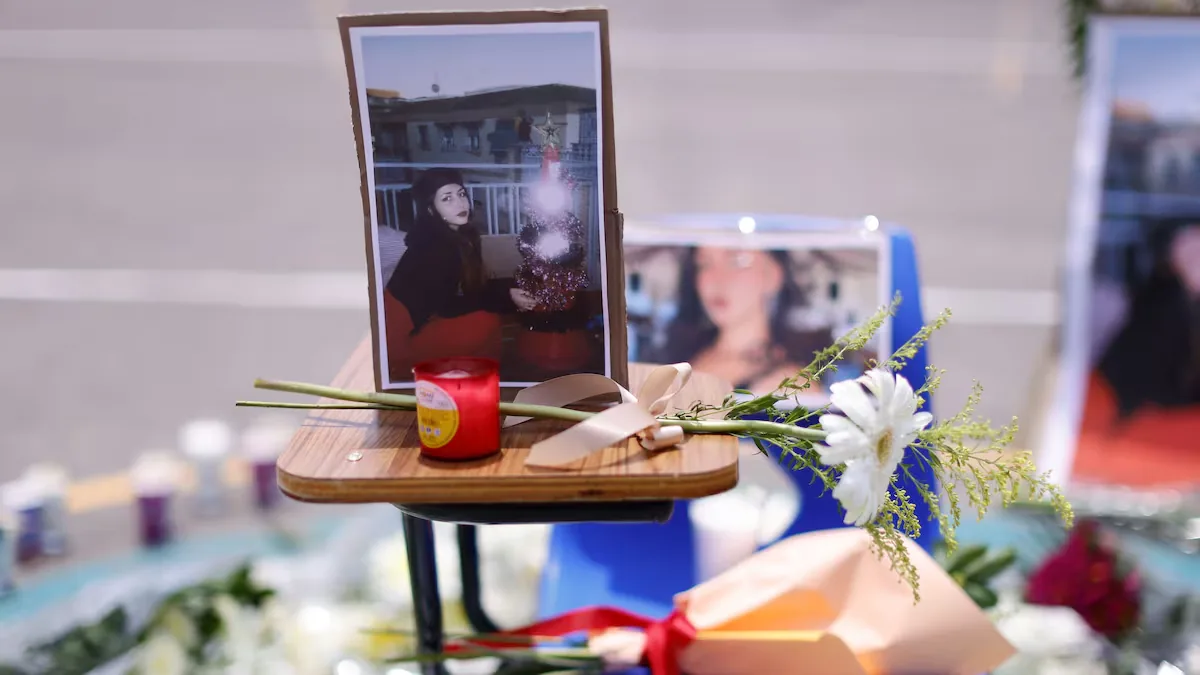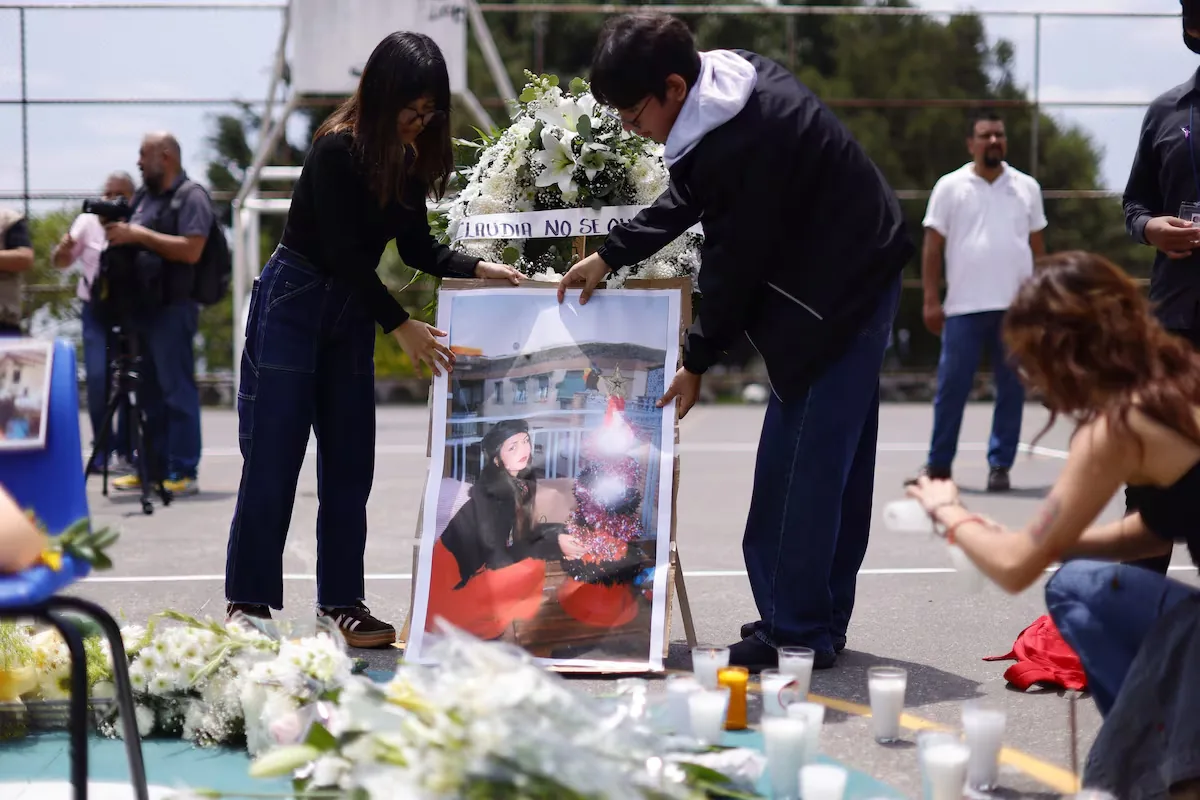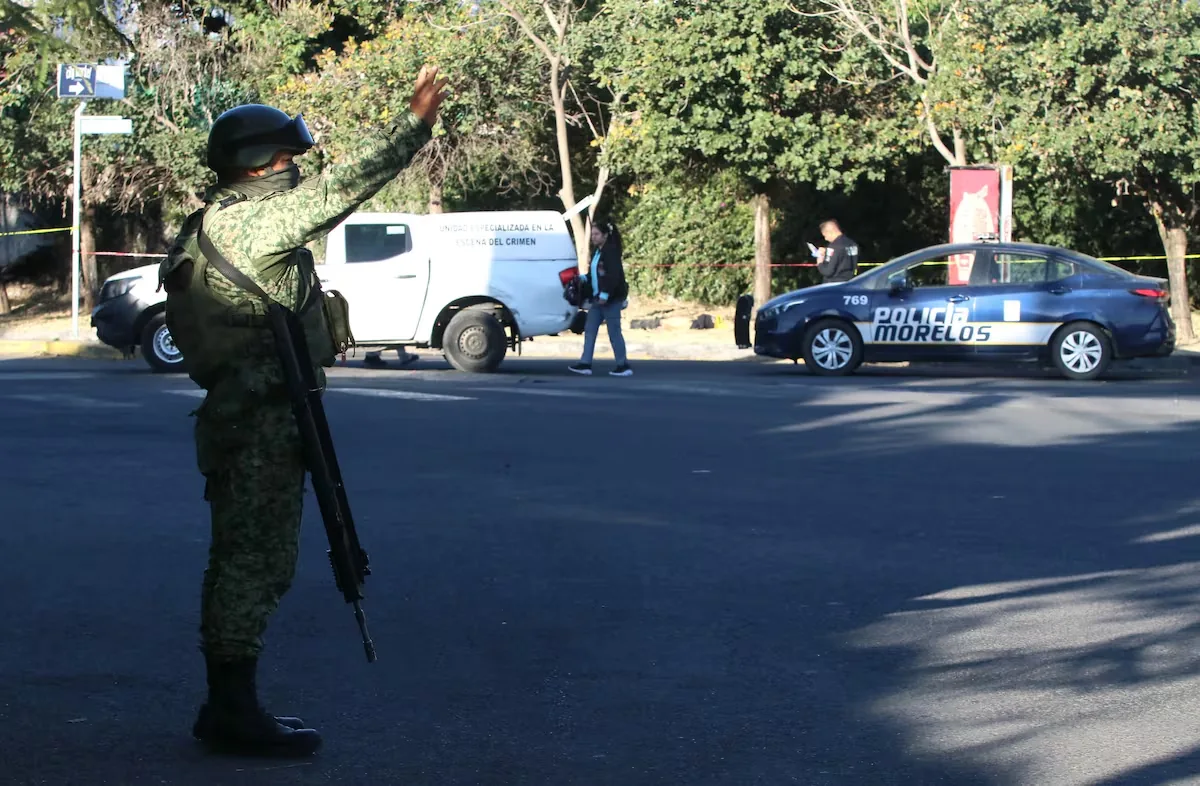
Anthropologist Claudio Lomnitz has approached the violence that permeates Mexico from every possible angle: a phenomenon with a thousand faces that overflows any classical conception of crime, war, or corruption. “Violence” is a word that contains everything and, for the same reason, slips away as soon as one tries to grasp it. Something similar happens with peace, the counterpart to which the Chilean-Mexican specialist has decided to dedicate his next efforts, in a series of lectures he inaugurated this week at the Colegio Nacional, of which he has been a member since 2021. Far from finding a definition of a concept as elusive as its reverse, Lomnitz has set out to “clear the way,” in his own words, removing what hinders understanding what is being talked about or has been talked about in Mexico when the pacification of the country has been named. “There are a number of important economic activities that are being regulated with the use of extrajudicial violence. You cannot see the problem exclusively through the typified crime,” he points out, believing that previous imaginaries have failed.
Read more Videoanalysis | The Breakup They Want
The researcher has identified three paradigms in the way the issue has been thought about in the last 20 years, when the spiral intensified. They are, more or less, the popularly known ones: the war on drugs; hugs, not bullets; and a third he has named speaking well of Mexico, “turning down the volume a bit [on the topic], because much violence is expressive, it is designed for the media,” he explains. Although the first, for example, is associated with Felipe Calderón’s administration and the second with Andrés Manuel López Obrador’s, the anthropologist points out that in reality they tend to be combined in different proportions.
“[Claudia] Sheinbaum shares many strategies from the war on drugs era, but tends to inscribe her policies, at least rhetorically, as a continuation of hugs, not bullets. She also has continuities with Peña Nieto,” he indicates. “All three are used, but one is presumed,” he finally simplifies. And although all three theories have failed in their objectives, he says, they all work a little.

Apart from the emphasis on one element or another, what the Executives generally have in common is the fixation on figures they feel “reflect on them,” but are unable to capture the reality behind them. “The way governments imagine peace has increasingly become a board with typified crimes such as homicide, disappearance, vehicle theft, etc., and the real relationship between some things and others is not really being seen,” argues Lomnitz, who has worked for more than three decades at Columbia University in New York.
For example, the presidential cabinet boasts of having reduced daily homicides by about half, but extortion continues to grow. “That means the merchant who is paying protection money feels a credible threat, and statistics are handled as if they were totally independent,” he evidences. Something similar happens with prison population statistics, he adds. “Those figures are not given together. Mexico has expanded the use of preventive detention. It is a country where prisons are very full and where the amount of crime inside prison and from prison outward is gigantic,” he assesses. That, while impunity levels approach 100%. “If the prisons are full, someone is being punished, but who?” he wonders.
The imaginary that prison will solve the problem, which is “Bukele’s imaginary,” he laments, “has been gaining ground both on the left and the right.” “Everything in Mexico has become prison. Everything is an investigation file,” he completes. These discourses, which spread like wildfire due to their simplification of reality, displace violent economies from the focus. “No one says: ‘We are ending illegal logging or gasoline theft.’ Why? Because those economies are important in this country, and all of them are regulated with violence,” details the expert, who adds mines, avocado cultivation, or migrant trafficking, among others.
Read more Ronda reunited with a Goyesca bullfight empty of content
For the author of The Torn Social Fabric (2022) or Anthropology of the Silence Zone (2026), the fundamental question that must be answered is, above all, the for what. “If you don’t understand that, you don’t understand why in Mexico, for example, so many forest or water defenders are murdered,” exemplifies Lomnitz, who patiently and precisely dismantles some of the prejudices already installed in the public imaginary, a way of missing the mark again and again.
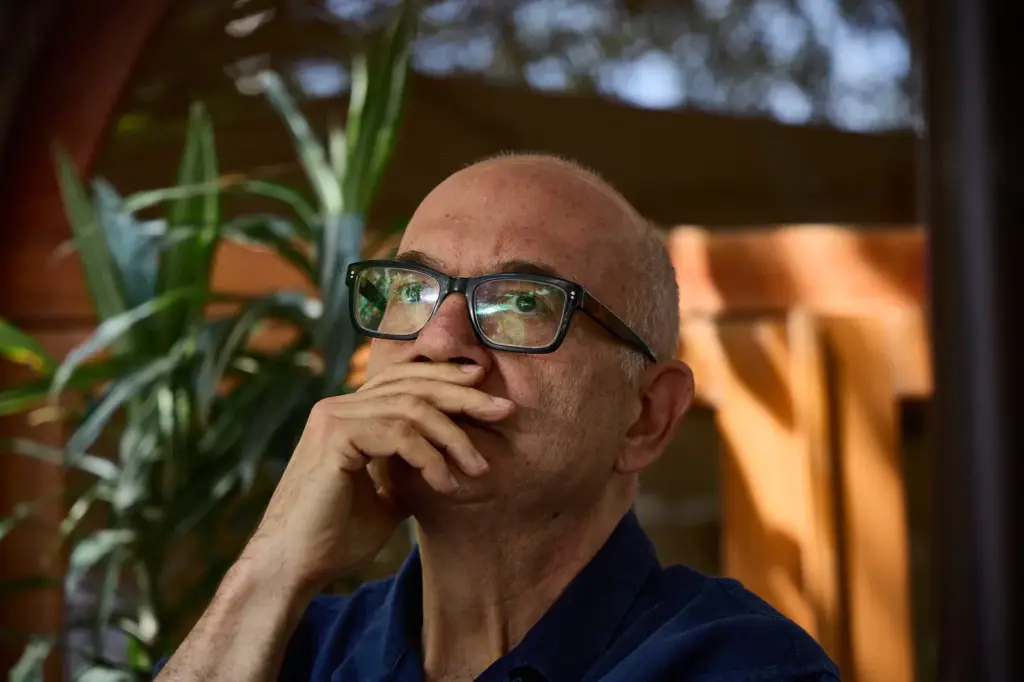
The anthropologist does not intend to replace or correct politicians who must design public policies, but rather to sketch a faithful portrait of reality that gives them tools to do so without “just fooling everyone,” he jokes. “I think López Obrador was right to talk about a relationship between all these violent processes and what they call ‘social’ issues,” he points out, “where I think he was less right is in imagining everything simply as a problem of inequality that could be solved by distributing money.” “That hypothesis was rejected by reality,” he concludes, returning to his mantra: “Around what economies do we have violence?”
He is, after all, lenient with the leaders, who sometimes “rightly get impatient” because only these things are talked about while so many others happen at the same time. “But it is very difficult to divert attention when, suddenly, six people are beheaded and thrown in a bar,” he nuances. Part of the difficulty of dealing with that reality, at least in the media or discursive plane, has to do with instability in the messages produced by that kind of horror, which from time to time wipes out any illusion in the form of a figure. There are violences thought of as “expressive political acts” that need media attention to exercise their power, as that is really what they seek: to be seen. There are others, however, carried out with technique and sophistication to hide their mechanisms, such as forced disappearance. “It is not only the horror of what you see, but also the terror of what you do not see,” he summarizes.
Navigating in that magma are the authorities, civil organizations, and above all, the population, which witnesses the barbarity sometimes with scandal and sometimes with normalized indifference. First some territories, then others, continue to bleed within the spiral, with no obvious way out. “Wow, that’s so difficult,” Lomnitz responds to the million-dollar question: what horizon of peace could be glimpsed today in Sinaloa, the cradle of El Chapo, which for two years has been engulfed in a war between factions that has strewn the streets with corpses. “I don’t think this case, nor the previous ones, can be analyzed as an ending where the blue helmets arrive,” the anthropologist simply sketches: “That’s the frustrating thing about talking to me, that I don’t have the solution.”
Read more Rosa Maria Duran, a reference of the Catalan exile in Mexico, dies at 99 years old