







First it was the United States, now it is Chile. Colombia faces the challenge of integrating hundreds of Colombians who migrated in search of greater stability and are now returning deported. Donald Trump has already expelled thousands of Colombians in his anti-immigration crusade, and this Thursday the far-right José Antonio Kast joins him. The new Chilean president, who marked one month in office a few days ago, has started his own campaign to deport foreigners with a flight scheduled to make stops in Bolivia, Ecuador, and Colombia.
Read more Checkmate to LIV Golf: the Saudi Sovereign Fund is considering withdrawing funding from the League
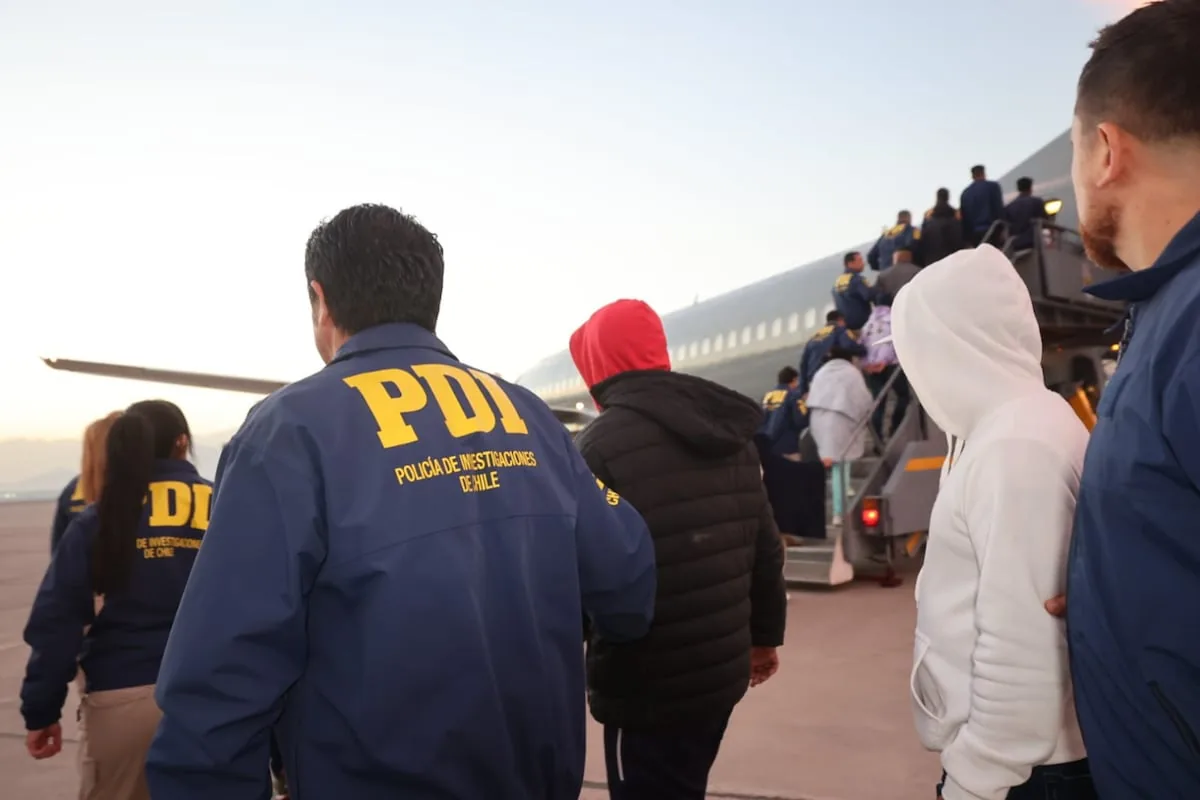
The Foreign Ministry has confirmed to this newspaper that it expects the flight with around twenty Colombians to land tonight. Sources from the Chilean government, cited by the media Bio Bio Chile, reported that before arriving in Bogotá, the plane will make stops in Santa Cruz de la Sierra and Quito to deliver 12 Bolivians and 9 Ecuadorians to their respective countries.
The expelled are accused of crimes such as drug trafficking, robbery with violence, vehicle receiving, or entry through unauthorized passages. Although entering Chile irregularly is not a criminal offense, it is an administrative infraction and those who do so are subject to expulsion. Of the 40 on the flight, 26 correspond to administrative expulsions and 14 to judicial ones. According to the same media, the migrants travel with disposable plastic handcuffs and each is accompanied by an escort.
The process in these cases is that, once they arrive, the authorities verify their status and, if anyone has a record or any pending judicial matter, they will be placed at the disposal of the National Police, according to a source from Migration Colombia. The official does not expect Colombians with a clean record in their country to be detained upon arrival. “It is unlikely that Chile will issue an Interpol notice for these crimes and, in any case, it must be with due process and the presumption of innocence. If this government has sought anything, it is respect for the migrant,” he indicates.
It was precisely the violation of Colombians’ rights that generated the first major diplomatic crisis between Gustavo Petro and Donald Trump. In January 2025, during the first expulsions from the US, the Colombian said he would prevent the landing of two planes loaded with deportees handcuffed at feet and hands, considering it an undignified treatment. The Republican threatened Colombia with tariffs of up to 25%, a measure that, thanks to the intervention of diplomats and businessmen, was not realized.
More than 20,000 Colombians were deported to the country from the US during 2025. So far this year, the Ombudsman’s Office has already recorded the forced return of 431 people, including 23 minors. The human rights entity has warned on several occasions that migrants are subject to various violations such as mistreatment, gender-based violence, inappropriate searches, insufficient food, or the confiscation of personal belongings.
The government has implemented several lines of aid for newcomers. In a first phase, authorities provide humanitarian assistance such as food, shelter, or health care to those who need it. Then, they promote the socioeconomic integration of deportees through productive loans or entrepreneurship workshops.
To the thousands of expelled are added those who choose “self-deportation,” an initiative promoted by Washington that offers up to $1,000 to irregular migrants who voluntarily return to their countries. The first flight under this campaign took place in May 2025 and included Colombians and Salvadorans.
Kast won the Presidency of Chile with an anti-immigration speech, similar to Trump’s. According to official figures, more than 1.9 million foreigners live in the southern country, almost 10% of the country’s population. Of these, about 44,000 people are “ready to be expelled,” according to the director of the Chilean National Migration Service. Although 65% of those with deportation orders are Venezuelans, management with Caracas is unfeasible as consular relations between the two countries are frozen.
The Chilean government announced that the frequency of flights and the number of expelled will increase in the coming weeks. It is likely that hundreds of them will be deported to Colombia. Neither President Petro nor his foreign minister have commented on the expectations of these arrivals in the future. It is also unclear how diplomatic relations with Chile will be in the few months left for the president in power. Petro has labeled Kast as “a Nazi” and said that, with his victory last December, “fascism advances” in Latin America.
Read more Correos pays tribute to EL PAÍS on its 50th anniversary with a commemorative stamp