









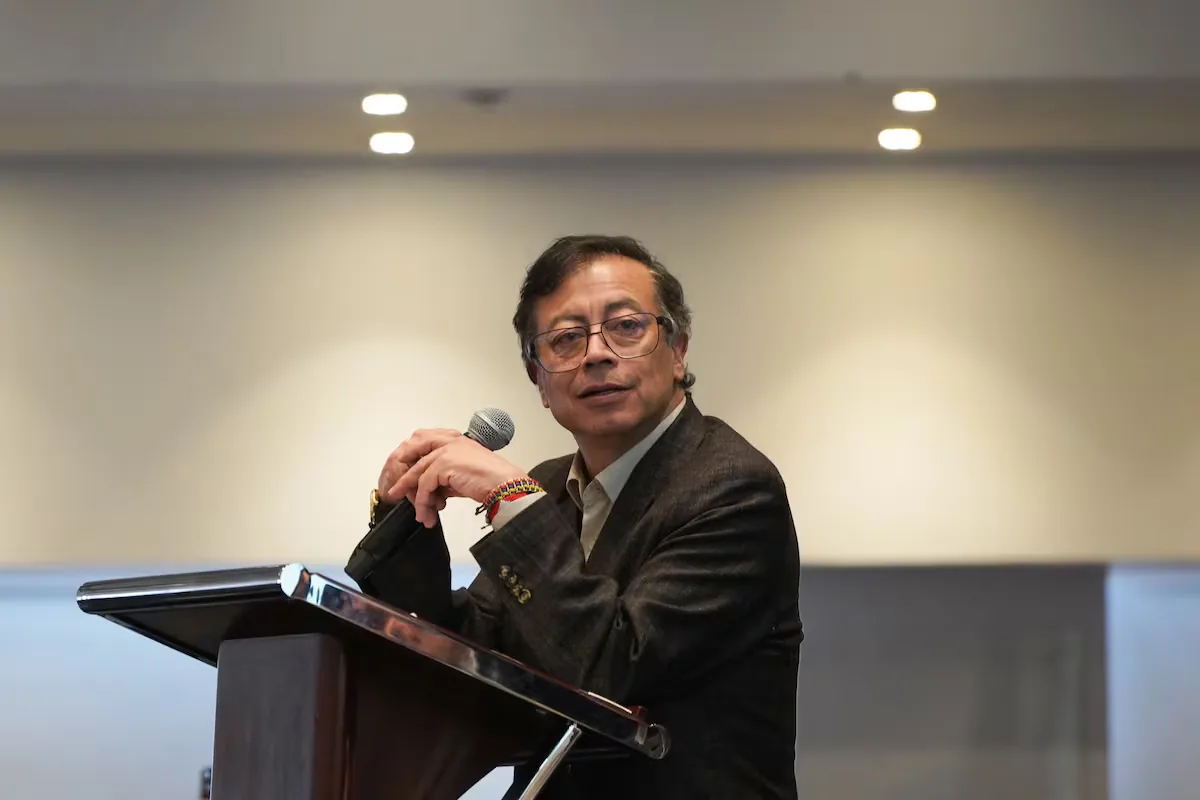
Colombia’s left, back in opposition in the nascent government of Abelardo de la Espriella, inaugurated this Wednesday the political exercise of appointing an alternative cabinet to that of the far-right president, which it has dubbed the “Cabinet for Life.” Accompanied by now former president Gustavo Petro, Senator Iván Cepeda, the Historical Pact candidate who narrowly lost the second round, was in charge of presenting this team, a novelty in Colombian politics with many details yet to be finalized.
Read more Senator Enrique Inzunza leaves Morena’s caucus after Rocha Moya’s fall
“They are those who formed the first Government in our history that managed to place the Colombian people at the center of the State’s policy. The first Government that truly defended social equity, our natural wealth, our sovereignty, our culture, our public education,” Cepeda highlighted in his speech about this parallel cabinet, composed mostly of former Petro ministers, without major surprises or renewal. “As a political movement with the greatest strength and influence, we assume the opposition with responsibility,” the left-wing senator emphasized, referring to the Historical Pact, now a unified party that has the largest caucus in Congress, though far from constituting majorities, which for now lean towards De la Espriella.
One by one, the announced names went up to the stage, without assigning them a particular portfolio or sector. None are congressmen. Not all belong to the Pact, although they do belong to the progressive sectors gathered in the Alliance for Life, the electoral coalition that supported Cepeda. Several were ministers in the previous Government, even in the last cabinet, such as Guillermo Alfonso Jaramillo (Health), Germán Ávila (Treasury), Yolanda Villavicencio (Foreign Affairs), Daniel Rojas (Education), Antonio Sanguino (Labor), and Irene Vélez, who finished the four-year term as acting Minister of Environment and had previously held the position of Minister of Mines and Energy. Also present were former ministers Andrés Camacho, who held the Mines portfolio, and Juan David Correa, who led Culture.
To these names were added that of former senator Clara López, who was also Minister of Labor in the Government of Juan Manuel Santos (2010-2018), and that of other officials from Petro’s administration. The list is completed by Astrid Cáceres, former director of the Colombian Institute of Family Welfare (ICBF); Felipe Harman, former director of the National Land Agency (ANT); Gustavo Bolívar, former director of the Department for Social Prosperity (DPS); and Jaime Dussan, former director of Colpensiones. There are 13 names, while the Government of Colombia has 18 ministries – Petro appointed more than 60 ministers during his term –.
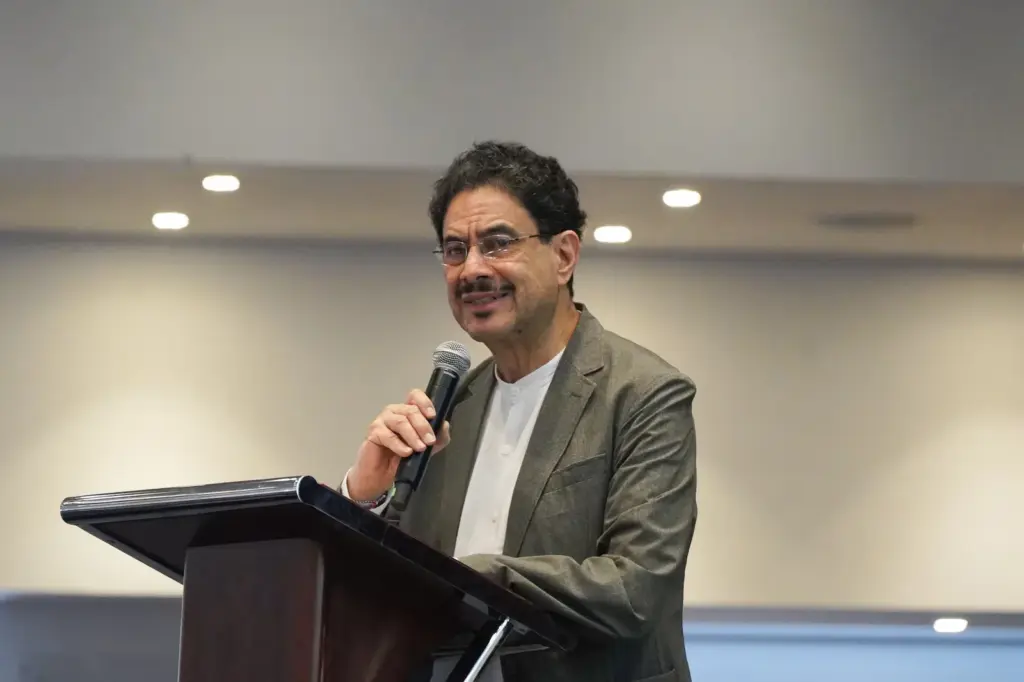
The Cabinet for Life, articulated with the Historical Pact caucus and social movements, “will not only point out what is wrong, but will contribute to what should come in the country,” said Senator Cepeda. “It will contribute to formulating solutions for overcoming the critical situation generated by the conjunction of two natural disasters currently facing the country,” he added, referring to the devastating earthquake of August 10, which left a trail of more than 300 dead, and the prolonged drought that threatens entire populations under what has been called the Super Niño Phenomenon. “It will also be responsible for proposing and implementing the public agenda that allows defending the social achievements of the first progressive government and deepening those achievements,” promised Cepeda, who occupies the Senate seat granted by the Opposition Statute to the runner-up in the presidential elections.
Read more The protests take to the streets of Ceuta: “We live in four blocks”
“We face a new political moment,” Cepeda acknowledged. “All our warnings about the serious threats embodied by the far-right project in Colombia, led by Mr. Abelardo de la Espriella and his Government, are unfortunately beginning to materialize,” he noted. “From the very day of his inauguration, De la Espriella’s actions have been marked by the politics of spectacle, religious rituals, and a worrying trivialization of public actions,” he elaborated in his diagnosis. “Colombia needs firm, serene, and organized action to defend democracy. Faced with arbitrariness, we are prepared to exercise all forms of democratic opposition: legitimate civil disobedience, active resistance, the search for alliances with all democratic sectors, and national agreement,” he concluded.
The figure of a parallel government cabinet, or “shadow cabinet,” is unprecedented in Colombia. The main example comes from the “shadow cabinet” in Great Britain, where the opposition – His Majesty’s Loyal Opposition, in more formal terms – chooses a group of parliamentarians to be spokespersons for different areas. Its members constitute an alternative team to that of the Executive, in which each of its members monitors a portfolio and is a spokesperson for that sector. They also meet weekly, similar to a Council of Ministers. The British BBC explains it as a “man-marking,” in an analogy to team sports, where each member of the shadow cabinet monitors and scrutinizes each minister – with the particularities of a parliamentary system –. Unlike that reference, for now no congressman is part of the Cabinet for Life.
“This is not a shadow cabinet. Quite the opposite. It is a cabinet in the light,” Petro said in his speech. “The one who is in darkness today is the current Government of Colombia,” the former president lamented, contrasting it with the progressive movement that, in his diagnosis, wants society to develop in the light. “The Cabinet for Life illuminates rational criticism of the Government,” he assured without too many specifics.