






Guillermo Rayo came up with a television format. Taking advantage of his ear for making up songs on the spot (“my friends called me the jukebox,” he says), the show unfolded as a musical interview with a well-known character: significant songs in the guest’s life were interwoven into the conversation, sung as a duet, with Rayo on guitar. He invested about 8,000 euros to record two pilot episodes featuring a couple of friends, actor Julián Villagrán and actress Alba Alonso. In 2007, he registered the result with the Intellectual Property Registry. The title: B.S.O. (initials for Original Soundtrack). “It seemed to me an emotional way to enter the interviewee’s world,” says the artist. It looked promising.
Rayo, musician, presenter, showman, began to promote his project and presented it to Canal+, a channel he professionally collaborated with, among other media. Although the reception was good, the project never took off, so the format, like many others, was forgotten on a hard drive. About 14 years later, Movistar Plus+, Canal+’s successor, launched a new program marking the return to television, after some time, of a very beloved star: B.S.O. with Emilio Aragón.
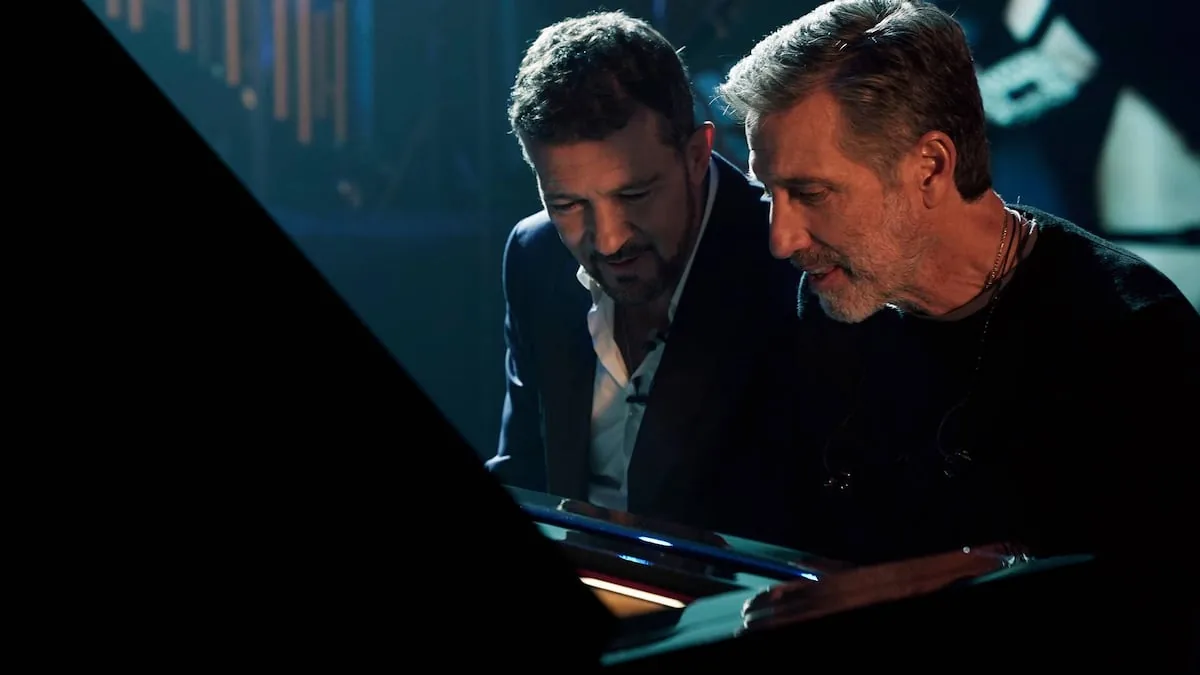
The title was very similar and so was the concept, with Aragón seated at the piano or leading a band singing the songs that had marked the guest’s biography. Among them, Los Javis, Alaska, Raphael, Antonio Banderas, Belén Rueda, up to eight episodes. The technical sheet credits the original idea to Emilio Aragón himself. It premiered on June 2, 2021.
“My theory is the following,” explains Rayo, “no one wanted to do my show and, at some point, Emilio Aragón decides to return to television, he is presented with formats and chooses mine.”
Rayo considered it a copy of his idea and asked for explanations. They mainly responded that it was a coincidence. He claims he tried to reach an agreement, without success. So he filed a lawsuit for plagiarism against Movistar Plus+, Caribe Music — Emilio Aragón’s production company — and against Aragón himself. The lawsuit was admitted for processing in 2022 (“for the commission of an alleged crime against intellectual property under Art. 270 of the Penal Code”), but now the process seems stalled, so Rayo has decided to make the case public.
“I filed the lawsuit as a way to stand up for creators,” says Rayo. “It’s very unfair that someone works hard and then someone with more money comes along and takes your work. I know it’s David versus Goliath, and they told me not to get into trouble. But I reported it.” From the other side, they consider there has been no plagiarism, that the mere idea of the sung interview is not a format but a universal genre carried out on other occasions, part of the universal heritage.
“We have not copied anyone,” sources close to Emilio Aragón and Caribe Music say by phone, “we don’t know the people leading this lawsuit at all. But if they feel some of their rights have been violated, we think it’s fine for them to do what they have to do, and for justice to do its job.” Movistar Plus+ responds via email: “This is an issue from some time ago with no progress, and we consider it an unfounded claim and have maintained this jointly with Caribe Music and Emilio Aragón.”
The defense is based on points such as that a format is more than Rayo’s idea: it requires greater development. The Movistar Plus+ program has a large-budget production with various performances, dance corps, music band, sets, lighting, etc., and a more complex structure. They argue that Rayo’s idea, as just an idea, is not subject to legal protection. They also point out that an important part of the concept is the presence of a character as well-known and beloved as Emilio Aragón, a fundamental pillar of the show. Or that the plaintiff has never had direct contact with Aragón or Caribe Music. They insist the musical interview is not original.
Origins of the ‘singerview’
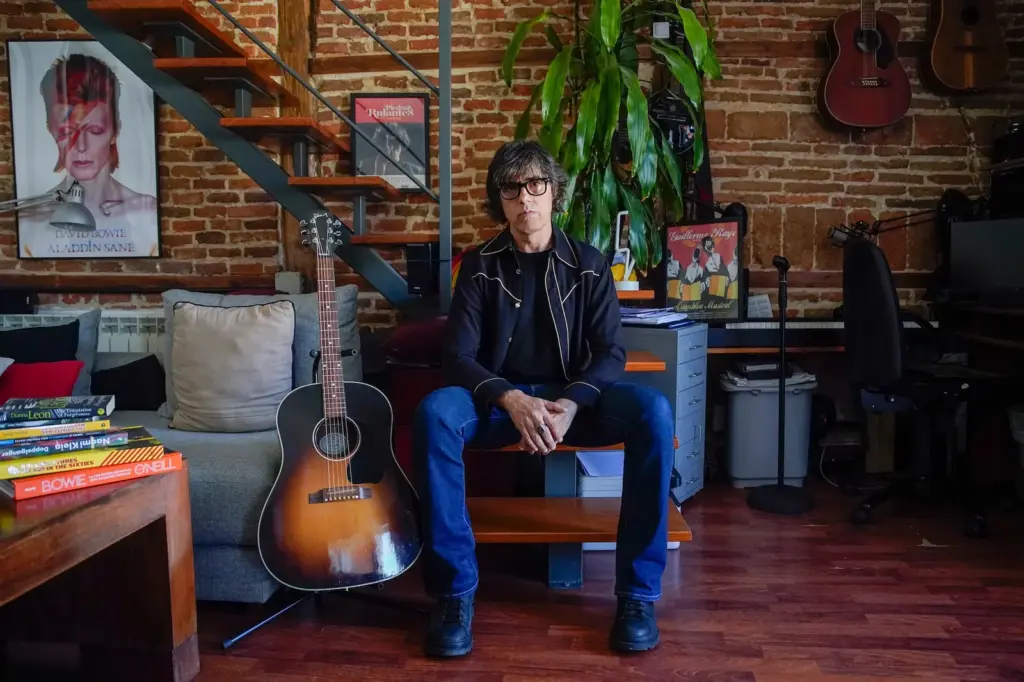
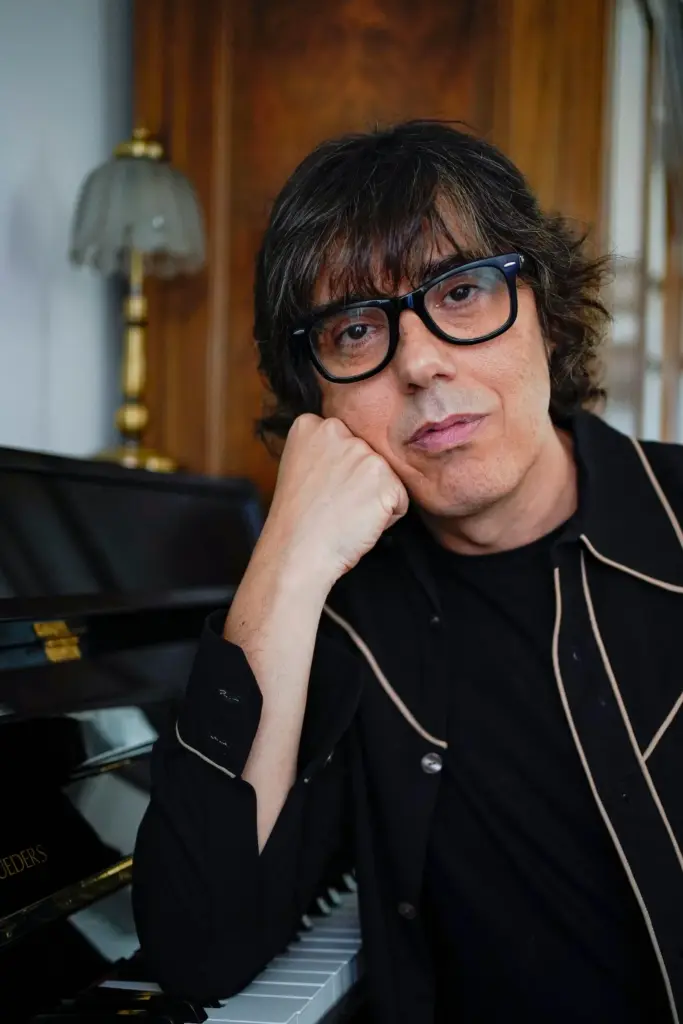
The context: in the mid-2000s Rayo had a fruitful relationship with Canal+. Between 2002 and 2005 he worked making humorous versions of songs for the famous program Las noticias del guiñol, where puppets recreated Spanish political life with sharp humor. “They sent me the topic in the morning, I composed in a hurry, and in the afternoon I sent the songs by messenger,” explains Rayo in a bar in Madrid’s Lavapiés neighborhood. Now Rayo continues in show business with his imitations of David Bowie or Mick Jagger and the Rolling Stones, and earns his living as a civil servant at the Madrid City Council. Bangs, plastic glasses, a soft Andalusian accent, this Sevillian has just turned 58, but it seems time has barely passed for him.
You can see it in videos from 20 years ago, when, between 2005 and 2006, he presented another Canal+ program, titled Bazar, where contemporary culture was commented on in a lively way, when the mentioned channel helped shape what was cool in Spain. His job was to devise intros for the videos and do small interviews with the protagonists. It was then that he came up with the concept of singerview: the sung interview. For example, he did it on Bazar with musician Muchachito Bombo Inferno. “That was a good invention: I was congratulated in the corridors of Canal+,” says Rayo. So much so that it was the seed of his format B.S.O.
With the pilot episodes, he then approached different people and places, including Canal+, where he says he presented his idea to Jorge Ortiz de Landázuri, then director of the program Bazar (and brother, by the way, of musician Enrique Bunbury). 14 years later, Ortiz de Landázuri turned out to be one of the executive producers of B.S.O. with Emilio Aragón. He has recently left the company Movistar. Also, Rayo says, he had the opportunity to present his project to actress Belén Rueda, ex-wife and collaborator of director and producer Daniel Écija (with whom Rayo attended, among others, a Rolling Stones concert in 2007 at the Vicente Calderón stadium: “The concert was horrible,” comments Rayo). According to the musician, she gave the project to Écija, one of the founders of Globomedia along with Emilio Aragón. He told him “they were going to look at it.” He also pitched the idea to other media, such as RTVE. “After two years I got tired, gave up on everything, and continued with my life,” says the artist.
When almost three decades later he sees a program so similar to his idea announced and finds such personal connections in its production, he decides not to ignore it and tries to negotiate, he claims without success. It is then, after some sleepless nights, that he files the lawsuit in December 2021. Since then, as Rayo’s lawyer, Mónica Sevil, an expert in intellectual property, recounts, the process has had twists and turns. First, although the lawsuit was admitted for processing in a Madrid court in 2022, it was transferred to a court in Alcobendas, where Movistar Plus+ is headquartered (Aragón and Caribe Music are based in Madrid). “When it was accepted in Alcobendas, no proceedings were initiated, Emilio Aragón nor Jorge Ortiz de Landázuri were called to testify; instead, the judge requested an expert report,” says Sevil.
The accused presented expert reports defending their position, but Rayo did not have it easy to find an expert: he attributes it to the fact that the expert favorable to the defendants’ version was Concepción Cascajosa, then a member of the Board of Directors of Radiotelevisión Española (RTVE), who later became interim president. “No one wanted to mess with such powerful people,” says Rayo, who had to fend for himself. So he commissioned a similarity test between the two programs from the sociological research company Wearetesters. That is, 400 anonymous respondents were asked about the programs. 97% said the formats were similar, 91% that the presenter’s role was similar, 82% that the Movistar Plus+ program could have been inspired by Rayo’s due to the concept, the presenter’s role, or the structure, despite the differences between Rayo’s humble pilot production and the abundant resources of the professional television format.
“Until now, throughout the process, we have not made statements to the press, we do not want to slander Emilio Aragón, nor promote my client. We simply want Guillermo Rayo’s authorship to be recognized and for him to be paid his share, to which we have not even put a price,” says lawyer Mónica Sevil.
From the other side, they insist on denying plagiarism. “Ideas are already out there,” say sources close to Emilio Aragón, “sometimes you have an idea for a fiction series, it doesn’t fit, and suddenly the same idea appears elsewhere approached differently. As we see life, this makes no sense. It would not make sense for Emilio to decide to return to television in that way, no one wants to hurt anyone. There is no intent to harm.”