







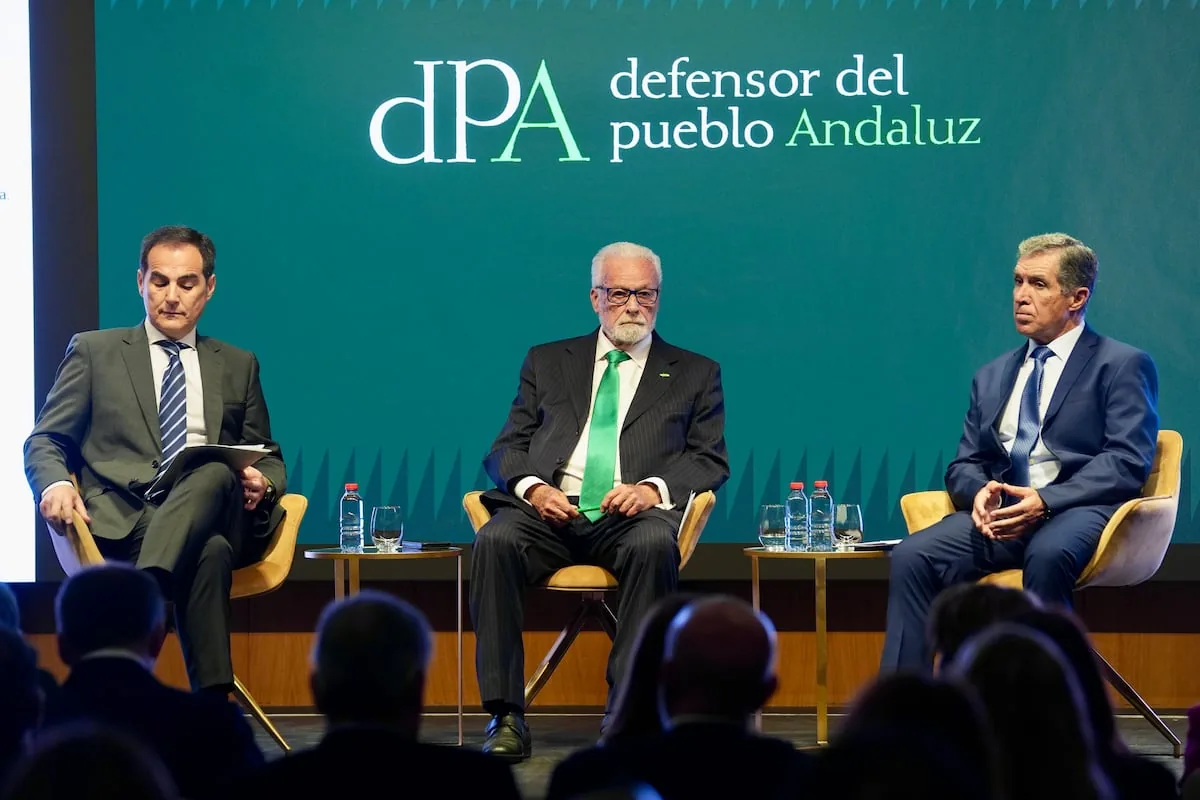
Complaints from Andalusian citizens to the Ombudsman have doubled in the last decade due to the violation of their rights and freedoms by the Junta and the City Councils, which indicates growing discontent with the treatment provided by the Administrations. Citizen complaints have risen to 13,410 filed in 2025, when there were only 6,170 in 2015, while consultations also increased last year to 17,494, from 9,343 in 2015 (an 87% increase). The sum of complaints and consultations caused the activity of the Andalusian Ombudsman, Jesús Maeztu, to skyrocket to 30,904 actions in 2025, his record in 43 years of history, when in 2015 both amounted to 15,513.
Read more El Roto: in electoral flour
María José Jiménez, mother of two autistic children in Las Cabezas de San Juan (Seville), has filed three complaints to ensure that the Junta provides them with the care they are entitled to by law. “When the school stage began, they wanted to stop seeing Juan [with grade three autism] at the child care center, but I invoked the law and the Ombudsman sided with me and moved papers until it was resolved. Then my son should have had two to three sessions a week, but since there were no specialists, they only gave him one,” she laments. However, the fight continues: “Now we are battling for school transport and monitors,” she adds.
The surge in citizen complaints, in the midst of the Andalusian election pre-campaign, attracts even more interest given that the peak occurred last year with 13,410, a sharp increase compared to previous years: 10,414 (2024), 9,661 (2023), 8,671 (2022) and 8,934 (2021). Half of the claims concern the Junta, which neglected 6,785 citizens who sought help from the Ombudsman, while 3,412 Andalusians appealed the response obtained from the region’s City Councils. Most of these 13,410 complaints were due to dependency, which accounted for 1,989 claims, 1,465 related to public sector personnel, 1,344 in the health sector, and 1,129 concerning education, another very sensitive area because it affects children’s rights. By comparison, the complaints to the Spanish Ombudsman, Ángel Gabilondo, reached 38,144 last year.
Maeztu, an 83-year-old former worker priest and university professor, has been acting in his role for two years and has repeatedly asked Andalusian parties to agree on a successor to leave office, after 13 years at the helm. “His maxim is not to bother the Administrations too much, and his logic is that he achieves more by being diplomatic than by confronting. He considers it aggressive to supervise the Administration to see if it has infringed rights, and says that his resolutions go nowhere because they are not binding, but of course they have great moral force and politicians obey,” criticizes a person who has worked closely with Maeztu.
The 785 Andalusian City Councils collaborate “adequately” in 82% of cases, a percentage that rises to 87% in the case of the Andalusian Junta, according to their own data. This adequate collaboration from the Administrations has also grown over the last decade, as in 2015 it was 74% and only in 26% was the official response inadequate, one in four cases. During his mandate, one of the main guidelines has been mediation between citizens and the Administrations. This newspaper asked Maeztu for an assessment of his mandate, but he declined to comment.
Read more The short trench coat, a new interpretation perfect for transitional weather
Last year, complaints initiated regarding education experienced a surge, increasing from 787 in 2021 to 1,129, a 43% rise, and managed complaints went up by 17% (from 1,112 to 1,307). In this area, the Ministry of Educational Development and Vocational Training sent a document to its management centers a month ago titled “Guidelines for processing and responding to complaints from the Ombudsman [state and Andalusian].” But the document also reached at least the educational inspectors of Seville and Cordoba, and among other issues, it emphasized “brevity and relevance”: “Include only the strictly necessary facts to understand and evaluate the administrative action. Avoid exhaustive chronologies or accessory details (exact days, call times, or irrelevant details) unless they are decisive for the case,” the order stated, interpreted by several inspectors as a way to withhold information from the Ombudsmen by the Educational Inspectorate.
One of the 290 Andalusian inspectors, who requests anonymity for fear of reprisals, laments: “I didn’t like the directive at all; it seems they want to channel and limit our reports. And the document has no letterhead because they know this curtails our independence.” Whenever required by the Ombudsman, the Junta must collaborate and provide all available information, according to law 9/1983. The Ministry alleges through a spokesperson that it only sent the document to its management centers and not to its inspectors, even though the latter received it in two provinces through the official channel.
The increase in education-related complaints is partly explained by the problems families face in including students with specific educational support needs, the most vulnerable in the education system. In Andalusia, they number 180,000 minors, 13% of the student body, according to data from the Confederation of Ampas of Andalusia (Codapa). “For parents, it’s a continuous battle with the Administration, which is why they turn to the Ombudsman. Early detection of the autism spectrum is better now, and the census has increased, but not the resources. Funding has grown by 18%, but it hasn’t increased in the adequate proportion. The diversity attention law is obsolete, and instructions have been issued, but sometimes they are contradictory,” protests Rocío Bejínez, president of the federation of Ampas of Seville.
The statistics from the Andalusian Ombudsman confirm the rise in complaints regarding problems in special education, which has increased from 237 cases in 2021 to 565 in 2025. Last year, it became the issue with the most claims within the education area, accounting for more than a quarter of the total cases.